Agenda-setting intelligence, analysis and advice for the global fashion community.
Agenda-setting intelligence, analysis and advice for the global fashion community.

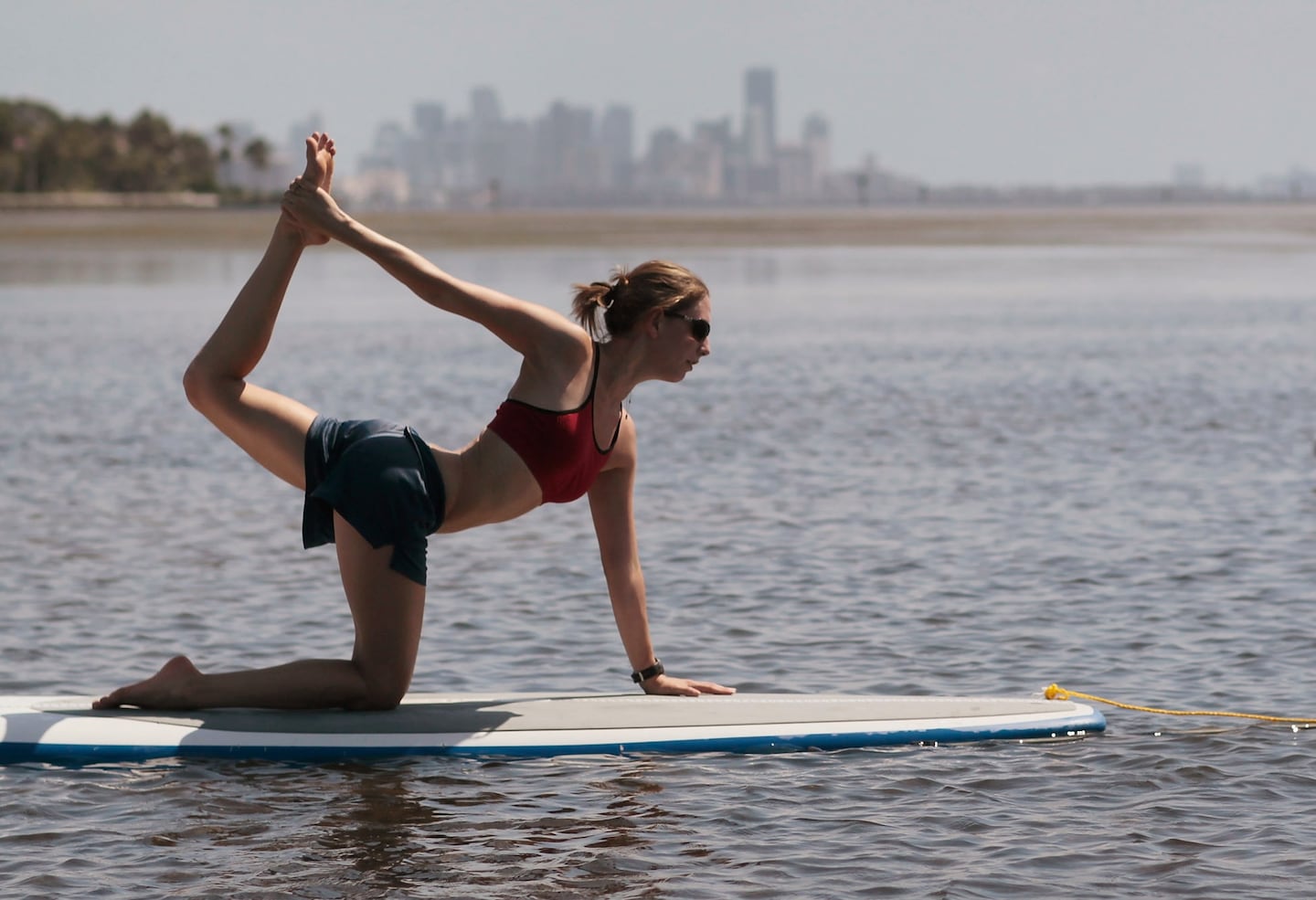
Miami, Florida — The Sunshine State is a hotbed of deranged crime and trespassing iguanas. It is also, newly, the chosen home base for the beauty and wellness industry.
In the past five years, key leaders of Crown Affair, Glow Recipe and Vacation have relocated from New York to South Florida. Naturium founder Susan Yara relocated to Miami and launched her latest project, Playa, there; Karlie Kloss and Victoria Beckham now call the city home. Members-only Pilates studios cater to clients like Alex Rodriguez and Shakira. What was once a retirement punchline has become one of the country’s most consequential beauty capitals.
True, the toned bums of Miami have long been synonymous with an enhanced practice of self improvement. Miami has the most plastic surgeons per capita in the US, higher than Los Angeles and New York. And while the almighty scalpel hasn’t disappeared, it’s being joined — and in some circles, overtaken — by the broader, softer language of “wellness” that spans injectable peptides, fitness optimization and longevity science. As beauty founders and influencers lather up with coconut-scented sun lotion, brands are moving in on the year-round beach scene, treating swim weeks and surf competitions with the same serious interest as a Coachella pop-up or a Formula 1 activation.
Founders said the pull of South Florida — encompassing Fort Lauderdale, Miami and Palm Beach — is as much about lifestyle as logistics. “People simply wear less clothes here, and they’re outside being active all the time,” says Colleen Wachob, co-founder and co-chief executive of the lifestyle media brand Mindbodygreen. “They are some of the first people to gravitate towards new wellness trends.”
ADVERTISEMENT
Florida has the second-largest number of GLP-1 prescriptions in the country, behind only New York. Because medspa owners in Florida don’t need to be licensed healthcare providers, the definition of a “wellness treatment” stretches further than it might elsewhere, like blood re-oxygenation chambers and microcurrent massages.
And with the Make America Healthy Again (MAHA) movement now woven into the Trump administration’s agenda, South Florida — home to Mar-a-Lago and its rotating cast of health-y VIPs — has become something like a MAHA epicentre, angling to unseat Los Angeles and Silicon Valley as the arbiter of how Americans stay fit — or at least, very hot.
One of the biggest draws to Florida is the state’s lack of income tax, which explains why it has captured a raft of post-exit founders. But there’s another reason why a high-level beauty professional would move somewhere vulnerable to drenching storms and extreme swings in temperature: It makes for fertile product testing ground.
When Glow Recipe co-founder and co-CEO Sarah Lee relocated from New York to South Florida in 2022, she found the humidity, the rain-to-sun flashes and the brutal air conditioning were accidentally “the best way for us to torture-test our formulas,” she said. Every new Glow Recipe launch sample now gets sent to Florida after clearing lab tests. “If you want a product to be universally loved, has that appeal, it needs to work in a tough climate. That’s this one.” Lee added the brand’s Dew Balm SPF and its setting sprays were shaped specifically by both Miami’s climate and its hyper-social attitude.
Nowhere is that attitude more visible than during two rival events in May — Miami Swim Week: The Shows and Paraiso Miami Swim Week — that battle for bikini runway dominance (a trademark suit between the two is still raging). Over 10 days, more than 50 designers show bikinis, caftans and beachwear to buyers, press and the occasional football player supporting a model wife or angling for one. “It is the epitome of beach life, of paradise,” said Sean Rashid, CEO of Miami Swim Week: The Shows, held this year at the Mondrian hotel. His daughter and social media manager, Lila, put it more bluntly: “Everyone wants to enter the villa,” a nod to Love Island, whose cast members Iris Kendall and Chelley Bissainthe made appearances at Miami Swim Week: The Shows this year.

That appetite for beach-coded culture has become a brand strategy in itself. According to Rashid, Miami Swim Week secured a $250,000 title sponsorship from Neutrogena as an official skincare partner, covering model makeup and skincare, branded backdrops, influencer events and a morning of poolside pilates for VIPs.
“It’s really about engaging with consumers and culture where it makes sense,” said Jenni Evora, Neutrogena’s head of communications. “When you think about bikinis and beach culture, protecting your skin is the most important thing.” Other beauty players took smaller stakes: L’Oréal-owned Kérastase styled hair backstage at the Sports Illustrated Swimsuit Issue show; Nyx Cosmetics was on hand for ambassador Megan Thee Stallion’s runway debut at Paraiso; and self-tan and wax studio Sugared + Bronzed comped services for models walking the Mondrian show.
The diversity of South Florida also lends itself to developing products for a range of consumers — more than half the population in Miami-Dade county alone is Latin. Miami Beach Bum founder and marine scientist Ayssa Di Pietro built a best-selling body scrub around Mexican oregano, which she’d used to treat her own body acne; it landed in Ulta Beauty this May.
ADVERTISEMENT
“It’s so multicultural here,” Evora said. Testing a new product like Neutrogena’s latest tinted lip oil shades in Miami means “you’ll see how everyone likes it, not just one type of consumer.” And the founders themselves say the audience is simply easier to work with.
“In New York, you ask an influencer if they’d like to come for a drink, and they say, ‘Sure, pay me a million dollars and send a helicopter,’” said David Protein’s Charlotte Coquelin Rahal. “In Miami, everyone is so lovely. People want to get to know your brand, but also you.”
That openness extends into territory many beauty founders spent their careers avoiding: politics. South Florida’s pluralism includes its conservative tribes, and living among them is reshaping how liberal-leaning founders think about their own market.
“It’s a very purple region,” Wachob said. “You walk into a room and you never know if it’s liberal, conservative or something in between.”
Perhaps the centre of that political gravity is Mar-a-Lago, US president Donald Trump’s club and residence and Palm Beach’s answer to Versailles, with a reported $1 million initiation fee and a waitlist longer than a voting district’s contested borders. Because the president and his inner circle routinely stop by, South Florida has become entangled with the Make America Healthy Again movement championed by Health and Human Services Secretary Robert F. Kennedy Jr., aka “America’s wellness influencer-in-chief.”
Wellness has been creeping into South Florida over the past decade: “Botox buses” zoom through bachelorette parties, offering injectables and peels; Hotels like the relaunched Delano or the tony Fontainebleau have upgraded their spa offerings with fitness tech, exclusive Pilates instructors and run clubs; and the Miami-based smoothie chain Pura Vida — now a rival to Erewhon and Juice Press — has become a magnet for TikTok creators, its recipes viewed more than 1.2 million times on the app, according to the brand’s reports.

More recently, wellness talk has taken a turn toward the longevity conversation.
When dietitian and Global Longevity Association founder Ella Davar was invited to lunch at Mar-a-Lago last year, she found “longevity eating” was on everyone’s mind — but nobody quite knew how to do it. “For people obsessed with longevity, the menu surprised me,” she said diplomatically. “It’s fish and chips, it’s burgers — basically, what the President eats.” Davar asked her connected clients if she could help “put science on the menu.” The result was a series of “Longevity dinners” hosted with Republican influencers like Lara Trump, built around what Davar describes as “the importance of food as medicine, how nutrition is key to longevity, how it’s important to support local farmers and what gut health really means.”
ADVERTISEMENT
Last November, Davar organized a Mar-a-Lago Thanksgiving lunch centered on organic food grown through regenerative agriculture, which is the practice of pesticide-free farming that favors in-season eating and soil health. A month later, RFK Jr. announced a regenerative agriculture plan with $700 million in farmer incentives.
On June 26, six months after Davar’s seminar at Mar-a-Lago, the president issued an executive order pledging support for American farms expanding regenerative agriculture practices, with an initial federal commitment of $1 billion, indicating that Miami wellness culture can have national ripple effects.
“She’s done something kind of amazing,” said a med-spa owner in Boca Raton who attended one of Davar’s events, “which is to turn her wellness influence into policy. That’s now possible if you have the right connections in [Florida].”
Sign up to The Business of Beauty newsletter, your complimentary, must-read source for the day’s most important beauty and wellness news and analysis.
The founder of Naturium unveils the details of her tropical new body and haircare brand, Playa, exclusively to The Business of Beauty.
The South Florida resort town has always been an enclave for the wealthy, but recent developments have bolstered its reputation as a fashion destination.
A coalition of sunscreen brands is pushing back against social media’s “tanmaxxing” obsession, raising questions about whether the industry’s sun-safe messaging has lost its way.
Faran Krentcil is a contributing writer at The Business of Fashion. She is a New York based writer, editor and lecturer with a focus on fashion and beauty.
Loading recommended reads…
Founder and actress Shay Mitchell will retain a 15 percent stake in Béis, which will become a Samsonite subsidiary after the deal closes.
Mike Ashley’s Frasers Group has bought the upmarket department store chain out of administration after it warned it could run out of money without new funding.
The Sunshine State has long been a destination for plastic surgery, but has more recently become a hub for founders and a clandestine birthplace for new policies shaping national health.
Resilient demand for Coach bags among young and affluent shoppers helped buoy the group, but weakness at Kate Spade led the company to forecast muted annual revenue.