Agenda-setting intelligence, analysis and advice for the global fashion community.
Agenda-setting intelligence, analysis and advice for the global fashion community.

If you ask most top skinfluencers, makeup wipes may be the ultimate beauty sin. Experts on TikTok, Instagram and YouTube warn that reliance on them for convenience’s sake could be causing irritation or wrinkles, even comparing the time-saving product to “the devil” — to say nothing of the space they take up in landfills.
But that hasn’t stopped them from selling. Neutrogena’s classic Makeup Remover Wipes are a constant fixture among Amazon’s top 10 beauty bestsellers, with few brands launching competing options to challenge market share.
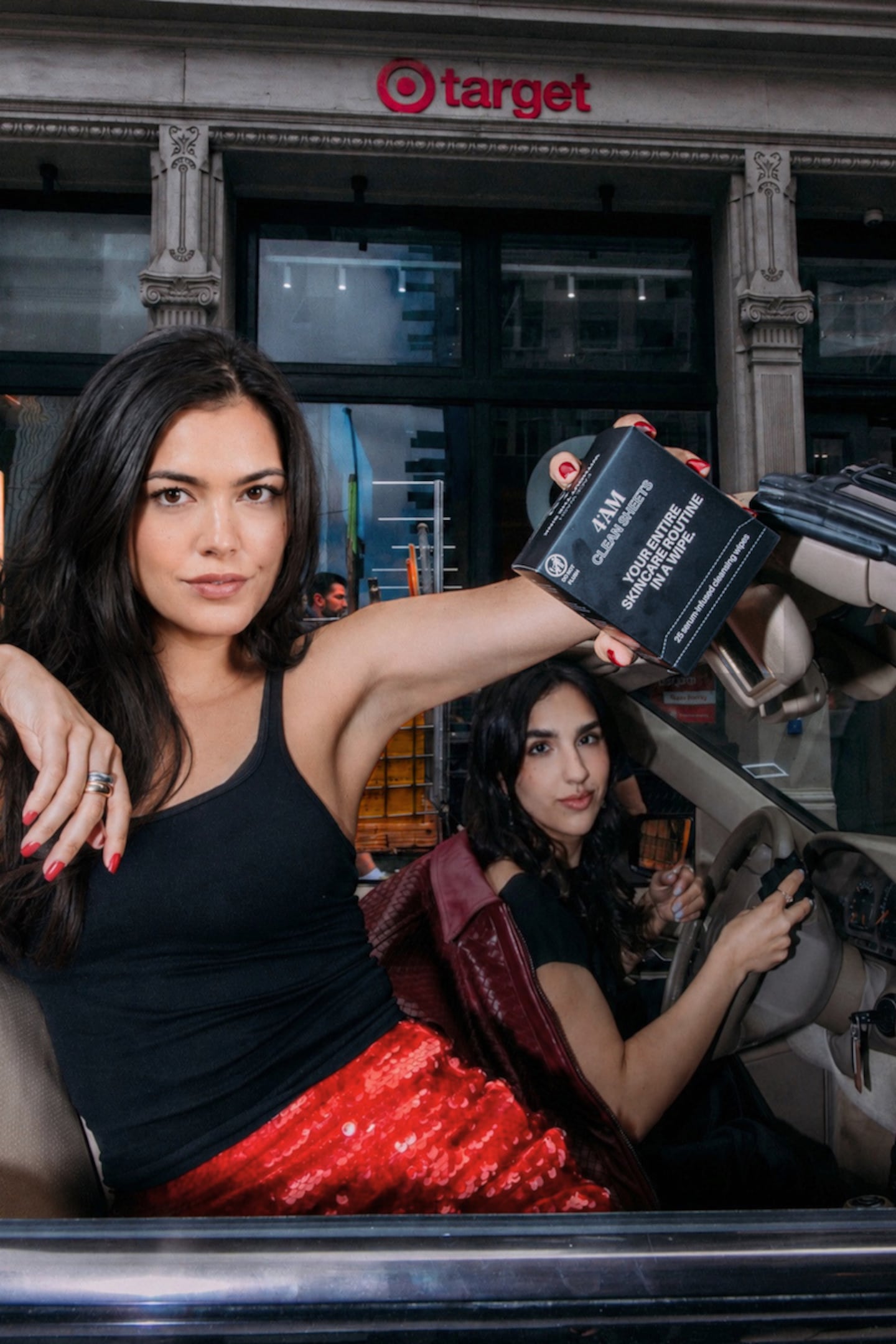
One brand that has dared to venture into the divisive category, however, has been US skincare brand 4AM. On May 10, the label created for simple routines after a night out made its Target debut with its Clean Sheets makeup wipes unveiled last year. To support its retail expansion, the brand has secured a $4 million funding round led by Cavu Consumer Partners, with participation from B4 Capital and Type Capital, as well as beauty industry figures including Violet Grey founder Cassandra Grey, Youth to the People co-founder Joe Cloyes, Starface co-founder Brian Bordainick, investor Maggie Sellers and Étoile founder Michelle Hu.
“Dermatologists have demonised [makeup wipes] for years, because they’re harsh, they tug at your skin,” said Jade Beguelin, the co-founder and chief executive of 4AM. These included Dr. Muneeb Shah, a dermatologist with a TikTok following of 17.8 million who has warned to avoid makeup wipes for reasons including risk of inflammation, hyperpigmentation and irritation, and Dr. Joyce Park, who has advised against using them without a cleanser.
ADVERTISEMENT
Shah and Park are now participants in 4AM’s investment round, won over by the brand’s differentiated approach.
“To me it’s just a ‘better-for-you’ makeup wipe,” said Dr. Shah of his investment. “It’s better ingredients, less irritating ingredients, less allergens.”
Makeup wipes, like pore strips, drying lotions or apricot facial scrubs, are a big business, even if they’re not uncontroversial. Beauty brands today prefer to hop on safer, if saturated, categories like lip balm, leaving riskier opportunities on the table for other products that are in high demand.
Resuscitating a disparaged category involves a multi-pronged approach that includes product innovation that addresses complaints, winning over influencers and finding demand from customers that aren’t relying on TikTok for all their skincare information.
“Brands rarely win by fighting consumer concerns directly or dismissing backlash,” said Erica Culpepper, a beauty industry expert and former L’Oréal Group executive. She offers a course on turnaround campaigns after guiding skincare brand Thayers through an anti-witch hazel moment. “The stronger approach is to listen, acknowledge concerns and help reframe the role the brand or category plays in a modern, informed way.”
Over the last half-decade, TikTok’s “skintelligentsia” has come after nearly every 2000s skincare product trend, including not just wipes, but apricot face scrub, witch-hazel toner and blackhead pore strips.
Makeup wipes have received much of the online hate. Brand founder, aesthetician and content creator Caroline Hirons declared that “the only thing wipes are good for are festivals,” while influencer Hyram Yarbro stated they can’t cleanse pores fully and are “bad for the environment” due to their single-use format. Susan Yara said that wipes are “very harsh on your skin” and even claimed in one YouTube video that they are “kind of like the devil.”
Products subject to these online pile-ons are rarely embraced by young brands, who opt instead for influencer favourites like milky toners and eye masks.
ADVERTISEMENT
“So many skincare brands wouldn’t touch wipes,” said Dr. Sabrina Sade, the co-founder and executive chairman of 4AM, which launched as 4AM Skin in 2021. But it turns out that there’s a wide swathe of consumers blissfully unaware of, or unconvinced by, the online debate. 4AM’s co-founders noticed that for years, Neutrogena’s classic Makeup Remover Wipes dominated Amazon with nearly no competition. Conducting market research, they found that wipes had become a “dirty little secret” even among dermatologists, said Sade.
In 2025, they decided to take a risk with the introduction of the brand’s “Clean Sheets” wipes, using extra liquid and glycerin to avoid friction on the skin, and adding skincare ingredients like micellar water and vitamin B5.

In October 2025, wipes faced another publicity crisis as Neutrogena voluntarily recalled one lot number due to positive tests for bacteria. The 4AM team responded with a campaign called “Break Up With Big Blue,” evoking Neutrogena’s signature light blue packaging shade rather than its name. The brand took out a billboard in Times Square and held a “wipe swap” event in New York, giving out free packets to anyone who brought another brand’s to exchange.
The five-year-old label’s sales quadrupled for the year, and Target reached out to them via a TikTok direct message; they are now in 1,745 US doors.
Only a handful of other startups have taken a stab at makeup wipes, so far: Australia-based Conserving Beauty addresses the environmental impact question with wipes that dissolve in liquid, Sofie Pavitt offers skincare-focused micellar cleansing pads and The Face Shop has a K-beauty option. But compared to 4AM’s other products like its logo eye masks, which face dozens of competitors that now include Rhode, its wipes are now its top growth driver.
According to Addison Cain, a beauty analyst at trends research firm Spate, searches for makeup wipes are up 45.9 percent year-over-year, driven by 4AM and The Face Shop.
“4AM’s positioning is unique, and in my opinion, winning, because it doesn’t try to position wipes as an everyday solution, but rather something for nights out or when you don’t have time for a full routine,” said Cain.
In the omnichannel era, beauty companies are more reluctant to launch products that might run afoul of influencers. The long list of creators who have recommended against St. Ives’ Apricot Face Exfoliant, for one example, has scared most brands off of physical face scrubs.
ADVERTISEMENT
“Out of every brand I’ve talked to, no one’s coming out with a scrub,” said skincare influencer Young Yuh, who has passionately defended his use of St. Ives’ apricot scrub in humorous videos over several years. “They’re like, ‘We’re not going near scrubs ever.’ They’re just scared about what happened with St. Ives.”
Manual face scrubs took a hit when countless influencers warned of the potential to cause “microtears” in the skin, with dermatologists like Dr. Shah posting videos showing jagged edges of the product under a microscope. While some brands, such as Fenty Beauty, have come out with scrubs since that time, chemical exfoliants have superseded them in facial skincare. Shah’s brand Remedy offers a body scrub, with a chemical exfoliant added as well as sugar crystals suspended in glycerin to protect the skin.
Brands working to make a category comeback have addressed skinfluencer debates head-on. While disruptors are differentiating with tweaked formulations and updates to quell criticisms, original leaders have sponsored campaigns to defend their products.
St. Ives, for example, gifted Yuh its scrub after seeing his organic posts about it, most recently commenting, “Our #1 fan… we see you.. without microtears!”. He said he’s currently in talks with the brand to do a paid campaign. Thayers, meanwhile, has been vigilant in courting Gen-Z influencers after its hero witch-hazel toner was criticised in 2020. Yuh said he was offered “a lot of money” to participate in one of the brand’s campaigns.
Some brands have also recognised that the TikTok set, while influential, is not the sole arbiter of skincare demand. 4AM has expanded its focus from Gen-Z party girls to a wider range of consumers with demand for time-saving skincare, including busy moms and medical professionals with long hours. One of their consumer surveys even found that their wipes were popular with fisherwomen on boats in Alaska.
“The loudest voices are the ones that are the ones shaming them. But there’s the silent majority of people who really love a wipe,” said Beguelin.
Sign up to The Business of Beauty newsletter, your complimentary, must-read source for the day’s most important beauty and wellness news and analysis.
The prestige body care brand has earmarked the funding for product innovation and international expansion, said founder Melissa Palmer.
‘Mediagenic’ physicians, scientists and researchers have become front-facing figures in the skincare trade. Their influence might be waning on social media — but according to brands, is more urgent than ever.
Dermatologist-founded skincare brands are often found at luxury retailers with price points to match. But the newest one to hit the market is geared toward the TikTok set.

Liz Flora is a Beauty Correspondent at Business of Fashion. She is based in Los Angeles and covers beauty and wellness.
Loading recommended reads…
Sales of gems, precious metals and artwork at Japan’s department stores climbed 19 percent in the first half of 2026 from a year earlier to $2 billion.
Though Adidas dressed both teams in the World Cup finals, the global football tournament still presented some bright spots for Nike, writes Bloomberg’s Andrea Felsted.
From our archive, the creator and host of award-winning podcast “Articles of Interest” joins BoF founder, CEO and editor-in-chief Imran Amed to explore what clothing can reveal about identity, culture, labour and the world around us.
Saunders, the brand’s first creative director in five years and a skilled colourist, promises to give Kate Spade the clarity it has long lacked. Now, Tapestry must apply the same long-term brand-building discipline that fueled Coach’s success.