Agenda-setting intelligence, analysis and advice for the global fashion community.
Agenda-setting intelligence, analysis and advice for the global fashion community.
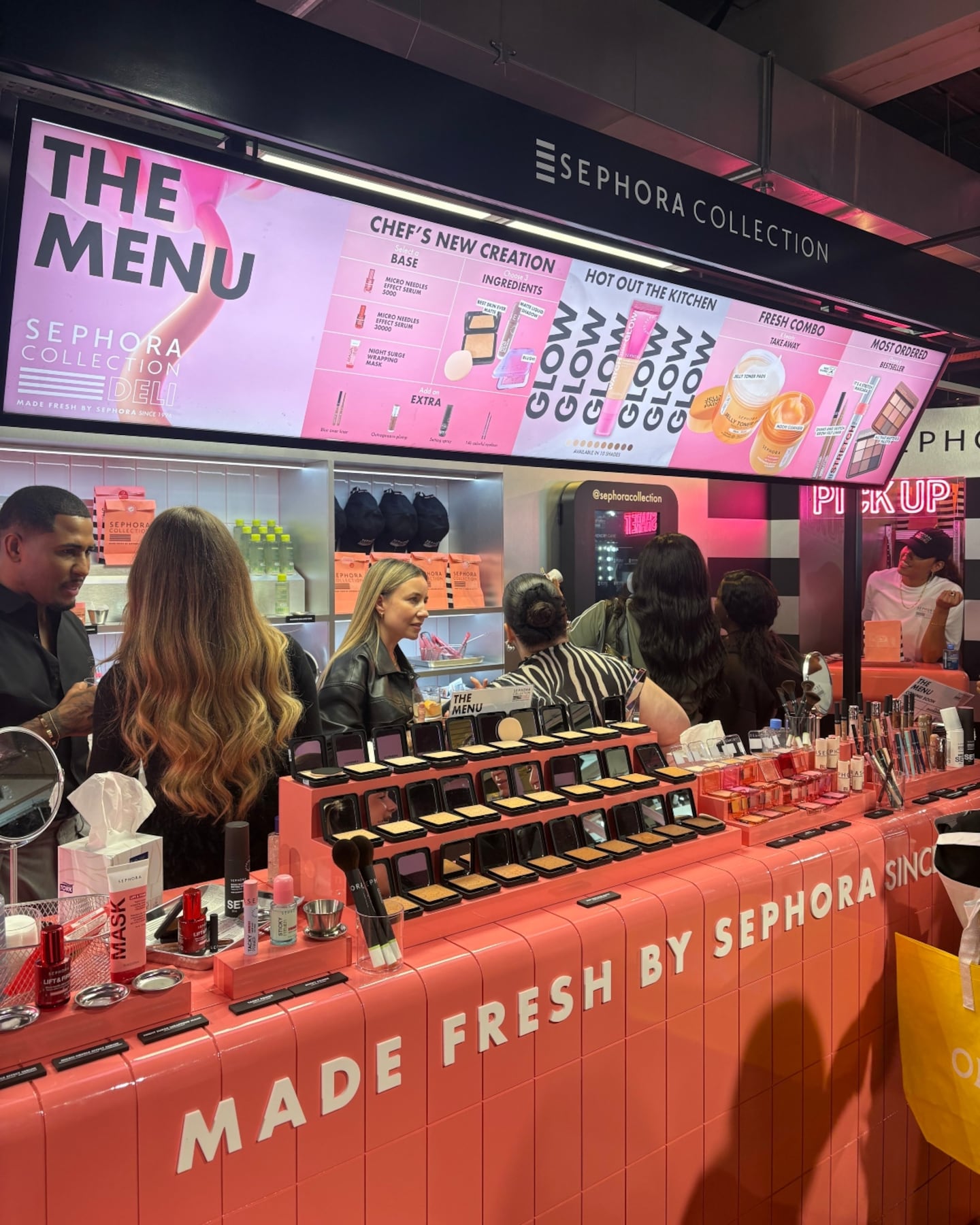
On its thirtieth birthday, Sephora Collection had a lot to celebrate.
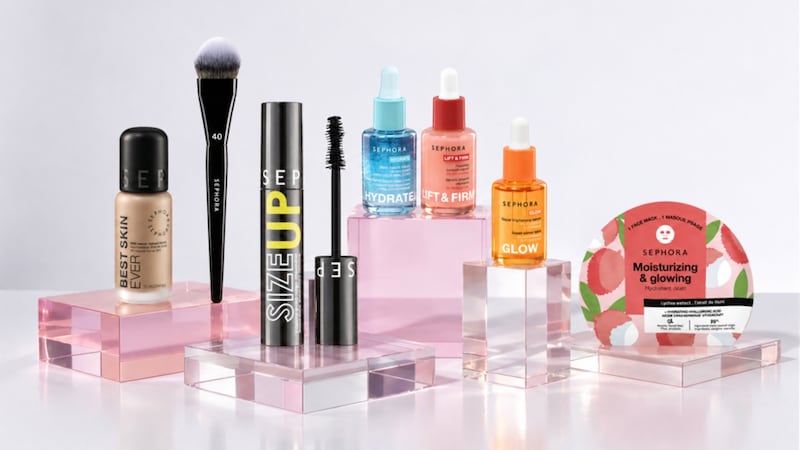
One out of three customers to the retailer buys products from Sephora’s in-house line, said Guillaume Motte, president and chief executive of Sephora. The brand, which launched in September 1996 and spans products like mascara, makeup brushes and face masks, is one of the retailer’s top five globally, and the one that recruits most customers to its stores. “Part of our success is based on curation, on bringing the best assortment to our customers, and Sephora Collection is at the heart of it,” he added.
It’s a cushy position for a private-label line (an assortment produced by multibrand retailers and sold alongside their most coveted brands) which have often been negatively associated with cheaper alternatives. But Sephora Collection has built its business around a different proposition: products that combine the retailer’s (and its parent, LVMH’s) expertise and standards of quality with accessibility. Nine out of 10 of its products cost less than €20 ($22) according to Sylvia Tournery, head of Sephora Collection since June.
Over the last three years, spend on private-label beauty and personal care in the US more than doubled from 2.8 percent to 6.2 percent, according to Nielsen IQ. As consumers seek value, and the economics of launching a brand become more challenging, retailers are finding that incubating their own labels and utilising existing real estate is an increasingly attractive model.
ADVERTISEMENT
Apparel retailers such as Gap and Zara have resurrected or beefed up their fragrance assortments, while big-box stores have also tinkered with elevating their private-label offerings, such as with Bluemercury’s reimagined cosmetics label, Lune+Aster. For incubators like Maesa and A-Frame, private-label brands make more business sense than celebrity labels, where even megastars such as Rihanna still need retailer support to reach consumers. Working with the retailers directly, instead of launching a brand and then vying for shelf space, is also much less of a risk, said Ari Bloom, founder and chief executive of A-Frame brands.
Instead, Bloom’s more recent conversations with large retailers presented the need for a different kind of model, incubating exclusive and proprietary lines with a modern sensibility as an evolution of the traditional idea of “private label.”
“In the past, private label was just the least expensive version of something available,” he said. “What we found is that there’s an ability to develop more premium brands — or brands in any range of price point or positioning — within a store.”
Retailers have long embraced private-label assortments to fill their shelves and flex the muscle of their budget, distribution and expertise. Since launching 90 years ago, Boots-owned line No7 has become a flagship British beauty brand, stocked in over 2,000 of its doors.
But, in the intervening beauty boom, independent labels have superseded them in covetability, even if they face unfavourable economics when it comes to launching in stores. “Retailers, for the most part, are set up for big brands with a lot of budgets, yet they’re always attracted to the new, shiny object,” said Bloom. “Most of those are not funded to the level needed to actually survive in a multi-hundred- or multi-thousand-door chain.”
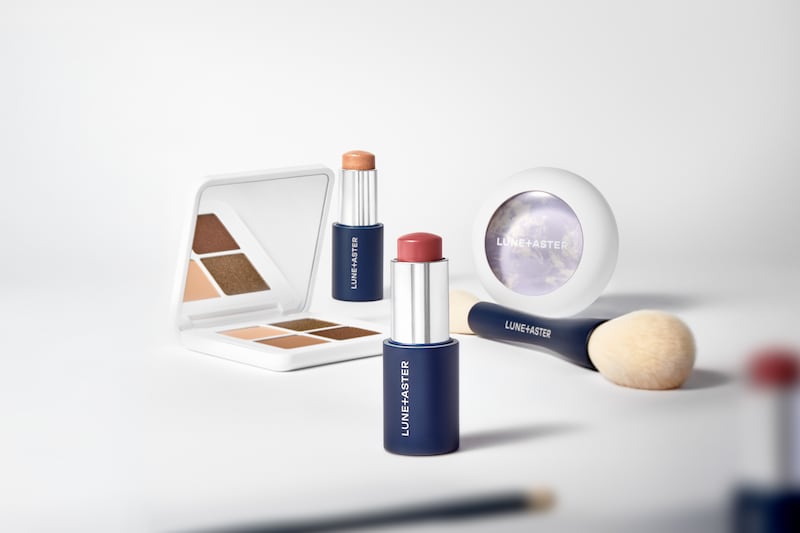
Private-label brands don’t face the same hurdles. These lines can offer an accessible alternative where a retailer sees unmet demand, while also creating products that a customer can’t find elsewhere. Macy’s-owned beauty store Bluemercury launched its cosmetics line Lune+Aster in 2015, in part to fill a colour cosmetics gap in its lineup, but refreshed the line this month with elevated packaging, a streamlined assortment and skincare-infused multitasking products.
“The point of differentiation that retailers are looking for is uniqueness of brand and uniqueness of ‘reason to come to me,’” said Wendy Liebmann, founder of WSL Strategic Retail. “They can fill shelves with something that supports their credibility and, also built into that, can be price point differentiation, innovation and uniqueness.”
Private label also offers retailers the ultimate control over pricing, positioning and product development — while also allowing them a healthy product margin. The fact that these brands physically exist within a retailer’s existing shelf space or e-commerce sites is, to Bloom, another straightforward win. “If you already have a relationship with a customer, if you have licence to talk back with credibility, you can actually expand your offering and pick up an incremental 5 to 10 percent of sales,” he added.
ADVERTISEMENT
This doesn’t extend to all categories. While customers lap up Zara’s dupes for high-end fragrances like Tom Ford — alongside its dupes of runway styles in its much larger apparel collection — its 2021 makeup line created with renowned makeup artist Diane Kendal largely came and went, and has yet to be followed up. And Gap’s more recent fragrance play, which tapped ex-Estée Lauder Companies executive John Demsey in a consultancy role and brought back nostalgic scents like Dream and Glass, underwhelmed longtime fans. The company parted ways with Demsey earlier this month.
Brand-retailer fit is critical, and entails a careful triangulation between consumer trends, a brand’s existing identity and the categories that it can credibly enter. “In a lot of cases a brand will say, ‘You know, we’d really like to get into cosmetics.’ And we can look and say, ‘You don’t have the credibility to do that,’” Bloom added.
Many clothing retailers are dipping into only the most lucrative beauty categories so they can keep their focus on their core businesses, as in the case of Victoria’s Secret, which had popular makeup and hair lines but has recently stripped its beauty back to fragrances. It’s a safe bet — women’s private-label fragrance spend has risen 65.7 percent this year, according to Circana Unify+ and the Private Label Manufacturers Association — but more beauty expansion is likely on the horizon for its competitors.
“We’re going to see more fragrance and personal care products in apparel. We’re working with a number of companies already,” said Bloom.
Year to date, private-label hair colour has seen the most rapid growth, up 160.8 percent in dollars and 43.2 percent in units, suggesting that private-label lines are cashing in on the “recession hair” trend with sophisticated offerings; in January, Sally Beauty’s in-house line Ion introduced the 24K collection, which includes buzzy ingredients like peptides to restore bleach damage.
At the other end of the spectrum, hair appliances have been the biggest loser, down 69.9 percent in dollars and 83.0 percent in units. With several affordable, high-quality options available from brands including Revlon, Wavytalk and Shark, it’s less of a tempting category for consumers.
Makeup is also bifurcated, with eye makeup down and complexion up. Foundations and concealers are hard products to get right, but offer the biggest opportunity for private-label lines. They’re also poised to capitalise quickly on trends: While dupe brands are often playing catch-up, retailers have the benefit of foresight via customer behaviour, trend reporting and the launch pipeline of their brand partners. “It definitely gives us a reading on how we get inspiration and how we create products,” said Tournery. “The cushion, we see it booming in China, so we were discussing yesterday with the team: Should we launch it elsewhere?”
Elsewhere, Bloom sees potential in underserved categories such as men’s and Gen Alpha beauty. “It just comes down to a great brand and a great product. I don’t think the formula is actually that complicated,” he said. “What I coach most of my partners on is, ‘If you’ve got a customer and they love you, you can sell more things to them.’”
ADVERTISEMENT
It’s an approach that has driven Sephora, which wants its own line to reach customers at as many touch points as possible. “We shouldn’t define accessibility just as price,” said Motte. “It’s also opening the doors to beauty, opening the doors to innovation, making beauty not always too serious.”
Sign up to The Business of Beauty newsletter, your complimentary, must-read source for the day’s most important beauty and wellness news and analysis.
Skincare, makeup and fragrance are often touted for their ability to withstand market turbulence, but a splintering economic landscape is testing them in new ways.
A majority of products will be priced below $15, as Walmart hopes to take on low-cost rivals.
Amazon just closed most of its in-house clothing brands and Macy’s is rethinking its approach. But when done right, store lines can take on a life of their own.

Rachael Griffiths is a Senior Editorial Associate at The Business of Beauty. She is based between St Helens and London, and covers beauty, wellness and industry news.
Loading recommended reads…
This week’s round-up of global markets fashion business news also features a crackdown on workplace harassment at Indonesian garment factories, South African Fashion Week and Musinsa’s deepening ties with Japan’s Zozo.
Amid mounting pressure in the West, global titles including Vogue, Harper’s Bazaar and Elle are launching multi-country editions from the Baltics to the Balkans, tailoring their business models to the economics of smaller markets.
With inflation biting and the celebrity beauty boom cooling off, retailers are elevating their private-label brand lines to be more sophisticated, and nimble.
The German consumer goods maker marginally missed market expectations for third-quarter sales growth on Tuesday, with its key Nivea brand posting a third straight quarterly sales decline.