Agenda-setting intelligence, analysis and advice for the global fashion community.
Agenda-setting intelligence, analysis and advice for the global fashion community.

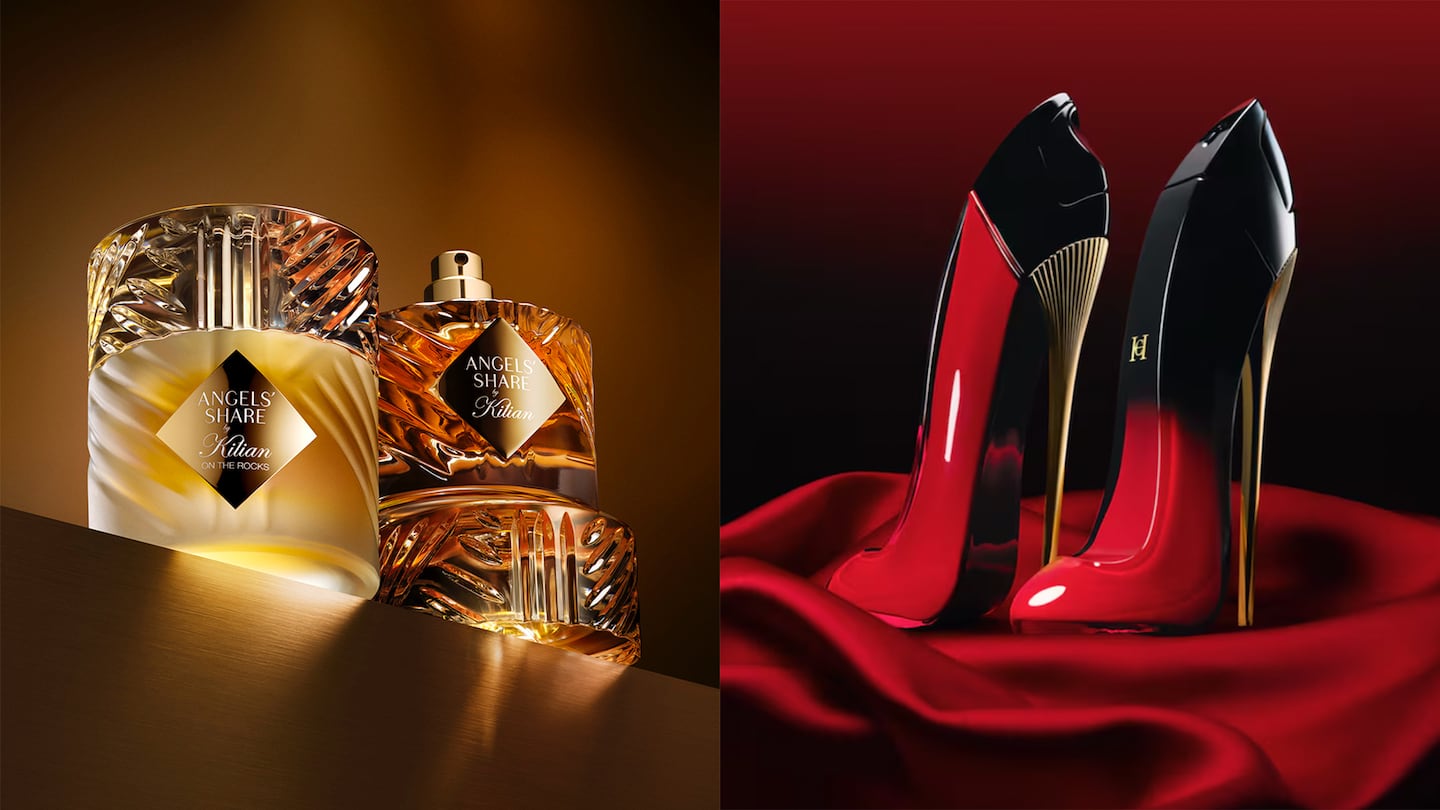
Estée Lauder and Puig are considering a merger, potentially creating a beauty and fashion juggernaut with a market capitalisation of around $40 billion and dozens of leading brands in categories ranging from cosmetics to fragrance, hair care, skincare and ready-to-wear.
The deal talks, confirmed by both companies on Monday, caught markets and even many beauty insiders by surprise: The Spanish owner of Charlotte Tilbury and Byredo and the American conglomerate behind MAC Cosmetics, La Mer and Jo Malone London had not signalled prior to Monday that they were looking to make a transformative deal. Merger rumours sent both companies’ stocks moving sharply in opposite directions in after-hours trading, with Puig’s soaring 12 percent and Estée Lauder’s sinking nearly 8 percent.
While unexpected, a tie-up has a certain logic to it, and experts have floated the idea that the two could be a good match over the years: Puig is strongest in fragrance, and Charlotte Tilbury could revive Estée Lauder’s struggling cosmetics arm. The American giant, meanwhile, is a major player in skincare and is a more experienced operator of brick-and-mortar stores.
But the most compelling argument for a deal is that the combined company would have the heft to compete against L’Oréal, the world’s largest beauty company by a wide margin.
ADVERTISEMENT
From a brand point of view, a merger would represent diversification.
Both firms have strong portfolios of well-known, well-distributed brands. Estée Lauder Companies has the likes of MAC Cosmetics, Clinique and The Ordinary, while Puig has the white-hot Charlotte Tilbury and Byredo, as well as many fragrance brands like Jean Paul Gaultier and Rabanne.
Estée Lauder Companies’ fragrance division is small but it’s been its top performer of late; Kilian, Le Labo, Tom Ford, Jo Malone London and Frédéric Malle are all sophisticated niche brands. Still, most of its revenues come from skincare and cosmetics. Puig, on the other hand, is essentially a fragrance company with a few other brands attached. The lion’s share of its revenues are generated from premium, but more widely distributed scents like Carolina Herrera Good Girl and Rabanne 1 Million. Combining forces would allow the newly formed company to have a broader offering, and in turn, reach more customers.
The unified portfolio would allow Estée Lauder to rebuild its cosmetics segment with Charlotte Tilbury as its anchor. As a powerful, founder-led brand, it has far more relevance than Estée Lauder’s other makeup lines like its namesake label or Bobbi Brown. MAC Cosmetics is undergoing a meaningful upgrade, but none of Lauder’s makeup brands have a strong founder-led proposition, and Charlotte Tilbury would bring that. While Estée Lauder’s skincare brands like Clinique and The Ordinary are far bigger than Puig’s skincare offering, it hasn’t made a foray into doctor-led skincare, which Puig’s Dr. Barbara Sturm would offer, albeit on a smaller scale.
Estée Lauder Companies’ experience running its own brick-and-mortar stores for the likes of Jo Malone London and MAC Cosmetics could prove a useful playbook for Puig’s brands, many of which are sold through specialty and department stores.
Both companies’ stock prices have seen better days. While Estée Lauder Companies’ has risen in the last year, it’s still down by almost three-quarters since 2022. Puig originally floated at a valuation of around $16 billion; its valuation is now closer to $10 billion.
While Estée Lauder Companies has had more well-documented struggles and Puig arguably has more dynamic brands, there are arguments for why both companies need this deal.
For Puig, a merger would be a quick way to gain meaningful exposure to other beauty categories without needing to go on an acquisition spree. Puig needs more than fragrance for a solid future: it warned in October that the segment’s sales were softening.
ADVERTISEMENT
For Estée Lauder Companies, a deal would mean rapidly expanding its fastest-growing category, fragrance, and benefitting from a halo effect of Puig’s more modern brands. Estée Lauder has a spotty track record with its acquired brands; The Ordinary has flourished since Estée Lauder bought its parent, Deciem, in 2021. But the company has put up for sale three earlier acquisitions, Too Faced, Smashbox and Dr. Jart, with an asking price well below what they paid. The premium Indian line Forest Essentials it bought earlier in March increased its geographic mix, but didn’t move the needle for virality or youth appeal.
While the combined firm could be a huge global player, it still wouldn’t be even half the size of L’Oréal, which has a market capitalisation of over $200 billion.
But it would create a bigger platform, giving both firms a better foothold for future brand acquisitions, especially given Puig’s track record with the likes of Byredo. Neither company is especially indebted or flush with cash — Estée Lauder has around $3.1 billion in cash and around the same amount in debt, Puig has around $1 billion in cash and $830 million in debt.
Beauty conglomerates are already harder to evaluate than individual companies. Within any big group, there are always more anaemic brands or units. If not properly constructed, a mega-merger can easily cause management inefficiencies and constrain capital allocation.
Both companies have a foothold in fashion as well, with Lauder purchasing Tom Ford for $2.8 billion in 2022. Puig’s brands include Dries Van Noten, Rabanne, Nina Ricci and Carolina Herrera but both businesses have allowed their fashion segments to operate largely autonomously. Estée Lauder licences Tom Ford to Zegna, while the apparel output of Puig’s fashion brands is much smaller than its designer fragrances.
If a merger goes ahead, and goes well, beauty’s other big conglomerates, including L’Oréal, E.l.f. Beauty and Shiseido will have a formidable new competitor on their hands. Lauder and Puig’s brand assortments are strong, and both firms’ leadership are world-class.
The challenge, however, with M&A is never in the ideation. It’s in the execution.
Sign up to The Business of Beauty newsletter, your complimentary, must-read source for the day’s most important beauty and wellness news and analysis.
Want to dive deeper into an insight from this article? Check out The Brain of Fashion, BoF’s new generative AI tool where you can unlock BoF’s beauty archive with a single question.
The American cosmetic giant’s buyout of Ayurvedic beauty line Forest Essentials came as a surprise. By picking an under-the-radar brand it knows well, the company can show that it’s still in the M&A game without needing to outbid rivals.
The US beauty giant is open to acquisitions as it enters the second year of a turnaround plan, chief executive officer Stéphane de La Faverie told Bloomberg.
International sales at brands like La Mer and Le Labo are improving, but the cosmetics conglomerate is still struggling to connect with American consumers.

Daniela Morosini is Senior Beauty Correspondent and Special Projects Editor at The Business of Beauty at BoF. She covers the global beauty industry, with an interest in how companies go to market and overcome hurdles.
Loading recommended reads…
Stephan Sturm is stepping down, as the German fashion house's largest shareholder seeks to beef up its board representation alongside its takeover bid for the brand.
Energy, shipping and material costs are going up thanks to the conflict in Iran, with consumers likely to start feeling the impacts this autumn.
How did a 115-year-old brand rocket back to growth amid a downturn in luxury demand? Drawing on interviews with Chanel fashion president Bruno Pavlovsky, artistic director Matthieu Blazy, group CEO Leena Nair and more, this report breaks down the multi-faceted strategy that reignited desirability and sales, allowing the French couture icon to solidify its position in ‘ultimate luxury.’
Join us for our next BoF Professional Masterclass on Monday, September 21, at 17:00 BST / 12:00 EDT as BoF’s Marc Bain and Robert Williams unpack the multi-faceted strategy that reignited desirability and sales, allowing the French couture icon to solidify its position in ‘ultimate luxury.’