Agenda-setting intelligence, analysis and advice for the global fashion community.
Agenda-setting intelligence, analysis and advice for the global fashion community.

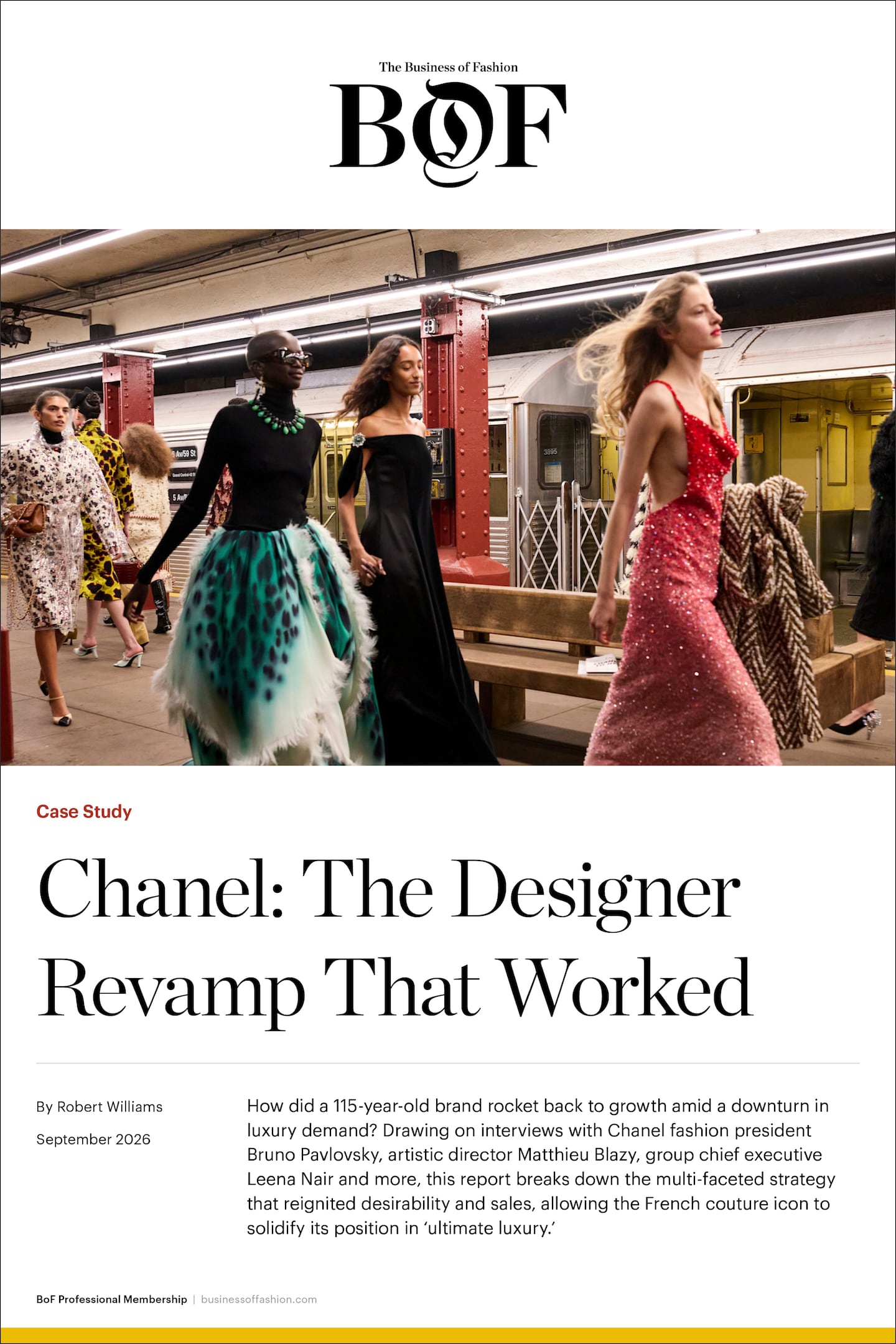
How did luxury’s biggest and most iconic brand become the hottest name in fashion and return to growth, defying a downturn in luxury demand?
In a historic year of designer reboots — with over a dozen brands launching debut collections last autumn, including three of the industry’s five biggest brands — one company, Chanel, has pulled far ahead of the pack, reigniting desirability and sales with a revamped creative vision signed by new artistic director Matthieu Blazy.
Stakes for the reboot were high. Sales had slipped in 2024 as steep price increases, reports of quality issues and a lack of design innovation led customers to pull back on purchases.
Creative turnover is not a part of Chanel’s formula. Before Blazy, the brand’s founder Gabrielle Chanel had been succeeded by just two artistic directors in its 115-year history. Chanel’s new designer revamp needed to seize a once-in-a-generation opportunity to update its aesthetic and rejuvenate its customer base, without alienating the loyal clients who power its nearly $20 billion business. With prices for its iconic quilted handbags now exceeding $10,000, Chanel also needed to leverage the power of creative innovation to bolster its value proposition without undermining its reputation for enduring style.
ADVERTISEMENT
One year after Blazy’s debut, the brand has succeeded in re-energising both its brand and business. The house has attracted younger, more fashion-forward devotees. Sales returned to modest growth by the end of 2025 before accelerating in 2026. Rapid sales growth at Chanel’s fashion division — reportedly as high as 16 percent in the first six months of 2026 — has far outpaced the sector’s low-single-digit average as many rivals struggle to shake off a multi-year slump in demand.
This case study examines the holistic strategy Chanel used to revamp its brand and business: retooling its ready-to-wear collections, communications, handbag pricing, retail experience and more. The report draws on Business of Fashion’s regular access to Chanel executives who orchestrated the brand’s relaunch, including conversations with fashion president Bruno Pavlovsky, artistic director Matthieu Blazy, group CEO Leena Nair and more.
Loading recommended reads…
Fenty Beauty’s first 12-hour online shopping event, featuring Rihanna, shows how a new generation of brands are embracing the practised art of live selling.
The policy bars ads from ByteDance, which remains in charge of key parts of TikTok, and extends to third-party advertisers running campaigns that link to TikTok.
The departure of Athleta’s CEO for Lululemon is a chance to ‘reimagine the brand’s path forward,’ Gap Inc. CEO Richard Dickson wrote in an internal memo viewed by Bloomberg.
Opening in Q4 2026 on Saadiyat Island — at the heart of Abu Dhabi’s cultural district — Saadiyat Grove brings together luxury retail, hospitality, residential living and culture in one of the emirate’s most ambitious new developments. BoF speaks to Jonathan Emery, chief executive officer of Aldar Development, about the strategic vision behind the project.