Agenda-setting intelligence, analysis and advice for the global fashion community.
Agenda-setting intelligence, analysis and advice for the global fashion community.

When a foreign brand executive visits China, the trip tends to follow a familiar script: they might inspect a few malls, attend a store opening and pose for photo ops with local government officials. Kilian Hennessy’s recent trip to Shanghai had a few notable departures.
Between touring flagship stores and hosting a party for his latest fragrance, the founder and creative director of Kilian Paris, Kilian Hennessy, learned Shanghainese phrases from Ken Wu, a popular C-drama actor — namely how to pronounce the brand’s signature Angel’s Share scent — and went on a day trip to the nearby historic city Suzhou, admiring its classical gardens while sipping local green tea. All this was duly chronicled on his newly launched RedNote account.

Kilian Paris has been on the social media platform, known as Xiaohongshu in China, since 2019. But the creation of Hennessy’s personal account was strategically timed, according to Jo Dancey, global brand president of lifestyle fragrance brands at the Estée Lauder Companies, which owns Kilian Paris. The content “reflects his genuine curiosity and appreciation for Chinese culture,” Dancey said in a statement. The personal touch has paid off: Hennessy’s account gained over 11,000 followers in the first two weeks.
It’s an example of the new playbook global beauty brands are following on the Chinese platform. With roughly 350 million monthly active users, RedNote is a critical battlefield for awareness.
ADVERTISEMENT
“The user base of RedNote is young, highly educated and high-spending consumers residing in top-tier cities,” said Elisa Harca, co-founder and chief executive of marketing agency Red Ant Asia. “They generally exhibit a stronger sense of curiosity and willingness to experiment with new products, compared to the audiences of WeChat and Douyin,” the Chinese equivalent of TikTok.
As beauty demand in China slowly stabilises — China’s National Bureau of Statistics showed a 5.1 percent rebound in cosmetics sales in 2025, following a 1.1 percent decline the year before — RedNote is becoming a litmus test for which global brands can win consumers back.
“Chinese social media isn’t a cake walk anymore,” said Arnold Ma, founder of the digital marketing agency Qumin. “Brands need to show up and make an effort.”
To build lasting credibility on RedNote, it’s helpful for brands to consider the app’s roots. RedNote originated in 2013 as an online guide for Chinese international students as a means to show their sophisticated lives abroad and gain an online following, explained Charlie Gu, founder of Jingzhi Chronicle, an online publication focused on China’s luxury economy. “Because of that, it has evolved into a lifestyle search engine.”
While Western marketers often equate RedNote to TikTok — a comparison fuelled by the app’s brief surge in popularity in English-speaking markets when TikTok was banned in the US — it actually functions much more like Reddit. “People go on RedNote to learn,” Ma said. “They will dissect ingredients, debate what works for specific skin types and post detailed questions.”
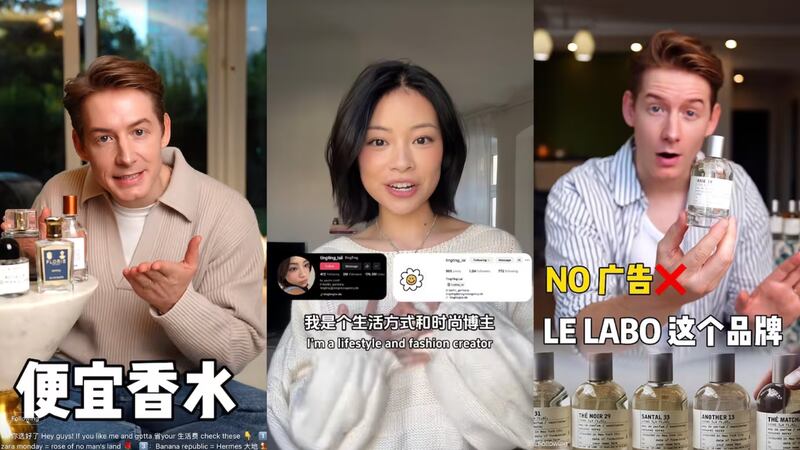
For Oliver Walsh, a South African-born beauty creator, satisfying this consumer curiosity has become a winning strategy on RedNote. A former English education worker and fluent Mandarin speaker, Walsh found a niche posting videos demystifying fragrance notes; he has grown his audience to over two million
“I deliver easy, bite-sized information. What is musk? What is bergamot? What perfume should you wear on a first date?”, Walsh said, pointing out that fragrance is still an emerging category in China. He likens scrolling on RedNote to flipping through a magazine.
There was a time when being a foreign beauty brand in China offered an aura of prestige. Global conglomerates were tapping into a vast, upwardly mobile consumer base eager to spend on imported labels, particularly those from Western countries, Japan and South Korea.
ADVERTISEMENT
But the post-pandemic economic downturn fractured that model as international labels have steadily lost market share to domestic players. In a 2025 survey by Chinese data insights firm Qingyan Intelligence, 46.5 percent of high-end beauty shoppers said they prefer buying domestic brands, up from 28.5 percent in 2021 — and significantly higher than the 31.7 percent for European and American brands.
“Being an international brand used to be an advantage in China, because of consumer curiosity and that perceived superior quality,” said Gu. “That has more or less disappeared now.”
A cursory search of international beauty brands like Elemis, Maybelline and Miller Harris on RedNote largely yields assets repurposed from their e-commerce channels or Instagram, with captions translated to simplified Chinese; these posts are typically met with double-digit likes and meagre comments.
“A lot of international marketers still think of RedNote as an Instagram-type platform: a place to post beautiful photos,” Ma said. “What you see is basically recycled from what was created for the Western audience.”
Domestic brands, by contrast, are not only culturally but emotionally fluent. Each International Women’s Day, Proya Cosmetics, China’s largest homegrown beauty brand, releases an annual short film capturing the unspoken everyday realities of Chinese women, from working through period pain to shouldering the burden of eldercare. Its 2026 instalment went viral on RedNote, driving thousands of shares and hundreds of comments from users claiming that they’ve been moved to tears.
Ma notes that the biggest hurdle for his international clients is often a cultural and societal knowledge gap. “The fundamental human truth in China is completely different to the West,” Ma explained, pointing out that concepts like filial piety (the Confucian virtue of serving and respecting your elders) require highly localised storytelling.
The German fashion and beauty influencer TingTing Lai, who launched her RedNote account in 2025, employs a China-based manager to handle translation, subtitling and community management. Lai explained that while her Chinese immigrant parents made a big effort to raise her close to their cultural roots, she needed the help of a third-party content management agency, Progress, to ensure her output aligns with the country and audience’s nuances. “My RedNote followers often write long comments to share their own experiences,” Lai said. “They expect substance behind visuals, and want to learn something or feel emotionally connected.”
Leveraging professional authority on RedNote can be a cost-effective way to expand a beauty brand’s reach — even beyond mainland China.
ADVERTISEMENT
Although makeup artist Lisa Eldridge does not yet sell her eponymous line directly in the Chinese market, she has already amassed over 60,000 RedNote followers. Her channel consists of educational content mostly repurposed from her Youtube channel, but localised with Chinese subtitles or introductions from Eldridge greeting audiences in Mandarin. From time to time, she also creates RedNote-specific makeup tutorials to capitalise on popular trends in China, like one she did for the viral shade of celadon green “mint mambo.”
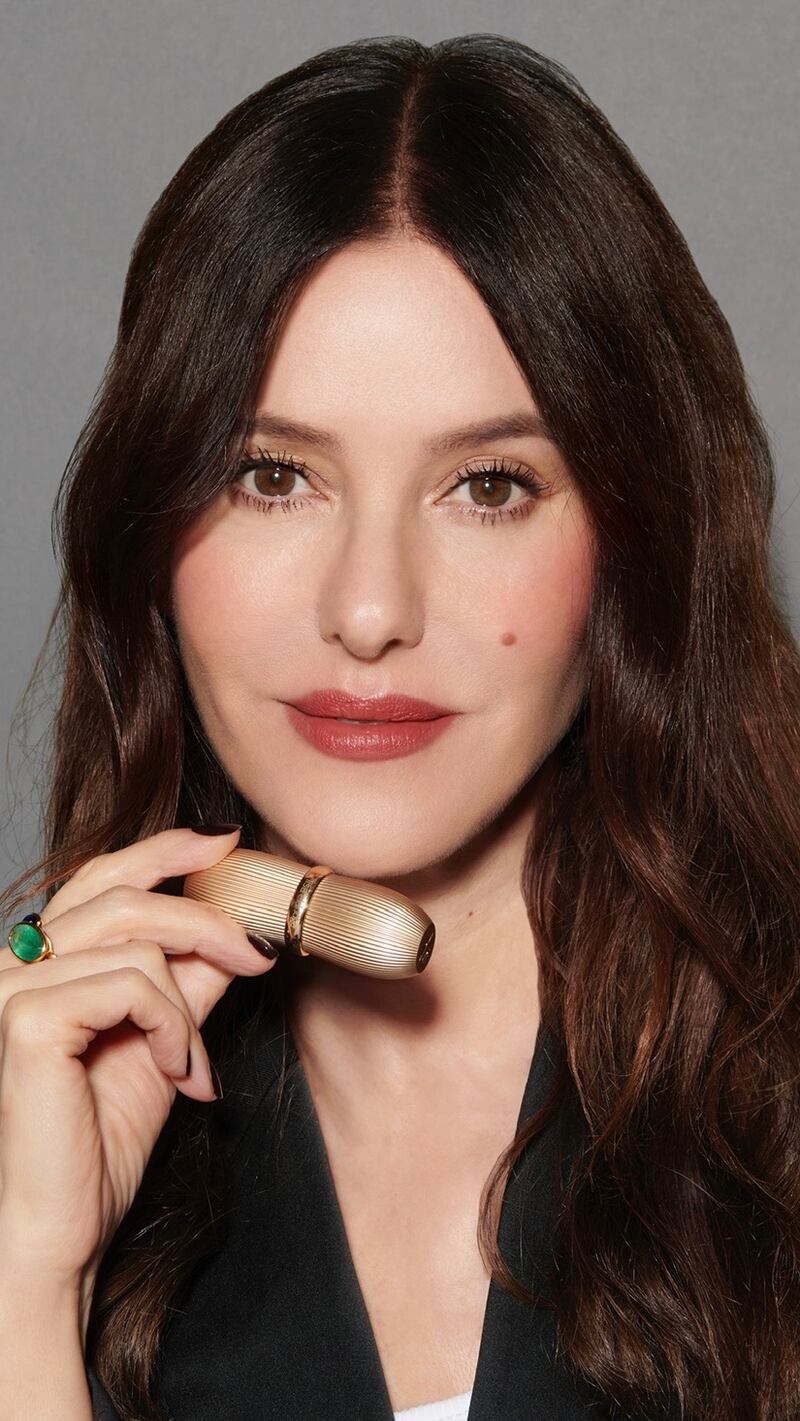
As a result, Eldridge enjoys strong organic awareness among Chinese makeup enthusiasts in the US and Europe (RedNote shows its users’ current country underneath their comments). Meanwhile, mainland China users routinely flood her comments section, pleading for her to set up an official Tmall storefront.
For foreign brands to succeed in China, broadcasting heritage is no longer enough; what matters now is whether consumers feel they are being engaged with in ways that feel authentic. In Hennessy’s case, that has meant positioning China as a meaningful source of inspiration in his fragrance-making process, whether through a collaboration with a C-drama star or by documenting his travels in the country.
As Dancey put it, “Both Chinese and Western followers show strong enthusiasm for authentic, founder-led content, with high curiosity about Kilian as a person.”
Sign up to The Business of Beauty newsletter, your complimentary, must-read source for the day’s most important beauty and wellness news and analysis.
The social media platform has gained over half a million new users amid a potential TikTok ban in the US and is positioning itself for global expansion as it works to adapt its content and features for an international audience.
Much like its Western counterpart TikTok, the short-form video app Douyin has become a vital part of the beauty marketing and e-commerce playbook in China. But growth on the app can be just as ephemeral as its trends.
Following S’Young Group’s acquisition of US luxury brand Revive Skincare in 2024, Chinese companies are evaluating whether to snap up foreign brands to broaden their global reach.
Loading recommended reads…
CVC Capital Partners is considering buying a stake in the fashion jeweller from private-equity firm TPG Inc., according to people familiar with the matter.
With its forthcoming reboot of classic 1990s scents like Grass and Om, the American retail giant is hoping to re-enter beauty with a contemporary twist on its old playbook.
As weak appetite for handbags and geopolitical tensions weigh on fashion sales, luxury groups are leaning on high-performing jewellery to help boost growth and steady profit margins.
The department store has more than doubled the size of its fabrics department and will host crafting classes this autumn as social media drives a surge in activities like sewing.