Agenda-setting intelligence, analysis and advice for the global fashion community.
Agenda-setting intelligence, analysis and advice for the global fashion community.
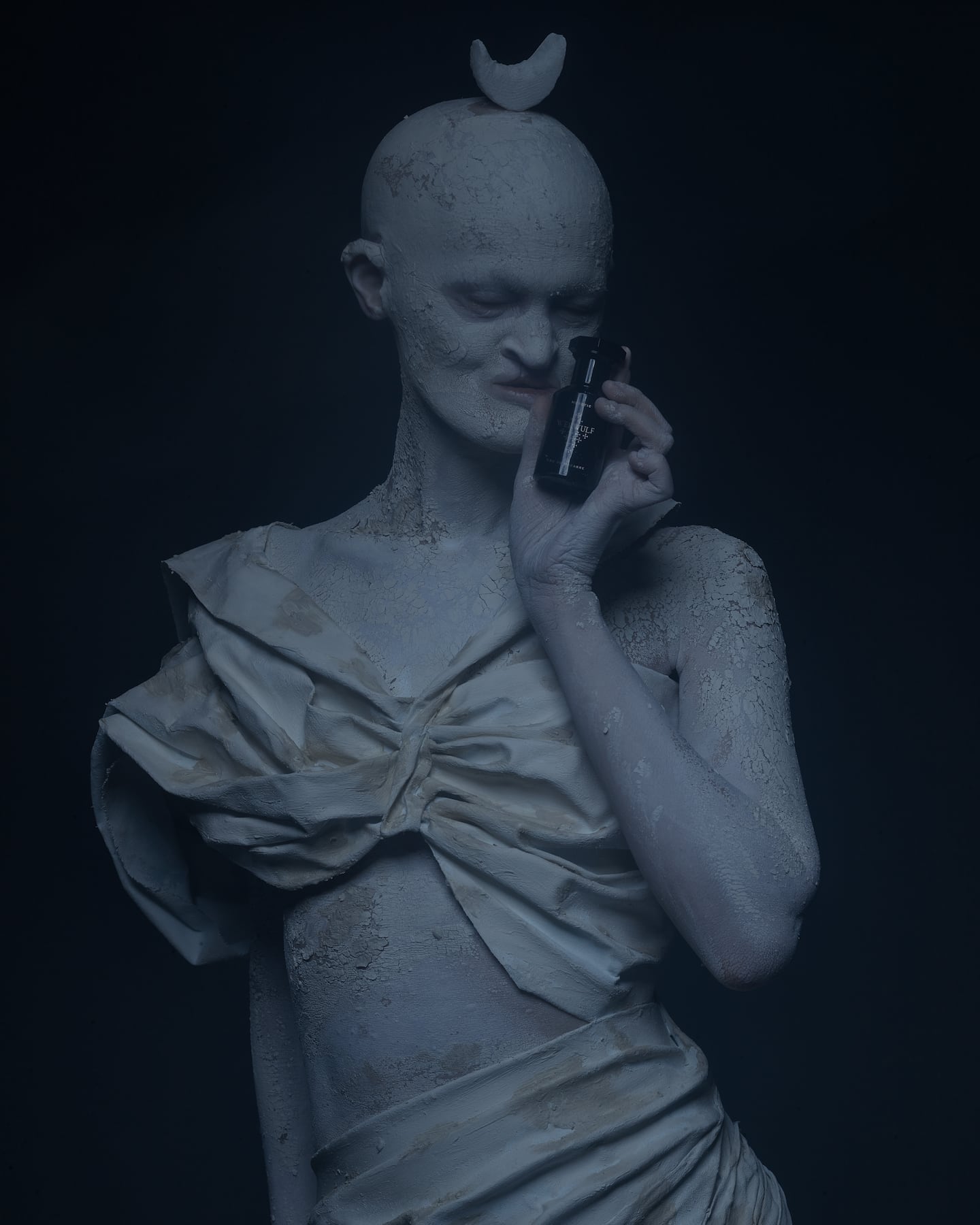
On Christmas Day, US audiences will travel back to medieval England with filmmaker Robert Eggers’ latest gothic horror release, “Werwulf.” But this week, Eggers’ fandom has pre-immersed themselves in the movie’s primal world by inhaling damp earth, wet fur, resins and roots via a three-piece fragrance line made for the film.
Douglas Little, founder of the niche brand Heretic Parfum, is Eggers’ collaborator on this custom collection, their second together. In 2024, Little created Nosferatu, for Eggers’ monster hit of the same name. The notes invoke thunder and rain via the smells of wilting lilacs, petrichor and electricity. It became Heretic’s top-selling fragrance, with over 130,000 units of Nosferatu products sold (including a body wash, candle and oil). The franchise has generated over $7 million in revenue since its launch, a source with knowledge of the brand’s business said.
Heretic is one of several niche fragrance brands tapping subcultures in an effort to court consumers. Little has become the go-to perfumer for Hollywood creatives when an eerie project needs an olfactory element — last year, he formulated a perfume for the Maggie Gyllenhaal film “The Bride,” with notes of cadaverous skin and ambered blood. Other brands have moved on corners of the music, film and nightlife worlds with a unique proposition.
These collaborations are proven sales drivers for Heretic, and Nosferatu helped scale 2025 revenues up 150 percent, according to the brand. But they’re even more successful in helping niche perfume brands achieve cultural “resonance,” a marketing buzzword that is harder to quantify, to imbue their products with a new level of value.
ADVERTISEMENT
“Speaking to a subculture gives people the sense of belonging to a movement. At its best, this works like fandom, which is one of the most powerful forces in Gen-Z culture,” said Arnaud Guggenbuhl, Givaudan’s head of global marketing insight and image, fine fragrances. Some subcultures have more plugged-in fandoms or dedicated adopters — nature, cultural identity, music and dark storytelling are major draws. While niche brands like Byredo and Le Labo once aimed to cast a wide net, the script has flipped: Capture a highly engaged audience and scale up from there.
Fragrance is more emotional than other beauty categories, and consumers are quick to pick up on cash-grabs or licensing logo slap deals, said Emma Vernon, host of the Perfume Room podcast. The key to nailing cultural resonance is enforcing another nebulous buzzword: “Authenticity.”
Niche perfume brands have a narrower audience profile that’s drawn in by precious ingredients or a singular, artistic vision. Heretic has proved that brands can also build businesses by catering to a specific cultural niche, but it’s not the only one adopting the strategy.
Brands created to appeal to hyper-specific niches are gaining shelf space at prominent niche perfumery retailers. For instance, Fischersund, which is rooted in the wild landscape of Iceland, with fragrances heroing sulfuric, salty and mineral notes, has become a cult brand. “Nature pulls at people, and these scents deliver it,” said Jake Belanger, a co-founder at the niche retailer Stéle in New York. Stéle is well-indexed on eerie brands: Dark Tales, a perfumer-led brand based in Uppsala, Sweden, explores the darker side of creativity, and has built a loyal following. Utah-based Ghost Stories is inspired by folklore traded through generations.
“A mainstream brand may release something ‘dark’ to sell around Halloween, but if it’s not authentic, it’ll fall flat,” said Belanger.
This sense of authenticity can be enforced through faithfully representing a cultural identity, offering belonging and comfort to those in the group (and discovery to everyone else). Gabar is inspired by Myanmar’s Buddhist heritage and spirit of resistance, while Damfool is founded by a perfumer of Min Nan descent, and is dedicated to developing scents inspired by Tibetan and Min Nan regions featuring rare native Chinese raw materials. The brands that are winning help customers connect a scent to a mood, a memory or a part of their identity, says Marissa Galante Frank, director of fashion, accessories and beauty for Bloomingdale’s, which carries niche labels like Heretic and D.S. & Durga. “Brands that stand out know who they are and are confident enough to stay true to that identity.”
Like D.S. & Durga — the early indie-gone-mainstream luxury house started by David Seth Moltz, a musician-turned-perfumer, and his architect wife Kavi Ahuja Moltz. The brand was rooted in Brooklyn’s indie music scene, and every new release comes with notes that explain the scent profile and an accompanying playlist to capture its vibe. Similarly rooted in musical expressionism are brands like Discothèque, created to celebrate underground club culture, and UFO Parfums, a brand for ravers by raver Maxwell Williams, a Los Angeles-based DJ and perfumer.
“We’d rather see brands build worlds than buy reach,” said Belanger.
ADVERTISEMENT
Authenticity and true immersion in the subculture are prerequisites.
Heretic has been the goth contingent in the perfume industry for years, selling scents like Poltergeist, Voodoo Lily and Smudge. It debuted in 2015 when Little saw the opportunity for scent immersion in obscure spaces like apothecaries, cemeteries and even churches; Little, a self-described “recovering Catholic,” aimed for an audience that saw beauty in the darkness of gothic culture rooted in Neoclassical art and history.
“[Little’s] part of the group, and that’s why it makes sense to so many people in this group. It doesn’t feel put on,” said Steven Gontarski, senior manager of brand at Luckyscent, on the goth community’s acceptance of Heretic. Gontarski was a goth teen and still retains those musical connections. “My musician friends really get Heretic. It actually speaks to what people love about goth culture.”
Collaborations like Nosferatu help the brand scale its audience, by finding a common cultural touchpoint. Heretic invests significantly in these partnerships — it typically doesn’t pay for licensing rights but commits to an advertising budget. For “Werwulf,” the brand’s paid advertising spend increased by 75 percent during the film’s promotion cycle in the third and fourth quarters of 2026. “It’s high, but it’s an investment into strategic positioning and conversion,” said Little.
Collaborations and campaigns with stars of the subculture like burlesque dancer Dita Von Teese, musician Chelsea Wolfe and drag performer Violet Chachki have helped Heretic adhere to the hype cycle outside of film promotion. Guggenbuhl recommends micro-creators, rather than big names, for these kinds of partnerships. The insights firm Traackr found that in US beauty, microinfluencers (with followings between 10,000 and 100,000) court twice the engagement that macro creators get, and nano influencers (1,000 to 10,000) see triple.
Working with smaller creators also helps fragrance brands maintain their niche status. “The trade-off is scale. A brand may never reach everyone, and that’s the point. The audience for such brands is smaller, but loyal,” said Belanger.
As Heretic grows, and as goth culture becomes more widespread, Little has a balancing act to perform: how to speak to a wider audience while retaining his place in the counterculture. But counterculture isn’t an aesthetic for Heretic, Little said; it’s his position in the world.
“Goth culture is not the source of the inspiration. Curiosity is,” he said.
Sign up to The Business of Beauty newsletter, your complimentary, must-read source for the day’s most important beauty and wellness news and analysis.
Following its acquisition by Manzanita Capital last year, Brooklyn-based fragrance brand D.S. & Durga must balance its grassroots appeal and devoted following with the demands of worldwide distribution.
From ‘Smurfs’ to ‘Jurassic World Rebirth’, big-budget films are an increasingly popular marketing tie-in for beauty companies — especially when their founder is also a star.
Plenty of people root for their favourite label like it’s their local football team — but that passion doesn’t always translate into sales.
Parizaad Khan is a contributing writer at The Business of Fashion. Khan is a freelance beauty and lifestyle editor based in New York.
Loading recommended reads…
Offhand remarks by French football superstar Kylian Mbappé sparked a backlash from Chinese ‘netizens’ this week, leaving labels from On to Dior exposed in one of fashion’s most important markets.
Photographer, stylist and entrepreneur Daniel Obasi joins Imran Amed on The BoF Podcast to discuss instinct-led world-building, his approach to image-making, and what makes Lagos’ creative scene singularly resilient, yet structurally unsupported.
The launch of Nike’s new Vegum Run shoes exclusively in India lays a groundwork for a new production cycle that could give the brand a leg up in its different geographies moving forward.
The Chinese beauty conglomerate’s revenue grew 29.8 percent in the latest quarter, but its profit decreased by double digits due to increased promotional expenses as it expands overseas.