Agenda-setting intelligence, analysis and advice for the global fashion community.
Agenda-setting intelligence, analysis and advice for the global fashion community.

When it comes to launching in India, Shamika Haldipurkar wishes that global brands would stop phoning it in.
A common misconception “is that their brand name is enough,” said Haldipurkar, founder of the premium Indian skincare brand D’You. “Okay, you have some awareness. But it’s not enough to say, ‘We’re available in India,’ and leave it at that.”
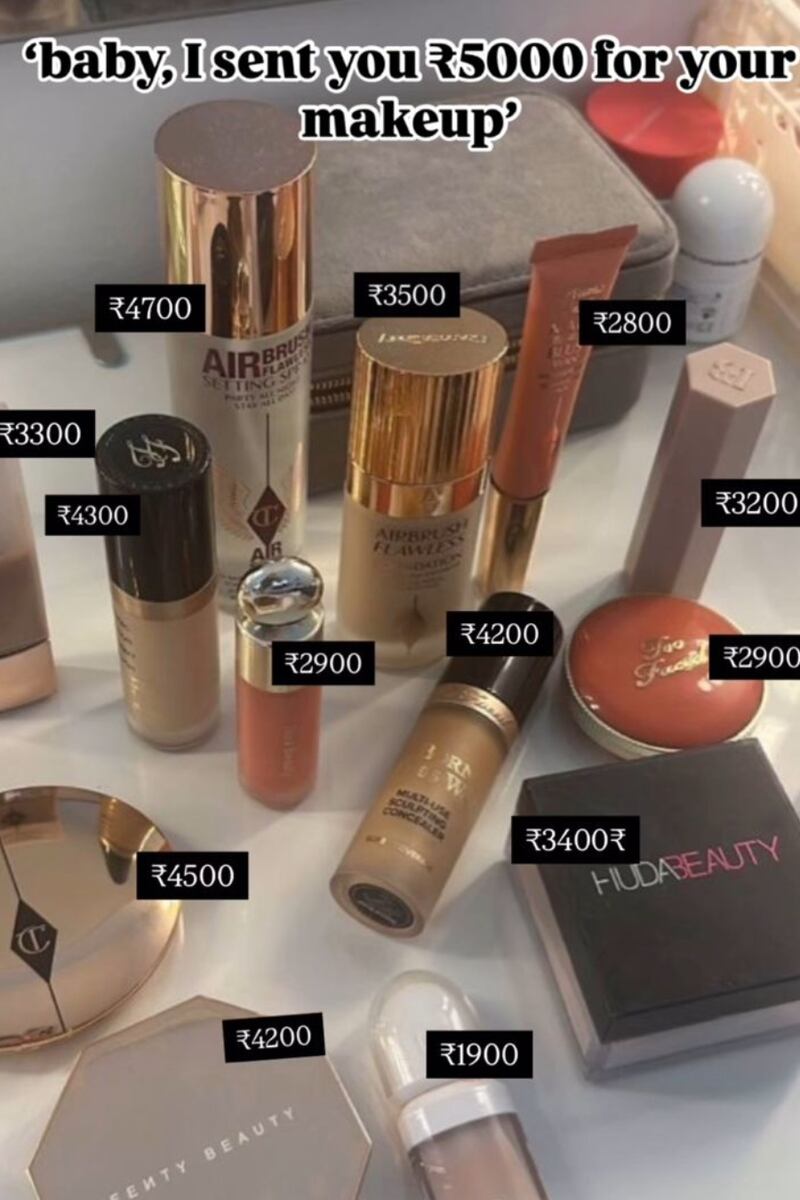
India is one of the most buoyant markets for beauty and has fast become a target for premium brands. 58 percent of Indian consumers increased how often they bought beauty products in 2025, according to The Business of Fashion and McKinsey in The State of Fashion: Beauty Volume II. Its luxury beauty market alone is expected to quintuple, from $800 million in 2023 to $4 billion by 2035, per consulting firm Kearney. The likes of Nars, Kiko Milano and Shiseido have all opened up brick-and-mortar stores in the last three years, while buzzy lines such as Charlotte Tilbury, Fenty Beauty and Laneige have entered the country with a local partner like Nykaa or Sephora.
But there are growing pains. Competitive intensity is increasing, and the Indian customer, while growing in affluence, is still price-sensitive. There’s also little margin for error; As the wider beauty industry’s growth cools and established markets show signs of stagnation, conglomerates need to ensure every dollar they spend on new markets is optimised to bring results. Some global players are missing out on valuable revenue and underperforming the market by not offering unique products for the region, misunderstanding the distribution landscape and underinvesting in marketing.
ADVERTISEMENT
“Global brands can be a status symbol in India,” said Netijyata Mahendru, founder of the New Delhi-based brand consultancy Broadcast Beauty. “But even if you’re Charlotte Tilbury, you still need to get people craving the brand.”
Paul Lee, who leads Korean conglomerate Amorepacific’s Indian business, said local customers are very influenced by the US, given that English is widely spoken in India. Its top-selling products from the Laneige cosmetics brand in India often overlap with the top sellers in the US, with American trends feeding Indian ones.
But with 22 official languages spoken and an ethnically diverse consumer base of more than 1.4 billion, brands need to ensure their offerings are broad but targeted. In regions that could be more homogenous in other markets, Indian shoppers may need a wider range of foundation shades and marketing in Hindi, Urdu and Punjabi.
The local customer is also hyper-attuned to value. Beauty is exciting to India’s young residents — the median age is 28 — but shoppers still want to maximise bang for their buck.
“The [Indian customer] is extremely savvy and sophisticated,” said Rohan Vaziralli, The Estée Lauder Companies’ general manager for India. “There’s a high amount of education and awareness, so customers want both value and efficacy.”
When Mahendru, who previously worked as a marketer for global lines Smashbox and Tom Ford Beauty, is advising international brands, she often finds herself having the same conversation.
“It can be hard for them to understand that in India, e-commerce is such a key channel,” she said. Global entrants tend to favour launching with a brick-and-mortar retail partner, applying the same strategy as their home market. “But even if you launch into all Nykaa stores, that’s only around 230. Launching into every Target would be 13,000 [doors],” she said.
While Nykaa, which also sells fashion, is India’s biggest beauty retailer, retail giant Reliance has entered the fray with its Tira stores, and also manages Sephora’s Indian presence and Italian brand Kiko Milano’s stores. Purplle, Tata and Shoppers’ Stop also have a growing footprint, but India’s market is more splintered compared to other nations. Many Indian consumers purchase beauty products at grocery or big-box stores; Amazon, live selling and quick-commerce platforms like Blinkit and Zepto, which deliver products via courier in minutes, are also growing fast. According to Indian consultancy firm RedSeer, e-commerce is expected to generate around 36 percent of all beauty and personal care spending in India; in 2021, it only accounted for around 8 percent.
ADVERTISEMENT
“You can still have a very flourishing brand with just e-commerce,’ said Haldipurkar. “Digital conversation and narrative creation is so big in India that the majority of beauty consumers prefer buying online than offline.” Six months after launching on Tira’s e-commerce site, D’You entered 23 doors.
An e-commerce launch can also be easier on brand margins. Mahendru noted the complexity and cost of launching into brick and mortar, and said that an initial launch that prioritised in-person retail can often drain cash without offering meaningful scale. She usually advises brands to focus on creating visibility and demand online before trying pop-ups, shop-in-shops or owned retail.
The margin question is especially prescient in India. For international brands, the import costs, labelling requirements and product registration necessary in India can be up to 30 to 70 percent of the product retail price, said Ryan Piela, a consumer investor who previously worked on The Estée Lauder Companies’ India-focussed investment initiatives.
Product selections also need to be calibrated to the market. Vaziralli, who has spent 20 years working in India with Estée Lauder, said that while mascara is a staple in Western countries, Indian shoppers prefer kajal liner. As such, both its MAC Cosmetics and Bobbi Brown brands developed kajal liners for the market, which they have subsequently rolled out globally.
Global brands must price accordingly, which is why brands in India often offer smaller sizes of some key products, like MAC Cosmetics lipsticks, Esteé Lauder Advanced Night Repair Serum and Clinique Moisture Surge, all at a fraction of their recommended retail price.
“When we look at a US consumer’s beauty shopping they may ask, ‘Do I want it?’,” said Piela. “And Indian consumers maybe lean more towards, “Is it worth it?’”
To convince shoppers of their value, premium brands have to work harder in India. And given how digitally native the nation is, that means mastering multiple forms of marketing.
“You have to create a lot more demand and a lot more storytelling to really start generating sales,” said Haldipurkar.
ADVERTISEMENT
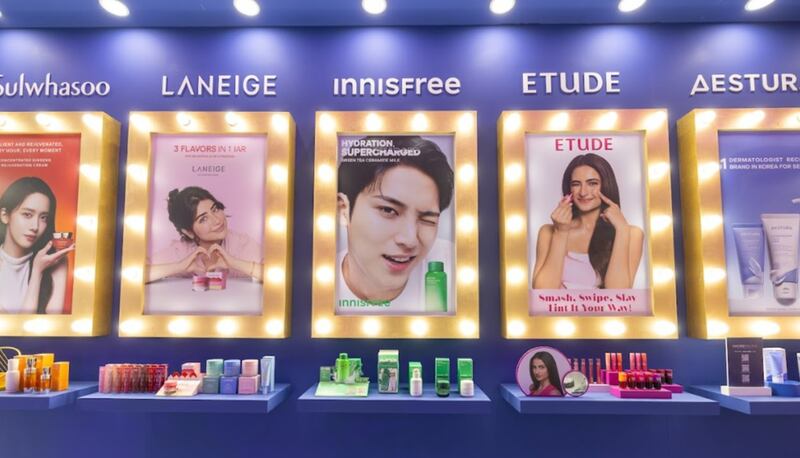
Bollywood actresses and local celebrities are very powerful. According to The State of Fashion: Beauty, Indian consumers are twice as likely to be influenced by celebrities compared to the global average. But Piela said tools like WhatsApp as well as smaller influencers on Instagram and YouTube can be very powerful. Smaller micro-influencers might have a grip on a particular regional cohort, and be able to build a sales pipeline on a WhatsApp group, if properly incentivised.
Haldipurkar’s D’You noticed that its followers seemed equally interested in the mechanics of running a beauty brand as they were its products, so the brand commissioned a short YouTube reality-style series called “In D’You Time” where cameras followed them around. (Sample episodes include explaining their retailer strategy, the “hidden costs” in skincare and a peek at their staff offsite.) Pop-ups are also popular, though Mahendru advised opening them to the public as well as influencers.
Brands should be careful not to abdicate the responsibility for demand creation solely to distributors, who might focus more on driving customers to the retailer, not the brand. Brand-building and marketing takes time, effort and specialisation to the market. If domestic partners aren’t granted the liberty to tweak copy or campaigns to better localise it, marketing will be less impactful. “You’ll end up with your stock being bought, but the demand won’t be created,” said Mahendru.
Activating around key holidays like Diwali or tailored to the Indian bridal market can generate big returns, while adding limited-edition or India-exclusive products or packaging can be another small way of making a brand feel relevant to local shoppers. Laneige will soon launch a range of cushion foundations specifically for India, with a shade range better suited to the market’s skin tones.
Indian’s growing cohort of young, affluent shoppers are interested in premium, global brands. Playful memes circulate across the country with some version of a message encouraging young girls to study hard so they can afford ritzy brands, rather than cheaper local names like Dot & Key.
0 of 2
But they still want products tailored to them.
Said Lee, “There are many cases where consumers ask, your products are made in Korea, but have you tried it on Indian skin?”
Sign up to The Business of Beauty newsletter, your complimentary, must-read source for the day’s most important beauty and wellness news and analysis.
Traditional macho marketing is being replaced by inclusive campaigns, science-backed formulations and influencer-led storytelling as Indian men embrace beauty and skincare.
At the second annual BEAUTY&YOU India Awards, created by The Estée Lauder Companies’ New Incubation Ventures in partnership with Nykaa, nine brands and creatives representing the future of Indian beauty, innovation and creativity were awarded cash grants and mentorship. BoF also hosted a series of panel talks with some of India’s most celebrated creatives and entrepreneurs, including Katrina Kaif, Lakshmi Menon, Bandana Tewari, Anaita Shroff Adajania, Diipa Büller-Khosla, Masaba Gupta and Anita Lal.
In a bid to own the Indian beauty market, Reliance Retail Ventures Limited (RRVL) has acquired the exclusive rights to Sephora’s India presence.

Daniela Morosini is Senior Beauty Correspondent and Special Projects Editor at The Business of Beauty at BoF. She covers the global beauty industry, with an interest in how companies go to market and overcome hurdles.
Loading recommended reads…
The British retail group has pushed its stake in the German apparel brand above 50 percent in a move that will turn Hugo Boss into a subsidiary of Frasers.
The settlement, equivalent to 44 percent of the ultra fast-fashion company’s second-quarter profit, is the latest blow amid regulatory and tax crackdowns in Europe and the US that have hampered Shein’s growth.
Among the takeaways from the latest round of quarterly reports from European luxury groups: China’s hurting, industry growth in the US has slowed and quiet luxury is having a moment.
Bloomingdale’s chief executive Olivier Bron joins Imran Amed on The BoF Podcast to discuss how a name every American knows is re-earning its place in luxury and why he sees Europe’s biggest houses wrestling with the same problem.