Agenda-setting intelligence, analysis and advice for the global fashion community.
Agenda-setting intelligence, analysis and advice for the global fashion community.

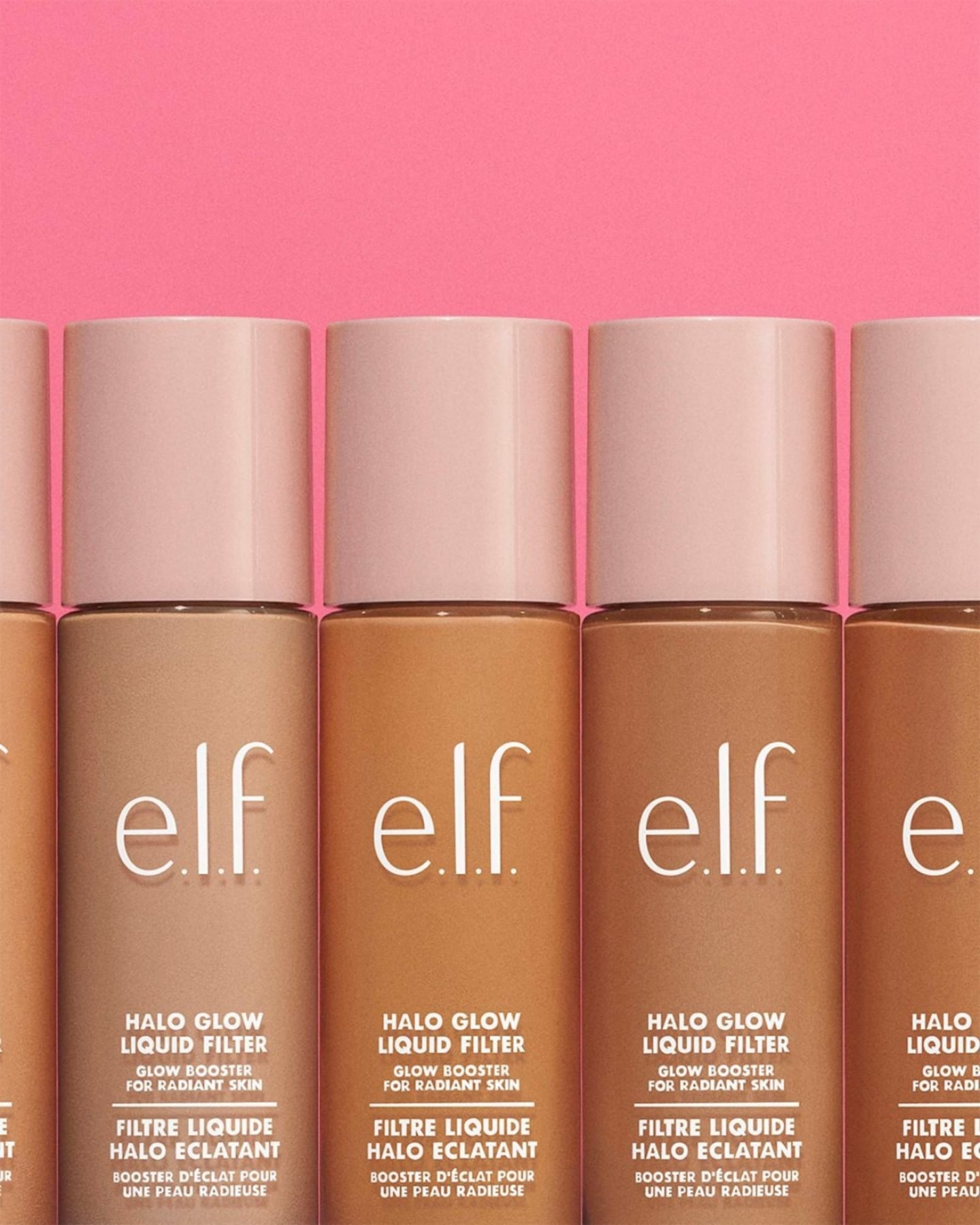
Beauty brands that have hiked their prices in recent years are now finding that what goes up must come down.
Inflation, supply chain disruptions and tariff concerns have led beauty businesses to push their prices up since 2021. According to Omnia Retail, beauty’s impressive growth rate between 2021-2024 was driven primarily by inflation, not volume growth. For a customer browsing the shelves at Sephora, the impact is clear: A bottle of Charlotte Tilbury’s Flawless Filter foundation was $44 in 2021 but is now $50. Now, for customers feeling the pinch, giants like E.l.f. Beauty and The Ordinary, alongside indies like Dieux and Dime, are cutting prices again to win back value-conscious consumers.
According to Circana, only 14 percent of US beauty shoppers now believe that a higher price signals better quality, a significant shift for an industry filled with brands that once tethered their prestige status to prestige pricing. “That playbook was rewritten a decade ago,” said Allison Collins, co-founder and managing director of The Consumer Collective. “Industry people get stuck on the legacy ways, but consumers aren’t attached to them. They’re just like: ‘I need to wash my face.’”
Price decreases are first and foremost a play to signal affordability, but when done well, they also work as a growth strategy, marketing moment and consumer acquisition tool — pushing more potential consumers into the funnel.
ADVERTISEMENT
But they also come with risk: To remain in consumers’ good books, brands must convince them that lower prices reflect increased efficiency, scale and community-listening, and not a backtrack from previous overcharging.
They also need to consider their margins. Operating on razor thin margins, where even the slightest decrease can be difficult to absorb, mass brands may not have scope to cut much from their prices. Especially as they feel the pinch from global events: E.l.f’s 2025 decision to raise prices across a range of SKUs by $1 was in direct response to tariff-related pressures. Though tariffs are less immediate, and a détente in the Middle East has reopened the strait of Hormuz, there has been no shortage of macroeconomic events impacting a brand’s bottom line.
“As hard as it is to say, it’s hard to future proof, because there’s been a lot of curve balls,” said Bernice Merlini, Dime’s chief brand officer. “Riding the waves, the ups and downs, comes with being a consumer goods brand these last five years.”
“You feel the cost of living in every aspect of your life,” said Amy Bi, vice president of brand at Deciem. “The cost of food, rent, gas: everything is fluctuating.”
While inflation in the US and several other countries has cooled from its post Covid-19-peak, consumers are facing pressure from everyday costs including hiked oil and gas prices as a direct result of the Middle East crisis. Though shoppers still wish to incorporate beauty products, these external pressures have fundamentally changed the way they evaluate discretionary purchases, particularly for those on the lower branch of the K-shaped economy.
“You have to drive your car to work, and that now costs you substantially more than it used to,” said Collins. “That money’s got to come from somewhere.”
Though the K-shaped economy has redefined the idea of the “Lipstick Index”, it hasn’t erased it. According to Circana data, both high-income and low-income consumers are contributing equally to beauty’s growth.
Price cuts have been a clear way to convey value. In May, skincare brand Dieux lowered the price of its bestselling Deliverance serum from $69 to $62. In early June, masstige label Dime reduced prices across 17 products by an average of 20 percent. The Ordinary, who’ve been assessing prices consistently for five years, continued its annual practice of selectively lowering prices on products that have reached great manufacturing scale earlier this year. E.l.f. Beauty, which raised prices in response to tariffs late last year, announced pricing re-evaluations a few weeks ago, including a reduction to the cost of its Halo Glow Liquid Primer from $18 to $14.
ADVERTISEMENT
Dieux’s decision to reduce Deliverance, a hero antioxidant and peptide-rich serum for the brand, was directly driven by its growing desirability, which enabled larger production runs and improved manufacturing economics.
“We have math that we do where we need to operate within a certain margin range to survive, and as long as we hit that margin range, then we’re good,” said Charlotte Palermino, co-founder of Dieux. “Deliverance surpassed that margin range, and so it was always the plan in 2026 to lower the price.” For Palermino, the selection of this particular SKU was crucial, as was the introduction of a more cost-economic jumbo size.
The Ordinary has operated with a similar philosophy. “Some of our products were reaching a level of scale where we were able to reduce the price,” said Bi. “Some because of the general cost of doing business, manufacturing, labour, we would need to increase.”
Both company’s decisions to pass savings along to their customers, instead of culling the profits, suggests that longevity for a beauty brand today means constantly re-evaluating its perception of value.
“I always thought it was so interesting that as companies scaled and they got more popular, they raised their prices,” said Palermino.
It tracks that hiking prices will lead to some unhappy customers. But lowering those same costs could bring trouble, too.
Though customers may welcome a lower basket price, price cuts can also prompt uncomfortable questions about previous brand economics. If a product can suddenly cost less, shoppers may wonder why they were required to splurge more before. When Augustinus Bader introduced an entry-level line fronted by pop star Dua Lipa in November 2025, critics felt it undermined the brand’s existing premium prices.
The current crop of mass and masstige price cutting brands have, for the most part, understood that transparency is key.
ADVERTISEMENT
Dieux publicly explained its scale efficiencies, while The Ordinary always allows customers a one month grace period between announcing price changes and implementing them. For Dime, messaging around price decreases was framed as a broader discussion of brand and pricing architecture.
“We very intentionally messaged it around the idea of category calibration, and also the fact that companies evolve,” said Merlini. The review led the company to focus on the cleanser category, which Merlini viewed as a key customer acquisition category. As cleansers are a wash-off SKU, price cuts ensured that all products in this category sat below $30 — more in line with consumers’ expectations.
In the fortnight since the decreases were implemented, the response has been encouraging. The brand’s Dew Recovery Mask saw its add-to-cart rate double alongside a 23 percent lift in conversion rate. On Amazon, newly reduced SKUs have seen a 73 percent lift in sales. E.l.f. chief executive Tarang Amin said that the $4 cut to its Halo Glow Liquid Filter, now $14, has led to a 40 percent bump in sales.
Price cuts can be more effective at signalling value than promotions.
“When you put something on sale, you’re teaching people they never have to pay full price,” said Collins. “It erodes the perception of the brand over time. Where, if you just set the price a little lower, you can say ‘Look what we realised we could do for you.’”
Sign up to The Business of Beauty newsletter, your complimentary, must-read source for the day’s most important beauty and wellness news and analysis.
Lower-priced beauty brands are feeling the pinch as fixed costs rise and customers reign in their spending. To grow, brands will need to rebuild creative muscle to improve product development and maximise marketing.
Brands that publicly disclosed tariff-related price hikes are now facing class-action lawsuits from consumers.
Dua by AB Science, which launched on Tuesday, spans three products that cost between $40 and $85.

Rachael Griffiths is a Senior Editorial Associate at The Business of Beauty. She is based between St Helens and London, and covers beauty, wellness and industry news.
Loading recommended reads…
Sales of gems, precious metals and artwork at Japan’s department stores climbed 19 percent in the first half of 2026 from a year earlier to $2 billion.
Though Adidas dressed both teams in the World Cup finals, the global football tournament still presented some bright spots for Nike, writes Bloomberg’s Andrea Felsted.
From our archive, the creator and host of award-winning podcast “Articles of Interest” joins BoF founder, CEO and editor-in-chief Imran Amed to explore what clothing can reveal about identity, culture, labour and the world around us.
Saunders, the brand’s first creative director in five years and a skilled colourist, promises to give Kate Spade the clarity it has long lacked. Now, Tapestry must apply the same long-term brand-building discipline that fueled Coach’s success.