Agenda-setting intelligence, analysis and advice for the global fashion community.
Agenda-setting intelligence, analysis and advice for the global fashion community.
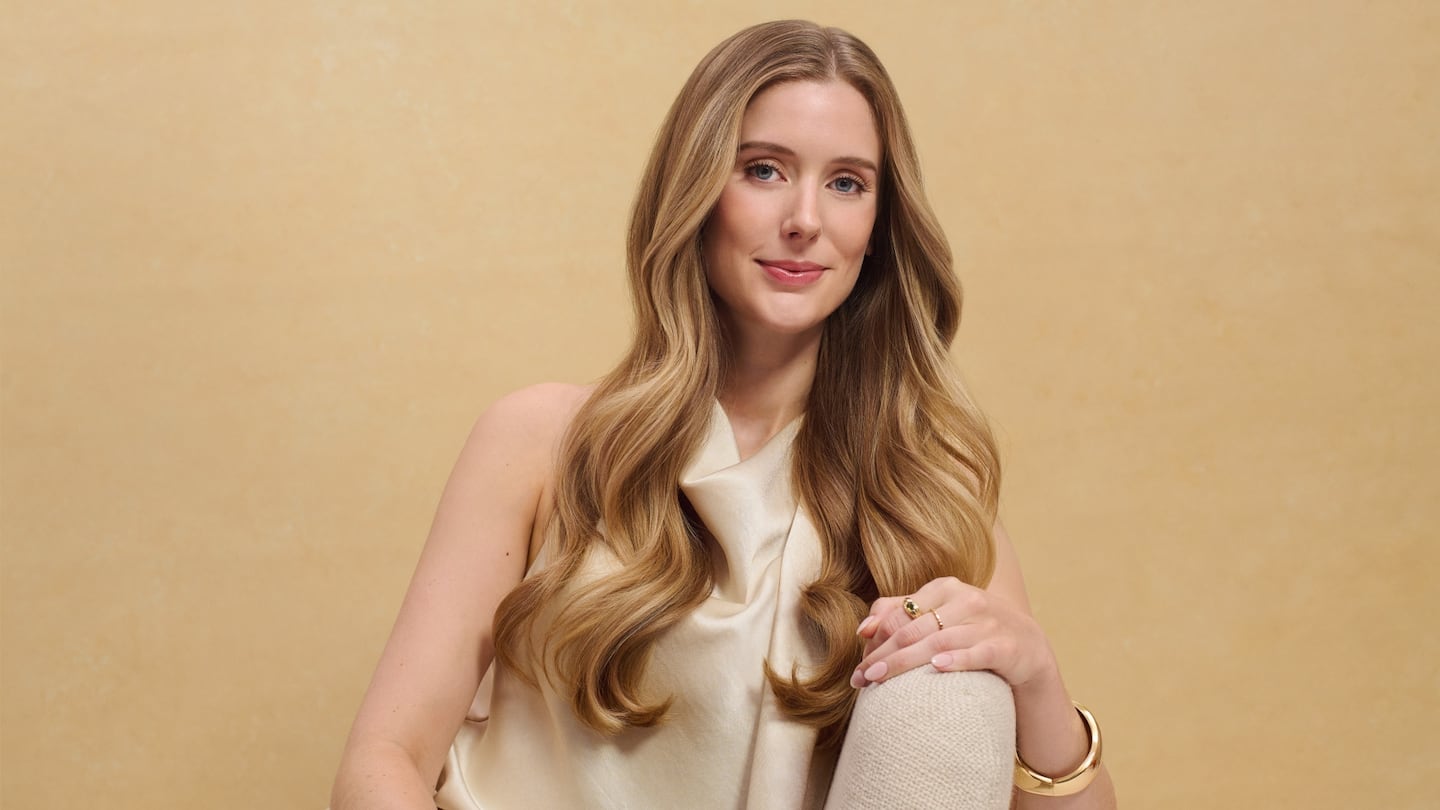
The “Abbey Yung Method” is a social media-viral hair care protocol, spanning 11 (non-compulsory) steps to be mixed and matched according to hair care needs and mostly incorporating drugstore products. It can be found pinned at the top of influencer-slash-trichologist Abbey Yung’s Instagram. But it wasn’t coined by her.
It came from her followers, who had been collating the hair care recommendations in Yung’s videos, trying them out and posting the results. “A little over a year ago, I started seeing posts like ‘trying out the Abbey Yung method,’” Yung told The Business of Beauty. “People realised they could build a whole routine.”
Now, the method receives over 14,000 Google searches a month (Yung herself gets 19,000) per trend forecasting firm Spate, and has won Yung a combined 5 million followers across Instagram, Youtube and TikTok where she posts a mixture of reviews and explainers along with glimpses of her life. In a short time, Yung has become one of hair’s most in-demand influencers, capable of commanding five figures per sponsored post, as well as an emblem for a new class of expert-creators.
With her waist-length, princess locks and down-to-earth conversational style, the 32-year-old looks like your average beauty influencer. Raised in Minneapolis, Yung spent five years in a corporate role before becoming a full time content creator, and then a certified trichologist, a non-medical specialist for the hair and scalp.
ADVERTISEMENT
Yung’s videos are characterised by their jargon-busting, pragmatic breakdowns of how hair care actually works, and a majority of her product recommendations come from drugstore labels. Years before Alix Earle extolled the virtues of her expired Pantene, Yung was vocal about the benefits of then denigrated, sub-$15 hair care. “I would attribute so much of the whole drugstore renaissance conversation to her,” said Dr. Jeni Thomas, Pantene’s global scientist.
In an industry that increasingly relies on scientific or medical credibility, expert voices are a hot — and premium — commodity. Dermatologist-, ingredient- and clinical-focused hair care content is performing 22 percent better than its peers, per influencer marketing platform Fohr, with experts such as TikTok-favourite dermatologist Dr. Muneeb Shah leveraging their popularity into fully fledged brands of their own.
It’s an option for Yung, who is warming up to the idea as her career develops. But it’s also an invitation to yet more scrutiny for the creator, who must navigate the tension between the unfiltered advice that gained her a following and accepting the sponsorships that earn her a living.
Yung is a lifelong fan of beauty. As a teen in Minnesota, she entered the giveaways of OG makeup Youtubers like RachhLoves, and remembers whipping out a calculator in Sephora to justify the economics of the latest Urban Decay Naked Palette to her mum. After writing her entrance essay on her ambitions to launch a makeup brand, she went to school at the University of Wisconsin School of Business, and upon graduation landed at hometown retailer Target, first as an inventory analyst, and then as an internal consultant. “So, not sexy,” she said. “My managers always knew that I wanted to get into the beauty space, but the right role was never open.”
Instead, Yung made her own beauty career. In college, she had posted — and hastily deleted — her first two makeup tutorials (“the response definitely made me feel embarrassed,” said Yung). But in 2019 she began posting a mixture of makeup tutorials, fitness content and reviews, using lunch breaks and weekends at her day job to strategise. In 2021, she narrowed her focus to just beauty, with hair care quickly emerging as her standout niche. “It was clearly what I’m most passionate about, and also something my audience seemed really interested in as well,” said Yung.
In 2021, having amassed 100,000 Youtube subscribers, Yung made the leap into content creation full-time. Her income didn’t — and has never — come from views, and was instead made up of revenue from Youtube via Google’s advertisement platform Adsense, affiliate links and a few initial brand deals via TikTok.
It’s no longer just a few. According to Fohr’s proprietary Rate Check tool, a creator of Yung’s calibre could charge up to $36,000 on average per social post. (Yung’s team declined to comment on financials.) Roughly one in 10 of her Reels are sponsored, again per Fohr, by brands like Dove and Pantene.
Brand sponsorships are a tricky part of the job for any influencer, but for Yung, whose career has been built on credibility, it’s a risky business. “People watch her videos, but they don’t engage with them as much, meaning it’s less of a relationship and more like a reference,” said James Nord, founder and chief executive of Fohr. “She’s very, very trusted,” Nord added. In other words, even if one isn’t up to date with every development in Yung’s personal life, she’s their first port of call before making a purchase.
ADVERTISEMENT
In the hair care space, where consumers are generally less educated than they are with skincare, Yung has emerged as a sorely needed, well-informed guru. She not only clarifies which products are worthwhile, but matches them to the specific hair type they’ll serve best. Her enthusiasm for championing drugstore products (with the occasional splurge, such as K18) comes as a welcome relief to today’s cash-strapped, results-driven shoppers.
She was also an influencer, and not an expert, first, meaning she brings a personal touch: Her page is peppered with life updates, such as candid videos charting her journey with anxiety, or her recent summer engagement.
“We see it immediately. She talks about things, and there’s a lot of excitement,” said Pantene’s brand director, Sara Steinwart. Yung’s grounded Pantene content has educated consumers on steps such as double clarifying the scalp in a way the brand itself has struggled to for years, she added.
The skincare space has its fair share of well-known dermatologists and estheticians, such as Dr. Shireen Idriss and Dieux’s Charlotte Palermino. But, bar the late Philip Kingsley, celebrity trichologists are few and far between — and influencer-trichologists are practically unheard of.
That may explain Yung’s decision to enroll in the International Association of Trichologists in 2023. “There were topics where I could do my own research, but there are certain things I felt I shouldn’t be posting a video on without more context,” she said, adding that while education was the goal, an eight year dermatology course simply “wasn’t the right path.”
Certified trichologist was a far better fit, its focus scalp health, hair loss, hair conditions and hair health serendipitously equipping Yung for the current boom in scalp-focused hair care. Experts, who are in high demand and low supply, command higher rates than typical influencers, per Fohr. But they also need to have higher standards when it comes to brand work.
For one, a brand has not and cannot sponsor the Abbey Yung method. “I will not do that,” she said.
Yung will take a minimum of a fortnight to test a product before agreeing to work with a brand. Some products, like scalp oils, she’ll test for months. She’ll also go deeper on the science, requesting clinical trials and sitting down with R&D to get beyond marketing talk.
ADVERTISEMENT
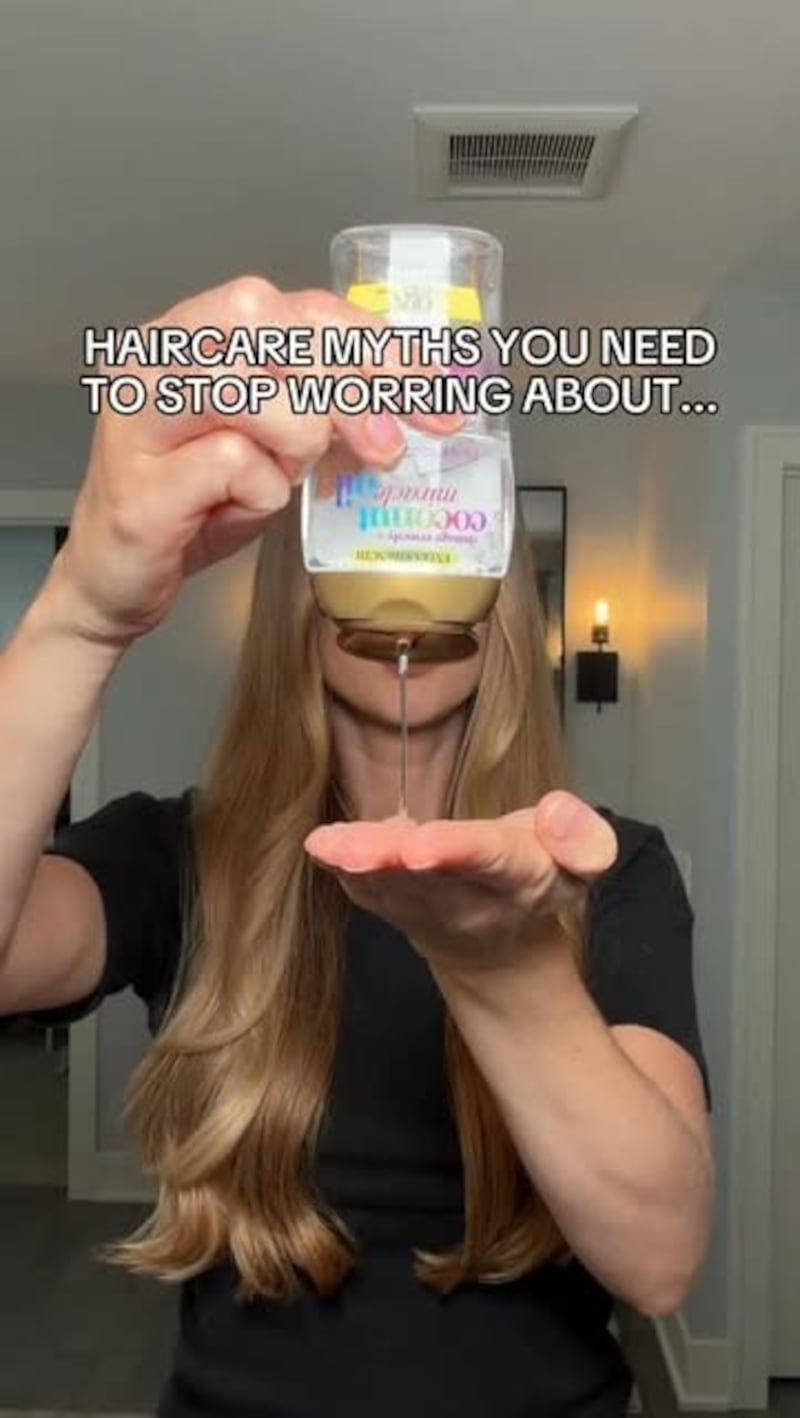
Before accepting a job promoting Pantene’s anti-shedding Abundant and Strong collection, she first visited the brand’s lab. “Abbey was in the weeds,” said Steinwart. “Transparently, that is not always the case when you bring in creators.” Another high-profile campaign was with OGX, who worked with the creator on the Target-exclusive “Abbey Yung favourites” gift set. (To Yung, it was a no-brainer: OGX’s Coconut Miracle Penetrating Oil has been a mainstay of her content for years.)
Yung’s credentials have not shielded her from influencer scepticism. To some, the sight of a “sponsored” beneath a post is akin to blood in the water. The top-liked comment on Yung’s most recent TikTok post, captioned ‘#DovePartner’, reads: “Paid partnership ends it all.”
“[I get] responses like ”Oh, well, you’ll say anything because they’ve paid you before,” said Yung. “Just because a brand has paid me before doesn’t mean I’m not going to share when something doesn’t work for me.” For example, positive reviews for L’Oréal’s Bond Repair products came after undeniably negative feedback on its EverPure Sleek range, she added.
Sometimes, the criticism is even worse. “Feedback like that about yourself at that volume is definitely not something that we were meant to see,” said Yung. “Some people do a really good job of separating themselves from their content. I still have not figured that out yet.”
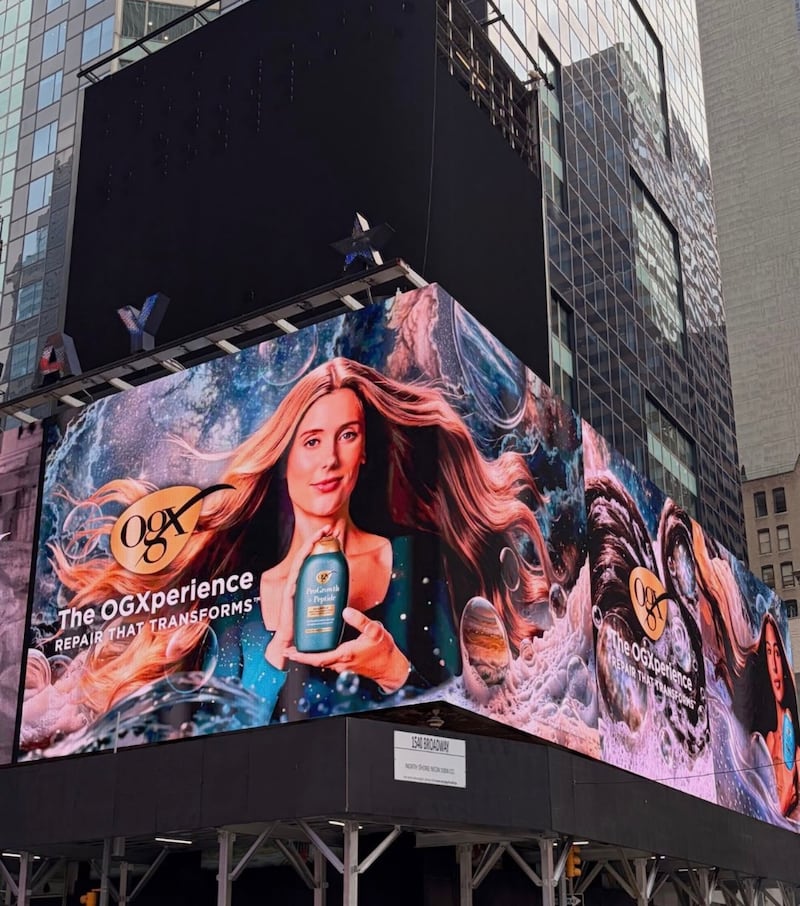
In the five years since she started posting, Yung is no longer confined to her Minneapolis home, now appearing in-person for talks, or starring in campaigns. In late August, she opened the OGXperience in New York, an experiential event designed to celebrate the sensoriality of the brand’s, and Yung’s beloved, affordable hair care.
Much like skincare’s Dr. Idriss and Dr. Shah, launching a brand would be the logical next step. As the “skinification” of beauty categories takes hold, shoppers’ demands for hair care are becoming increasingly more technical. There are still demands that aren’t being met, said Yung.
“Originally I thought I wouldn’t do [a brand], because there’s already so many products, but I see so clearly the common complaints that people have,” she said. While Yung confirmed it’s not something she’s working on, she is undoubtedly the hottest acquisition for any hair care incubator looking to make a splash.
“There’s just so much that would have to go into that for me to be okay with it, that I won’t say 100 percent yes, but it’s not 100 percent no anymore either.”
Mara Roszak spent her career styling the hair of starlets like Emma Stone and Zoe Saldaña. Now, through her hair line Rōz, she hopes to move into salons and Sephora stores across the US.
Charlotte Palermino, a leading ‘skinfluencer’ and co-founder of decidedly not clean skin care brand Dieux, is using her platform to shift the conversation around “clean beauty.”
As shoppers seek newer, better solutions for hair shedding and thinning, brands are racing to offer products that go beyond the scalp.

Rachael Griffiths is a Senior Editorial Associate at The Business of Beauty. She is based between St Helens and London, and covers beauty, wellness and industry news.
Loading recommended reads…
For over half a century, Mackie dressed celebrities ranging from Cher to RuPaul and shaped red carpet style.
The conglomerate bought its former partner’s 50 percent share to take full ownership of the Spanish skincare label.
Influencer and certified trichologist Yung has turned hair-care expertise and accessible advice into a lucrative career, wherein trust is her biggest asset — and liability.
A year after shifting production and sourcing out of China to avoid higher US tariffs, some companies are learning that finding substitutes for the country's factory ecosystem is not so easy.