Circulose Appoints Interim CEO as Textile Recycling Plant Restarts
Chief financial officer Amanda Geijer will take over from Jonatan Janmark as the Swedish textile recycler resumes commercial-scale production.


BlackRock will exit deals that present a high sustainability-related risk.

The disaster has increased the pressure on brands to show they care about climate change, offering a grim picture of the potential future for retail if nothing is done.

As the fashion industry grapples with how to keep old clothes out of landfills, finding ways to scale long-standing upcycling initiatives offers one near-term solution.

The companies cashing in on fashion’s fast-growing resale market are positioning themselves as a solution to the industry’s sustainability problems. But the reality is far more complex.
Next year, fashion players need to swap platitudes and promotional noise for meaningful action and regulatory compliance while facing up to consumer demand for transformational change.

Fashion brands are exploring alternatives to today’s standard materials, with key players focused on more sustainable substitutes that include recently rediscovered and re-engineered old favourites as well as high-tech materials that deliver on aesthetics and function.

As a sustainability pioneer long before ‘sustainability’ became an industry buzzword, Eileen Fisher and her eponymous brand have been pushing the boundaries for decades. Here’s what she’s learned.

The trade show is also partnering with denim brand Lee and designers Bethany Williams and Duran Lantink for a sustainability-focused special project, curated by Stavros Karelis and Orsola de Castro.
This week, everyone will be talking about fashion's role in fighting climate change, Colin Kaepernick's first sneaker for Nike and the UK general election. Get your BoF Professional Cheat Sheet.
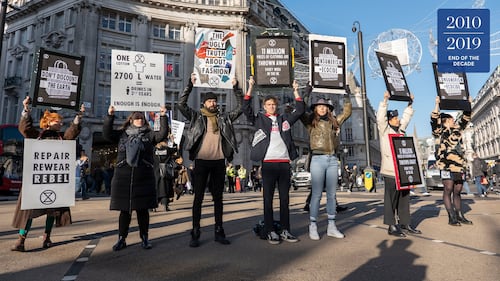
As the fashion industry heads into a new decade, it is facing more pressure than ever before to clean up its act when it comes to climate change and human rights. Whether or not it does could determine which brands survive the next 10 years.
The sharing economy promotes mindless overconsumption, argues Eugene Rabkin. Buy less, pay more and keep your garments for longer.

British biotech firm Colorifix says its method uses no hazardous chemicals and cuts water use by up to 90 percent.
Chief financial officer Amanda Geijer will take over from Jonatan Janmark as the Swedish textile recycler resumes commercial-scale production.
A new analysis of eight widely used cosmetics ingredients by Verisk Maplecroft found widespread exposure to child and forced labour risks, with palm oil, cocoa and shea nuts among the most problematic commodities.
Global environmental non-profit The Nature Conservancy has launched a new industry coalition to help apparel companies tackle microfibre pollution across their supply chains.
The new initiative will explore how the industry can take responsibility for the millions of used and unsold garments exported to secondhand markets around the world.
Planet-warming emissions associated with the raw materials used to make fashion, footwear and home textiles have risen 30 percent since 2019, according to a new report.
Investments to reduce heat stress for garment factory workers can pay for themselves within four years, a new report from Cornell University's Global Labor Institute finds.
Greenhouse gas emissions rose in 2023 and 2024, due in part to increased global production of fibre, especially polyester, according to a new report by the Apparel Impact Institute.
Lululemon and apparel manufacturer MAS Holdings are among the investors backing the French startup as it scales a proprietary process for recycling nylon from mixed-textile waste.