Circulose Appoints Interim CEO as Textile Recycling Plant Restarts
Chief financial officer Amanda Geijer will take over from Jonatan Janmark as the Swedish textile recycler resumes commercial-scale production.


Luxury sneaker brand Golden Goose is investing $1.3 million in an R&D tie-up with Milanese materials manufacturer Coronet.

New regulations are set to make it easier for investors to factor in companies’ environmental footprint when deciding which businesses to back.

The 27-member bloc outlined an ambitious policy strategy Wednesday that aims to curb the industry’s environmental impact and address labour abuses.

Understand how the industry can change materials to lessen environmental impact.

Since its inception, Oeko-Tex has offered a ‘Standard 100′ certification as a label for textiles tested for harmful substances. Today, its offering has evolved to measure production impact in much greater depth.

On this week’s episode of The BoF Podcast, Dame Ellen MacArthur explains how the fashion industry can move toward a waste-free future.

After becoming luxury’s first major player to become B-Corp certified last year, the Richemont-owned brand wants to take the lead on understanding how fashion can improve its impact people working in the industry.
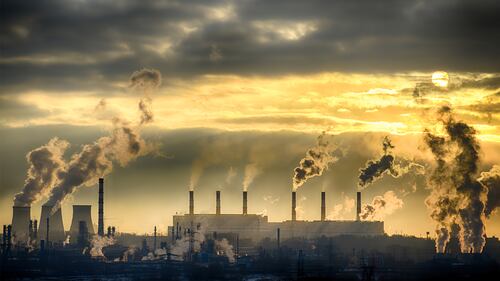
LVMH, Kering and Hermès are among the companies that have yet to set absolute targets to cut greenhouse gas emissions in their supply chains.

For our latest online BoF Professional Membership event, please join BoF’s Sarah Kent and Rachel Deeley along with Elaine Siu, chief innovation officer, Material Innovation Initiative, as they explore fashion’s new frontier of material innovation.

Trade in emeralds, rubies and sapphires have been linked to human rights abuses and funding armed conflict, terrorism and military dictatorships. The industry is struggling to find a solution.
Design education needs a radical overhaul, argues trend forecaster Lidewij Edelkoort.

An oft-overlooked natural asset, mushrooms are not just infiltrating the fashion industry, but also have the potential to unlock new ways of thinking and healing.
Chief financial officer Amanda Geijer will take over from Jonatan Janmark as the Swedish textile recycler resumes commercial-scale production.
A new analysis of eight widely used cosmetics ingredients by Verisk Maplecroft found widespread exposure to child and forced labour risks, with palm oil, cocoa and shea nuts among the most problematic commodities.
Global environmental non-profit The Nature Conservancy has launched a new industry coalition to help apparel companies tackle microfibre pollution across their supply chains.
The new initiative will explore how the industry can take responsibility for the millions of used and unsold garments exported to secondhand markets around the world.
Planet-warming emissions associated with the raw materials used to make fashion, footwear and home textiles have risen 30 percent since 2019, according to a new report.
Investments to reduce heat stress for garment factory workers can pay for themselves within four years, a new report from Cornell University's Global Labor Institute finds.
Greenhouse gas emissions rose in 2023 and 2024, due in part to increased global production of fibre, especially polyester, according to a new report by the Apparel Impact Institute.
Lululemon and apparel manufacturer MAS Holdings are among the investors backing the French startup as it scales a proprietary process for recycling nylon from mixed-textile waste.