Circulose Appoints Interim CEO as Textile Recycling Plant Restarts
Chief financial officer Amanda Geijer will take over from Jonatan Janmark as the Swedish textile recycler resumes commercial-scale production.


In a climate where consumers are wary of greenwashing and a backlash against “woke capitalism” takes shape, brands peddling sustainability messaging have to treat the topic with a degree of irreverence and put the product first.

A backlash against complex and costly new rules is threatening Europe’s pioneering efforts to make the industry operate more responsibly. Failure to address valid criticisms risks undermining the whole endeavour, argues Kenneth P. Pucker.

Donation centres around Los Angeles have been overwhelmed by mountains of old clothes, a stark reminder of the excesses of production and consumption that have helped drive the climate crisis and the weather extremes that come with it.

A new report has linked businesses supplying companies including Zara-owner Inditex, H&M Group, Gap Inc. and Amazon to incidents of forced labour and debt bondage on Indian cotton farms.

Many brands have treated the climate crisis as a useful marketing tool, while viewing the impact to the bottom line as a distant threat. That approach is increasingly untenable, experts warn.

At VOICES 2024, BoF sustainability correspondent Sarah Kent sits down with a panel of experts to discuss how fashion can operate under increasingly unsustainable climate conditions.
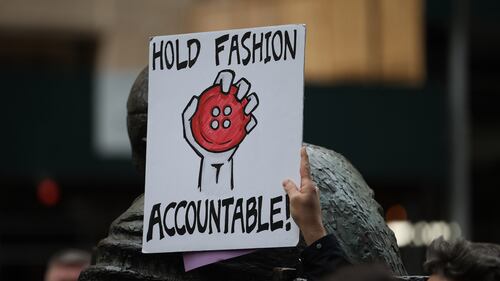
This year offered up a jarring reality check for players seeking to improve the industry’s environmental and social impact, with brands deprioritising sustainability efforts even as the risks of inaction have become more apparent.

A fragmented fashion industry needs to cooperate in order to avoid falling further behind on decarbonisation efforts, according to the BoF-McKinsey State of Fashion 2025.

Big brands are focused on buzzy, marketable ‘solutions’ and face little accountability for failing to deliver on decarbonisation targets, but there are ways to unlock more effective action, writes Kenneth P. Pucker.

French engineering giant Technip Energies builds oil refineries and liquefied natural gas platforms. Now, it’s aiming to establish a $2 billion business regenerating polyester.

BoF senior correspondent Sheena Butler-Young and chief sustainability correspondent Sarah Kent unpack a scandal that has linked brands like Armani and Dior to Italian sweatshops.

This year, average global temperatures surpassed 1.5 °C above pre-industrial levels for the first time. With action increasingly uncertain after a fractious UN climate summit, fashion is facing risks from overheated factories to consumer volatility.
Chief financial officer Amanda Geijer will take over from Jonatan Janmark as the Swedish textile recycler resumes commercial-scale production.
A new analysis of eight widely used cosmetics ingredients by Verisk Maplecroft found widespread exposure to child and forced labour risks, with palm oil, cocoa and shea nuts among the most problematic commodities.
Global environmental non-profit The Nature Conservancy has launched a new industry coalition to help apparel companies tackle microfibre pollution across their supply chains.
The new initiative will explore how the industry can take responsibility for the millions of used and unsold garments exported to secondhand markets around the world.
Planet-warming emissions associated with the raw materials used to make fashion, footwear and home textiles have risen 30 percent since 2019, according to a new report.
Investments to reduce heat stress for garment factory workers can pay for themselves within four years, a new report from Cornell University's Global Labor Institute finds.
Greenhouse gas emissions rose in 2023 and 2024, due in part to increased global production of fibre, especially polyester, according to a new report by the Apparel Impact Institute.
Lululemon and apparel manufacturer MAS Holdings are among the investors backing the French startup as it scales a proprietary process for recycling nylon from mixed-textile waste.