Agenda-setting intelligence, analysis and advice for the global fashion community.
Agenda-setting intelligence, analysis and advice for the global fashion community.


What's up, down and making news this week in the fashion and beauty businesses.
If you experienced this year’s Vogue World: Milano by watching clips on social media, you might think the magazine’s annual event this year was about robots.
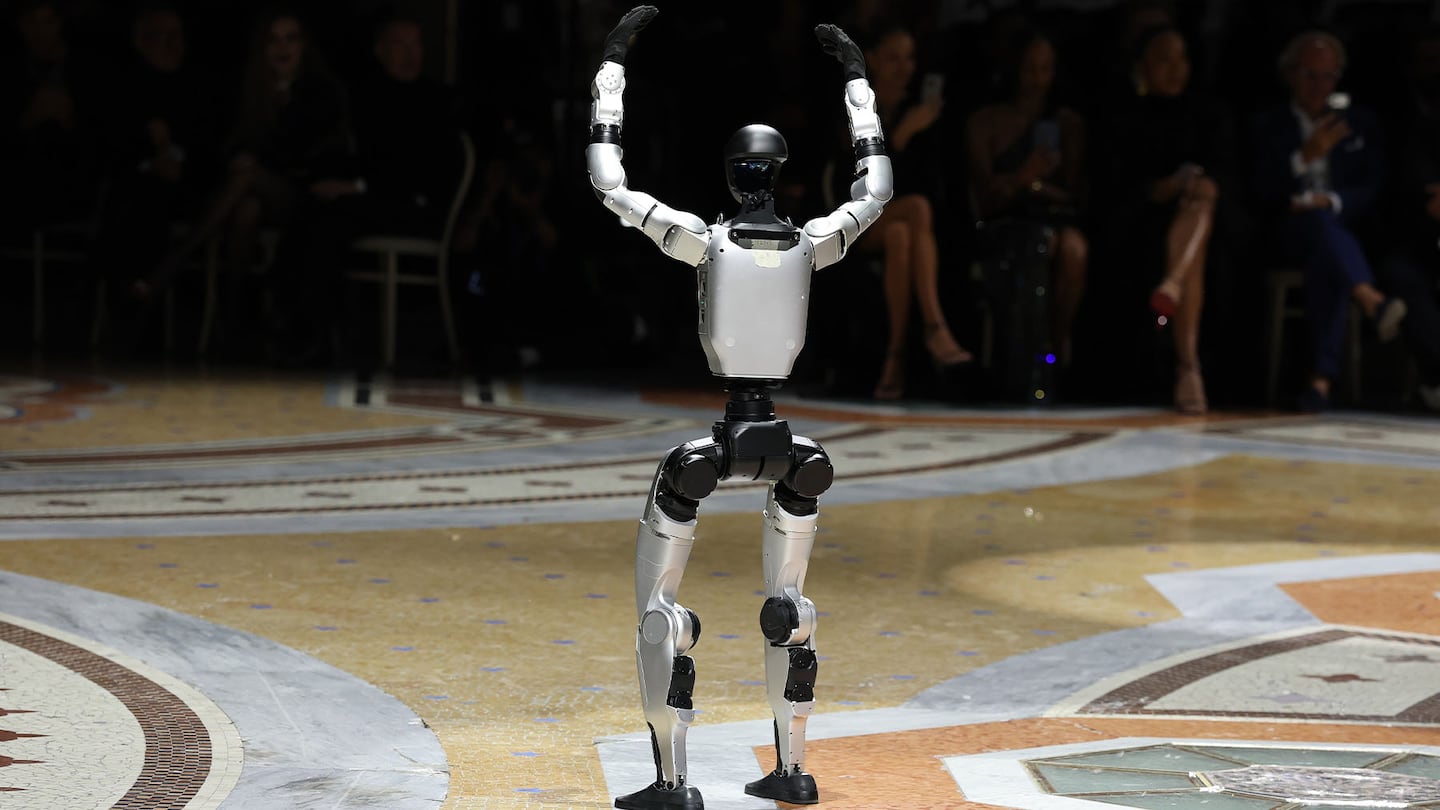
In reality, the robots appeared for just over a minute, marching out to the centre of the Galleria Vittorio Emanuele II and waving their arms to rouse the crowd before disappearing. Yet they’ve captured most of the conversation around the 40-minute-long spectacle.
The reaction has not been positive.
“I’m going to bed please delete this by the time I wake up,” fashion journalist and historian Ashantéa Austin commented on Vogue’s Instagram post featuring the bots, receiving more than 18,700 likes.
ADVERTISEMENT
The overwhelming sentiment online, summed up in another comment by content creator Hanan Besovic — aka ideservecouture — is that Vogue failed spectacularly to read the room. Anger towards AI, and technology more broadly, has continued to grow, driven by factors including the threat of AI displacing human workers, especially creatives; concerns about its huge environmental impact; the accumulating power unelected tech oligarchs wield in the world; and the fact that AI companies keep warning their products could wipe out humanity yet continue racing to develop them. The list goes on.
Meta, for example, has gotten backlash over its smartglasses with EssilorLuxottica, which critics have dubbed “pervert glasses” because they’re being used to record people without consent. (The company this week unveiled new glasses that don’t have a camera.)
Doing nothing to allay criticism of Vogue World, Meta Glasses was among the sponsors of the event, as was OpenAI, while Vogue more generally has come under fire for its apparent courting of the tech industry, putting Lauren Sánchez Bezos on its cover last year and inviting numerous Silicon Valley figures to attend — and fund — this year’s Met Gala. Next year’s Vogue World is even set to take place in San Francisco.
The appearance of robots also struck an off note, given that the extravaganza was meant, in Vogue’s words, to pay tribute “to craftsmanship and the human touch,” though Vogue did also say “innovation” was a theme of the event.
“The robots came into the conversation to represent this very moment that we’re living through,” Juan Costa Paz, creative director of Vogue World: Milano, said in a piece the outlet ran online about the robots, which are the work of Chinese company Unitree Robotics, whose mechanised humanoids recently made it to the finale of “America’s Got Talent.” Costa Paz continued: “It’s fun, because robots are fun. But it’s also terrifying and is meant to say, ‘AI is not going away, and the robots are not going away.’”
That inescapability, however, is part of the problem. People increasingly feel they’re having technologies such as AI foisted on them whether they like it or not. At the Fendi show in Milan, attendees watched the looks come down the runway through a mirrored screen.
“Bodies multiplied, images refracted, reality dissolved somewhere between trippy hallucination and the pulverisation of existence into a digital aura. In short, you couldn’t see a thing!” The Business of Fashion critic Angelo Flaccavento wrote in his review.
Technology mediates just about everything today. Fashion is no exception, and it would be naive to pretend otherwise. But the industry is still one predicated on human craft and creativity.
ADVERTISEMENT
Technology best serves fashion when it assists those ends, rather than becoming a distraction or barrier. The robotic arms spraypainting Shalom Harlow at Alexander McQueen’s Spring-Summer 1999 show were integral to that moment, for example, but at the centre of that image, it’s Harlow and the dress that we remember.
Loading recommended reads…
The Swiss firm agreed to purchase the medical-grade skincare company from private equity firm Blackstone and the founding Obagi family to expand its US portfolio.
A new analysis of eight widely used cosmetics ingredients by Verisk Maplecroft found widespread exposure to child and forced labour risks, with palm oil, cocoa and shea nuts among the most problematic commodities.
Nike is reducing the number of Jordans it puts on the market as it tries to restore the brand’s exclusivity and pull it out of a slump. Experts say it will take more than reducing supply to fix the problem.
Kelly Clarkson’s viral feud with an independent Brooklyn toy store has ignited debate over poor customer service, which experts say can be remedied with investment in training and employee motivation.