Agenda-setting intelligence, analysis and advice for the global fashion community.
Agenda-setting intelligence, analysis and advice for the global fashion community.

Kelly Clarkson, the prolific pop star and talk show host known for her down-to-earth disposition, has become an unlikely mouthpiece for retail’s most enduring epidemic: lousy customer service.
In a post on X over the weekend, Clarkson described an unpleasant encounter with a sales associate at a Brooklyn toy store, likening it to the famous scene in “Pretty Woman,” in which Julia Roberts’ character is snubbed by sales staff who assume she can’t afford to shop there.
The store, Art of Play, disputed her account, setting off a viral back-and-forth that divided social media over whether the singer had unfairly targeted a small business.
There’s good reason why such a banal exchange struck a nerve: Everyone has their own crappy customer service story, whether they were ignored, judged or even bullied by a shopkeeper.
ADVERTISEMENT
It’s a problem that retailers have grappled with for decades — one that has dogged department stores and other once-dominant retail chains as they’ve struggled to stay relevant or shuttered altogether. But experts say a mix of old and new pains is making good service even harder to come by today.
Retail jobs, particularly at mass-market chains in the US, have long held a reputation for low salaries, limited benefits and upward mobility, factors that can influence how motivated and invested store employees are in the service they offer, even as wages have ticked up in recent years. Young wage workers, who helped usher in the post-pandemic era of “quiet quitting,” may feel less inclined to go above and beyond for jobs they see as offering minimal long-term reward, or simply have different ideas about what good service looks like.
At the very top, meanwhile, retail executives could have lofty ambitions for the in-store experience that don’t always trickle down to staff on the sales floor. And at some higher-end stores, there’s still a lingering notion that a little snobbery is part of the appeal.
None of this means sales associates should have to put up with rude or abusive customers. But retailers aren’t doing themselves any favours when shoppers walk out feeling mistreated.
“Whether Clarkson was right or wrong to call the store out, she is still the customer,” said Liza Amlani, co-founder of the business consultancy Retail Strategy Group. “When we as customers have an experience like that, even if I’m the one having a bad day, it doesn’t inspire me to shop. I leave the store and I’m frustrated.”
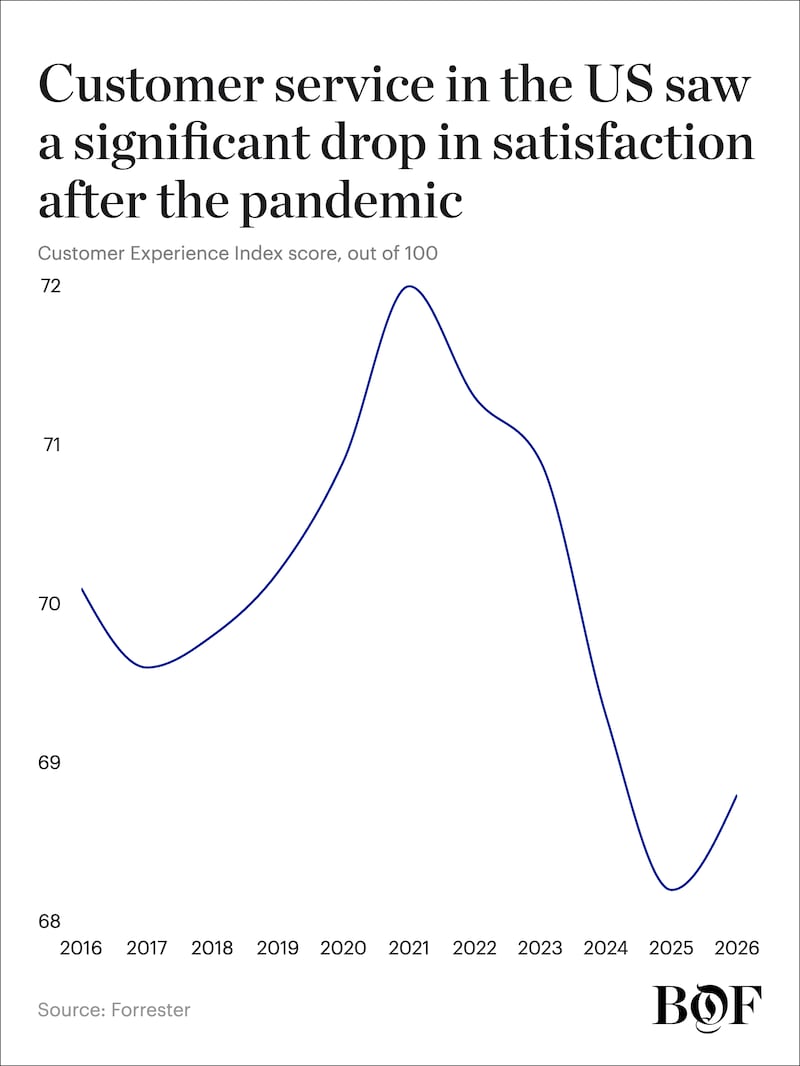
Training store employees to deliver good customer service remains a persistent challenge for retailers. Pandemic-era labour shortages have made it harder for retailers to staff stores in the first place, as workers gravitate towards better-paying jobs and remote work. Younger workers, meanwhile, have more ways to earn a living outside traditional retail, including through the creator economy.
But hiring workers is only part of the challenge. Retailers also need to equip them to deliver the kind of service customers expect — something even businesses that pride themselves on personalised attention can struggle to do consistently.
Exceptional service remains a selling point for some luxury retailers and independent boutiques, from The Webster to Elysewalker and Hirshleifers. But smaller operators can lack the resources or expertise to invest in staff training, Amlani said.
ADVERTISEMENT
Generational differences can also shape how store employees and customers define good service — a disconnect that may have been widened by the pandemic, when young people in particular missed out on opportunities to develop their interpersonal skills.
“I’m finding that some Gen-Z associates have a different idea of what good service is than the customers that they’re serving,” Amlani said. “Training is what would close that gap.”
Even well-trained employees can struggle to deliver their best service when faced with rowdy or aggressive customers, skeleton teams or pay that leaves little room for financial comfort.
While retail income is sometimes supplemented by commission, most retail workers in the US are hourly employees. As of 2023, the median hourly wage for retail salespeople was about $16, amounting to an annual salary of $33,680 — well below the overall median personal income in the US of about $47,000, according to federal data.
Low wages mean high turnover, which creates a spiral effect of worsening customer service because staffing shortages often contribute to a culture of overwork and exhaustion.
“Inadequate staffing creates security problems for employees. People get harassed on the job, they get intimidated,” said Stuart Appelbaum, president of the Retail, Wholesale and Department Store Union.
Retailers that earn the highest marks for customer service tend to have something else in common: higher wages, full-time hours and benefits such as health insurance, 401(k) matching and even stock options for their staffers, according to Luxury Institute founder and CEO Milton Pedraza, who pointed to Costco as a prominent example. The wholesale retailer’s store employees on average earn $31 an hour with higher Sunday wages, bonus cheques, annual raises and healthcare benefits. The results are self-evident: Staff turnover at Costco sits at just 8 percent, far below the 60 percent average turnover that other retailers see, according to The Economist.
Ultimately, the quality of the customer experience often comes down to the working conditions and support retailers provide their employees, Pedraza said.
ADVERTISEMENT
“How can I, as a brand, as a management team, treat my employees in a way that they want to stay because they feel cared for?” said Pedraza. “Because then they’re going to care for the clients, and a very virtuous cycle gets created.”

Jessica Kwon is an Editorial Associate at The Business of Fashion (BoF). She is based in New York and holds a bachelor’s degree in English literature, creative writing and Asian/Pacific Islander American Studies from the University of Michigan.

Sheena Butler-Young is Senior Correspondent at The Business of Fashion. She is based in New York and covers workplace, talent and issues surrounding diversity and inclusion.
Loading recommended reads…
The Swiss firm agreed to purchase the medical-grade skincare company from private equity firm Blackstone and the founding Obagi family to expand its US portfolio.
A new analysis of eight widely used cosmetics ingredients by Verisk Maplecroft found widespread exposure to child and forced labour risks, with palm oil, cocoa and shea nuts among the most problematic commodities.
Nike is reducing the number of Jordans it puts on the market as it tries to restore the brand’s exclusivity and pull it out of a slump. Experts say it will take more than reducing supply to fix the problem.
Kelly Clarkson’s viral feud with an independent Brooklyn toy store has ignited debate over poor customer service, which experts say can be remedied with investment in training and employee motivation.