Agenda-setting intelligence, analysis and advice for the global fashion community.
Agenda-setting intelligence, analysis and advice for the global fashion community.


A monthly briefing on the technology news and trends shaping fashion and the wider world.
Subscribe to Tech Mode by Marc Bain to go deep on the most intriguing developments in AI and how technology is reshaping the fashion industry.
Welcome back to Tech Mode, your monthly guide to how AI and other technologies are changing the fashion industry.
In this edition, we’ll have a special guest segment from BoF correspondent Lei Takanashi, who attended a preview of the release of Meta’s first pair of smart glasses under its own label on Monday.
We’ll also dive into the implications of the growing number of countries banning social media for kids and teens, and the advertising boom happening in generative search channels.
ADVERTISEMENT
Let’s get to it.
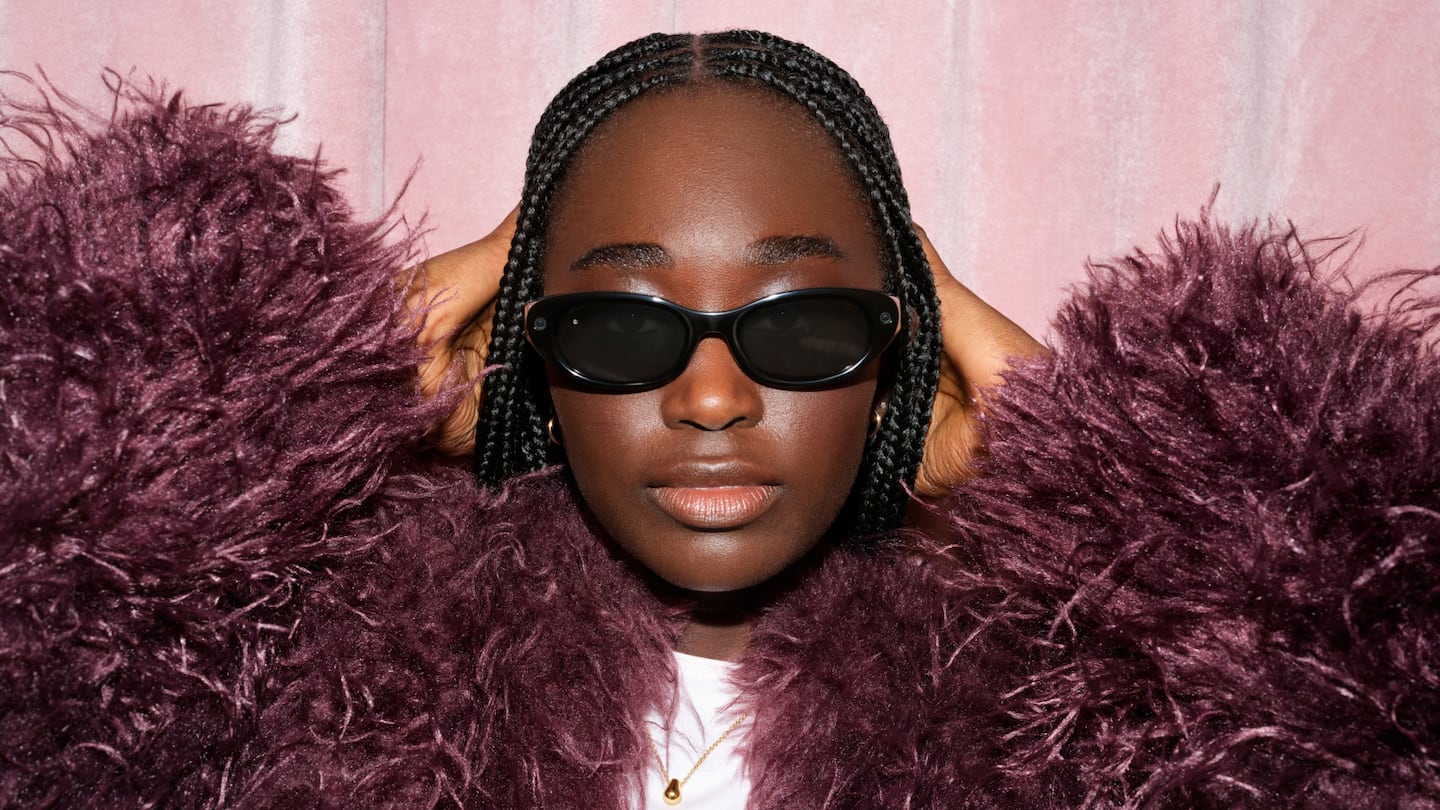
The Move: Since Meta entered the smart glasses market in 2021 with Ray-Ban Stories, it has always worked with one of EssilorLuxottica’s partner brands. On Tuesday, the US tech behemoth unveiled its first line of smart glasses with the Franco-Italian eyewear licensing giant under the Meta brand. Their debut collection includes three frames that will be available in 26 different styles with prices starting at $299. There’s a rectangular style dubbed “The Adventurer,” a square frame style dubbed “The Fury,” and a cat-eye style named “The Starfire” that was created in collaboration with Kylie Jenner.
The Challenge: While Meta’s frames offer consumers a budget-friendly option to access the company’s newest wearable technology features — such as Meta’s new AI model “Muse Spark” — it faces a challenge that’s long impacted competitors since smart glasses were first explored by companies such as Google. Simply put, it’s going to be difficult to convince consumers that wearing eyewear by a tech brand is cool. Peter Bristol, Meta’s head of industrial design, acknowledged as much during a press conference Monday, saying the move marked the company’s first step on a “really hard path at becoming relevant in the fashion and glasses world.” And even if Jenner’s face has helped sell millions of units of beauty products, it’s likely to take a lot more than integrating her voice into a pair of Meta frames to convince fashion consumers to buy into Meta smartglasses that aren’t made in collaboration with known eyewear labels such as Ray-Ban or Oakley.
The Bigger Picture: In recent years, Meta’s EssilorLuxottica tie-up has succeeded in breaking through to consumers after so many brands tried and failed. But soon they could have serious competition.
In May, Google and Samsung unveiled their new AI glasses with Warby Parker and Gentle Monster, set for release later this year. Apple is developing its own smart glasses, with a launch set for 2027, according to Bloomberg. Snap unveiled its first new pair of consumer augmented-reality glasses in years last week — complete with a campaign shot by Steven Meisel featuring stars like Kaia Gerber — though their clunky shape and $2,195 price tag will make them a tough sell when they drop this autumn. (Snap’s share price plunged nearly 10 percent after the reveal.)
To maintain its early advantage, Meta will have to keep delivering products with greater abilities, whether that’s AI or hardware features, such as the in-lens display it introduced last year, packaged in a frame that people actually want to wear.
Banned wagon: Last week, the UK and United Arab Emirates joined a growing list of countries social media for children and younger teens that so far includes:
These are just some of the examples. For a more in-depth accounting of the bans, Reuters and The New York Times have compiled handy lists.
ADVERTISEMENT
Fashion impact: These bans could make reaching young shoppers more difficult, as BoF’s Haley Crawford detailed in this story on what the bans mean for brands. Kids and tweens may not be the biggest spenders, but they’re a key demographic for many brands selling items like sneakers, denim and activewear. And that’s to say nothing of their growing importance in the beauty market, hence so-called “Sephora tweens.”
Social media is often how they learn about brands, and companies have invested in building awareness among this group so that, when they do have money to spend, their brand is top of mind. It’s part of the reason companies like Vans, E.l.f., Alo Yoga and Gucci create experiences in the gaming platform Roblox.
Ecosystem effect: The caveat here is that the bans might only have a big impact if they can actually be enforced. Several months into its ban, Australia has found that kids are tricking facial scanners to get around age verification by using photos of older people, scanning the face of an older friend or sibling or drawing on a fake mustache, according to reports by the Australian Broadcasting Corporation and The New York Times. Nearly 70 percent of parents in a March compliance update said their kids still had accounts on Instagram, TikTok and Snapchat.
But that’s not to say widespread bans won’t change the landscape for marketers. It could make marketing to tweens and young tweens “legally awkward, reputationally risky and harder to measure,” Matt Navarra, a social media consultant and author of the Geekout newsletter, told Crawford for her story. “The whole market changes once platforms, agencies, brands have to prove they’re not knowingly targeting underage users.”
The news: A new forecast by communications giant WPP estimates that generative search’s advertising revenue will top $100 billion by 2031, making it the fastest channel to ever reach the milestone, ahead of contenders like retail media and social. That revenue would come from ad impressions and paid placements across all the different AI search options, from Google’s AI overviews to platforms like ChatGPT and Claude.
Why it matters: Advertising in AI search is still brand new. OpenAI only introduced ads in ChatGPT this year and started rolling them out more widely to users over the past few months. But the forecast indicates how eager advertisers are to jump into these platforms, which present a different advertising environment than traditional search.
Their selling point is that they filter out all the junk users don’t want to sift through and just give them the information they’re seeking. Ads in this context could prove even more effective, since they’re competing against fewer options and will be presented as directly relevant to what the user is seeking.
On the other hand: The idea of running ads in AI search results is controversial, however. It’s because AI is supposed to focus on providing users what they’re looking for, rather than a list of links to weigh and judge for themselves, that ads may be viewed as unwelcome. Users also interact with AI platforms differently, engaging in conversations that can quickly turn personal. Anthropic cited these factors as reasons for its pledge to keep Claude ad free, stating in February that conversations with AI are “susceptible to influence in ways that other digital products are not.”
Fashion brands are sure to be among the many companies contributing to the boom in AI ad revenue as they try to get their products in front of shoppers looking for just the right item, but some could also find their ads surfacing in conversations where their presence may not be so well-received.

Marc Bain is the UK Editor at The Business of Fashion. He is based in London and oversees BoF's case studies and executive memos, as well as driving its technology coverage.

Lei Takanashi is a Correspondent at The Business of Fashion (BoF). He is based in New York City and covers menswear, streetwear, young consumer trends, and the intersection between fashion and culture.
Loading recommended reads…
LVMH’s sales report and Shanghai Fashion Week will bring fresh insight into the Chinese retail environment as Western brands seek to navigate the wobbly market and local labels angle to capture more spending.
As Milano Beauty Week closes its biggest edition yet, Cosmetica Italia and its partners are betting that the country’s entire beauty ecosystem can become a brand in its own right.
The ultra-fast fashion company said sales had been bolstered by marketing partnerships with music festivals, a pop-up shop on London’s Oxford Street and local Christmas gift events.
Frasers Group is expanding its holdings in luxury and retail brands, but what it wants from those investments is not always clear.