Agenda-setting intelligence, analysis and advice for the global fashion community.
Agenda-setting intelligence, analysis and advice for the global fashion community.

Subscribe to Tech Mode by Marc Bain to go deep on the most intriguing developments in AI and how technology is reshaping the fashion industry.
Welcome back to Tech Mode, your monthly guide to how AI and other technologies are changing the fashion industry.
First, there have been a couple of recent funding announcements that show money is still flowing into fashion tech, especially when AI is involved.
Separately, you should check out this story from BoF’s Lei Takanashi on the proliferation of AI-generated mockups of unreleased products — as seen recently with the Swatch x Audemars Piguet “Royal Pop” collaboration — which explores the benefits as well as challenges they’re creating for brands.
ADVERTISEMENT
Let’s get to the news.
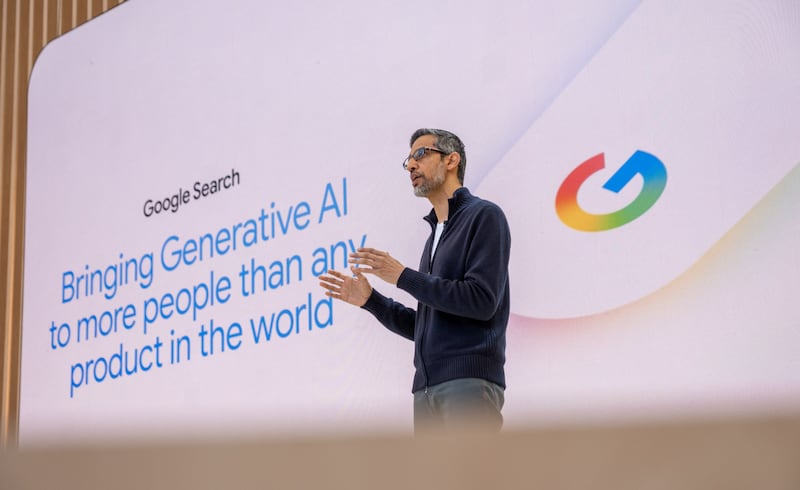
The new look: At its I/O Conference last week, Google announced what it called the “biggest upgrade in over 25 years” to its search interface. The new experience builds on the changes it introduced with its AI Overviews in 2024, where it responds more like an AI chatbot rather than just returning a list of links. Here are some of the key updates:
Amazon, meanwhile, announced earlier this month that its own search bar is getting an LLM-powered makeover. The new tool, named Alexa for Shopping in reference to the company’s AI virtual assistant, lets you ask questions rather than just find products based on keywords. One of Amazon’s examples: “What’s a good skincare routine for men?” Shoppers looking for items can now also get AI overviews about the product category they’re searching for, and they can build custom shopping guides letting them compare features, prices and Amazon reviews across items. The experience is now the default for US users.
Why it matters: Surveys consistently find that Amazon and Google are where most US shoppers begin their online product searches. Those searches will now be shaped by LLMs, which create a different shopping experience where people refine their queries through back-and-forth conversation and can get more detailed information and tailored product recommendations, rather than a list of links matching keywords.
While some users of AI platforms such as ChatGPT may have already started searching for products this way, they’re a minority. But LLM search is increasingly becoming the standard. Meta is also reported to be testing what appears to be an LLM-powered shopping research tool.
That said: It’s hard to predict how significant these changes will be for the way consumers shop for fashion in the long term. Online shopping is a fragmented experience of which search is just one part. Consumers frequently jump back and forth among search, social media and e-commerce, as well as venturing out to physical stores, before finally completing a transaction. That won’t change.
Still, the search part of that equation seems increasingly set to just show the products the LLM thinks are the best match, to the exclusion of others. This dynamic creates the potential for winners and losers, particularly in cases where shoppers base decisions more heavily on consumer reviews, like when searching for the best leggings for a workout. Brands are racing to optimise their sites for generative search and AI agents, and that urgency will keep growing.
But wait, there’s more: Both Google and Amazon also announced new agentic features.
ADVERTISEMENT
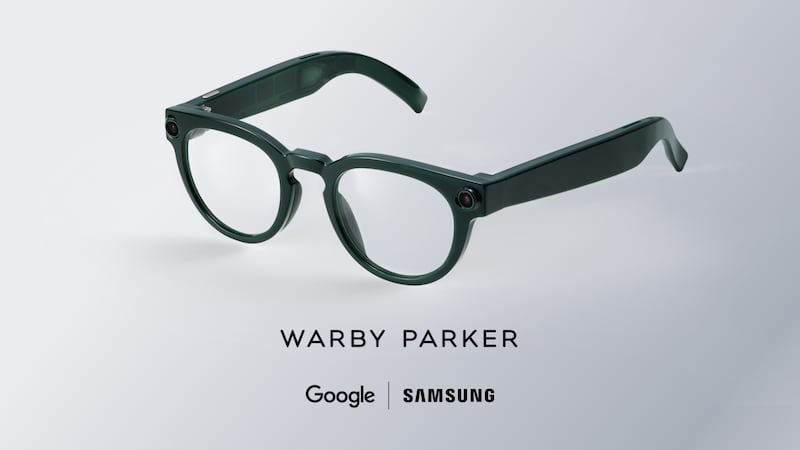
Frame job: Also at Google’s I/O Conference, the world finally got to see the new smart glasses the search giant and Samsung are making in partnership with Warby Parker and Gentle Monster — and they look a lot like regular glasses. As Meta and EssilorLuxottica proved with their successful collaboration on Ray-Ban smart glasses, the key to getting shoppers interested is to hide the technology in what appears to be a normal frame. Google, whose previous venture into smart glasses with Google Glass a decade ago was famously a flop, apparently got the hint.
The details:
Growing competition: In a note to clients, Bernstein analyst Luca Solca noted that the lack of any real novelty in the glasses may be a relief to EssilorLuxottica, but the forthcoming styles could be causing consumers to wait for the new launches, increasing pressure on the Ray-Ban and Oakley smart glasses already on the market. The second-generation versions of the Ray-Ban and Oakley glasses “are being sold on discount on their respective brand.coms, less than year after their launch (at -15 percent and -20 percent off, at least in the UK and USA),” he wrote.
The POV content explosion: A secondary effect of the growth in smart glasses is that we could see a lot more POV-style content circulating online as people use their glasses to record their lives. The trend is already having an impact on fashion.
BoF’s Austin Kim reported last week that shoppers wearing smart glasses are filming their visits to luxury stores and posting them online. These videos don’t always paint a flattering picture of the experience, and some are racking up tens of millions of views. While the glasses do have a light that lets you know when they’re recording, users are finding ways to disable them. As more people start wearing the glasses, it’s bound to become less clear which interactions may end up online.

Putting the AI in entertainment: There’s been a spate of recent news about AI being used to produce creative works:
Creative conflict: These moves all come as debates continue to swirl around what role — if any — AI should play in creative jobs. While people don’t seem to mind the idea of companies using AI to crunch large amounts of data, they’re much more resistant to AI being used to write stories or produce fashion campaigns. Daunt’s comments, for example, resulted in calls for a boycott of Barnes & Noble. (Daunt later clarified to the Los Angeles Times that the chain is not currently selling any AI-generated books that it’s aware of and wouldn’t do so unless there was clear demand for them.)
The distinction seems to come down to creativity being regarded as a particularly human endeavour, and for that reason worthy of protection from bots that would displace people for the sake of profits. Though one recent study found that, for now at least, there is little evidence generative AI is diminishing the earnings of artists and other creative professionals.
ADVERTISEMENT
The long road to acceptance: The million-dollar question is whether audiences will warm up to AI-generated entertainment, art and design as companies continue pushing it into the world, or whether they’ll keep revolting against it. Technologies once deemed a threat to creatives, like photography, gained acceptance over time. If creative AI starts to be regarded as normal — or at least not worthy of outrage — in these other contexts, it would help pave the way for greater use of it in fashion as well.
At the moment, that outcome feels a long way off. Anger at AI companies over everything from lost jobs to the impacts of AI data centres on nearby communities continues to rise, to the point that US law enforcement is warning of a rise in anti-tech extremism, according to documents obtained by Wired. In this environment, fashion businesses need to be cautious about which creative jobs they’re using AI for, and how they’re communicating with customers about it.
Marc Bain is News, Features and Reports Editor at The Business of Fashion. He is based in London and drives BoF’s coverage of technology and innovation, from startups to Big Tech.

Lei Takanashi is a Correspondent at The Business of Fashion (BoF). He is based in New York City and covers menswear, streetwear, young consumer trends, and the intersection between fashion and culture.
Loading recommended reads…
Sales of gems, precious metals and artwork at Japan’s department stores climbed 19 percent in the first half of 2026 from a year earlier to $2 billion.
Though Adidas dressed both teams in the World Cup finals, the global football tournament still presented some bright spots for Nike, writes Bloomberg’s Andrea Felsted.
From our archive, the creator and host of award-winning podcast “Articles of Interest” joins BoF founder, CEO and editor-in-chief Imran Amed to explore what clothing can reveal about identity, culture, labour and the world around us.
Saunders, the brand’s first creative director in five years and a skilled colourist, promises to give Kate Spade the clarity it has long lacked. Now, Tapestry must apply the same long-term brand-building discipline that fueled Coach’s success.