Agenda-setting intelligence, analysis and advice for the global fashion community.
Agenda-setting intelligence, analysis and advice for the global fashion community.

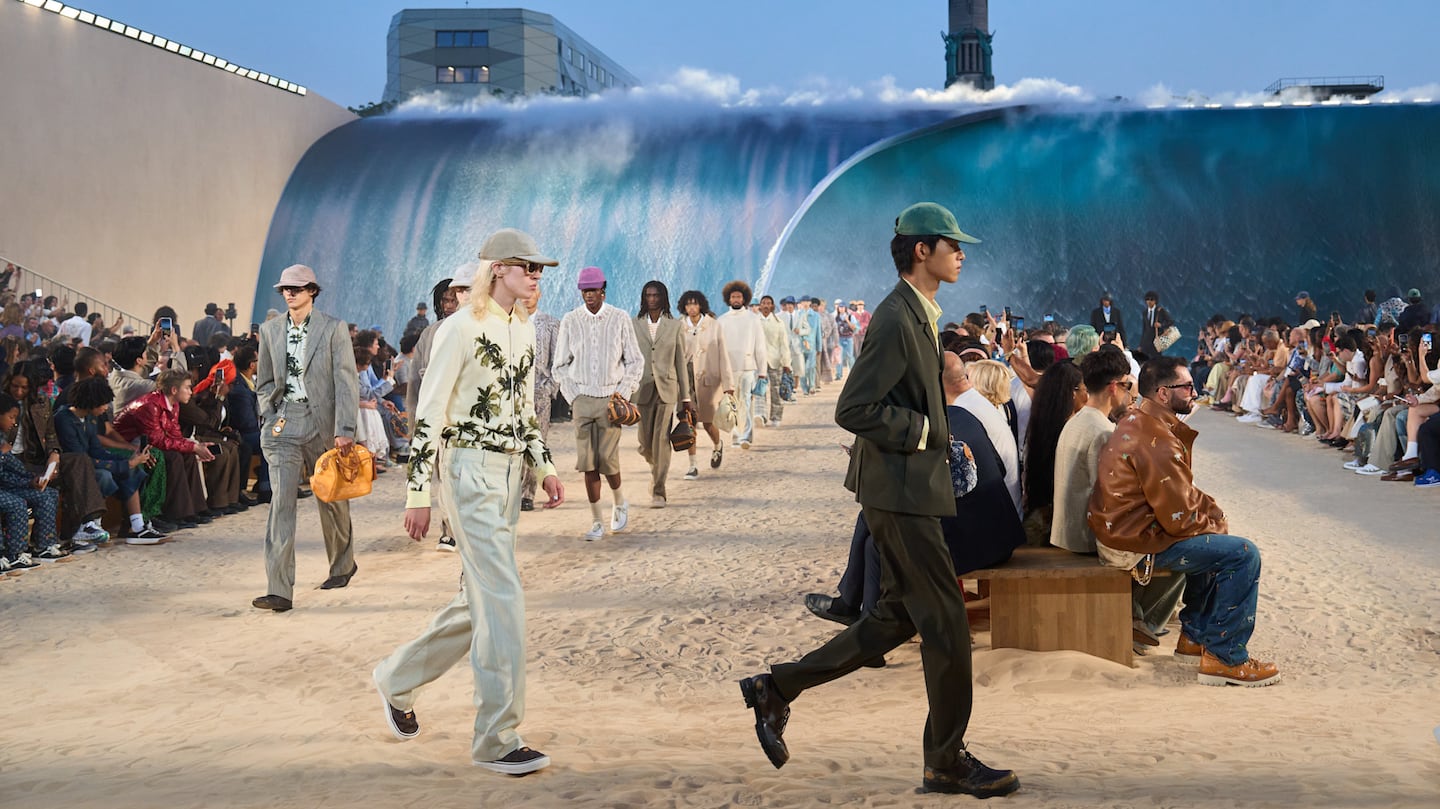
The hottest chatter in Paris and Milan this week has been, well, the heat itself.
Editors, buyers and celebrities alike endured record temperatures across fashion’s capitals, scurrying to and fro shows armed with hand fans and bottles of water. Meanwhile, here in London, several industry events for Climate Action Week were cancelled due to the sweltering heat — the irony was not remiss on anyone.
The discomfort of this week serves as an alarming reminder to industry of the speed at which climate change is accelerating. According to the latest Indicators of Global Climate Change (IGCC) report, at current emission levels, the world will likely exceed the critical 1.5°C threshold by 2030, which scientists explain is the boundary to avoid irreversible impacts of climate change.
And fashion, famously one of the most polluting industries, has largely fallen behind on its goal to limit its culpability in the planet’s warming. Recent analysis by BoF shows that the vast majority of fashion brands are off track to meet the carbon footprint mitigation deadlines they set for themselves.
ADVERTISEMENT
Yet, while the weather may be disrupting business as usual at the epicenter of the sector, it’s a minor misery compared to the catastrophic consequences of heat stress elsewhere in the supply chain. In apparel manufacturing hubs like Bangladesh, India, Pakistan and Vietnam, high temperatures paired with the heat from factory machinery is proven to have a severe impact on garment workers’ health and increase the likelihood of accidents due to fainting spells, dehydration or overheating. These conditions not only jeopardise their wellbeing but also ultimately lower productivity.
For the most part while fashion businesses have been sluggish on mitigation, the inertia around climate adaptation has been resounding.
Manufacturers alone are not able to pay for the high costs of solutions across the supply chain — namely heavy factory retrofits for cooling systems, heat pumps and other infrastructural changes. But the magnitude of these investments deters brands from chipping in, leaving suppliers to shoulder the burden alone.
Consumers also have a role to play. While some may signal climate-consciousness on surveys and social media, their shopping patterns tell another story. For now, most shoppers continue to make their purchase decisions based on convenience and price.
However, with climate extremes now increasingly frequent, will more people be coerced to act differently? It’s hard to say. But it might just be a variable that makes a difference.
Brands will face far more pressure on the regulatory front.
This September, the EU will begin enforcing a much tougher set of rules around environmental claims, sustainability labels and product durability to dismantle greenwashing tactics and promote better buying. Additionally, incoming corporate sustainability reporting and due diligence laws, albeit watered-down in recent years, will require companies to actively prevent and mitigate human rights and environmental violations across their supply chains.
For now, whether extreme heat transforms the way people shop remains to be seen. But it may well change what they expect from governments. As the climate crisis exacerbates, becoming a quotidian reality rather than an abstract threat, public pressure for stronger environmental action could grow — and with it scrutiny of industries like fashion.
ADVERTISEMENT
Then again, it may just lead politicians to demand cheaper air conditioning over tougher climate policy.
Which path will make push come to shove for fashion is unclear, but it’s undeniably something to keep an eye on.
By Shayeza Walid
Go Deeper:
Why Fashion Is Falling Behind on Its Climate Targets
While H&M and Kering have cut emissions by more than a third, the majority of fashion’s biggest brands remain behind the schedule they set for themselves.
Who’s up and down in the business of fashion, luxury and beauty this week.
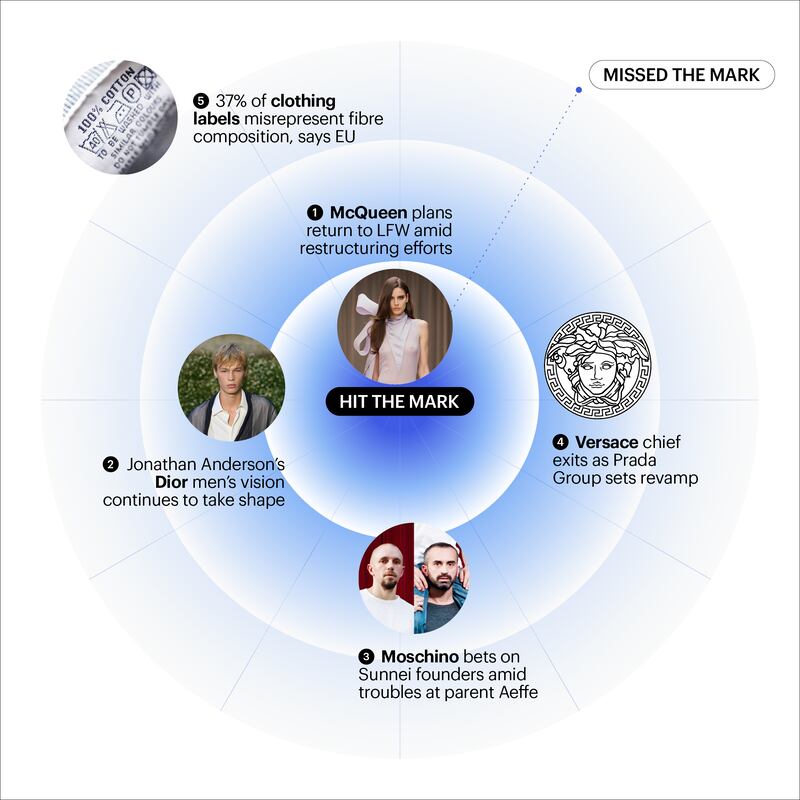
1. McQueen will return to London Fashion Week as owner Kering works to restructure and reposition the label. The move could help McQueen cut through in a noisy market and strengthens the LFW lineup.
ADVERTISEMENT
2. At Dior Men, Jonathan Anderson’s vision of a young aristocrat continued to take shape. “It keeps looking more like a draft rather than something fully formed,” wrote critic Angelo Flaccavento.
3. Moschino is betting on Sunnei founders Simone Rizzo and Loris Messina to reignite demand for the troubled label amid a court-supervised restructuring at owner Aeffe.
4. Versace CEO Emmanuel Gintzburger has stepped aside as new owner Prada Group accelerates its bid to revamp the Italian luxury label founded by Gianni Versace.
5. The labels on almost 40 percent of clothing misrepresent the garment’s fibre composition, according to a European Commission-backed report that tested 132 products across categories.
Catch up on all the news of the week in fashion, luxury and beauty here.
Loading recommended reads…
Chanel’s surging sales underscore that the luxury industry’s challenges may be less about demand than desirability.
Chris Green joins Imran Amed to explain how his self-funded Brooklyn menswear store earned a place among the world's best fashion stores — by staying off the internet and betting everything on how it feels to walk in the door.
Global editorial director Steff Yotka will succeed Bettridge, who is leaving to focus on his creative studio Content World.
Kith's new collaboration with Salomon on the XT-Evo is the latest example of the way footwear companies are leveraging influential outside partners to help them debut their newest shoes or even co-design entirely new styles.