Agenda-setting intelligence, analysis and advice for the global fashion community.
Agenda-setting intelligence, analysis and advice for the global fashion community.


What's up, down and making news this week in the fashion and beauty businesses.
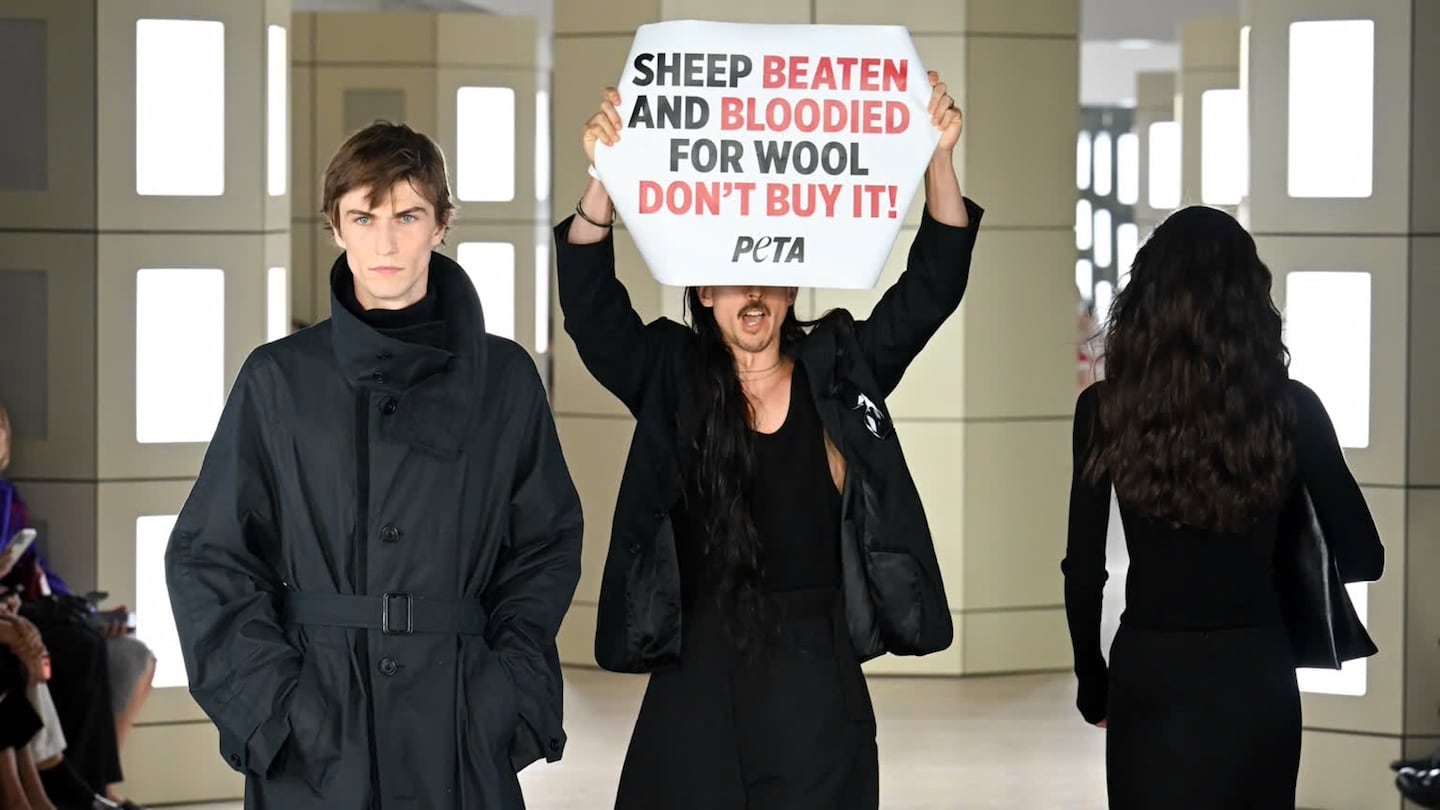
When protestors from animal-rights group PETA stormed the Cos runway during New York Fashion Week on Sunday, many in fashion were primed to condemn the disruption and move on.
PETA has long been a thorn in the industry’s side and slogan-wielding catwalk crashers have become near routine. So the incident at H&M-owned Cos might have gone largely unremarked were it not for the intervention of Steven Kolb, the head of fashion’s leading trade organisation in the US. After video footage began to spread online showing Kolb restraining protestors, things changed.
The video was picked up far beyond fashion circles, featuring in publications from The New York Times to Al Jazeera, spiking awareness about PETA’s campaign against wool, a material often positioned by brands as a clean, green, responsible option. It’s an area where the animal rights group has been ratcheting up engagement with the industry, pointing to graphic investigations that allege cruel practices and abuse persist throughout the material’s supply chain.
But while Sunday’s protest has managed to grab widespread attention, will it make any difference to the way the industry actually operates?
ADVERTISEMENT
PETA has spent nearly 50 years agitating to stop fashion from making clothes, bags and shoes from animals, lambasting brands for using everything from fur and exotic skins to more mainstream materials like wool and leather.
Its aggressive tactics — including dropping a dead raccoon onto Anna Wintour’s plate while she was eating lunch — have sometimes made even those who agree with its stance — that all animal-derived materials are cruel — uncomfortable. But they’ve helped achieve results.
Fur, once a mainstay of the luxury market, is now banned by many of its largest players. Several governments have made selling the material illegal. This month, New York Fashion Week went fur-free for the first time, a decision Kolb championed.
Still, change has taken years and was hardly built on protest alone. Shock-tactic campaigns have been bolstered by broader advocacy efforts by PETA and others. Much of the work that’s ultimately shifted business actually happened behind the scenes in the guise of corporate engagement.
A wider cultural conversation around ethical consumption, bolstered by social media, has helped support the anti-fur message and in turn, change the economics. As luxury brands targeted a bigger, more mainstream market, fur products — always prestige items that didn’t contribute much to most brands’ sales — became even less important to business.
Protest was not necessarily the change mechanism, it was a marketing tool and pressure point.
In other instances, protests that galvanised large swathes of consumers have had a more direct and swift impact. Anti-sweatshop demonstrations on college campuses in the ‘90s and social-media-first labour rights campaigns that spread in the wake of the 2013 Rana Plaza factory collapse helped push brands to take more responsibility for working conditions in garment factories.
But these changes didn’t happen in a vacuum. The protests gained momentum because of major scandals. Consumer action was accompanied by scrutiny from governments and investors. The path to change was paved by years of previous advocacy.
ADVERTISEMENT
It remains to be seen whether the current controversy will push the conversation around wool to a tipping point where brands feel the need to make changes.
Wool is a mainstream material that many feel lacks the moral issues associated with fur, since sheep aren’t raised or killed purely for their pets or skins. PETA contends that — just like with fur — once more people are aware of the cruelty it sees in the material’s supply chains, attitudes could change.
Even if there’s no widespread pull back, the heightened media scrutiny may compel some companies to make changes that better ensure animal welfare standards and responsible farming practices.
PETA targeted Cos after an investigation alleged instances of abuse at farms linked to parent-company H&M Group. The Swedish fashion giant said the responsible-wool certification schemes it uses investigated the claims and suspended the licenses of several farms.
Some might take that as a win.
Loading recommended reads…
Louise Trotter’s Bottega Veneta was lighter and more clearly expressed the designer’s signature. Also: Angelo Flaccavento reports on Ferragamo, Dolce & Gabbana and Act No. 1.
For the last twelve months, the designer has played therapist to the brand’s ‘multiple personality disorder.’ This latest session for Spring/Summer 2027 was a breakthrough.
Gucci, Moschino, Tod’s, Institution and The Attico each offered their vision of fashion for the people as commercial pressures put the customer squarely in focus, Angelo Flaccavento writes.
A Bank of America analyst downgraded shares of the sportswear maker to underperform from neutral, pushing back expectations of a sales turnaround to 2028.