Agenda-setting intelligence, analysis and advice for the global fashion community.
Agenda-setting intelligence, analysis and advice for the global fashion community.

Subscribe to The Kicks You Wear with Mike D. Sykes, a drill down on the red hot intersection between sports and fashion.
Good morning, friends! Welcome back to The Kicks You Wear. Thanks so much for reading today. I appreciate you giving me a bit of your time. I hope your weekend was great. Lots of college basketball this weekend! I didn’t put together a bracket this year for the first time in a long time. I’ve got to say, it’s been pretty refreshing to watch the tournament with no stakes!
Nike is reaching a pivotal point in its comeback. The company’s stock is as low as its been in almost a decade. It’s done a bunch of restructuring and brought new, interesting products to the market. Still, the public seems to have a lack of confidence in a brand that, for so long, felt like the footwear industry’s biggest guarantee. I explore that a bit today.
Plus, Adidas debuted a new 3D-printed footwear built specifically for basketball at the highest level — or, at least pretty close to the highest level.
ADVERTISEMENT
All of that and more is in today’s newsletter.
Quick hits
Let’s jump in.
Nike has done a lot of work to convince consumers that the brand is capable of returning to its previous position of power in the footwear industry, but investors quite literally don’t seem to be buying it.
What’s happening: Take a look at Nike’s current stock price per share. It dipped below $53 on Friday and has been hovering around that mark since.
Think Back: Nike’s circumstances of 2017 were very similar to the brand’s current predicament. It’s facing an uphill battle after ceding shelf space to competing brands. Adidas and Yeezy took up a ton of space in the market back then. Today, that space is occupied by Adidas and other competitor brands both large and small, including New Balance, On, Brooks and others.
Despite the difference in competitors, the variable that remains the same is that Nike ran into a bit of an identity crisis after relying too heavily on retro styles to buoy its business.
That brings us to today where the brand has worked hard to change course and reinvent itself to meet the contemporary consumer’s demands and change its image.
ADVERTISEMENT
These are things the public generally seemed to want from Nike. New innovations, more performance products, interesting products. And yet, the negativity around the brand just won’t go away. At least when it comes to investors.
Between the lines: Some of you reading this are likely saying, “Well, there are larger macroeconomic factors at play that can’t be overlooked.” That’s absolutely true. The US tariff policy is still uncertain. Plus, there’s the impact of the Iran war that sportswear brands — including Nike — won’t be able to avoid.
Yes, but there’s more to it than that. Guggenheim senior analyst Simeon Siegel outlined investor’s major concerns in a note on Friday.
The other side: Siegel argues that at least some of those fears feel quite unfounded.
“We have a hard time ignoring the fact that Nike, the largest revenue footwear brand by far, grew North America, its largest geography, by 4% in 1Q and a meaningful 9% in 2Q,” Siegel wrote. “If we are all being honest, these are numbers people would likely never have believed possible last year.”
My take: I tend to agree with that. Nike’s picture isn’t exactly clear by any means, but it does feel like investors — and the public at large — are taking a “we’ll see it when we believe it” approach with the company.
But to be fair to them, while there have been positive bits of momentum, Nike hasn’t shown us that “One Big Thing” to make the public believe again.
The big picture: What investors think about Nike isn’t the end-all, be-all. Its low share price certainly doesn’t mean the brand is cooked. But it clearly means there’s still a lot of work the brand has to do to win the public over.
ADVERTISEMENT
Nike’s return to prominence won’t be determined by investors or a potential Converse sale or another precipitous dip in the company’s DTC sales. What has always determined Nike’s success has always been how cool consumers think the brand is. You can’t buy that or number crunch your way to it.
There’s always been something to pull the brand out of the mud and differentiate it from its competition. That something doesn’t exist yet. If Nike can make it — and that’s a big if — all of its problems will be solved.
Chinese fashion companies are making big pushes to spread their business across the globe as China’s economy has slowed in recent years and the wave of nationalism that once motivated consumers has begun to wane, The Business of Fashion’s Lei Takanashi reports.
Details: Companies like Li-Ning, Anta and Urban Revivo are setting up shop in places like Paris, New York City, Los Angeles and London, Lei writes.
Between the lines: What makes this so interesting to me is that brands like Nike are trying to make inroads in China as these Chinese brands are trying to do the same in reverse.
Reporter corner: Lei was kind enough to give us a thought bubble for the story following his reporting, why the story was so interesting to him and what his personal takeaways were.
“I’d already recognised the global growth of Chinese brands and their growing cultural soft power — especially within the F&B space in the United States. So when Anta opened its first store in the US last month, I began wondering if Chinese sportswear brands could become as big as Chinese consumer brands like Hey Tea, Luckin Coffee, or Pop Mart within the States.
It was interesting to find out while reporting this story that Anta’s biggest rival, Li-Ning previously attempted to open its first store in the United States in 2010 — only to shut it down by 2012. Now, while Anta’s trying to make its big debut in America with its first brick and mortar store in Beverly Hills, Li-Ning is taking a different route outside of physical stores by partnering with the e-commerce platform Revolve on “Way of Wade” sneaker releases.
Only time will tell what strategy will work better right now. Regardless, now that most consumers broadly view Chinese-made products and cultural exports positively, Anta and Li-Ning might really find themselves having more shelf space in the Foot Lockers and Dick’s Sporting Goods of North America.
However, one key strength Anta has that’s really intriguing, beyond potentially signing Steph Curry, is a strong M&A strategy that’s lead them to own “gorpcore” giants like Arc’teryx and Salomon. Now, adding the fact that Anta’s Puma’s largest shareholder, the brand has extremely strong resources to create products for new markets fuelled by knowledge it’s likely gathering from its subsidiaries. It will still definitely take some time to see Anta become a global player like Adidas or Nike, but it’s definitely laid the foundation to do that at an opportune moment for Chinese brands.”
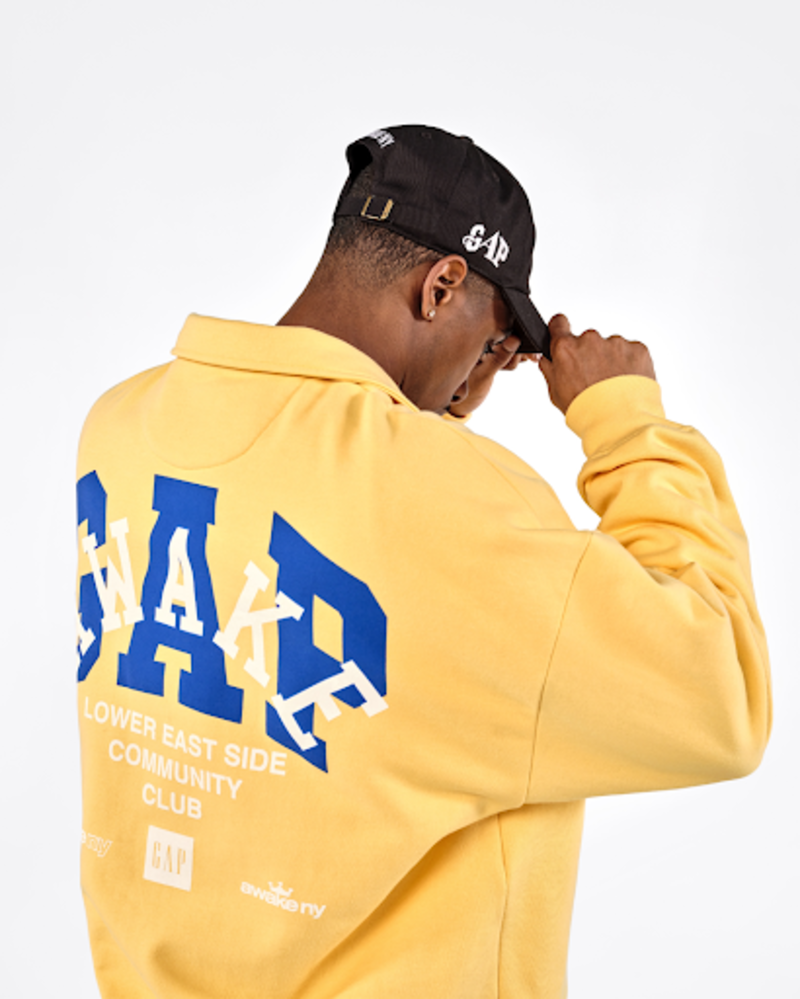
Angelo Baque’s Awake NY announced a new partnership with Gap on Monday — a surprise I certainly wouldn’t have had on my 2026 bingo card.
Details: The two sides launched a 27-piece collection together filled with apparel and accessories for adults and kids.
My take: I’ve got to say, folks. This is one of those partnerships that genuinely surprised me when I saw it. Streetwear brands and classic mall brands have typically existed on two very different sides of the fashion spectrum. But, more and more, that gap seems to be closing — pun intended.
Gap, itself, certainly has some experience in this area.
Plus, this is a great look for Awake. Baque’s company made waves with its Air Jordan 5 collab last year. It should find a new audience here, too.
The bottom line: This collab might be a weird one. But it’s kind of fun and seems productive for both brands. That’s how you do it.
Adidas unveiled a new 3D printed basketball shoe on Monday when it announced a new initiative called “Project R.A.P,” which is code for Radical Athlete Perception.
Why this matters: A few months ago when reporting on the evolution of 3D-printed footwear in fashion, one of the key points I hit on was that the products developed in the future would need to be built for performance to reach a broader audience. It looks like that moment has arrived through this sneaker.
This is a meaningful moment for 3D printed technology. This is a shoe that was built for an athlete at the highest level — Peterson is one of the best prospects in the US and is slated to be a top NBA pick. Peterson wearing these means these are shoes that will eventually make their way onto an NBA court. That’s a huge breakthrough.
The big picture: There’s been a lot of promise coming with 3D printed footwear for more than a decade now without a lot to show for it. But with this, along with Nike and Zellerfeld’s upcoming multi-colored sneaker and its own potential performance partnership, things are getting interesting.
This is a dedicated section detailing upcoming sneaker releases for the week, and sometimes other interesting drops I think you might care about.
Lots of Air Max drops included this week for Nike’s Air Max Day! You Max heads out there will have a blast this week.
Thanks for reading, gang!
If you have any questions, comments or concerns, reach out to me via email at michael.sykes@businessoffashion.com or shoot me a message @MikeDSykes via socials.
Peace and love. Be safe, be easy, be kind. We out.
-Sykes 💯
Want to dive deeper into an insight from this article? Check out The Brain of Fashion, BoF’s new generative AI tool where you can unlock BoF’s sports archive with a single question.
Loading recommended reads…
Chanel’s surging sales underscore that the luxury industry’s challenges may be less about demand than desirability.
Chris Green joins Imran Amed to explain how his self-funded Brooklyn menswear store earned a place among the world's best fashion stores — by staying off the internet and betting everything on how it feels to walk in the door.
Global editorial director Steff Yotka will succeed Bettridge, who is leaving to focus on his creative studio Content World.
Kith's new collaboration with Salomon on the XT-Evo is the latest example of the way footwear companies are leveraging influential outside partners to help them debut their newest shoes or even co-design entirely new styles.