Agenda-setting intelligence, analysis and advice for the global fashion community.
Agenda-setting intelligence, analysis and advice for the global fashion community.

Watches expert Robin Swithinbank weighs in twice a month with intelligence and insight on the age-old industry as it navigates the tension between tradition and reinvention.
GENEVA — The luxury watch industry’s capacity to remain upbeat was put to the test during Geneva Watch Week. With no sign of resolution to the Middle East conflict, more than 200 brands and their chief executives descended on the city, hoping to inject positivity — and drum up fresh business with retailers — with thousands of new watch releases.
March was a challenging month for watchmakers. Many of the chief executive officers I spoke to at the industry’s flagship event, the Watches and Wonders fair — where 65 brands including Rolex, Patek Philippe and Cartier were exhibiting — confirmed that sales across the Middle East had dropped by around 50 percent in March, in line with reports from other parts of the luxury sector.
Despite uncertainty brought by war in the Middle East — and the threat to global appetite for high-end purchases — brands flocked to the show aiming to amp up their businesses. With the sector mired in a slump and geopolitics forcing brands to second guess every move, marketing investments are under greater scrutiny than ever.
ADVERTISEMENT
For smaller brands like Favre-Leuba and March LA.B — two of this year’s new exhibitors — taking part in the large-scale show can mean splashing out half of their annual marketing budgets.
But the move is helping them open new markets, they say. Favre-Leuba, a historic dial name that many moons ago opened doors to new markets for giants Patek Philippe and Jaeger-LeCoultre, was aiming to widen distribution after relying heavily on the Indian market.
Four days into the show, industry veteran Patrik Hoffmann, who revived the brand 18 months ago and expects volumes to increase to 9,500 this year, told me that attendance at the fair helped the brand unlock wider distribution.
Alain Marhic, co-founder of fellow show debutant March LA.B, said his brand had been on the waiting list for three years. Seeking to break over-reliance on his home market in France after international sales had been kiboshed by the pandemic, he said he secured retail accounts in North America and Asia at the show.
With talk of waiting lists swirling more about the show than for new watches, organisers told a round table of journalists they would cap exhibitor numbers to a maximum of 80 — rumours are that 45 brands are waiting in the wings. Breitling could be a candidate, with its new House of Brands concept regrouping the brand along with newly-revived Universal Genève and Gallet, which relaunches in September. “It’s becoming a possibility worth considering,” the group’s chief executive Georges Kern told me. And the sighting of Kering chief executive Luca de Meo at the show prompted talk of Gucci — which aims to emphasise watches as part of broader turnaround plans.
Chief executives of listed group brands were generally less forthcoming than the smaller labels. Richemont’s timings continue to confound – the show, which it co-founded, falls during a closed period that runs until it reports until next month, prompting tight lips.
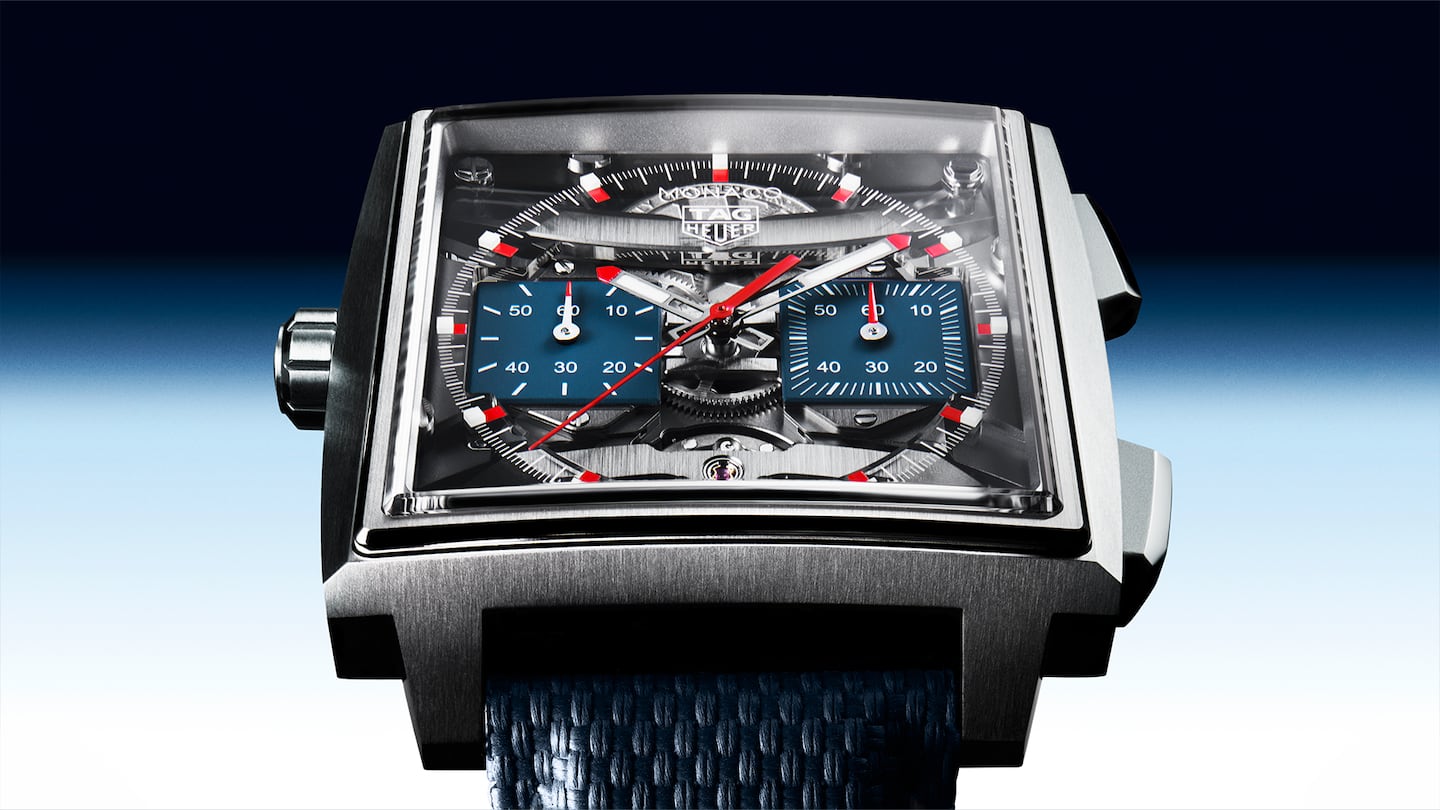
At LVMH, meanwhile, TAG Heuer remains without a leader, although chief executive-elect Béatrice Goasglas was on hand to meet and greet before her formal start on May 1. She will inherit a company still looking to balance high-end products like the new $28,500 Monaco Evergraph and poppy solar-powered Formula 1 watches that retail for under $2,000.
At Hublot, Julien Tornare remains confident that his company’s new manufacturing facility, dubbed H3, will open early next year, despite the brand’s well documented drop in sales. Zenith chief executive Benoît de Clerck maintained his focus on the G.F.J. collection of high-end pieces, looking to position the company with collectors. And at Bulgari, a swan-song for industry veteran Jean-Christophe Babin, who will be succeeded by his current deputy Laura Burdese on July 1. Burdese, who I met with informally, is unlikely to rock what is a very steady boat, but will bring a freshness and vitality to the multi-disciplinary Italian company.
ADVERTISEMENT
Few chief executives I spoke to were ready to discuss the scheduled end of an extension to Switzerland’s short-working hours employee compensation scheme, known as RHT. The scheme protects jobs during a downturn, normally for 12 months. That became 18 and then 24 months to accommodate a challenging period for the Swiss manufacturing sector, but the extension is due to expire in July.
This could give the watch industry a new headache. Many brands and third-party manufacturers have used the scheme over the past two years in anticipation of a recovery that has not materialised, but may be forced into redundancies if the extension ends. Off the record, some acknowledged that their movement and dial suppliers have already laid off hundreds of workers as pressure mounts.
Brands that own their own manufacturing, like Rolex and Audemars Piguet are unlikely to be affected. Audemars Piguet opened a vast new manufacturing facility earlier this year, and Rolex is building a colossal 228,000 square-metre facility in Bulle, 120 kilometres from Geneva. When it opens in 2029, it’s expected it will accommodate 2,000 staff.
Despite the looming threat of layoffs posed by the end of the RHT extension, I found no appetite in Geneva to lobby for either a further extension, or for a softening of a Swiss franc that has gained on the dollar again this year. This increases pressure on brands to raise already unpopular, high prices once more. For now, Swiss makers continue to be held hostage to their currency.
As it is, prices of Swiss watches are dizzying as brands look to compensate for disappearing volumes. Jaeger-LeCoultre revived its Master Control collection this year — the steel perpetual calendar version will cost $45,700, more than double the closest equivalent a decade ago. Vacheron Constantin introduced a time-only version of its Overseas in platinum — one of a number of materials brands are hoping will serve as a popular alternative to gold — for a staggering $120,000.
Not everyone was impressed. “A lot of brands, and not only in the watch industry, but in the luxury industry in general, have increased prices over the years, and I think they created some disconnect with the market,” Cartier’s chief executive Louis Ferla said, when I asked if the industry has a value problem.
While March sales figures trickle in showing a hit from the war, the full impact of the conflict may still be to come. Figures released on Tuesday by the Federation of the Swiss Watch Industry (FHS) showed export values down by only 1 percent in March, with exports to the UAE actually up 0.7 percent, but down 16.8 percent to Saudi Arabia. The numbers are not an indication of sell-out and monthly exports can be volatile. Tourist traffic to the region has been reduced to a trickle, with reports from Dubai suggesting hotels are running at less than 20 percent of the occupancy rates expected at this time of year.
Still, according to analyst forecasts, the industry remains on track for recovery — that is, if the conflict can be resolved quickly. The US market remains strong, despite a 1.6 percent year-on-year fall in exports in March, while signs are beginning to emerge that China and Hong Kong may have turned a corner after years of steep decline.
Watches and Wonders proved the power of the collective to create a positive mood inside the industry. But with the Middle East conflict ongoing and domestic labour market deadlines looming, it’s likely external factors will shape the sector this year.
In his latest briefing, watches expert Robin Swithinbank takes the temperature as the Swiss watchmaking industry kicks off Geneva Watch Week. Audemars Piguet’s return, heavyweight no-shows, the mood amongst CEOs and more.
In his latest bi-monthly briefing, watches expert Robin Swithinbank examines how the war in the Middle East is weighing on growth prospects and offers a preview of the sector’s flagship annual fair, Watches & Wonders.
Robin Swithinbank is a contributing writer at The Business of Fashion. Swithinbank is a London based journalist, editor, and speaker who specialises in luxury watches.
Loading recommended reads…
French newspaper Le Monde published a six-part series last week on the tycoon, including alleged tensions among his family members driven by succession.
LVMH’s fashion and leather goods unit returned to organic growth after a two-year slump. Group sales rose 3 percent.
CVC Capital Partners is considering buying a stake in the fashion jeweller from private-equity firm TPG Inc., according to people familiar with the matter.
With its forthcoming reboot of classic 1990s scents like Grass and Om, the American retail giant is hoping to re-enter beauty with a contemporary twist on its old playbook.