Agenda-setting intelligence, analysis and advice for the global fashion community.
Agenda-setting intelligence, analysis and advice for the global fashion community.

Watches expert Robin Swithinbank weighs in twice a month with intelligence and insight on the age-old industry as it navigates the tension between tradition and reinvention.
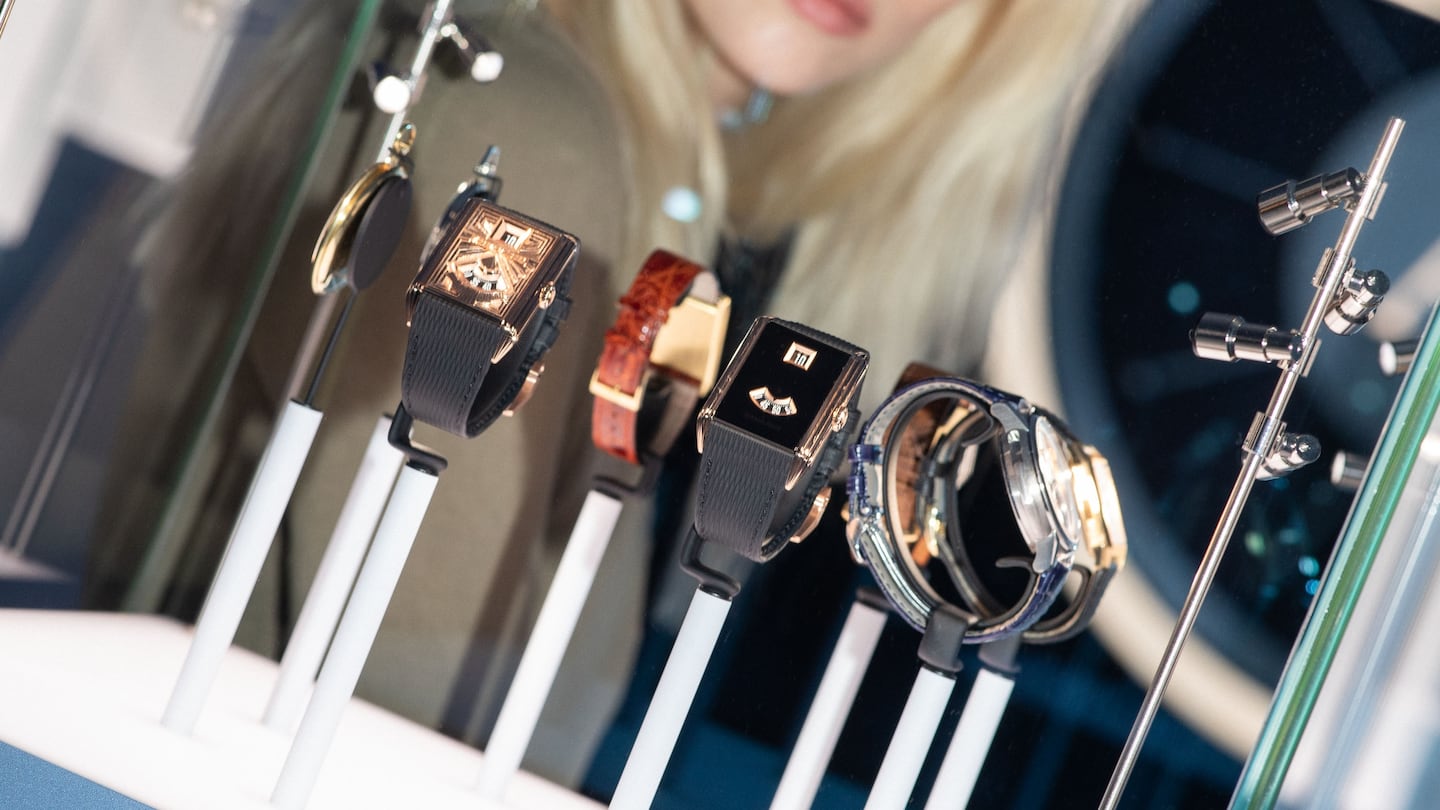
GENEVA — It’s being called “Geneva Watch Week” these days. Hundreds of brand executives and other industry insiders as well as members of the public flood Switzerland’s watchmaking capital this week to attend the Watches and Wonders mega-fair at the sprawling Palexpo conference centre and the dozens of events that have sprung up alongside it, from Time to Watches, a showcase for around 80 mid-market brands, to the first edition of Chronopolis, featuring 20 microbrands.
On offer, new watches from big name brands, high-level networking opportunities, celebrity spotting and — for the lucky ones — some big money deals with retailers.
For brand CEOs, there’s no bigger week in the calendar. They’re coming in hoping their launches make the most noise (beyond the mighty Rolex) and looking for cut-through in a crowded industry that’s pitching to a shrinking customer base.
ADVERTISEMENT
I’ll be spending five days visiting Rolex, Patek Philippe, Cartier et al. With 20-odd CEO sit-downs ahead of me, it’s going to be very interesting to see what mood they’re in. (Stay tuned for what I glean in the next edition of this briefing).
I’m expecting most to be feeling hyper-cautious. It was during Watches and Wonders last year that President Trump announced his Liberation Day tariffs, sending Swiss watchmakers into a spin. Another year of turbulence later, and few are expecting clear skies ahead, particularly with conflict in the Middle East and little sign of a clear roadmap to peace.
Signs of life had begun to emerge for the sector towards the end of last year. After two very difficult years, and before the war broke out, Swiss export numbers were climbing again. Brand bosses will need to tread the line this week between the optimism that framed the first two months of the year and the looming threat of spiking energy prices and dipping consumer confidence that are threatening the outlook.
Sticking to the script, Matthieu Humair, chief executive of the non-profit Watches and Wonders Foundation that hosts the show, told me last week the mood among exhibitors was “very positive.”
He was upbeat about public interest, too. Under pressure from brands, the show opened to paying visitors a few years ago and nowadays it’s split, with four days reserved for invited professionals and three for the public. Most events this week are free, but standard single-day entry into Watches and Wonders is 70 Swiss francs, with premium packages rising to 550 Swiss francs. Humair said that per last year, he was expecting to sell at least 20,000 tickets. Interest in watchmaking remains high. Whether retailers’ appetite to spend matches remains to be seen.
As if to highlight some of the battles going on behind the scenes, last week HYT, one of the independent watchmakers due to exhibit at the show, pulled out at the last minute, citing “ongoing strategic restructuring,” as the show’s 66 exhibitors became 65.
Of all the brands that bowed out of the big Swiss watch shows at the end of the 2010s, AP has been missed the most. Having surged into the top three Swiss watchmakers by revenue and been so instrumental in aligning the sector to mainstream culture over the past two decades, its no-confidence vote has hurt Watches and Wonders, and the industry, too.
Its first appearance at the new show (Watches and Wonders is a post-pandemic amalgamation of the now defunct Baselworld and SIHH shows) is a huge boost to organisers, visitors and the brand’s fellow exhibitors.
ADVERTISEMENT
Why come in now? AP’s chief executive Ilaria Resta has watched two shows go by since her appointment in 2023. In that time, she’s made herself and her company the de facto champions of watchmaking conservation, something she has said she considers a “responsibility” of the brand. She used the same word to explain her decision to exhibit this week, bringing AP in line with Rolex, Patek Philippe and other heavy-hitters whose businesses are surely not reliant on taking part in a big show.
Resta also made it clear AP won’t be treating Watches and Wonders like an old-school trade show where the emphasis was on behind-closed-doors sales meetings with retailers and will seize the opportunity to target consumers.
The company unleashed its new collection in February and will be exhibiting it this week through an immersive brand experience, expected to mirror something of the Wes Anderson-style walk-through it hosted at Dubai Watch Week in November last year.
This is the kind of approach brands will need to take if they are to drive interest and engagement — which will be key for the success of the watch fair this year. Even now, paying visitors aren’t universally welcome on stands and are often reduced to peering through vitrines as they might in shopping alleys — an approach that feels increasingly like a relic of an old world. Expect AP’s model to accelerate the demise of that approach.
In that light, Swatch Group’s continued absence continues to confound. The company that netted $8 billion in sales last year and that counts Omega, Longines and Breguet in its portfolio signed out of Baselworld after the 2018 edition, declaring it could spend the $50 million exhibiting cost more effectively.
That boast looks more fragile every year. Even without that overhead, profits have spiralled while Swatch Group has made itself an industry outlier. Macroeconomic factors apply (it was over-indexed in China and has been hit hard by the country’s luxury slump), as do concerns around its product and retail strategies, both of which now lag behind those of industry leaders. But it’s increasingly apparent that bypassing the industry’s big-moment event has divorced it from the watch community, a nebulous but powerful global network of fans and critics with huge influence over buyer perceptions of brands and watches.
Other no-shows like Breitling are thought to be warm to the idea of exhibiting in the future (by 2027 Breitling’s “House of Brands” concept will include Universal Genève, a defunct dial name revived last week, and Gallet, set for relaunch in September). But Swatch’s relations with the foundation show no signs of thawing. “If Swatch Group thinks this is the perfect platform, they are more than welcome to contact us,” Humair said coolly.
Swatch Group isn’t the only naysayer, of course. Richemont big-hitter Montblanc has ducked out, as has Bell & Ross, whose co-owner Carlos Rosillo told me recently he could do 500 point-of-sale events for the cost of being at Watches and Wonders.
ADVERTISEMENT
Montblanc’s self-imposed exile is harder to explain. It has just split out its hallowed Minerva division, creating a standalone sub-brand of sorts, and this week would have presented a seamless opportunity to put it under the noses of industry stakeholders. As it is, what will be seen by enthusiasts as significant news passes with little fanfare.
Few senior executives will be taking their eyes off the geopolitical situation between now and next Monday, when the show closes. None will be in the business of predicting what events might occur between now and then that could impact the sector; instead, there will be calls for stability, new ideas that stimulate interest and sales, and a doggedness that will see it outlast the storm. Watch brands will need to keep this focus for the fair to be successful.
Humair stressed the value in brands coming together now. “It’s important to have this human connection, to gather the professional and the public,” he said.
One question remains, however. Why not bring this week’s scattered events throughout the city together under one roof? “It’s not the plan to welcome other shows,” Humair told me. “We can welcome a few additional brands, but not a lot.”
He was careful not to criticise surrounding events leveraging the power of his show, once described by Rolex chief executive Jean-Frédéric Dufour as “pirates.”
“They contribute to the broader conversation around watchmaking,” offered Humair. “They bring additional energy. But Watches and Wonders remains the anchor of this entire dynamic and attracts the global audience and major brands.”
Loading recommended reads…
This week, Europe’s leading luxury groups LVMH, Kering, Hermès and Prada will show who’s pulling ahead in the stubbornly choppy environment.
Sales of gems, precious metals and artwork at Japan’s department stores climbed 19 percent in the first half of 2026 from a year earlier to $2 billion.
Though Adidas dressed both teams in the World Cup finals, the global football tournament still presented some bright spots for Nike, writes Bloomberg’s Andrea Felsted.
From our archive, the creator and host of award-winning podcast “Articles of Interest” joins BoF founder, CEO and editor-in-chief Imran Amed to explore what clothing can reveal about identity, culture, labour and the world around us.