Agenda-setting intelligence, analysis and advice for the global fashion community.
Agenda-setting intelligence, analysis and advice for the global fashion community.

What's up, down and making news this week in the fashion and beauty businesses.
After more than two years of malaise, luxury entered 2026 almost buoyant, with new designers in place, China inching forward and a rebound seemingly in the offing. Three key financial reports later, along with the sudden outbreak of war in the Middle East, that narrative looks considerably more fragile.
Over the course of a tightly packed week, LVMH, Kering and Hermès all reported first-quarter revenue. While none of the reports suggested a crisis, together the results underscored a set of shared pressures confronting the sector. This includes disruption of the war to both shopping malls in the region and tourist flows to Europe, the threat of inflation, uneven regional demand and the slow payoff from recent creative resets.
Individually, the underwhelming revenue figures came with plausible explanations; collectively, they challenged the idea that 2026 will be marked by a long-awaited recovery.
The key US market has held up better than feared, but without accelerating. China continues to show signs of improvement, but gradually. And while a number of the industry’s largest brands kicked off high-profile creative transitions in the past year, a substantial commercial lift at Dior and Gucci has yet to materialise. Meanwhile, at privately held Chanel — which reports only annual figures, later in the year — the arrival of new designs in stores has generated shopping frenzies.
ADVERTISEMENT
LVMH, the world’s largest luxury group, posted modest overall growth, but its closely watched fashion and leather goods division slipped again, falling short of expectations. Management highlighted resilience in a challenging environment, early signs of stabilisation in China and improving trends as new products reach stores.
The message was measured and familiar: LVMH’s recovery will take time, particularly as many of its largest brands navigate creative transitions and recalibrate assortments after a prolonged slowdown.
Kering’s week unfolded across two stages. First came a revenue update, which showed another difficult quarter driven by continued weakness at Gucci, where sales fell 8 percent. Attention then shifted to Luca de Meo’s first major investor presentation in Florence, where he laid out the group’s strategic reset.
Gucci, de Meo said, lost focus by trying to be too many things to too many people. “Gucci is not vanilla ice cream. It is spicy,” de Meo said during the marathon capital markets day. His response to Gucci’s multi-year plunge, which has seen revenue drop more than 40 percent since peaking in 2022, centres on clearer brand positioning, improved product quality, a more disciplined price architecture and faster execution. At the group level, Kering is pushing for tighter controls, greater centralisation and a clearly defined end to its reset phase by 2026.
Bluntly, de Meo said underperforming brands must break even within two years “or else I eject them from the system.” But what happens if Gucci is still struggling to get its mojo back in 2028?
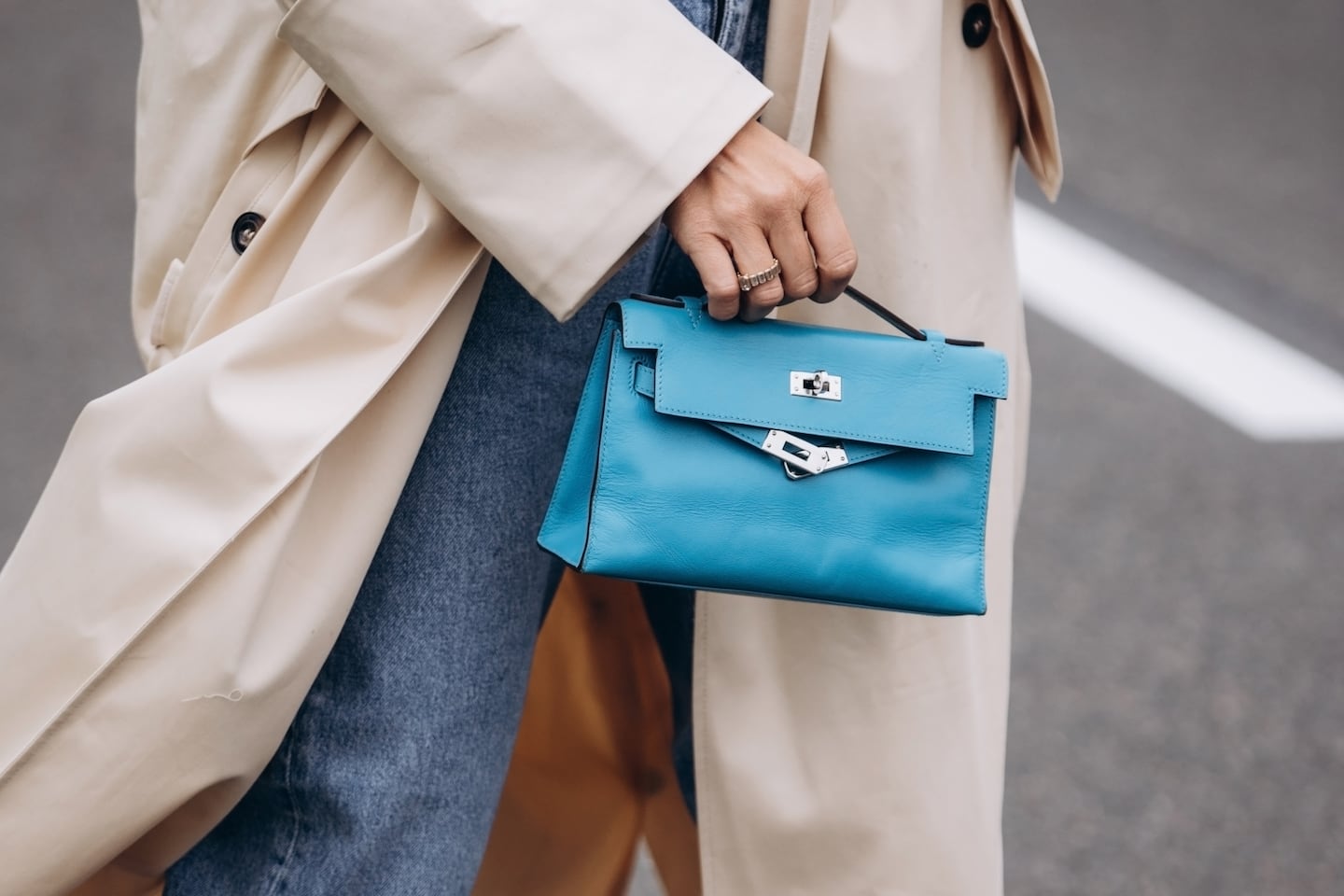
Hermès, known for consistently outperforming during downturns as wealthy shoppers congregate around established brands, once again delivered growth, but at a slower pace than expected. Demand remained solid, particularly in core categories, yet the deceleration was enough to unsettle expectations that the brand would remain largely insulated from the broader industry slowdown.
The French company’s shares dropped as much as 14 percent the day of the results, which served as a reminder that even the most tightly controlled luxury models are not immune to a softer global environment.
Investors, at least for a day, were forced to consider whether one of the most often repeated truisms of the current luxury slowdown — it’s a crisis of aspirational luxury — will continue to hold true.
ADVERTISEMENT
Shares of all three groups fell following their results, extending a period of investor caution towards the sector. The moves reflected less alarm than a partial reset, as investors and analysts tempered expectations for the pace and breadth of the elusive rebound. All three booked strong gains on Friday following the news that the Strait of Hormuz had reopened to shipping.
There were pockets of resilience among luxury companies.
Late last week, Brunello Cucinelli reported strong sales, illustrating the enduring popularity of quiet luxury brands catering to higher-end consumers. In the current environment, disciplined distribution and pricing together with a consistent aesthetic count for more than scale.
More results are still to come. Prada reports on April 30, with expectations supported by steady execution at Prada and continued momentum at Miu Miu. A solid showing would not rewrite the sector’s outlook, but it could help restore some balance to a narrative that has tilted sharply towards caution.
For now, any idea of a swift, broad-based luxury rebound looks overly optimistic. Growth remains patchy, pressure points persist and confidence has yet to fully return. While luxury isn’t broken, this week made clear that the recovery, when it arrives, is likely to be slower, narrower and more uneven than many had hoped at the start of the year.
By Eric Sylvers
Go Deeper:
Kering Aims to Double Profitability, Reignite Gucci with New Strategy
ADVERTISEMENT
The French conglomerate is reorganising key functions as part of a strategic overhaul unveiled by new CEO Luca de Meo in Florence Thursday.
LVMH Sales Remain Sluggish Amid Middle East War
First-quarter sales at the group’s critical fashion and leather goods unit fell 2 percent, missing estimates. Crisis in the Middle East is dampening turnaround plans despite signs of improvement in China and increased buzz at Dior.
The French leather goods powerhouse is losing momentum and may soon face its own ‘Capucine moment,’ writes Luca Solca, drawing a comparison with Louis Vuitton in the early 2010s.
Who’s up and down in the business of fashion, luxury and beauty this week.
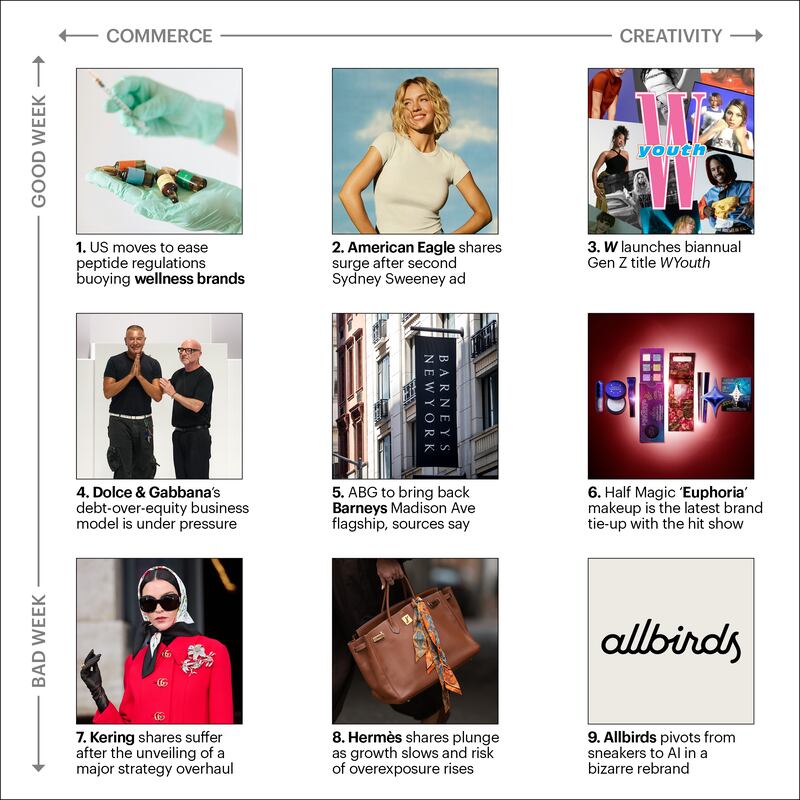
1. US health secretary Robert F. Kennedy Jr. said health regulators will ease rules on peptides, sparking a rally for wellness companies like Hims & Hers.
2. American Eagle Outfitters shares jumped after the retailer unveiled its second campaign featuring Sydney Sweeney, a year after an initial campaign that fuelled sales but polarised consumers.
3. W Magazine announced the launch of WYouth, a biannual print title for Gen-Z readers helmed by Ava Nirui and editor-in-chief Sara Moonves.
4. Dolce & Gabbana’s leveraged business model has allowed the label to remain independent but is being tested by the luxury slowdown. Co-founder Stefano Gabbana is reportedly considering selling his 40 percent stake.
5. Licensing giant Authentic Brands Group is bringing Barneys back to life at its previous flagship location at 660 Madison Avenue, sources said. Will it be the same?
6. Half Magic, the cosmetics brand from “Euphoria” makeup department head Donni Davy, debuted a “Euphoria” line to coincide with the premiere of the show’s third season, which has been widely panned.
7. Kering stock fell after the company detailed plans to double profit and close more Gucci stores, but failed to provide revenue guidance beyond a vague promise to outperform the market.
8. Hermès shares suffered a record plunge as Middle East sales slow and investors weigh the threat of overexposure, akin to what Louis Vuitton experienced in the early 2010s.
9. Allbirds announced a head-scratching pivot from wool sneakers to AI, inviting suspicions that it’s all a ploy to chase tech hype and buoy its stock.
Catch up on all the news of the week in fashion, luxury and beauty here.
Disclosure: LVMH is part of a group of investors who, together, hold a minority interest in The Business of Fashion. All investors have signed shareholders’ documentation guaranteeing BoF’s complete editorial independence.

Eric Sylvers is Milan Correspondent at The Business of Fashion. He is based in Milan and leads BoF’s coverage of all things Italian.

Cathaleen Chen is Retail Editor at The Business of Fashion. She is based in New York and drives BoF’s coverage of the retail and direct-to-consumer sectors.
Loading recommended reads…
As Milano Beauty Week closes its biggest edition yet, Cosmetica Italia and its partners are betting that the country’s entire beauty ecosystem can become a brand in its own right.
The ultra-fast fashion company said sales had been bolstered by marketing partnerships with music festivals, a pop-up shop on London’s Oxford Street and local Christmas gift events.
Frasers Group is expanding its holdings in luxury and retail brands, but what it wants from those investments is not always clear.
Tim Blanks joins Imran Amed on The BoF Podcast to discuss why the season’s strongest statements — from Erdem and Simone Rocha in London to Rick Owens, Miuccia Prada and Matthieu Blazy at Chanel — came from designers acting on conviction rather than consensus.