Agenda-setting intelligence, analysis and advice for the global fashion community.
Agenda-setting intelligence, analysis and advice for the global fashion community.

Subscribe to High Margin by Robert Williams: perspectives on creativity and business in the world of luxury.
Now is the spring of our discontent: Nearly everyone I’ve spoken to lately seems to be running low on patience — and hope — for big luxury brands to bounce back from their multi-year slump.
Fashion’s sweeping program of designer resets has largely succeeded at renewing interest and buzz. People are paying attention again to what Gucci, Dior, Tom Ford, Margiela and Chanel are doing. But with the exception of that last one — where early signals from the retail rollout of Mattheiu Blazy’s collections suggest customers are buying into the products, not just the image — designer resets have yet to materially impact sales. Fashion increasingly seems like a spectator sport, consumed on Instagram.
It’s still early days: big brands can’t overhaul their assortment overnight. But should they need to? All of this attention ought to be creating a halo for icons and carry-over products. But buzz isn’t a substitute for market fit, and nearly three years into the industry’s downturn a lot of brands are still focussed on getting people to care about $4,000 handbags, and struggling to cover other segments with designs that feel like more than a consolation prize.
ADVERTISEMENT
In this week’s edition:
A few items from the news before we dive into the week’s main topics.
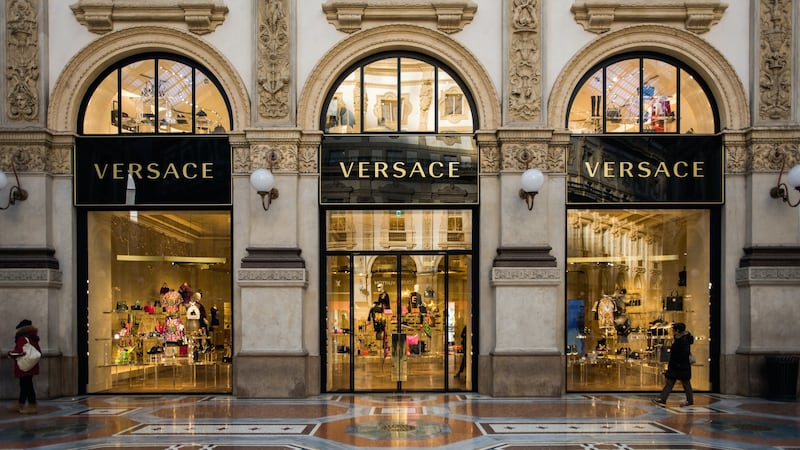
I can’t say I was surprised to see a spate of gloomy reports lowering forecasts for luxury this week. I’ve been keeping a closer-than-usual eye on Paris’ main shopping streets, and with very few exceptions the stores have been mostly empty. Empty Versace, despite all the hype for Dario’s one-and-only collection, empty Vuitton–eery! Chanel and Saint Laurent have been a bit busier, but hardly mobbed.
This is reflected in the numbers. War in the Middle East dominated the narrative during Q1 results season, but even correcting for that crisis the underlying sales momentum remains lacklustre, two-plus years into a sector-wide downturn.
“The sector’s weak fundamentals remain unchanged,” Berenberg analysts wrote May 8. “We would be sellers of any bear market rally. Even adjusting for the impact of the conflict in the Gulf, the weakness of the underlying Q1 data raises questions about whether luxury remains a growth sector. The Chinese and aspirational consumers continue to struggle, burdened by structural headwinds that are yet to abate.”
Berenberg breaks down the bear case for luxury point-by-point:
Barclays also put out a bearish report, suggesting growth would remain lacklustre near-to-medium term and then slow down further long-term.
Gird your loins. The only good news, according to Barclays, is that most of the slowdown is already priced in. The dip in luxury stocks (LVMH is down 28 percent year-to-date) has already wiped out nearly all of the sector’s post-pandemic gains, compared to a far more modest decline in fundamentals.
ADVERTISEMENT
It’s worth mentioning that not all sell-side analysts are on board with this bear case: UBS’ Zuzanna Pusz reminds me that we’ve seen this movie before, when a crackdown on gifting and corruption in China coincided with widespread brand fatigue from 2014 to 2016. Brands retooled their offer — adding streetwear and sneakers to keep up with casualisation — and went all-in on the creative visions of designers like Alesssandro Michele, and it worked. Despite easy comps, she sees sequential improvement over the past quarter as a sign that novelty is getting customers in the door yet again.

As renewed designer buzz struggles to meaningfully ignite store traffic, placemaking continues to emerge as a top priority.
It’s hard to consider bankrolling splashy retail investments in the midst of a sector-wide downturn with no end in sight. Mega-stores remain reserved for mega-brands: Louis Vuitton’s “Le Louis” flagship in Shanghai, Tiffany’s Landmark, Dior’s Avenue Montaigne complex (and its little sister on Madison Avenue). Hermès has one coming on New Bond Street, set to open in June. Gucci has a massive new Paris location forthcoming on Rue de Castiglione.
Marshalling the funds for this kind of location requires a rethink of the global network: BoF’s Eric Sylvers had a feature this week on how fewer, but more spectacular locations are driving the market.
For brands that can’t rely on blunt scale, service and uniqueness are the ordre du jour for turning a store into a destination.
“We’re reentering an era where the importance of stores and physical spaces is going to be increasingly important in people’s minds across generations and especially for younger customers,” Paul Smith’s executive chairman Ewan Venters told me on a call this week. “People want to touch stuff, feel stuff, have a conversation about things. They want to learn and be educated about how something is made and why.”
Prior to joining Paul Smith last year, Venters was CEO of London’s Fortnum & Mason — an iconic food emporium which has reemerged as one of Britain’s premier gifting and tourist destinations — before piloting the global expansion of art giant Hauser & Wirth, which doubled its network from 9 to 18 galleries over the space of 5 years. Hauser & Wirth also pushed into food and hospitality with its “Artfarm” network of restaurants and hotels.
This week, the brand named a new managing director, Zia Zareem, who previously worked with Venters at Hauser & Wirth and Fortnum & Mason, as well as a stint at Selfridges.
Whether it’s bags, biscuits or blue-chip art, the key to effective placemaking “is to build a network so you can bring people in, not just for a glass of champagne but so you can say ‘I know what you like and I’ve got some things put to the side,” Venters said. “Then you have to keep doing things that are unexpected” — whether it’s the buzzy exhibition programming at galleries like Hauser & Wirth or “clever collaborations”. Paul Smith is currently seeing traction with its “Made in the British Isles” program of collaborating with British and Irish producers including ceramicists, knitters and more, Venters said.
Loading recommended reads…
Influencer marketing represents a nearly $44 billion dollar industry that’s set to surpass traditional media, but a stigma around its personalities and economics still persists. Should it?
This week’s LVMH and Kering results suggest a fragile recovery is underway in the face of sluggish Chinese demand, succession drama, wildfires and heat waves.
The Permira-backed womenswear retailer and some of its shareholders had raised $211 million in its IPO on Wednesday, with shares opening at $15 apiece.
The Spanish beauty company reported first-half revenue growth on strong demand for makeup from Charlotte Tilbury.