Agenda-setting intelligence, analysis and advice for the global fashion community.
Agenda-setting intelligence, analysis and advice for the global fashion community.

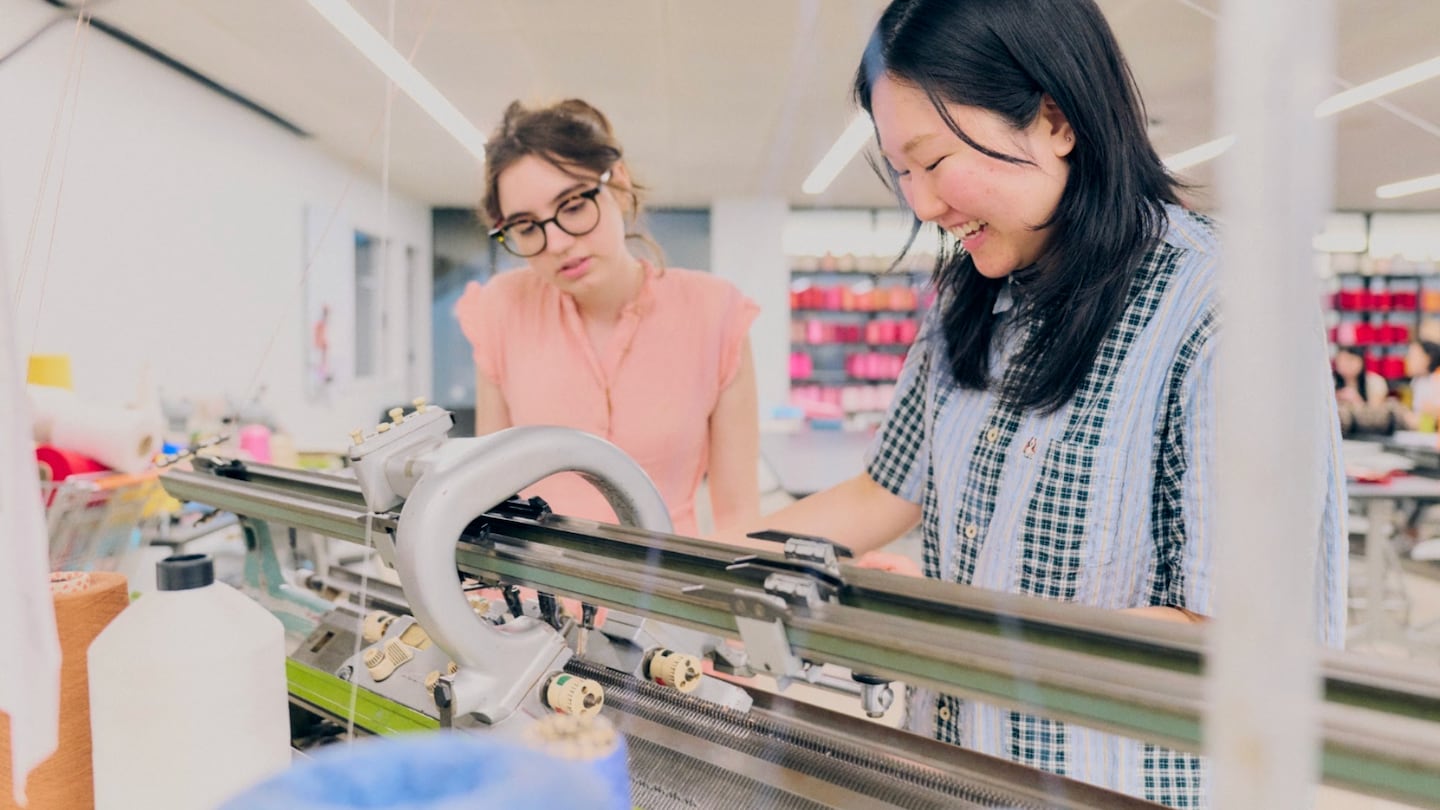
Bazaar, a Savannah, Ga.-based retailer that opened in March, is part store, part classroom.
Inside, it has all the fixings of a luxury boutique, including one-of-a-kind pieces by designers including Christopher John Rogers, Emily Dawn Long and Kate Barton, bench-crafted jewellery and ceramics. But it’s also a key facet of the curriculum for Savannah College of Art and Design’s fashion programmes: the store employs current students and stocks their work; its manager is a SCAD graduate, too.
The goal is to show students the entire retail ecosystem firsthand — not just designing a product, but merchandising it, selling it and understanding what resonates with customers.
“You’re essentially doing what you will be doing in the workplace in a couple of years,” said Dirk Standen, dean of the School of Fashion.
ADVERTISEMENT
It’s one example of how fashion schools are working to keep pace with a rapidly changing industry. Artificial intelligence is reshaping the skills employers expect from graduates, while rising tuition costs and a tougher labour market have students and parents asking harder questions about a fashion degree’s value.
The response isn’t an overhaul so much as an evolution. Schools are strengthening industry partnerships, weaving AI into coursework and placing greater emphasis on entrepreneurship and workplace skills such as critical thinking, collaboration and judgement. They’re also updating longstanding programmes in areas like merchandising and marketing to reflect how the fashion business operates today, expanding instruction in areas such as social media strategy and digital storytelling alongside hands-on training in skills like tailoring.
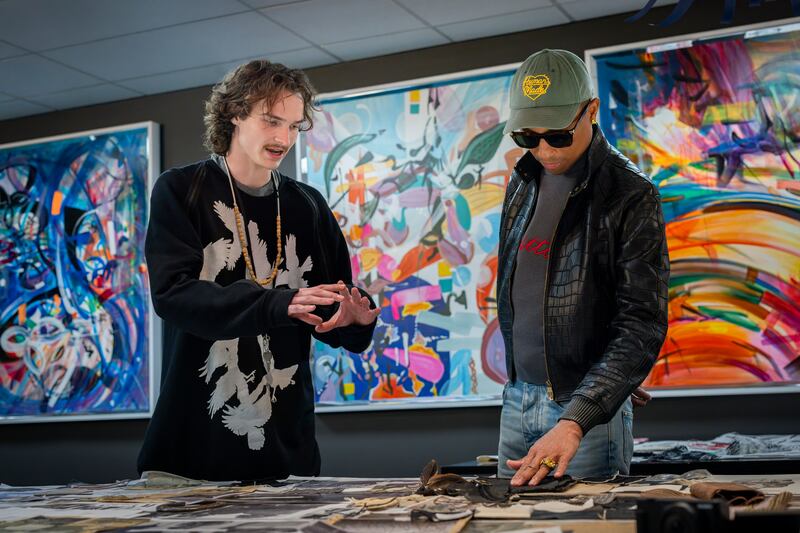
Schools are also doubling down on industry partnerships and enlisting alumni mentors to help students break in. From Central Saint Martins to the Fashion Institute of Technology, relationships with companies including LVMH, Gap Inc. and Nordstrom have expanded to include scholarships, mentorship, design competitions and classroom projects.
At the same time, fashion school leaders say students also need to broaden their views of what career success looks like. Many students arrive focused on becoming designers or creative directors, viewing retail sales as beneath someone with a fashion degree. But as brands place renewed emphasis on customer experience and commercial acumen, time on the shop floor is more valuable training than fallback option. As AI becomes more prevalent, many educators also expect traditional craft skills — think sewing, knitting, patternmaking and draping — to become even more in demand.
Schools can create opportunities, they argue, but students still have to meet the education process halfway.
“You could easily think we’re not offering what they want,” said Liz Gee, dean of the Fashion Business School at London College of Fashion. “But I just don’t think they see the value in the offer … we know that’s what they need and what the industry is asking for.”
Fashion students today must contend with a slower-growing industry and an expanding creator economy, where platforms like TikTok and Instagram have made it possible to build careers without a degree. The schools are updating long-established programmes to reflect changing employer expectations, incorporating everything from AI and social media strategy to entrepreneurship and other workplace skills alongside traditional craft.
At FIT, for instance, the advertising and marketing programme has expanded its focus on social media and content creation, with coursework exploring how brands build audiences across platforms like TikTok, YouTube and Reddit. Campus events now regularly feature fashion and beauty creators — influencer panels are among the school’s best-attended, said FIT president Jason Schupbach.
ADVERTISEMENT
“You can’t teach marketing without teaching about [the creator economy],” he said.
Schupbach also expects the curriculum to keep evolving as AI reshapes how consumers discover brands and information online.
At LCF, courses and campus activations have also shifted in response to employer feedback, said Gee. Hiring managers increasingly want graduates who think more entrepreneurially, take initiative, communicate effectively and present as more “commercially creative.” Visual merchandising, for example, has evolved from “physical mannequins and positioning” to digital brand experiences, storytelling and content creation.
“Whether it’s in their curriculum or outside of their curriculum, we’re giving them a really safe space to fail, experiment with a business idea, work out whether it’s feasible … to take a risk, present skills, defend [their] ideas,” Gee said.
Schools are also expanding alumni mentorship, recruiting faculty with active fashion careers and deepening partnerships that provide internships, scholarships and, increasingly, direct pathways to employment, their leaders say.
In April, FIT unveiled one of its biggest industry partnerships to date: the Doris Fisher Creators Program, a year-long mentorship initiative with Gap Inc. that pairs 30 students with company executives and creatives for career guidance, industry exposure and networking opportunities. This year, FIT’s business school also inked a research partnership with eBay, which recently acquired the Gen Z-favourite resale marketplace Depop, Schupbach said.
“We had an internal contest with [250-plus] Gen Z and Gen Alpha students working on this in teams,” he said, with the winners receiving cash prizes up to $1,000. “The things that the students came up with were so brilliant — they were using AI to make whole [pseudo] websites, marketing campaigns and commercials.”
Central Saint Martins has long worked with companies including LVMH, which provides annual financial support, said Hywel Davies, Dean of M School at Central Saint Martens. More recently, it launched a five-year partnership with China’s Trendy Group, parent company of Miss Sixty, which introduced a denim-focused awards programme in June to recognise students who use denim in new ways, such as recycling old clothes.
ADVERTISEMENT
“We’re focusing on partnerships that bring financial opportunities for the courses and students,” he said.
Those offerings matter more than ever, school leaders say, because prospective students increasingly want to know exactly what they’ll gain from a fashion degree — and how it will help them build a career.
“Students need to know there’s value … what skills they’re going to learn, and what opportunities they’re going to get by investing their time,” Davies said.
It’s true that the fashion industry has long grappled with a mismatch between the number of aspiring fashion professionals and the jobs available – but the situation has worsened, some insiders say. Critics argue that it raises difficult questions about schools that continue to enroll hundreds of students each year.
“The biggest disconnect is between how many students go into fashion education and how many jobs are actually available for them,” said Olya Kuryshchuk, founder and editor-in-chief of 1 Granary, a media and career platform for fashion students and graduates. “A fashion design career has become the equivalent of a sports career: it’s only for a few, it’s incredibly competitive, you can lose your role any minute, and it doesn’t last forever. … It’s survival of the fittest.”
Schupbach said prospective students are increasingly looking for lower-cost options that don’t require a four-year commitment, prompting FIT to further expand its offering of certificates in areas like handbag making and sewing, as well as a course launched this year focused on tailoring with support from Nordstrom. The department store said it hired nearly half the students who enrolled in the free programme.
“What I hear people complaining about is the cost and the time. Is it worth it?” he said. “We fix both those problems.”
Still, some school leaders say the onus is largely on the students to take advantage of the opportunities available to them. One of the biggest frustrations is seeing students ask for greater industry exposure and mentorship, only to fail to show up when it’s offered, Gee said.
“We bring in a lot of industry. We bring them into the classroom and have lots of extracurricular talks to give students the exposure they say they really want, but they don’t come,” she said.
Students can also be fixated on a narrow set of careers. Design roles, for instance, are the most sought-after, but represent only a fraction of the positions available across the industry.
“For every design job, there’s probably 10 marketing jobs,” Standen said.
Regardless, schools insist that a fashion education in itself is an asset. Particularly for jobs in operations, supply chain, marketing and some aspects of merchandising, graduates will compete with professionals from a range of schools and backgrounds. If working in fashion is the goal, “immersion in this sort of specialist creative environment is more important than ever before,” Gee said.
“[Students] could go and do a general business degree somewhere else and then take that into the fashion industry,” Gee said. “But actually, studying business within the fashion environment is more important. It gives them that edge... They’ve got to stand out out there.”
As AI reshapes entry-level jobs and the fashion industry slows, students are questioning whether a fashion degree still delivers on its promise. BoF Careers’ Dan Hastings joins The Debrief to discuss what schools are getting right, where they are looking to evolve and the skills graduates will need to succeed.
Hefty tuition prices, unclear career pathways and new routes into the industry are reshaping how young people invest in education.
Soft skills like agility, intellectual curiosity and an ability to work across departments and categories will be crucial in 2025 — but true success will mean playing the long game.
Sheena Butler-Young is Senior Correspondent at The Business of Fashion. She is based in New York and covers workplace, talent and issues surrounding diversity and inclusion.
Loading recommended reads…
Satoshi Kondo and Sarah Burton show us why they’re BoF 500 cover stars.
After nearly three decades under LVMH, the designer is opening a new chapter at his namesake label with new owners and no guarantees. Ahead of an in-depth BoF 500 cover story by Eric Wilson out next week, Jacobs joins Imran Amed on The BoF Podcast to reflect on the fashion slump and what comes next.
A growing Dutch outcry over the glasses mirrors a broader backlash against smart glasses equipped with cameras.
The ultra-fast-fashion giant’s share price sank to a record low after it released its first results as a public company earlier this week. With sales growth under pressure, the company must find a way to stand out in a hyper-competitive market.