Agenda-setting intelligence, analysis and advice for the global fashion community.
Agenda-setting intelligence, analysis and advice for the global fashion community.

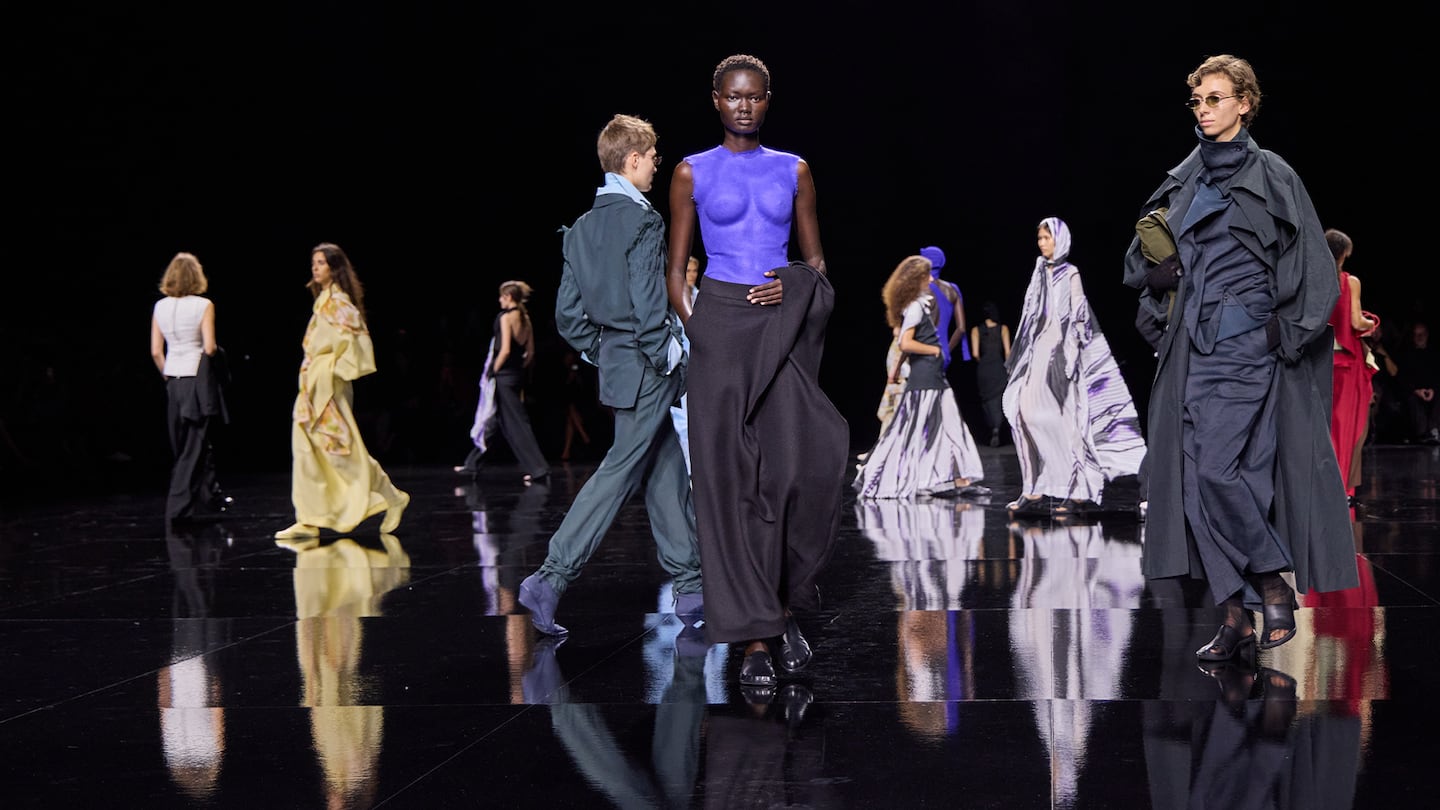
PARIS — Issey Miyake didn’t like it when you called him an artist. He was too humble to accept the idea that what he did might be considered a calling higher than the craft of clothes-making. I never did find out how he’d deal with being labelled a magician (Miyake died in 2022) but his acolyte Satoshi Kondo is carrying Issey’s torch so brilliantly that I can probably get a sense of it by proxy.
Season after season, Kondo and his studio expand on Issey’s exploration of the way the human form interacts with fabric, and the results are brought to us in presentations as artful and intelligent as Issey’s own. Friday’s show reminded me of his legendary collabs with the Frankfurt Ballet in the 1990s. Choreographer Tess Voelker led her dancers through a lyrical interpretation of the Japanese concept of Ma, which was Kondo’s starting point.
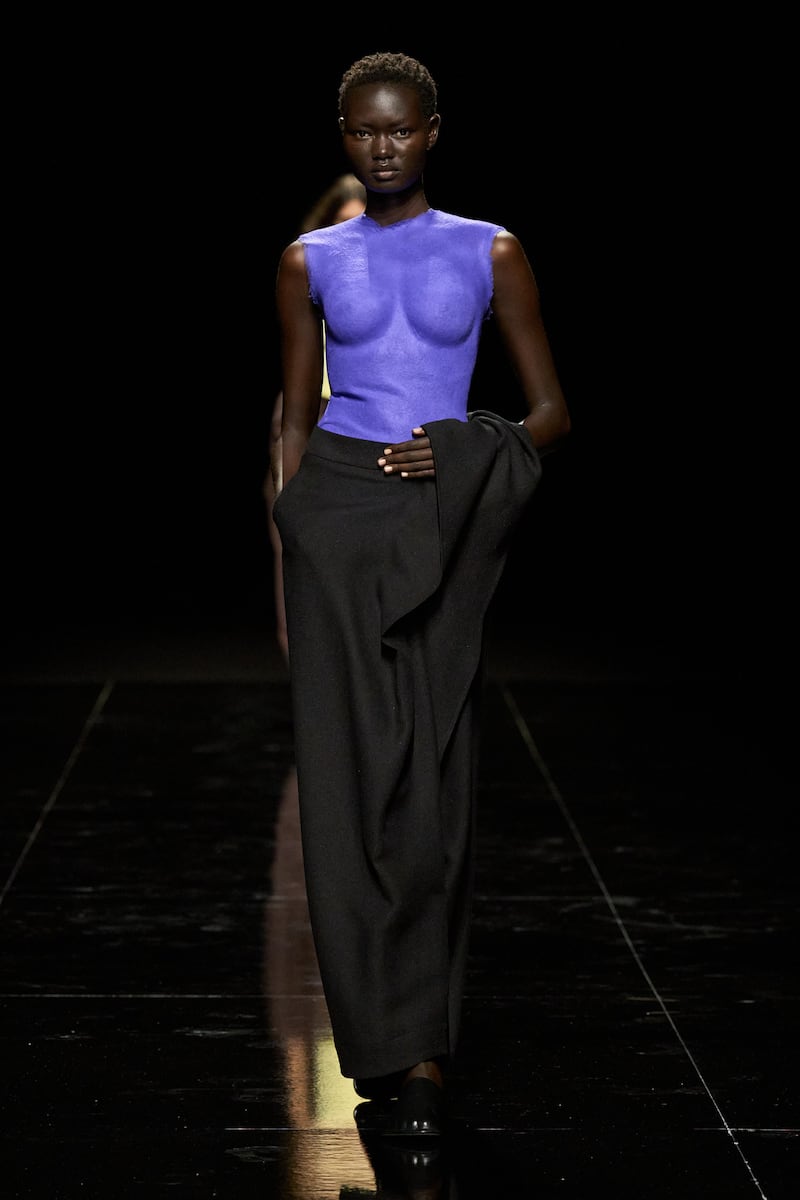
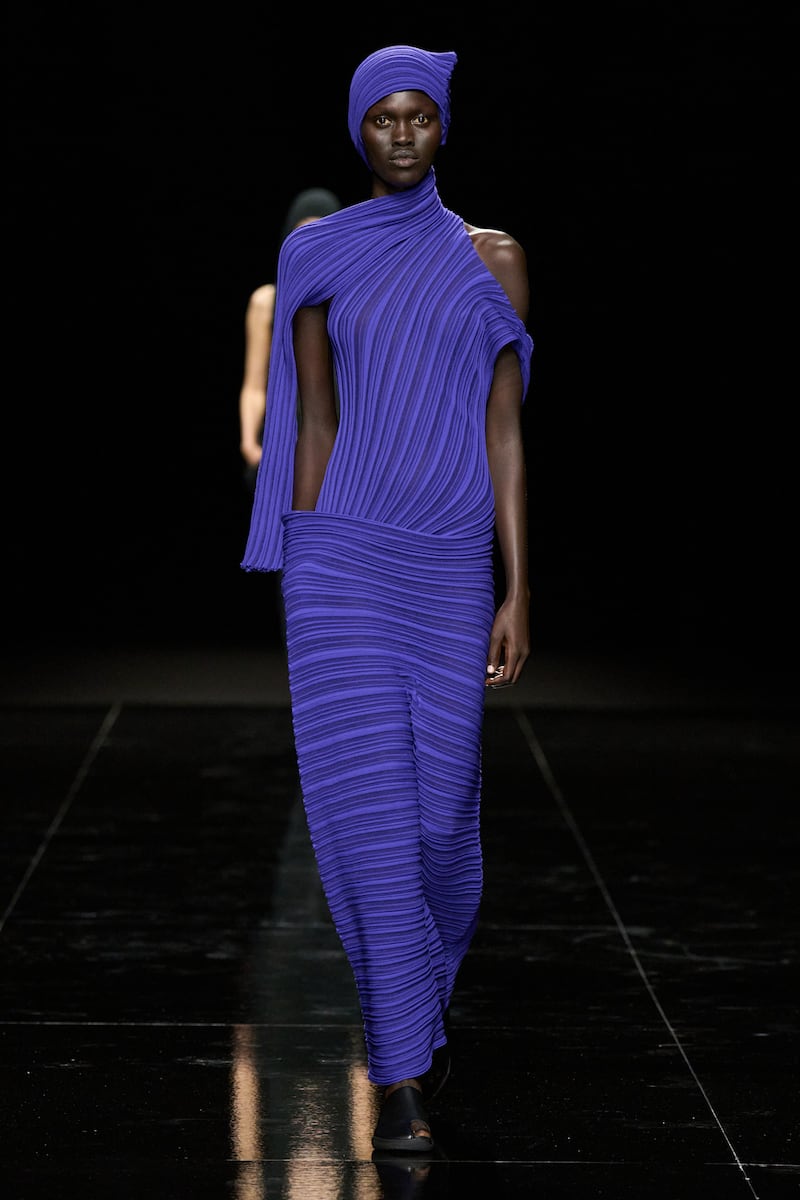
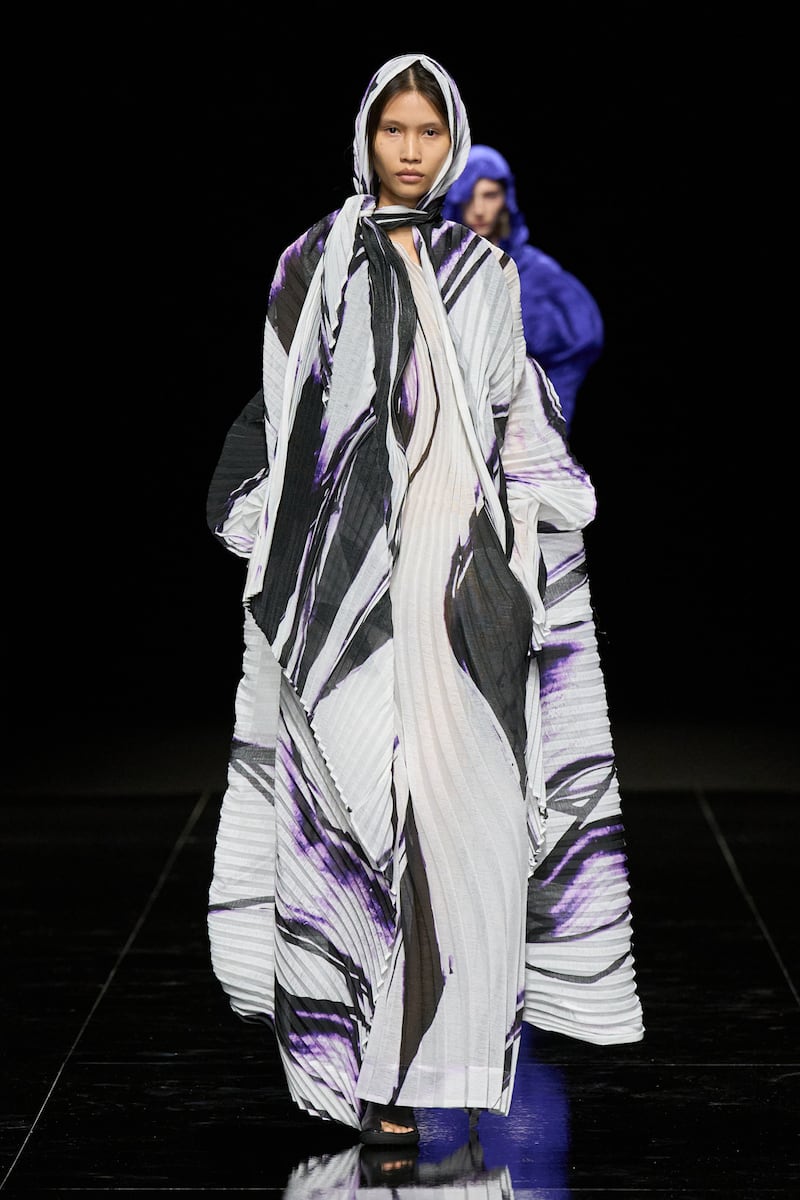
Ma is, by dictionary definition, “an active, meaningful emptiness, it calms the nervous system and prevents conflict during moments of tension.” Clearly, what the world needs now is ma, sweet ma. In clothing, it’s what happens in the space between fabric and flesh. The words used in the show notes to describe the clothes told their own story: ripple, crinkle, undulate, curve, cocoon, bubble, billow, balloon, each of them suggestive of some elemental interaction with nature. For example, seamless knits rippled around the body like water, Issey’s classic wind coat was updated in a coat of fine nylon that looked like it was inhaling and exhaling air as its wearer walked, pants cut from a single piece of fabric also seemed to be walking on the wind. And there was a literal spring (appropriate for the season) in the horizontally pleated rectangle of fabric that curved around bodies.
ADVERTISEMENT
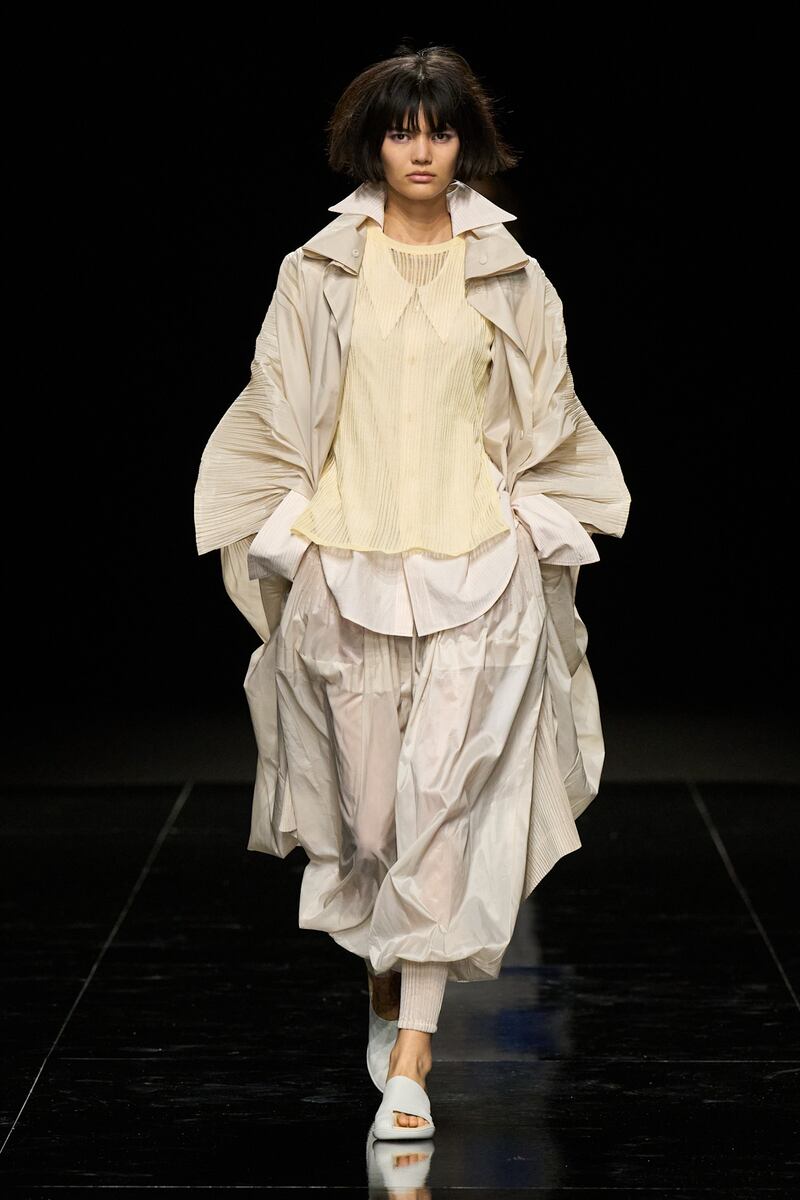
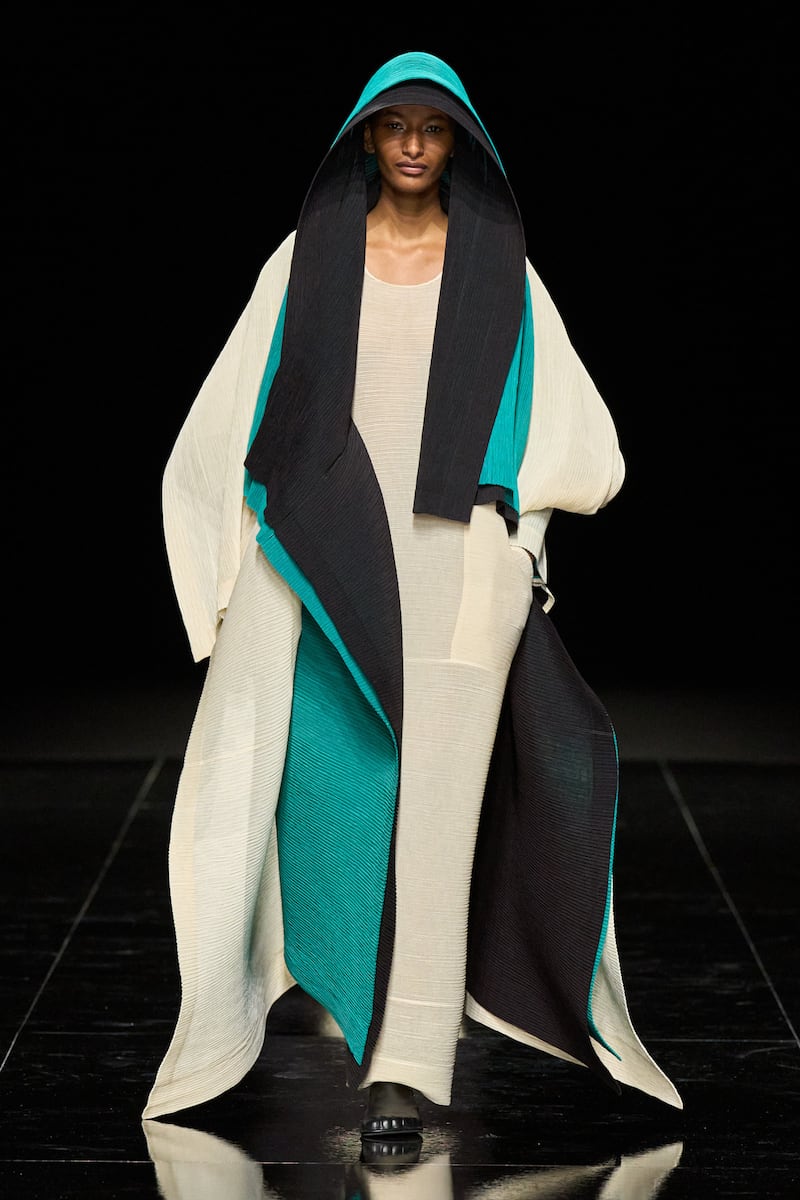
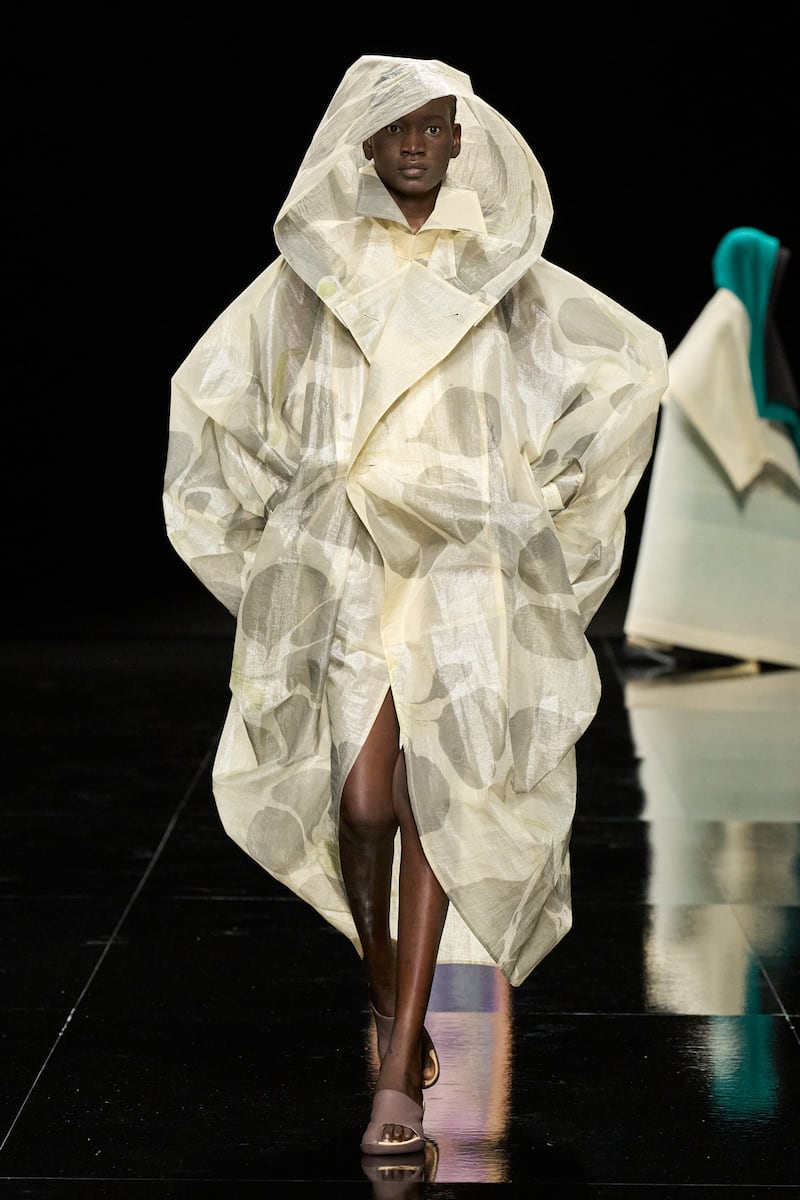
Starting from a point of absolute simplicity, like a single square of fabric, and expanding on it with the experimental precision of science, has always been one of the brand’s singular challenges. Voelker and her corps acknowledged that with the dance piece that opened the show, their movements animating a square of cloth, eventually metamorphosing it into a giant tent from which the models emerged (I told you it was magic!). The live musical accompaniment was similarly alchemical. Multi-instrumentalist Koki Nakano started with a simple prelude on his Steinway and by the end of the show he was generating a symphony of sound, courtesy of his battery of electronics.
The clothes followed a similar path, from the directness of a torso moulded to the body (actually spun with melted resin “like a silkworm spinning its cocoon”) paired with trousers, to swirling, hooded, extravagantly pleated and layered looks that suggested nomad queens on other worlds. And if there is often something otherworldly about the beauty of a Miyake collection, it has a lot to do with the input of people like the Kyoto artisans who handpainted an ink-marbled effect on sheer organza pieces.
A very different kind of artisanship defined Sarah Burton’s new collection for Givenchy, although you could say the absolute precision with which she approaches her work is a marriage of art and science that’s analogous with Kondo’s. Here, she wanted a sharpness to cut through all the noise in the world. Even the release that accompanied the show dispensed with the usual fol-de-rol. It read, simply: “I wanted a sense of balance and clarity. A wardrobe to bring precision and simplicity to dressing as we speed through the multiple perspectives and perpetual motion of all our lives.”
The first look was the mission statement: black leather dress and matching boots, both unzippable to spectacular effect. Pencil skirt or one leg out… or both? Tank top… or shoulder straps? The effect was amplified by the fact that the lining glowed yellow. Actually, there was something a little ma in the look. The zippers allowed you to manipulate the space between dress and body by encouraging air to circulate. After summer’s killer heatwaves (with more on the way next year), this will undoubtedly become more of a consideration for designers. Burton was already using lots of cottons, lightweight fabrics, washed satins.
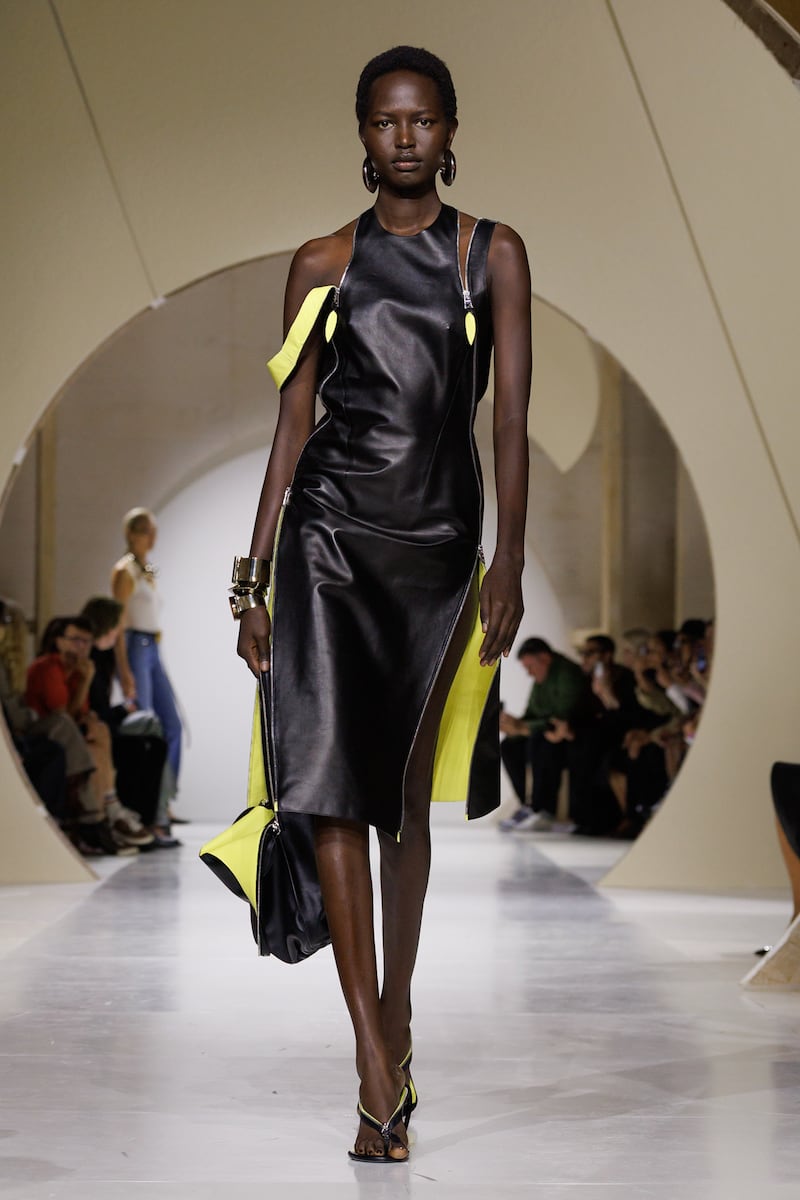
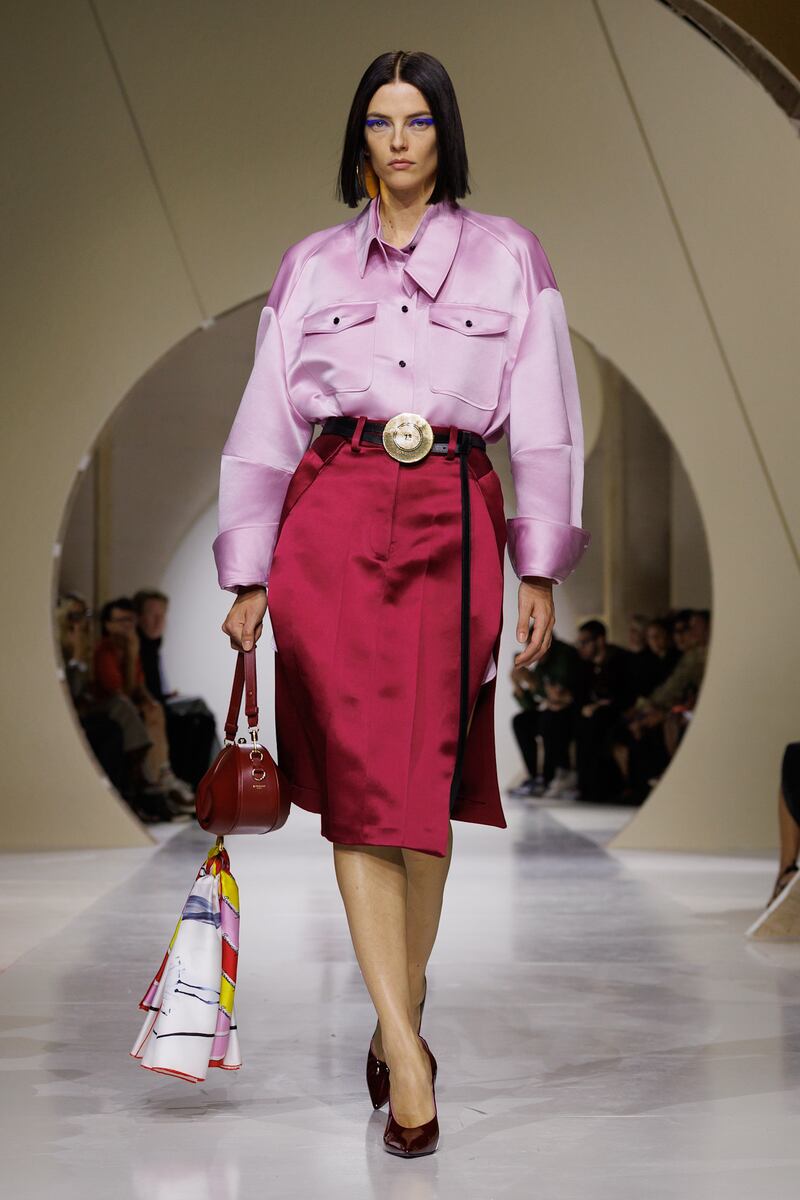
Black leather, long, sinuous zips, the suggestive interior… the hint of fetishwear was hard to resist. But Burton did resist it, insisting, instead, that it was not fetishisation but “a stripping back” (maybe even a peeling back). She sliced into and brought forward the front of one of her superb jackets so it looked more like a gilet, then paired it with trousers that were tailored low on the hips to create a suit so formidable it read Goldman Sachs dominatrix. Perfect with the patent stilettos in a bull’s blood shade Burton called “nail varnish.” There were hairclips shaped after lipsticks, belt buckles modelled on compacts, a purse she referred to as the chestnut bag with a sexy little pucker of leather and a pink lining, all of them going with the red (or lilac) blouse and maroon skirt combination which has always struck me as particularly maîtresse-y. Ok, Burton conceded, maybe a little fetish-y. She wanted everything to feel a little off-kilter. Hems dipped and slipped sideways. A pinstripe jacket was opened up, flattened out, its sleeves detached and patched onto the front, a trompe l’oeil that was actually a lot off-kilter.
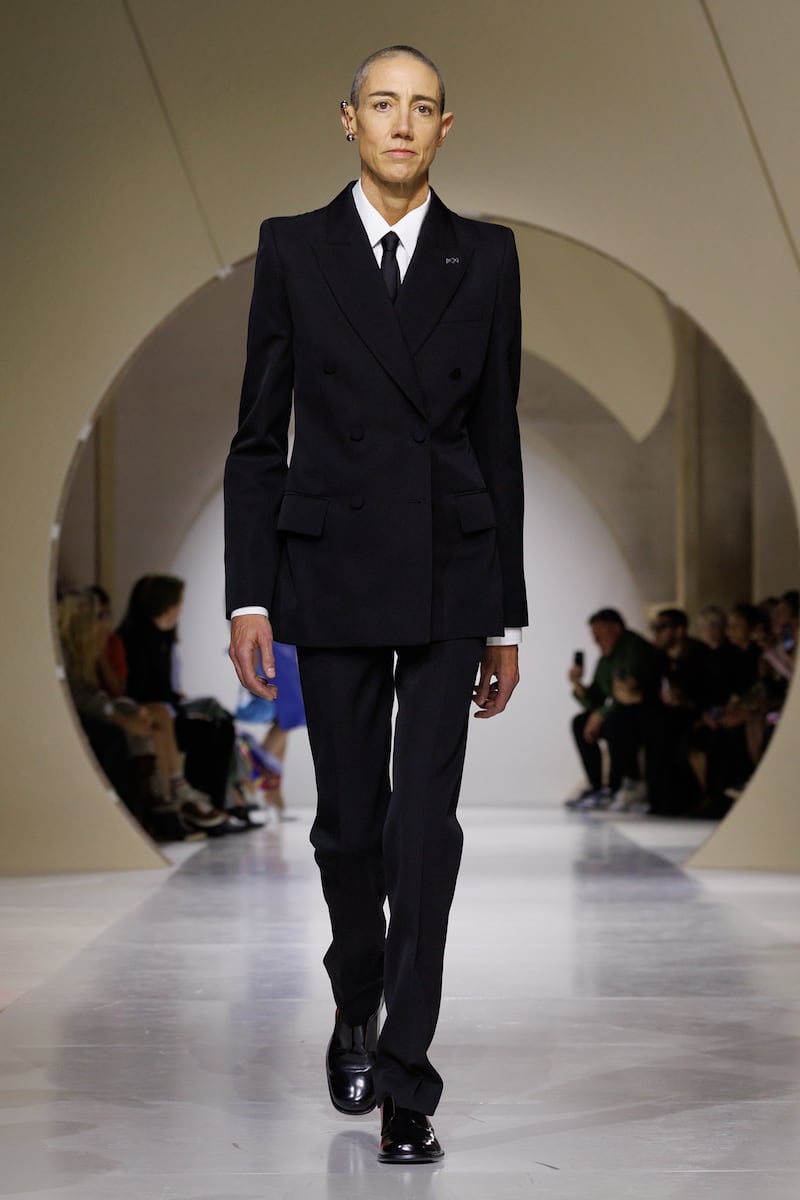
Tucked away in the hallway outside her studio was a mood board covered with Helmut Newton photos. “She’s always a Newton woman,” said Burton during a preview on Thursday. “Sharp and sexy, in focus and fearless. There’s always been an eroticism in what I do. I really love the fact that women want to show their bodies or want to feel a certain way.” She insisted it’s her mission to “embolden” them, which will surely gratify the women with whom she claims to be in constant conversation about what it is they want their clothes to do for them. The immaculately tailored coats and suits, and the perfect white shirts served that purpose.
ADVERTISEMENT
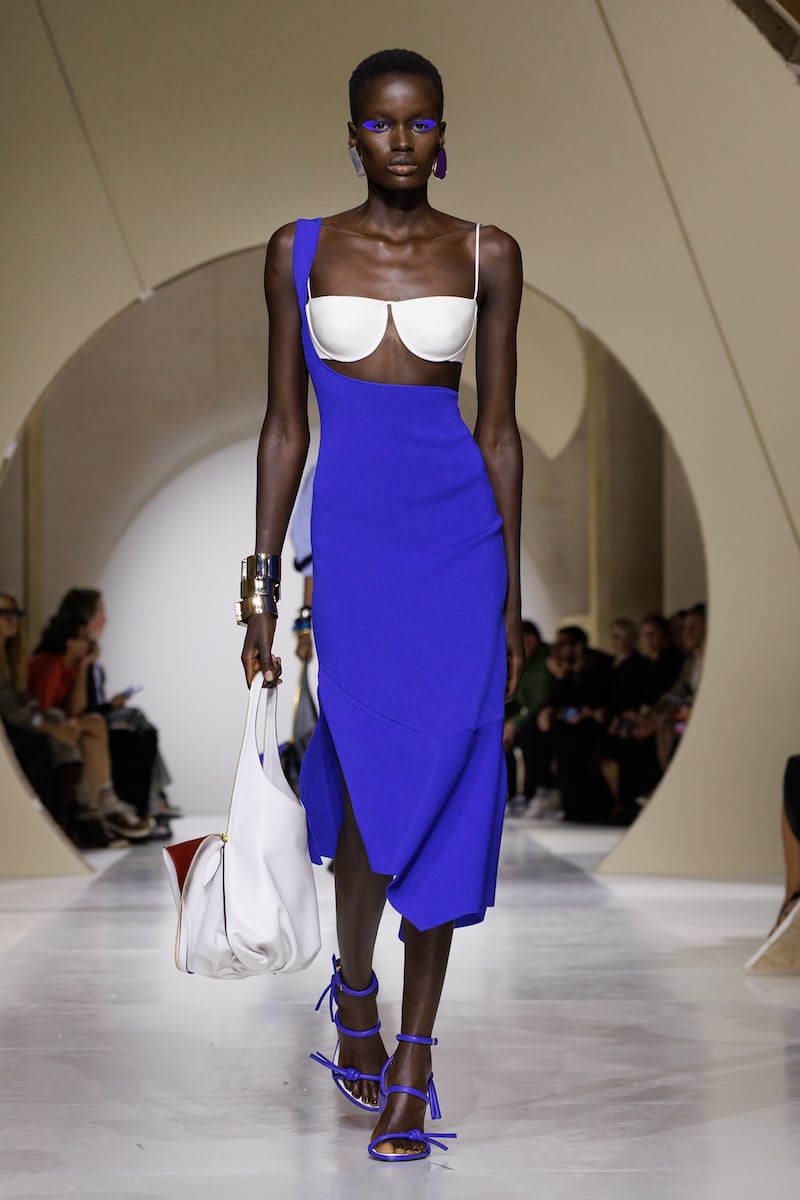
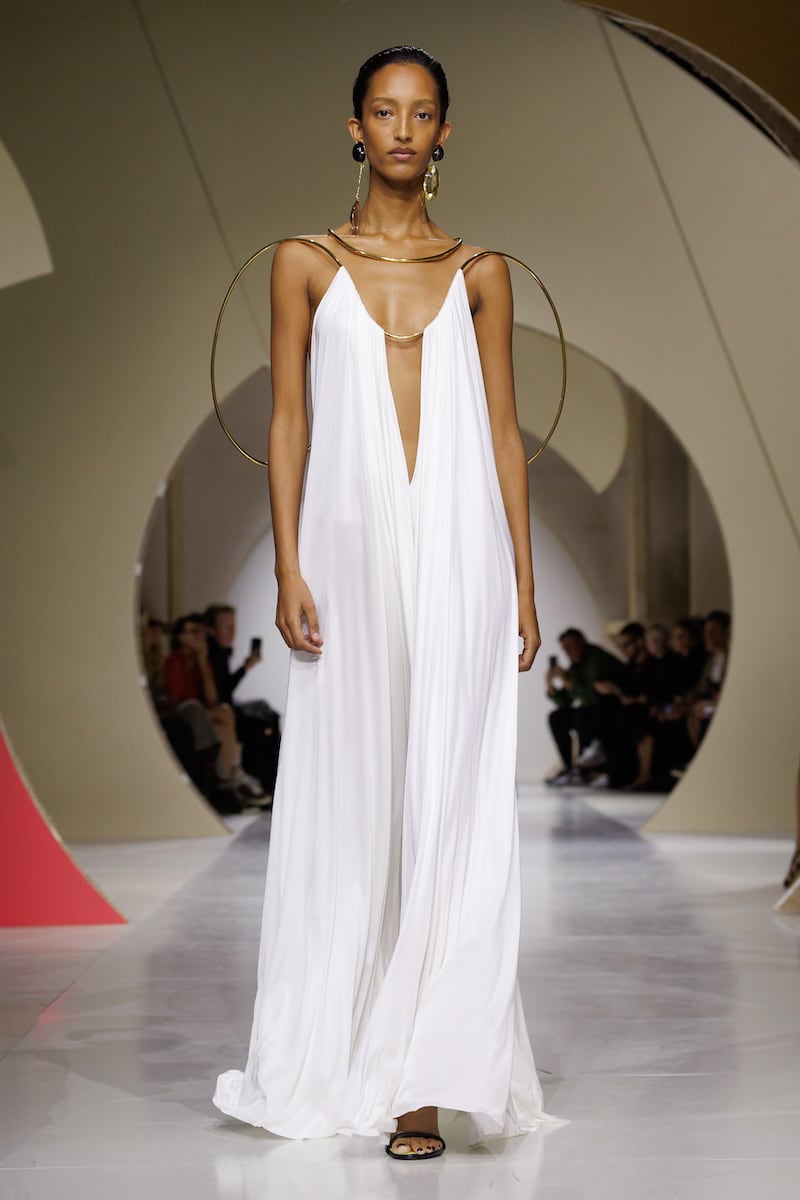
But there was another element which hinted at other ambitions. Two columns of fabric — one white, one Klein blue — were draped off metal frames inspired by the mobiles of American sculptor Alexander Calder. “A dress that hovers off the body on a piece of jewellery, like she’s wearing nothing is very sensual for me,” Burton mused. “Everything’s in suspension, the whole world is in flux.” It was a subtle, elegant way to defy that noise she was talking about earlier. Likewise, the beaded evening dresses at the end, the beads so fine and so many they created an effect akin to a tattoo on the skin. Is there haute couture in her future? “It is talked about,” she said with a small smile.
Loading recommended reads…
As Milano Beauty Week closes its biggest edition yet, Cosmetica Italia and its partners are betting that the country’s entire beauty ecosystem can become a brand in its own right.
The ultra-fast fashion company said sales had been bolstered by marketing partnerships with music festivals, a pop-up shop on London’s Oxford Street and local Christmas gift events.
Frasers Group is expanding its holdings in luxury and retail brands, but what it wants from those investments is not always clear.
Tim Blanks joins Imran Amed on The BoF Podcast to discuss why the season’s strongest statements — from Erdem and Simone Rocha in London to Rick Owens, Miuccia Prada and Matthieu Blazy at Chanel — came from designers acting on conviction rather than consensus.