Agenda-setting intelligence, analysis and advice for the global fashion community.
Agenda-setting intelligence, analysis and advice for the global fashion community.

On its face, the hiring philosophy at aesthetics and skincare company Revance isn’t unusual: recruit people who are “growth-oriented and want to make a difference,” said chief executive Nadeem Moiz.
But the approach is also a reflection of Revance’s ambitions. As the company positions itself as a challenger to beauty’s biggest incumbents, Moiz says he’s looking for talent willing to walk away from industry giants — people who “could have easily stayed at L’Oréal or Unilever,” but join Revance “because they’re innovators. They want to build something.”
As he scales Revance — whose portfolio includes acne treatment PanOxyl, stretchmark product StriVectin and the neurotoxin Daxxify — Moiz says he’s drawing on lessons from his early career at Chrysler, where he developed an appreciation for the underdog mentality required to compete with American giants GM and Ford. Daxxify, a challenger to Botox, accounts for about 7 percent of the neurotoxin market, according to the company.
That mindset shows up not just in who he hires, but how Revance’s teams are structured. Access to the CEO — Moiz himself — is “quick and easy,” people move with speed and collaboration, and “no decision is on one person,” he said — all key parts of the company’s culture that he believes helped grow it from $200 million to nearly $1 billion in sales in four years. Whether that same challenger playbook can carry the company into its next phase — from disruptor to true contender — is the test ahead.
ADVERTISEMENT
Fashion and beauty are filled with brands eager to position themselves as challengers to industry leaders. There are at least a dozen sneaker labels that frame themselves as Nike’s next rival, and no shortage of beauty startups hoping to take share from the category’s dominant players. But true challenger brands gain traction because they introduce something genuinely new or innovative — a product, technology or business model that incumbents struggle to match.
Leading a company like that requires a distinct kind of executive: one who can masterfully harness underdog energy without letting it curdle into victimhood, set ambitious but realistic goals (without fostering burnout) and build the operational discipline needed to eventually compete at scale.
“The non-negotiable leadership trait … is bravery,” said Kyle Rudy, a senior partner at Kirk Palmer Associates, an executive search firm. “You have to take really big and calculated risks. It requires realism and self awareness.”
Many challenger CEOs trace their leadership philosophies to formative moments early in their careers — times when they either developed a taste for the underdog role or saw firsthand how a small shift in strategy could galvanise employees and push a company to the next level.
At running brand Saucony, which saw sales cross $500 million last year, global brand president Rob Griffiths recalls one of his earliest leadership stints — before joining Saucony parent Wolverine Worldwide in 2013 — when he realised he had “taken on too much” and was at risk of stifling the development of his team.
“I remember the guys kept coming in and saying, ‘What do you want to do about this? And ‘what would you like to do about that?’” he recalled. “They kept asking for validation on many, many things. And I had to stop them and say, ‘Well, what would you do?’”
Challenger brand or not, most experienced executives eventually learn the art of delegation. But the skill carries extra weight in the underdog world, experts say. At challenger brands, giving people real ownership over their work is part of both the talent strategy and the cultural promise — a way of making the organisation feel more dynamic and empowering than its larger rivals.
“If you’ve been brought up with a huge resource around you, then sometimes you rely on that resource, and you stop thinking for yourself,’ Griffiths said. “I like people that are original, creative thinkers, but also they’ve got pace and urgency about what they do.”
ADVERTISEMENT
For Moiz, the lesson dates back to his early days at Chrysler, when the automaker was rebuilding after years of financial strain, including the 2008 financial crisis that forced the century-old company into a government-backed bailout. It was there he developed an appreciation for the scrappy mentality required to compete with larger rivals — and learned to see second or third place not as a disadvantage, but as a motivator.
“Chrysler was up and coming — had all kinds of problems with profitability, so you always had to work really extra hard,” Moiz recalled. “There was always this drive to come up with something very innovative, and you’re trying to create buzz. You’re the third. You don’t have a balance sheet, like some of the others.”
It’s also the lens Moiz uses when recruiting talent — often bringing in people from incumbents or outside the industry who seek out environments where they are challenged to build momentum rather than maintain it.
“This is probably not the right environment if you’re coming in and looking for cruise control,” he said.
The draw of challenger companies is also psychological. Samir Nurmohamed, a professor of management at Wharton School of the University of Pennsylvania, calls it “status momentum”: the idea that people gravitate toward organisations they perceive as gaining ground. Being part of a company that is “number two and rising,” he said, can feel more energising than working for a market leader that appears static or slipping.
The dynamic helps explain the buzz around brands like Hoka and Saucony during Nike’s slowdown in 2024. Swiss running brand On, for its part, has emerged as one of the category’s most prominent challengers, building momentum through its distinct CloudTec technology — the visible “cloud pods” on its sneakers — and a steady drumbeat of high-profile athlete partnerships and cultural collaborations, including with Loewe.
“We make sure when we bring … talents to On, they embody these spirits: One is the explorer spirit,” said On co-founder David Allemann. “The explorer spirit basically says, ‘when you join On, you have to be somebody who can sail away not knowing exactly the destination without calling home the next day.’”
That ethos has helped propel rapid growth: the company surpassed 3 billion Swiss francs ($3.8 billion) in revenue in 2025.
ADVERTISEMENT
“We absolutely see ourselves as a challenger brand,” Allemann said. “Probably more than just challenging others, it’s about challenging ourselves. Because we’re that innovation brand and we’re always reinventing, so we’re never just sitting on an archive.”
Successful challenger CEOs do something else particularly well: They have strong instincts about what progress actually looks like. Rather than measuring success in ways that constantly remind teams how far they are behind incumbents, they focus on signals that reinforce momentum — the signs that the brand is gaining relevance with the customers that matter most.
“[It’s about] not wasting effort,” Griffiths said. “You need to know who you’re talking to and why you’re talking to them, because when you nail that, things become 10 times easier.”
In other words: Credibility and becoming indispensable to one audience can matter more than shallow relevance to many. For challenger brands, sustained cultural traction can matter more than one-off sales spikes.
Saucony, for example, has been a bright spot in Wolverine’s financial results in recent years. In the most recent quarter, the performance running brand’s net sales rose 26 percent year over year to $125.9 million. While those growth numbers offer encouragement to the team, Griffiths said he urges employees “not to think about percentages.”
“You need to measure yourself doing the right thing,” he said. “Are you building the brand in a sustainable way? We look at things like relevance, working with certain collaborators, and we’re doing it in such an authentic way that we know it cuts through.”
One tradition he picked up several years ago has become a small but powerful cultural marker: giving the team class pins each year.
“The guys get a kick out of the class of ‘25 pin badge I give everyone,” he said. “There’s something about being recognised for being part of the brand’s history — delivering against something that no one else will deliver against again.”
Similarly, Moiz said challenger leaders must constantly steer their teams toward their own distinct benchmarks rather than obsessing over the incumbents they are trying to unseat. The focus, he said, should be identifying where a smaller company can move faster or innovate more boldly — while maintaining the operational rigour needed to scale.
“The culture is: We’re moving fast. That is a competitive advantage,” he said. “We’re [also] very focused culturally on science and safety and efficacy of the product. … We spend a lot of money on science ... research and clinicals. That’s part of the ethos of the company.”
Ultimately, the goal of challenger leadership is not to remain an underdog forever. The strongest leaders eventually channel that insurgent energy into building a company that can endure at scale.
“You have to figure out how to keep the core going while you evolve,” Rudy said. “Sometimes when you’re challenging, you’re not thinking 10 and 20 years from now, but at some point you need to make that switch.”
- Mike Sykes contributed to this story.
From Kering to Nike to Everlane, fashion and beauty companies are turning to fixers to get back on track — with mandates to steady finances, reset culture and reignite consumer desire.
New Balance revealed its financial numbers for 2025. They paint a very positive picture for all challenger brands in the sportswear space.
Canadian chain Sukoshi is expanding into the US quickly, having opened six stores since the start of 2025 vending a variety of beauty products from Korea, Japan and China. It enters a crowded market, but wants to set itself apart as both a specialist and a generalist.
Wolverine Worldwide’s CEO Chris Hufnagel explains how he’s kept two small sportswear brands, Saucony and Merrell, competitive in a category dominated by giants.
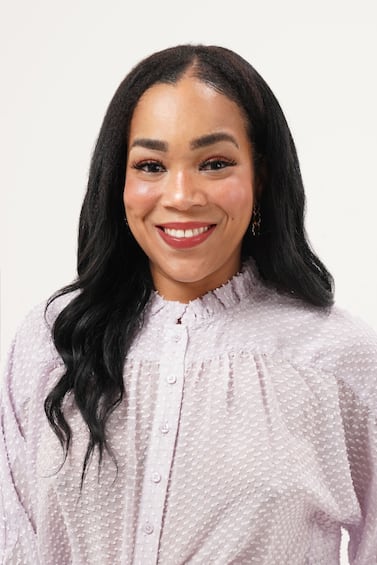
Sheena Butler-Young is Senior Correspondent at The Business of Fashion. She is based in New York and covers workplace, talent and issues surrounding diversity and inclusion.
Loading recommended reads…
Beauty brands have long paid to be featured in ‘Get Ready With Me’ videos. Now, they’re designing their products and tools for maximum screentime.
As she prepares to hand power to the next generation, the doyenne of Italian fashion contemplates what makes Prada Prada and what she’ll leave behind, as well as more immediate matters like absorbing Versace.
As the beauty industry evolves to cover new frontiers, global beauty giant Unilever is proactively shaping its talent strategy to meet the new business realities.
Michele goes deep, Miuccia gets happy.