Agenda-setting intelligence, analysis and advice for the global fashion community.
Agenda-setting intelligence, analysis and advice for the global fashion community.

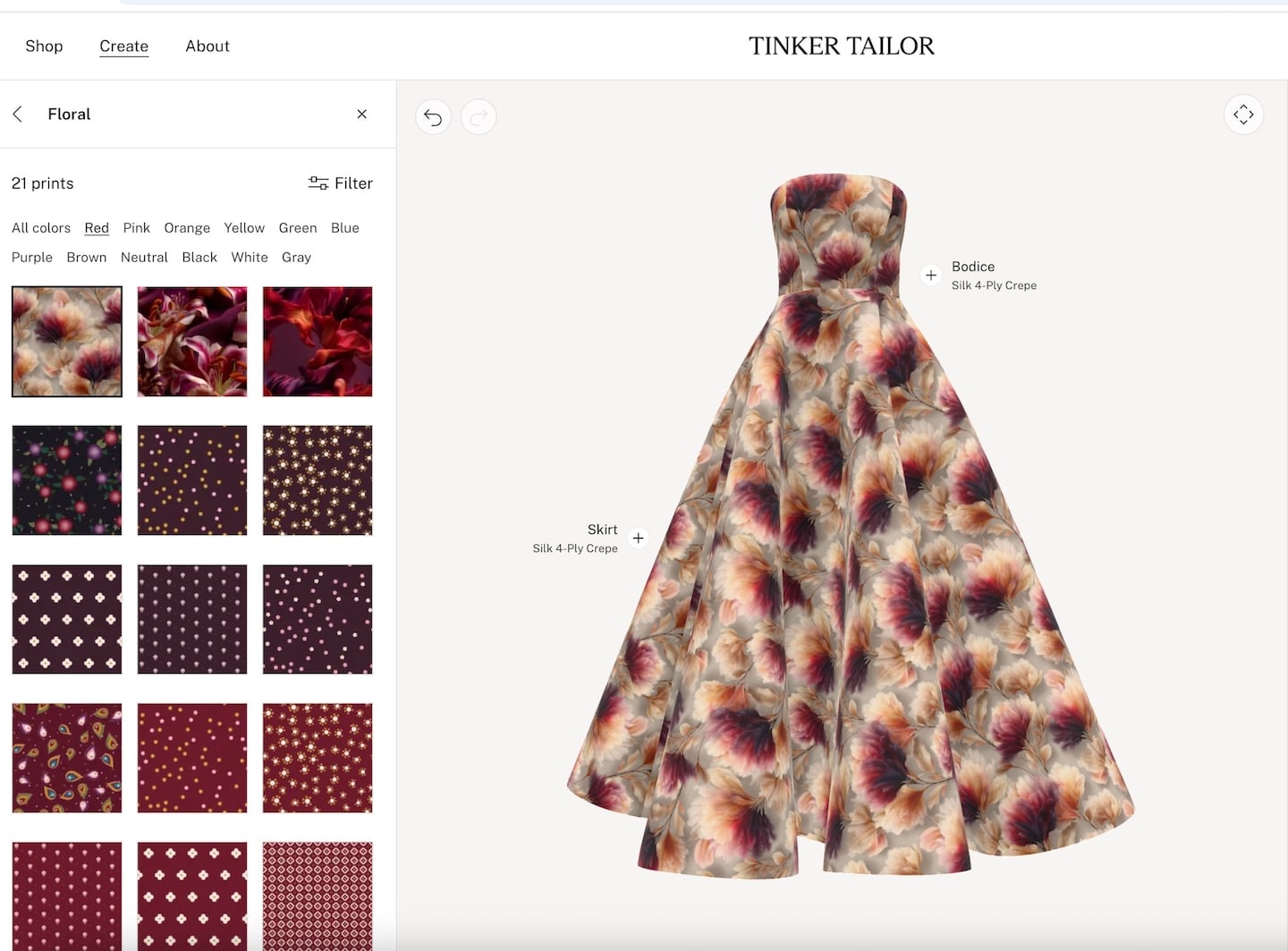
It took Áslaug Magnúsdóttir just 15 minutes to design a dress for a New York cocktail party and a floral-print ball gown; both would be made-to-order and shipped within two weeks. And it’s all thanks to Tara, the AI design assistant at the centre of her platform Tinker Tailor, which lets users design and purchase clothing through conversational prompts. The platform also aims to empower influencers to quickly open their own storefronts and launch new brands.
“A very small segment of people have access to that [couture-like] experience,” said Magnúsdóttir. “What I want to do with Tinker Tailor is give the feeling of that.”
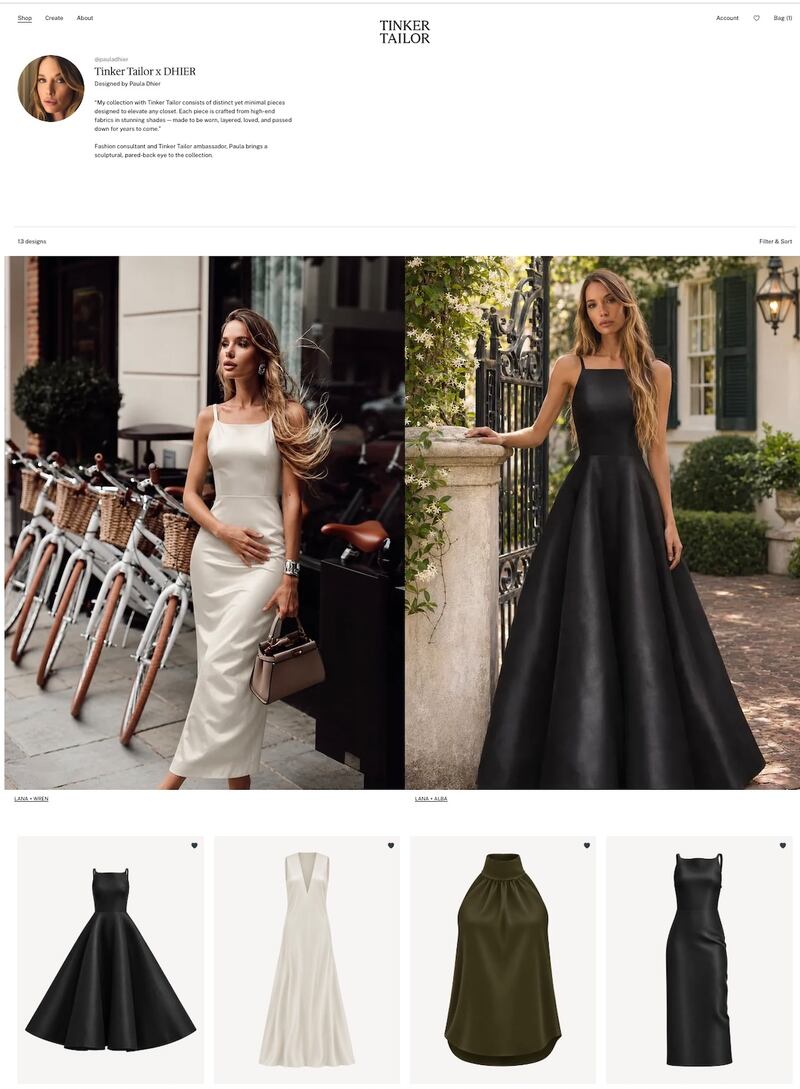
Aside from AI, influencer partnerships lie at the heart of Tinker Tailor’s business model. On Thursday, the site will open to the public for custom orders but also include five collections designed by creators like Mary Leest and Eugenia Kuzmina. By working exclusively with made-to-order factories that don’t require minimum quantities, influencers can design made-to-order collections for their audience. Magnúsdóttir said creators will receive 20 percent of sales, and also earn a 10 percent affiliate fee for referrals while Tinker Tailor handles production and order fulfillment. By year’s end, Magnúsdóttir expects to have around 30 creators onboarded and selling clothes on the platform.
“So many of them have wanted to do their own lines, but the operational side is challenging—they’re typically not educated designers and they don’t have manufacturing infrastructure,” said Magnúsdóttir. “We give them the tools to go from idea to sellability.”
ADVERTISEMENT
That bespoke experience is what the Moda Operandi co-founder sought to deliver when she first launched Tinker Tailor in 2014. Then, the platform allowed users to design custom pieces using 3D models made to order in New York’s Garment District, but ultimately struggled to scale and ceased operations in 2015. Now, Magnúsdóttir said the rapid evolution of AI, the maturity of on-demand manufacturing and the expansion of the creator economy created a new window of opportunity. That also attracted Brunnur Ventures, an Iceland-based venture capital firm that led a $3 million pre-seed funding round for the relaunch.
“Venture capital isn’t coming in to build a small business,” said Magnúsdóttir “If you just look at the influencer segment and what they’re driving in terms of business size, there’s a huge opportunity to go after here.”

Tara, the AI tool behind Tinker Tailor, is trained on a library of patterns and tech packs built by a human atelier team led by Svetlana Shalumova, whose decades-long career in digital product creation and fashion production spans everything from Kontoor jeans to Isaac Mizrahi couture. What the AI does is pull these together based on the user’s prompt and preferences, which also lets them select fabric and even custom prints. The designs are then routed to an on-demand factory partner in Arizona, taking approximately one to two weeks to produce and ship under a zero-inventory model designed to eliminate overproduction and garment waste.
Still, despite the role AI plays in the process, Magnúsdóttir emphasises that Tinker Tailor products are not designed by AI.
“I want to be very clear here that this is based on craft,” said Magnúsdóttir. “This is based on real fashion knowledge, people that have been doing this for decades, and they know what they’re doing.”
Zalando is using artificial intelligence to boost growth and efficiency, including a 90 percent reduction in the cost of creating website content. BoF went inside the push to win the AI race at Europe’s largest online fashion retailer.
As AI makes digital imagery even easier to fake, BoF's Diana Pearl and Marc Bain join Sheena Butler-Young on The Debrief to unpack why some luxury brands are betting on real artists and handmade craft to win back customers who feel alienated by a fashion industry built for the screen.
AI is cutting the cost of selling fashion online, but brands need the right infrastructure to benefit. BoF sits down with Tarek Müller, co-founder and co-CEO of online fashion retailer About You and co-founder of e-commerce software platform Scayle, to explore what comes next.

Lei Takanashi is a Correspondent at The Business of Fashion (BoF). He is based in New York City and covers menswear, streetwear, young consumer trends, and the intersection between fashion and culture.
Loading recommended reads…
Backed by a $3 million pre-seed round, the made-to-order platform aims to lessen inventory waste by giving influencers the tools and supply chain to launch custom apparel lines.
Developing, not recruiting, top sales associates is the way to build client loyalty that lasts, argues Martin Shanker.
From Kallmeyer to Toteme, a new wave of fast-growing labels nestled at the top end of fashion’s contemporary segment is offering a luxury-like quality at prices that trigger ‘reverse sticker shock.’
Ultraceuticals is bringing its treatment-first approach to the US, positioning aestheticians as its most powerful brand ambassadors. BoF sits down with chief executive Catrin Thomas to learn more.