Agenda-setting intelligence, analysis and advice for the global fashion community.
Agenda-setting intelligence, analysis and advice for the global fashion community.

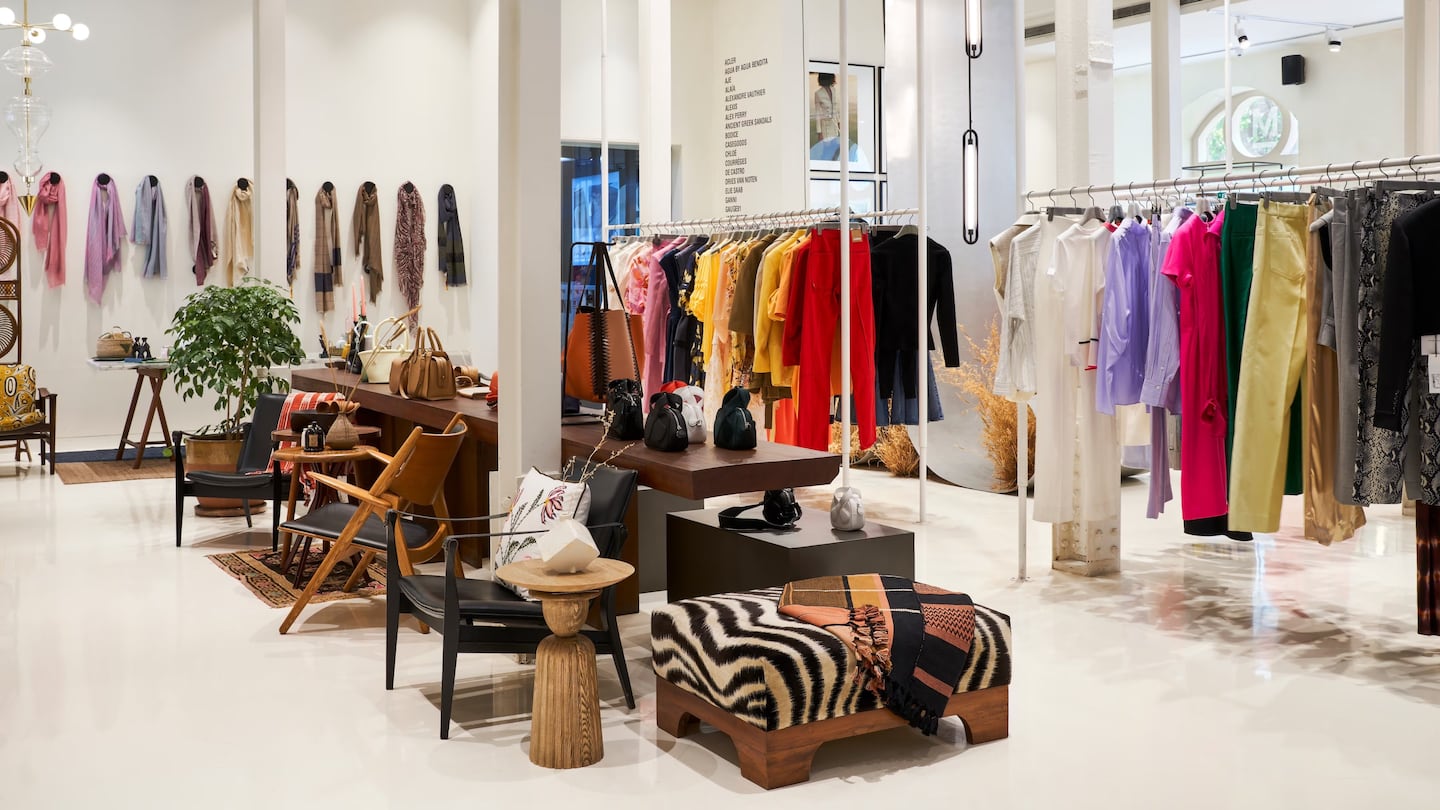
Every year, luxury e-retailer Moda Operandi scouts a whole new generation of emerging talent — combing through myriad brands per season across New York, London, Paris and beyond, before shortlisting between 70 to 100 prospective labels.
Of this crop, only about a quarter gets picked up on the platform, according to vice president of merchandising Marc Rofsky. While many are able to exhibit a distinctive and compelling point of view, vision in and of itself isn’t enough; Rofsky and his team are looking for a proven presence in the fashion landscape and a sense of business readiness.
For emerging designers, securing an order with a prestigious stockist is an undeniable career-defining milestone. Wholesale is an effective customer acquisition channel, and even for brands looking to build the majority of their business directly to consumers, landing a coveted account is a marker of credibility.
But as Moda’s criteria shows, securing wholesale in today’s competitive landscape requires more than just attractive designs. Across the board, buyers are looking for brands to prove that they have a long-term business strategy and clarity on where it sits in a saturated market, which requires seasons, if not years, of trial and error. Mitsuhiro Kubo, founder of Tokyo-based concept store GR8, for instance, said he prefers to look at a designer’s fifth or sixth collections rather than the first few.
ADVERTISEMENT
“First and foremost, the clothes have to be exciting, well-made and fit well,” said Kaelen Haworth, founder of Toronto-based Canadian independent retailer Absolutely Fabrics. “But I also have to know that you can deliver and know how to sustain a business before I take you on.”
Through conversations with six multi-brand retailers around the world, here’s what buyers say it takes for emerging brands to earn a place on their racks, and keep it.
A singular point of view remains the foundation for emerging labels to get noticed.
Brigitte Chartrand, chief buying and merchandising officer at Net-a-Porter said she looks for brands with a unique aesthetic across various style offerings that isn’t tied to any trend. Collections don’t have to be prolific, said Rofsky; a small but cohesive offering that together feels like a complete vision is preferable to a sprawling assortment.
In addition to the design itself, high-quality imagery on social media and compelling lookbooks are essential in establishing the visual identity of a brand, Rofsky added.
For independent retailers, where buying teams are smaller and often have even less time to sift through the market, first impressions are even more consequential. Absolutely Fabrics’ Haworth said the first image in a designer’s pitch or the specific showroom in which they choose to exhibit, including the brands they sit next to, can determine whether she investigates a brand further.
“Show me an image, or in a succinct email show me that you get our store ethos,” she said.
At Mumbai-based luxury boutique Le Mill, general manager Nandita Dalmia described finding new talent as looking for “the empty chair at the table” — a designer who brings something genuinely different to the store’s existing assortment. “If we can’t explain why they’re unlike everyone else we carry, they’re probably not right,” she said.
ADVERTISEMENT
Before a brand begins its wholesale journey, it’s crucial to understand which retailers align with its vision, ethos and pricing structure rather than pitching blindly. One retailer may emphasise craftsmanship while another values having an eclectic aesthetic or brands that are able to meet its clientele’s seasonal or cultural demands.
“I want to know that the brand has done their research and is thinking about where it lies strategically in a store,” said Haworth.
When it comes to scouting stockists, it’s also better to choose strategically rather than cast a wide net.
“It’s not about the number of stockists a brand has,” said Net-a-Porter’s Chartrand. “It’s about being in the right places and having a meaningful presence in key cities with retailers who genuinely believe in the brand and understand its vision.”
Beyond store fit, buyers favour brands that have cemented their overall market fit, meaning they know exactly where they sit in the crowded landscape of fashion brands and how they bring something different to that market.
Often the best proof is an established direct-to-consumer operation — a revenue stream that exists independent from retail partners. Even a modest customer base can give buyers confidence in a new label and help the brand identify markets where wholesale distribution might find traction.
If a brand can generate sales on its own, “it means they already have somewhat of a following and we can help amplify that,” said Rofsky.
Chartrand points to Aaron Esh and Conner Ives as successful examples of emerging brands that carved out a niche in the market through direct-to-consumer first and built a loyal following by combining a differentiated fashion offering with savvy, targeted marketing.
ADVERTISEMENT
At Luxembourg-based retailer SMETS, where the local customers tend to be more conservative than fashion-capital crowds, pricing is often a key factor in whether a collection ends up as a commercial success. The emerging designers offering high-quality pieces at accessible prices, roughly between €200 and €600 ($225 to $674) are best positioned for success, according to its co-founder Pascaline Smets.
Prices should match the value of their corresponding piece. More affordable pieces can help introduce customers to a label, while higher-priced designs should convey quality through craftsmanship, distinctive design or specialist techniques.
“You need to have the combination of both design and then entry-product access,” said Smets.
At Moda Operandi, Rofsky said the sweet spot is an average unit retail of roughly $500 to $1,500, though the appropriate price depends on the product and category. “We’re looking for an easy-to-understand price-value proposition for the customer to take a risk on trying something from a new brand,” he said.
Critically, pricing also needs to accommodate wholesale margins. Some DTC labels struggle to make the transition because their original prices leave insufficient room for third-party retailers to participate profitably. But overpricing can be equally damaging. Young designers whose collections fail to sell at full price, especially if they are too high, are often among the first to be discounted on e-commerce platforms, eroding their brand equity and squeezing retailers’ margins.
Smets said she recommends introducing higher priced products gradually as demand and brand recognition strengthen alongside a loyal customer base.
While retailers hold all the power when it comes choosing and paying its vendors, investing in emerging talent poses considerable risk. Not every brand is able to meet the demands of wholesale fulfilment. Emerging designers sometimes underestimate production schedules, margin requirements and flexibility in working with time-pressed buyers, said Smets.
Managing the logistics of wholesale means a brand is able to establish dependable timelines, provide the correct documentation and ensure a straightforward ordering process — all of which influence whether a buyer can confidently commit to a collection.
Having a strong DTC operation helps exhibit operational readiness. Experienced business partners, agents or showrooms can also help young brands bridge the gap, particularly when they lack the infrastructure to manage wholesale independently, multiple buyers said.
Once operations are developed and pricing feels appropriate, resisting the temptation to expand distribution too quickly is the final step emerging labels must approach pragmatically.
“My advice would be: don’t get ahead of yourself, scale slowly, really take it season by season,” said Rofsky. “It’s better to start with one or two key partners rather than to expand and be over-distributed for the sake of it.”
For small teams, rapid expansion can stretch production capacity, overwhelm operations all the while potentially diluting the exclusivity that attracted customers in the first place.
Large retailers like Moda and Net-a-Porter, in this regard, can offer collaboration and mentorship, including pointing brands to the right retail partners if they’re not yet ready to be on a major e-commerce platform.
Ultimately, in a market that is flooded with options and where trends shift faster than ever, the goal should be to “retain discoverability and grow organically,” said Rofsky, to remain “as special as you can, for as long as you can.”
An insider’s guide to the independent retailers with the most distinctive edits and experiences in the world, hand curated by the editors of BoF.
View all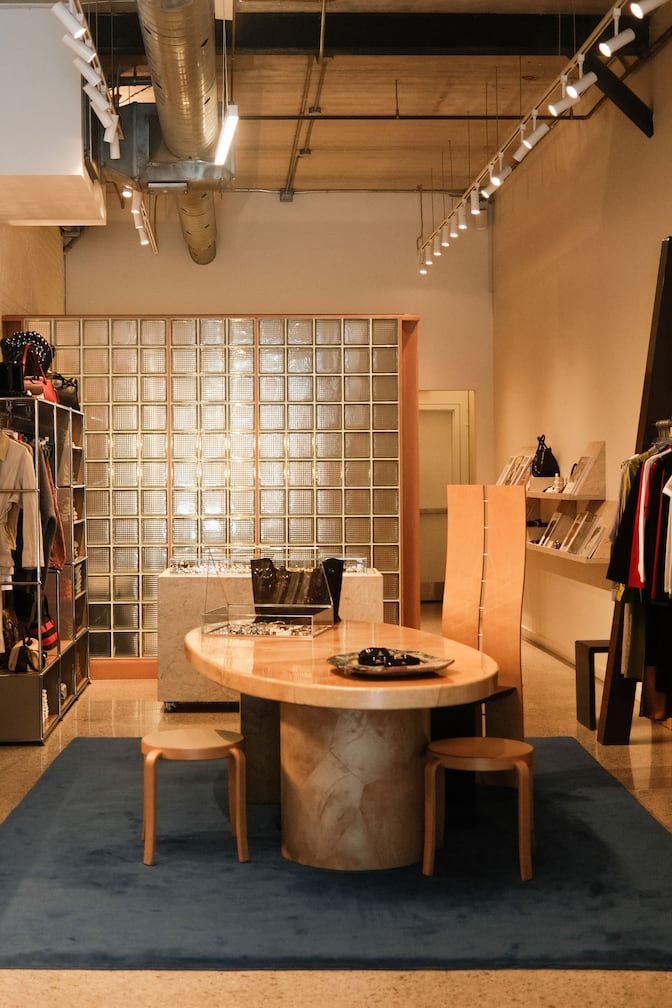
Toronto's tightly curated home for premium design
Toronto • Est. 2023
Emerging Talent • Homegrown Heroes
Owners: Kaelen Haworth
Absolutely Fabrics is a young Toronto boutique making a name with a disciplined edit of premium and emerging designers, including Fforme, Diotima and Colleen Allen. Founder-led and highly selective, it has quickly earned the respect of the designers it carries for its supportive approach. In a city with few genuine multi-brand destinations, it offers a curation you'd expect from a much larger fashion capital. For discovering the right names in Canada, Absolutely Fabrics is one to watch.

Harajuku's gateway for emerging and directional design
Tokyo • Est. 2005
Emerging Talent • Cultural Hub • Retail Theatre
Owners: Mitsuhiro Kubo
GR8 is a Harajuku store widely regarded as a gateway into the Japanese market for emerging designers. Its directional mix of streetwear and forward-looking labels has made it a launchpad for brands and a favourite of the fashion-obsessed. Buyers and designers look to its stock as a signal of what’s gaining traction on the ground. Compact and constantly refreshed, it packs an outsized influence into a small footprint.
Luxembourg's lifestyle concept store for fashion and art
Brussels, Luxembourg • Est. 1986
Lifestyle Edit • Cultural Hub • Retail Theatre
Owners: Pascaline Smets, Bertrand Smets
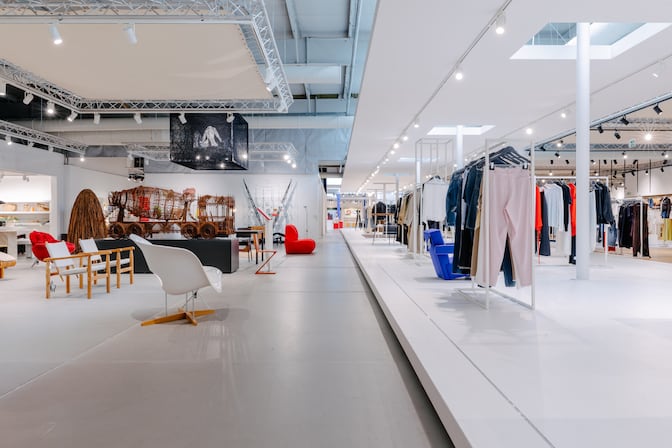
Founded in 1986, Smets is Luxembourg's leading concept store, blending fashion with art, design and lifestyle across an expansive space. Its edit spans luxury houses and contemporary labels, including Prada and The Row, presented alongside cultural programming that gives it a role beyond retail in a small market. With a 3,000-square-metre flagship and five other stores, including one in Brussels, the family-owned business and self-described “cultural project” has reshaped its country’s luxury shopping experience.
Mumbai's meeting point for global and Indian design
Mumbai • Est. 2011
Fashion Landmark • Homegrown Heroes • Lifestyle Edit
Owners: Burgundy Brand Collective
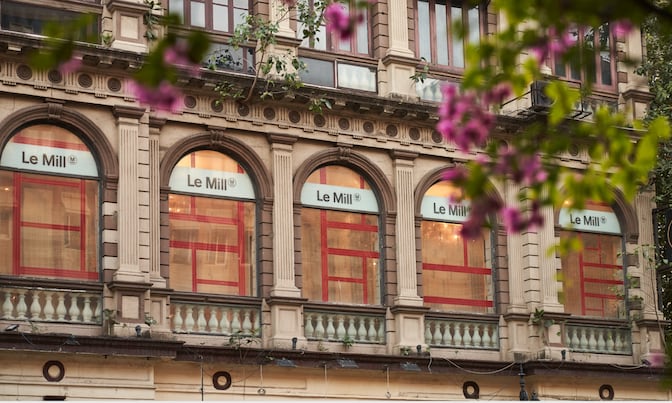
Le Mill is Mumbai’s most thoughtful multi-brand store, balancing international labels with the best of Indian design under one coherent point of view. The brand was acquired by Burgundy Brand Collective in 2026 and is housed in a converted industrial space, it reads as a genuine concept store rather than a boutique, pairing its buy with collaborations and community-led programming. Its curation has helped shape how a new generation of Indian shoppers and designers understand contemporary fashion. As a key voice in one of the world’s fastest-rising markets, it is reason enough to make the trip.
Prompted by the overwhelming response to a recent briefing about the ‘industry that eats its young,’ we’ve gathered the most vital strategies from the BoF archive to help independent designers navigate today’s fraught retail landscape.
With customers having moved away from logo-heavy looks, indie retailers are finding ways to highlight subtle details like unique fabrics and treatments, while training staff to communicate about the craft that makes garments special.
Partnering with department stores and boutiques used to be the first and sometimes only option for new labels to break though. Today, that path often winds through Shopify and Instagram first, but multi-brand retailers still have an important role to play.

Shayeza Walid is Senior Editorial Associate covering Sustainability at The Business of Fashion. She reports on fashion's environmental impact, climate accountability, supply chain and labour issues. Based in London, she also contributes to BoF's Global Markets and UK coverage.
Loading recommended reads…
Check out this week’s new partner and openings on BoF Careers, the global marketplace for fashion and beauty talent.
The new collaboration will include footwear and apparel products built from scratch to blend technical performance with understated design.
From Net-a-Porter to Moda Operandi, buyers from around the world break down what it takes for retailers to back a young brand in 2026.
The immersive event featured an archive exhibition, vintage marketplace and speaker series, building on a brand strategy aimed at creating cultural currency with younger shoppers.