Agenda-setting intelligence, analysis and advice for the global fashion community.
Agenda-setting intelligence, analysis and advice for the global fashion community.

Nearly three years ago, California-based apparel company KYS Group saw an untapped opportunity.
Quiet luxury was all the rage, propelling sales for retailers like Cos and Massimo Dutti that offered a look similar to The Row at much more accessible prices. Online, though, shoppers complained that their quality often fell short. KYS seized the moment and sought to deliver on both fronts, relaunching its label, Rue Sophie, with a new pricing structure in January 2024.
“We weren’t sure if we wanted to price higher than those brands, but we knew the quality would have to be better,” said Jannice Chen, president of KYS. “The most important thing we do is that we never stop sourcing.”
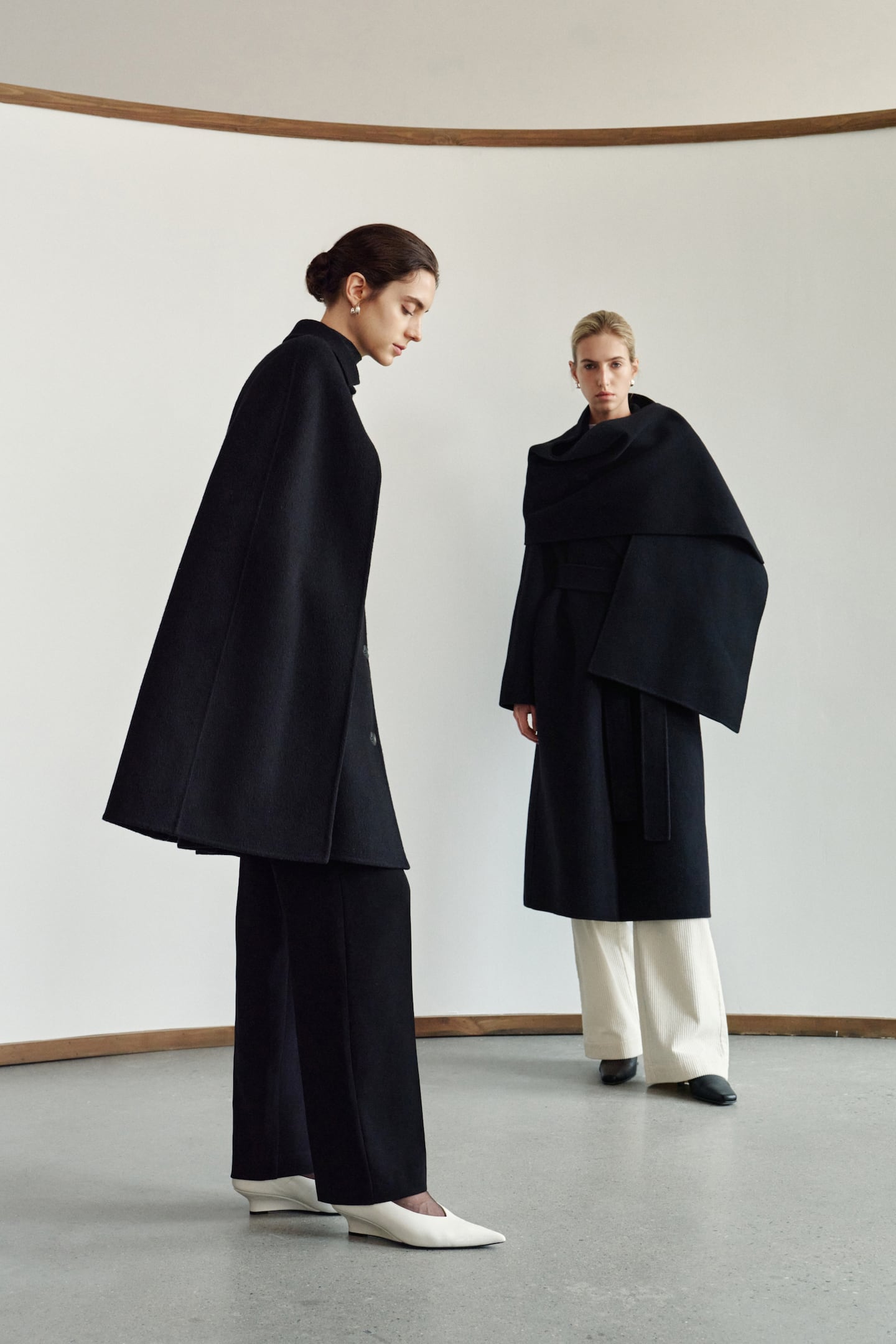
While fabrication and durability laid Rue Sophie’s foundation, its pricing strategy has been just as critical to its success. Outerwear, a bestselling category, is priced between $600 and $680 — costlier than Cos, where winter coats run around $350, but made with a higher content of wool. Rue Sophie’s popular grand scarf coat is 75 percent wool, 15 percent viscose and 10 percent cashmere, while Cos’ double-faced wool shawl coat contains 60 percent wool and 40 percent lyocell. Toteme’s signature doublé camel coat, which retails at $1,470, contains 90 percent wool and 10 percent cashmere. Chen said about half of Rue Sophie’s production costs are for fabrics.
ADVERTISEMENT
While price isn’t the only factor that consumers consider when it comes to a making a purchase decision, it plays a critical role in how a brand defines and delivers value.
“Most brands think about price way too late,” said Max Walter, a director at consultancy Simon-Kucher, which specialises in pricing strategy. “Yes, you should check your cost for a minimum profit but the price you put in front of the consumer is the first thing you should think about.”
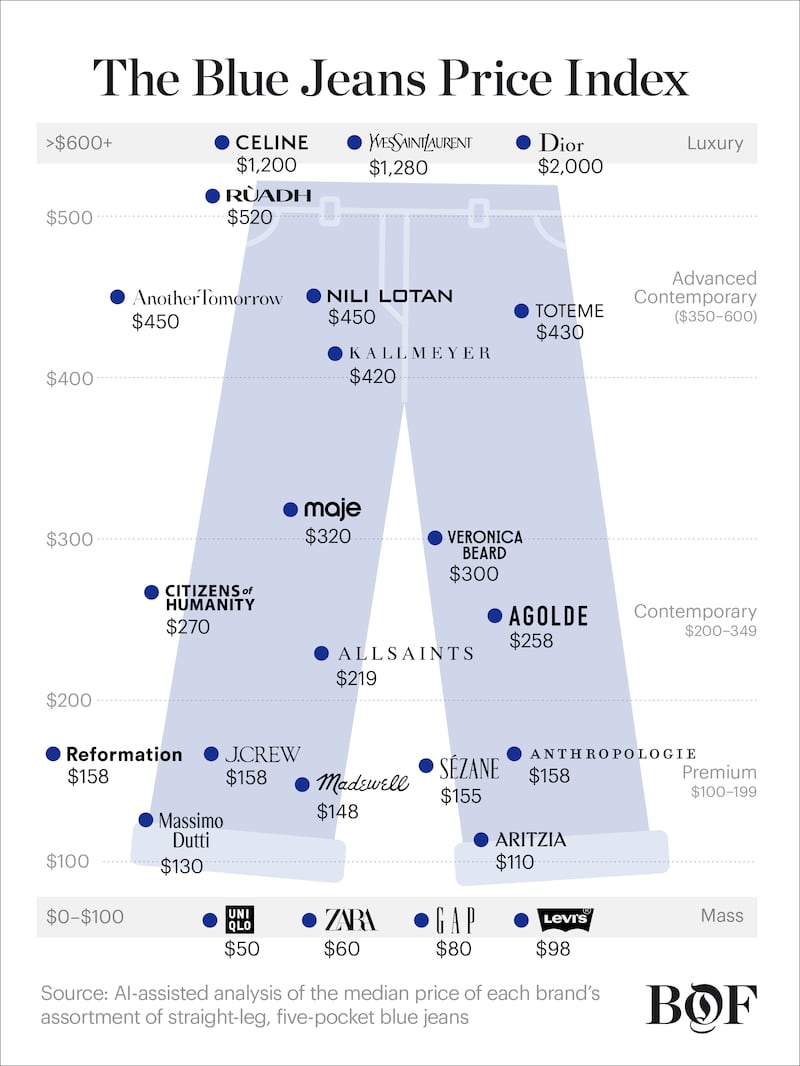
After years of inflation — or, in the case of luxury, flagrant price hikes — shoppers are more discerning than ever. Even the top echelon of luxury shoppers, for whom price has historically not been a factor in their purchase decisions, is now more conscious of it; one in four say they’re trading down, according to data from Simon-Kucher. At the same time, consumers are far more sceptical of pricing: The majority say they no longer trust product prices, up from around 50 percent just two or three years ago, Walter said.
In this ultra-cost-conscious moment, identifying a clear point of differentiation in the market is key, whether that’s offering luxury-grade materials at the lowest possible price or consistently offering a lower price than competitors. Setting prices today is about more than gross margins but the economics of the entire business. Brands should work backwards from a net profit target, while offering a broader range of price points to appeal to a wider pool of shoppers.
“The white space between fast fashion and contemporary brands became extremely available in the last 20 years because a lot of people became scared to be too close to fast fashion,” said Ginny Seymour, chief executive of London-based label Aligne, whose prices range from $150 to $400. Still, she said operating in that range requires building trust with customers. Capturing the market opportunity is possible “as long as we can be transparent about our pricing and avoid markdowns,” Seymour added.
For a number of new contemporary brands like Rue Sophie, success has come from identifying an underpenetrated pocket of the market and building a business around it.
Finding that pocket, though, requires more than picking a particular price point. Brands need to establish clear guardrails for what they want to offer, from how much cheaper they intend to be relative to their competitors to the materials and brand positioning that will justify the purchase.
For Marcella, the New York- and Bulgaria-based womenswear label founded by Andy Huszar and his wife, Siyana, that starting point was to be “disruptively priced,” Huszar said, with an aim to be 25 percent to 50 percent cheaper than competitors. That translates into a strict price ceiling: tops, for instance, mostly retail for less than $100.
ADVERTISEMENT

“We look at who our aspirational customers are and where they’re shopping, and we make sure we’re priced less than those brands,” he said. “We’re also aware of certain psychological barriers, and that’s why our dresses are always priced at $149.”
To persuade customers that a lower price doesn’t mean a compromise in quality, Marcella also has to deliver on the product itself and cultivate an aspirational brand image. That means sourcing the right materials, maintaining certain production standards and communicating its manufacturing practices to customers. The company, for instance, highlights production teams that receive benefits and a living wage, while working to create an aesthetic e-commerce identity that feels elevated enough to compete with the brands it undercuts.
Los Angeles-based womenswear label Almina Concept took a similar route to finding its niche in the market. Founded by former fashion merchandiser Angela Gahng, the brand specialises in premium knitwear priced between $250 and $500, offering merino wool sweaters made in South Korea that are heavier and more structured than what customers typically find at that price, Gahng said. Their quality and construction, she said, are comparable to knitwear that typically sells for upwards of $1,000.
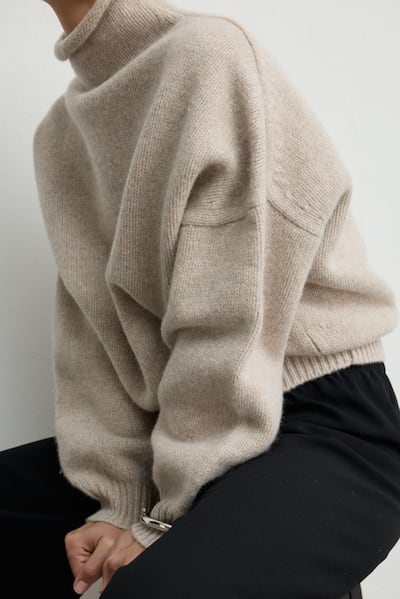
The brand has managed to turn that value proposition into free marketing. A significant share of its sales today is driven by user-generated content on TikTok and Instagram, where customers share their Almina Concept purchases and highlight the quality relative to the price. That organic exposure has helped Almina spend less on Meta advertising, Gahng said.
Most fashion brands approach pricing by working backwards from a target markup or gross margin. A shirt that costs $20 to produce, for instance, might be marked up 2.2 times for wholesale and then another 2.5 times from wholesale to retail, according to Amy Williams, chief executive of Citizens of Humanity. That would put the final retail price at around $110 — a gross margin of roughly 80 percent, on the upper end of the industry’s standard target of 60 to 80 percent.
Gross margin alone, however, doesn’t tell the full story of a product’s profitability. Beyond manufacturing, brands have to account for freight, warehousing, marketing and, perhaps most treacherously, the cost of returns.
“Margin alone is misleading because driving web traffic is really expensive,” said Chen of KYS Group. “For every style, there’s a different return rate, ad costs and marketing fees. That’s why a higher-margin product could actually contribute less to profit.”
Rather than evaluating products solely on their individual margins, Rue Sophie looks at overall profitability across its entire catalogue, factoring in every associated cost of selling each style. This gives the brand more flexibility in its pricing strategy: some lucrative products carry lower margins compared to other garments, but they generate higher volumes, cost less to convert customers and attract fewer returns.
ADVERTISEMENT
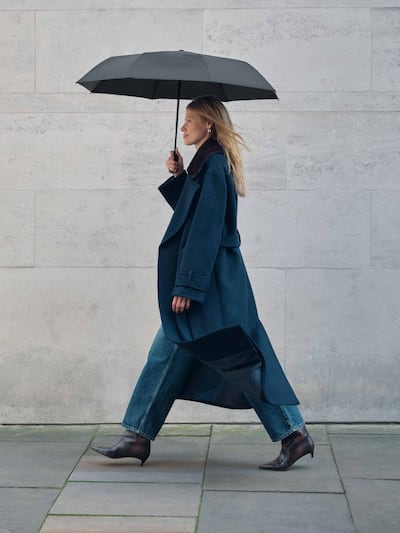
The same thinking can also help brands protect the prices of their most competitive products. At Aligne, for instance, the bestselling George wrap coat is priced at $395. It delivers a lower-than-ideal margin, according to Seymour, but because it sits in a crowded category, a strong price is particularly important.
“If it’s a competitive item, the guardrails are much stronger,” said Seymour. “We’ll take a hit on the margin, but we sell it 100 percent full price, and keeping it under $400 is something we will not change.”
One thing many savvy brands have in common today is a reluctance to discount. Beyond eroding brand equity, frequent markdowns can train customers to wait for sales rather than buy at full price, making demand harder to predict and inventory more difficult to manage.
Maintaining price discipline, however, has become increasingly difficult as brands contend with rising costs, from wages and raw materials to tariffs and shipping expenses during peak periods.
“It’s like you’re riding on a bucking bronco in the last few years and trying to hold on,” said Huszar of Marcella.
Kristen Pumphrey, founder of home fragrance brand P.F. Candle Co., has managed to hold the price of her signature seven-ounce candle steady for the past five years, even as many competitors in the premium candle market have significantly increased theirs. She’s done so through two strategies: raising prices on less central products, such as reed diffusers, and finding ways to strip out costs elsewhere. That has meant “removing costs that are ancillary,” she said, including expenses related to packaging, shipping and rent.
Aligne, meanwhile, has resisted raising prices despite facing additional costs from tariffs imposed under the Trump administration. “If we had raised based on the new duties, it would’ve changed our price positioning,” said Seymour. “Aligne has grown 500 percent in the US in the last 12 months, and had we changed that price positioning as we were expanding in the US, we would’ve narrowed our market.”
But holding prices down isn’t always the right strategy, either. When Citizens of Humanity was testing the market positioning for its sister label Agolde, it found that some of the brand’s bestselling styles were also among its most expensive.
“What we quickly saw was that our customers don’t buy based on the point of entry,” said Williams. “There’s interest in buying fewer things at higher prices so we have a bigger mix of products that are on the higher end than before.”
Explore “The Mighty Middle Market,” our latest Go Deeper series, examining how a new generation of brands is carving out a powerful position between mass and luxury.
Loading recommended reads…
The sportswear giant is targeting a return to growth by 2029 with a strategy built on performance sports, faster product innovation and deeper specificity for its consumers, executives said at its first investor day in nearly a decade. Will it work?
The finalists for the award that supports emerging Black designers are Aisling Camps, Olivier Rogers and Kingsley Gbadegesin of K.ngsley.
As Elle and Tatler launch new ventures from Côte d’Ivoire to Kenya and homegrown publishers gain ground across the continent, African fashion media is establishing its own editorial authority.
As consumers become more selective about spending, middle-market premium brands are finding new ways to balance accessible prices, product quality and profitability.