Agenda-setting intelligence, analysis and advice for the global fashion community.
Agenda-setting intelligence, analysis and advice for the global fashion community.

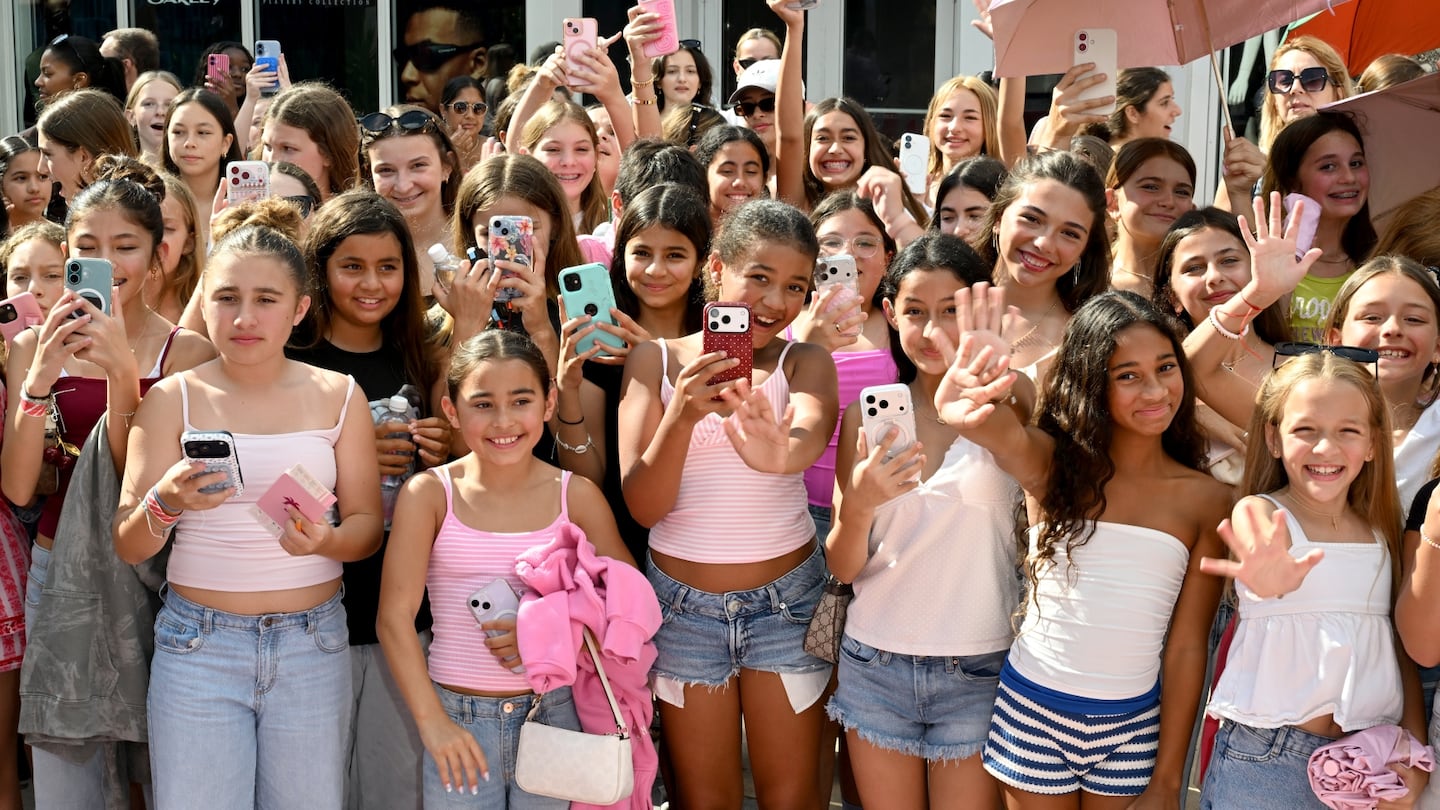
Targeting teenage consumers is getting harder.
On Monday, UK Prime Minister Keir Starmer announced the country was implementing a social media ban for children under 16, set to take effect next spring.
The restriction is designed to “give kids their childhood back,” Starmer said. It’s just the latest move in this direction: Malaysia, Indonesia and Australia have implemented similar bans, while states like Florida and Utah have tried to do the same (though Utah’s was halted by a federal judge). Countries including Spain, France and Poland have legislation in the works, while Brazil and Denmark also require some level of consent.
These bans present a new challenge for fashion and beauty marketers, who, in an era of “get ready with me” TikToks, have spent the past several years angling for teen attention. Companies like E.l.f. and Gucci have shown up on gaming platforms like Roblox, while beauty brands including Bubble and Sincerely Yours have tapped Gen Alpha’s social media-driven skincare obsession.
ADVERTISEMENT
While bans come with the best of intentions, in practice, they’ve proved tough to enact. Since Australia implemented its ban in late 2025, teens have already found ways around the law. According to a The New York Times report, they are doing everything from creating new accounts with fake birthdays to drawing on fake moustaches to get through age verification layers.
Even if teens find ways to stay on social media, brands may find it becomes “legally awkward, reputationally risky and harder to measure” to market to teens online, said Matt Navarra, a social media consultant and author of the Geekout newsletter.
“The whole market changes once platforms, agencies, brands have to prove they’re not knowingly targeting underage users,” he said. “It’s not just whether a 14-year-old can sneak onto TikTok.”
No matter how effective the bans are, brands are likely going to have to adapt somewhat. But fragmentation of attention may initially make it challenging to know where to show up.
Alternative channels like in-person pop-ups and events and out-of-home and in-store advertising are likely to be a first step. Moving ad spend to YouTube, too, is an easy switch — because users aren’t required to log in, they can circumvent age barrier rules.
There also may be opportunity in messaging platforms like WhatsApp group chats and Discord, though these are harder for brands to organically integrate themselves into, said Kaya Yurieff, co-founder and co-chief executive of creator economy-focused media company Scalable. Substack could also see a lift among younger users; since 2025, more teen-friendly companies like Selena Gomez’s Rare Beauty and Alex Cooper’s Unwell Network have launched newsletters.
“I don’t think younger consumers suddenly become analog saints reading magazines or going for long walks,” said Navarra. “Their attention will move, but it will fragment. … The smarter shift is from platform-first marketing to ecosystem-first marketing.”
Offline will still play a significant role in capturing teen eyeballs. Brand advisor and author of “The Sociology of Business” newsletter Ana Andjelic pointed to Gen Z and Alpha’s love of after-school visits to Starbucks or Sephora, where they are inundated with limited-edition collaborations, in-store ads and pop-up events. Andjelic is also confident in the power of word of mouth, trickle-down from older classmates and siblings and in-person discovery.
ADVERTISEMENT
“Everyone wants to have what everyone else has,” said Andjelic. “They may discover from someone’s older sister, or they may discover from going to Sephora.”
More often than not, trends start with young people and drive culture more broadly. With less access to public social media platforms, cultural influence may shift into more niche and local pockets, making it more difficult for brands to access.
“It will make youth culture online less spontaneous and more mediated by adults,” said Navarra. “Some of the most powerful fashion trends don’t start in polished campaigns, they start in messy, low-production, peer-to-peer content.”
As it becomes more challenging — and likely pricier — to track youth culture, brands will need to rethink how they identify what’s cool early on. Rather than relying on algorithms and comment sections, instead, they should diversify their research across focus groups, more niche platforms like Discord and Reddit and even tags on peer-to-peer resale sites like Depop and visual-first platforms like Pinterest, which has a Gen Z-favourite shareable collage tool called “Shuffles.”
Brands should focus on how trends develop among younger consumers, rather than what specific platforms or spaces they’re popping up on, said Navarra. It may be easier to track microtrends on social media, but cultural influence is simultaneously developing elsewhere.
“The biggest strategic change is that marketers will need to stop treating younger audiences as a media-buying segment,” said Navarra. “Youth marketing becomes less about buying teenage attention and more about designing for cultural spillover.”
The real change, rather, may be among younger generations who never get on social media in the first place, or who start using newer platforms that pop up as competitors are banned.
“It opens the door for new types of platforms that aren’t social,” said Yurieff.
Prime minister Keir Starmer outlined measures against platforms including TikTok and Instagram, as well as gaming sites that allow strangers to communicate with children, with implications for fashion’s marketing playbook and the tween influencer economy.
Beauty built an entire industry around Gen Alpha’s shopping frenzy. But as the legal and ethical consequences of marketing to kids come into focus, tween-focused brands face their watershed moment.
Obviously, it’ll be a long time before the generation — born starting in 2025 into a world of AI and rapid change — will have an impact on the industry. But they’ve already sparked conversation.

Haley Crawford is Marketing Correspondent at The Business of Fashion. She is based in New York and covers the marketing and public relations industries.
Loading recommended reads…
Sales of gems, precious metals and artwork at Japan’s department stores climbed 19 percent in the first half of 2026 from a year earlier to $2 billion.
Though Adidas dressed both teams in the World Cup finals, the global football tournament still presented some bright spots for Nike, writes Bloomberg’s Andrea Felsted.
From our archive, the creator and host of award-winning podcast “Articles of Interest” joins BoF founder, CEO and editor-in-chief Imran Amed to explore what clothing can reveal about identity, culture, labour and the world around us.
Saunders, the brand’s first creative director in five years and a skilled colourist, promises to give Kate Spade the clarity it has long lacked. Now, Tapestry must apply the same long-term brand-building discipline that fueled Coach’s success.