Agenda-setting intelligence, analysis and advice for the global fashion community.
Agenda-setting intelligence, analysis and advice for the global fashion community.

As one might expect for a demographic raised on 20-second videos, the second wave of Gen Alpha beauty arrived sooner than expected.
The now-infamous “Sephora tween” can be viewed as a symbol for Gen Alpha beauty’s first phase, as excited underage shoppers flooded the aisles of specialty beauty retailers, selecting products with ingredients much too harsh for their young skin. Now, they finally have their pick of products designed specifically for them.
It took Sephora years to properly grapple with tweens, and the fact that products like Drunk Elephant’s bubblegum-hued Babyfacial weren’t suited for them. But the cohort remains a lucrative one — higher income households with children under 18-years-old have grown their spending on beauty products three-times faster than any other demographic, per Circana — and one that the retailer can’t ignore. More recently, it has recruited newly minted kid-friendly skincare brands such as Evereden and Sincerely Yours.
Julia Straus, who co-founded the teen-focused skincare brand Sincerely Yours with teenage creator Salish Matter and her father Jordan Matter, said that nobody in beauty was responding to the backlash with buzzy, age-appropriate products. “There was a gap in the market, which, in beauty, almost feels impossible.”
ADVERTISEMENT
Tapping that gap has proved controversial. Marketing to minors already demands a level of responsibility far beyond the industry standard, but has more recently become a legal risk for brands and retailers. In March, the Italian competition authority AGCM launched an investigation into Sephora and Benefit for their “insidious marketing practices” to children; the same month, Italian psychologists released a study citing the mental impacts of compulsive beauty behaviour, also known as “cosmeticorexia.”
It leaves the new wave of Gen Alpha brands in a tricky spot. Distancing themselves from tainted predecessors requires winning parents over with their kid-safe credentials. Preventing a sales slump means convincing a tween that a parent-approved product can be cool. And avoiding the legal and moral ramifications of marketing to children requires them to ask: Is there really a “right way” to sell skincare to kids?
In 2025, when the marketing agency RazorFish surveyed over 1,000 Gen Alpha shoppers, 88 percent said it was important to make decisions about beauty purchasing independently from their parents. But the majority of the generation — born between 2010 and 2024 — is still too young to pay for most purchases themselves.
“We always say we have two customers. If you look at who’s making the purchase, it’s usually a parent’s credit card,” said Straus.
Parents are overwhelmingly involved in Gen Alpha purchasing decisions. According to RazorFish, 39 percent of tweens make decisions with their parents, while 35 percent of decisions are made by parents alone. Winning over these guardians requires less of the cool-factor, and more emphasis on trust.
“Our heritage in baby care makes us different from what’s been on the market,” said Kimberley Ho, the co-chief executive and co-founder of the brand Evereden, which launched an offering for older Gen Alpha in 2021. “Creating skincare for the most developmentally fragile skin means we have a true philosophy of ingredient safety.” Though it has its own manufacturing capabilities, the brand has also invested $1.5 million into third-party efficacy and safety testing, as well as spotlighting chief scientific officer and founding member Dr. Joyce Teng, head of Stanford University’s pediatric dermatology department.
Earning a parent’s trust also depends on showing up physically — in the right way. Though Sephora caught flack for encouraging inappropriate tween spending — flames further stoked by the retailer’s introduction of birthday parties — parents have to accept that it’s still the place that their kids want to shop. In Piper Sandler’s most recent “Taking Stock With Teens” survey, the retailer took the number one beauty retailer spot from Ulta.
“Singling out a retailer is skirting over the actual conversation that we needed to have, which is that a customer was not being met with the right product,” said Straus, whose brand Sincerely Yours launched straight into Sephora on day one. “When a parent and child are in the shop, that is where the dialogue is happening. We wanted to ensure we had boots on the ground to be part of that conversation.”
ADVERTISEMENT
Ho also said that she was impressed by Sephora’s efforts to turn the tide. “They kept pushing back on how we intended to market and grow the brand, and they wanted to partner with brands that had a responsible long term vision in serving this generation,” she said, adding that the retailer encouraged more involvement from Tang in brand-related events.
“Whether Gen Alpha skincare is positive or harmful depends on the narrative we’re marketing,” said Ho. “Are we teaching care, or are we teaching correction?”
A parent’s endorsement is futile unless their tween actually wants a product. After all, “kid-safe” products have been on the market for decades — but none have ever attracted 80,000 budding beauty fanatics to the mall as Sincerely Yours did in 2025.

But cultivating a “cool-factor” is where the new ethical dilemma of tween beauty kicks in. While a lack of forewarning about unsafe ingredients was one complaint levied by the AGCM, its second was the use of “insidious” marketing strategies that encourage “compulsive” purchase of beauty products among young people.
Though brands didn’t begin the phenomenon of adolescent beauty hauls — a particular grievance of regulators — they’ve certainly utilised them. According to The Guardian, skincare brand Bubble welcomed children as young as 13 to its ambassador programme: they’ve since raised that threshold to 16.
But aging away from the cohort altogether is not an option: over two thirds of tweens are interested and determined to purchase beauty products, per RazorFish. “Kids are going to receive a phone, and see skincare routines. It’s just part of culture,” said Michelle Goad, chief brand officer of Claire’s. “Our job isn’t to change the culture, it’s to meet that demand in a safe way.”
According to Goad, tweens are Claire’s new “bullseye” demographic — but the pressure to reach them responsibly is more intense for the retailer compared to a Sephora. To ensure its newly stocked third-party brands, such as Pipa Skincare, aren’t mixed up with its “play makeup”, the brand is building new dedicated beauty zones for older Gen Alpha. It is also utilising a network of Gen Alpha creators, but aiming to do so without “friction” by liaising closely with the creators’ guardians, and encouraging “unscripted, authentic” content.
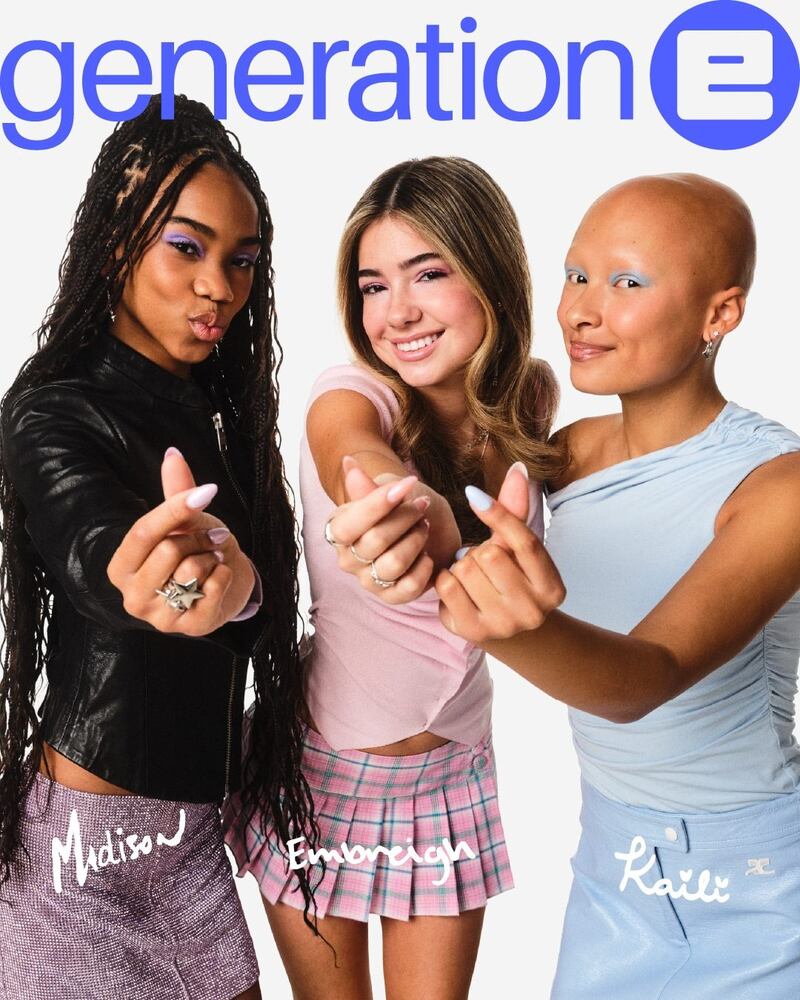
Across Gen Alpha brands, deploying the right spokespeople is the key to unlocking buzz. While the use of tween and teen creators has been met with backlash, it’s where the vast majority of Gen Alpha get their skincare recommendations. Evereden introduced its “Generation E” initiative in February, which gave creators like Madison Rae, Embreigh Courtlyn and Kaili Asa equity in the brand to formalise the influencer-brand relationship. The idea is that by officially bringing younger people into the brand, Evereden is empowering them long-term, not merely using them as a fleeting marketing gimmick. It also imbues moments like Courtlyn’s limited-edition body mist, launched by Evereden earlier this month, more legitimacy.
ADVERTISEMENT
As the face of Sincerely Yours, marketing responsibly is something at the forefront of co-founder Salish Matter’s mind. In an email, the teenage creator told The Business of Beauty that the objective is always to emphasise “fun” over pressure to conform to beauty standards.
“We try really hard to make sure Sincerely Yours feels like more of a trusted friend,” she added.
Sign up to The Business of Beauty newsletter, your complimentary, must-read source for the day’s most important beauty and wellness news and analysis.
Drunk Elephant may be old news for Gen Alpha, but a wave of new brands, including Sincerely Yours and Yes Day, are hoping to capture tweens’ attention at just the right moment.
The online pushback from parents has led to some of the world’s biggest beauty companies responding with a kind of anti-marketing.
Gen Alpha has become increasingly captive with beauty, but as their preferences and purchasing power changes, beauty labels need to find the right mix of messaging and product to keep them coming back for more.

Rachael Griffiths is a Senior Editorial Associate at The Business of Beauty. She is based between St Helens and London, and covers beauty, wellness and industry news.
Loading recommended reads…
Sales of gems, precious metals and artwork at Japan’s department stores climbed 19 percent in the first half of 2026 from a year earlier to $2 billion.
Though Adidas dressed both teams in the World Cup finals, the global football tournament still presented some bright spots for Nike, writes Bloomberg’s Andrea Felsted.
From our archive, the creator and host of award-winning podcast “Articles of Interest” joins BoF founder, CEO and editor-in-chief Imran Amed to explore what clothing can reveal about identity, culture, labour and the world around us.
Saunders, the brand’s first creative director in five years and a skilled colourist, promises to give Kate Spade the clarity it has long lacked. Now, Tapestry must apply the same long-term brand-building discipline that fueled Coach’s success.