Agenda-setting intelligence, analysis and advice for the global fashion community.
Agenda-setting intelligence, analysis and advice for the global fashion community.

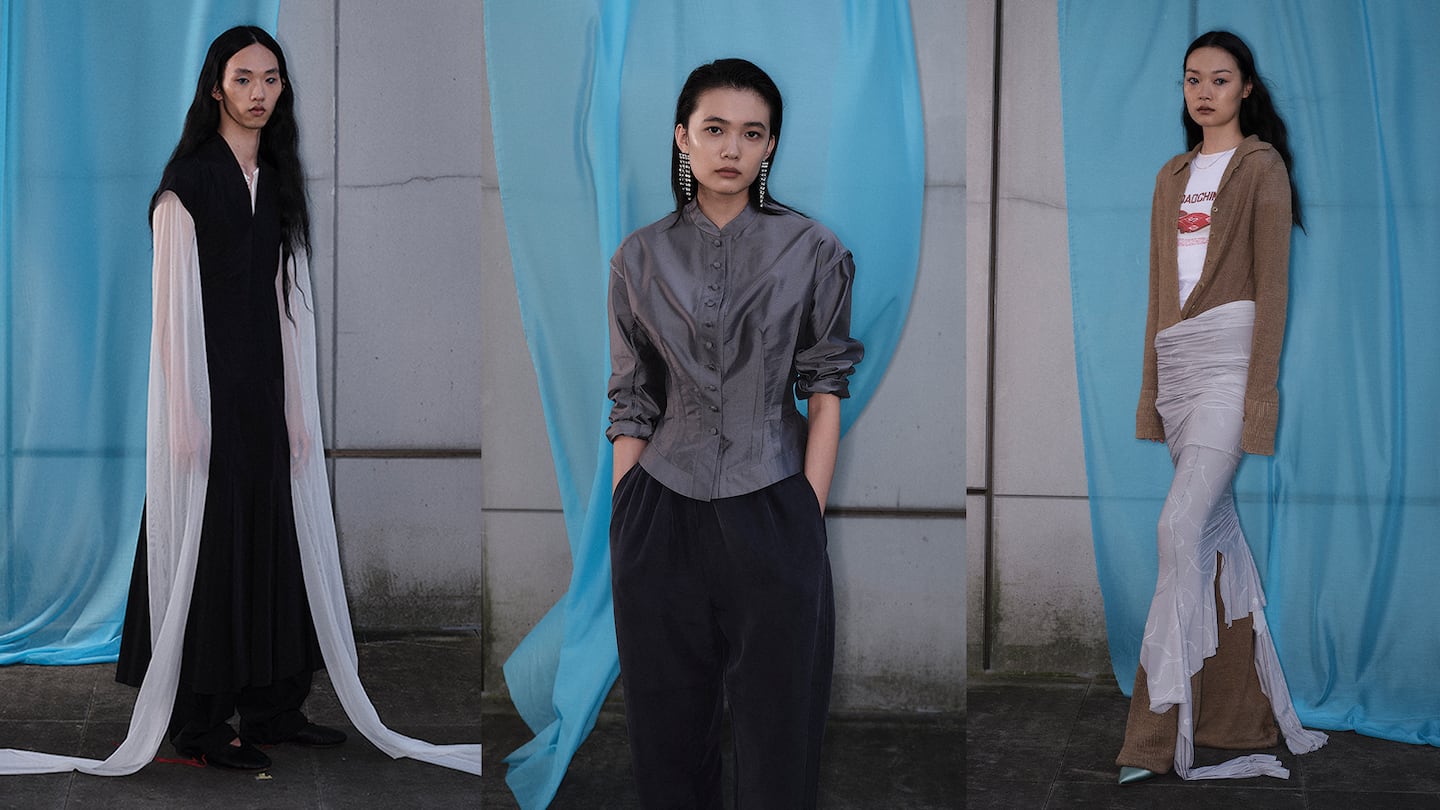
SHANGHAI — The crowd on the tree-lined street outside the historic, boutique hotel Shangying Chao in downtown Shanghai on Wednesday wore relaxed, flowing trousers, boxy vests and qipao-flavoured dresses in a faded acid wash.
They came to see Samuel Guì Yang, a longtime star of Shanghai Fashion Week. The show was set in an old 1930s building, its white facade decorated with streams of billowing aqua fabric for the occasion.
Co-founders and creative partners Samuel Yang and Erik Litzén have never been ones to follow the crowd. Their business approach, like their clothes, is understated and consistent.
The label was founded in 2015, operating between London and Shanghai. It opened its first store this week and is only now preparing to return to international wholesale and direct e-commerce after a pandemic retraction.
ADVERTISEMENT
“We’re all determined and stubborn people, but quite realistic,” said Litzén, outlining the brands’ measured approach during a conversation in the brand’s Shanghai studio this week. “You need a certain amount of traction, established customers, people looking for you — not just for a fun piece.”
After a little over a decade in business, the brand finally feels like it’s reached that point.
“He’s really been a slow burner and that allowed him to form his language in his own way,” said Angelo Flaccavento, journalist and fashion critic for The Business of Fashion, who has viewed the brand as a standout since first attending Shanghai Fashion Week a decade ago. “His taste is really exquisite, the way he mixes textures or colours, or the way the layering is done in the show. It’s innate taste, and it’s so refined and so modern while still keeping its roots.”
When Samuel Guì Yang launched, the brand was ahead of its time. In the go-go years of the late 2010s, big names and big logos were all the rage. Yang and Litzén’s contemporary approach to Chinese design was seen as niche. Industry watchers questioned whether it could have broad appeal.
The design duo stuck to their guns, refusing to compromise or water down their aesthetic. Their East-meets-West lens wasn’t a gimmick, it was the point.
“We would like to show something else outside what is on offer in the West,” said Litzén.
Just over 10 years on, that looks prescient. Samuel Guì Yang sits at the forefront of the xin zhong shi (neo-Chinese style) movement, which has bloomed in recent years alongside a wave of nationalism and increased cultural confidence. Western consumers are also more open to Chinese cultural influence at both the high end and the mass-market level (as the rise of Shein and Popmart’s Labubus show). Around the world, a quieter form of luxury has increased in popularity.
On Wednesday, models paraded in loose tapered trousers paired with structured Mandarin-collared jackets in dusty pinks and navy blues. Elongated gauzy white sleeves leant drama to simple black silk dress and pops of red were toned down under chiffony layers of the palest lime.
ADVERTISEMENT
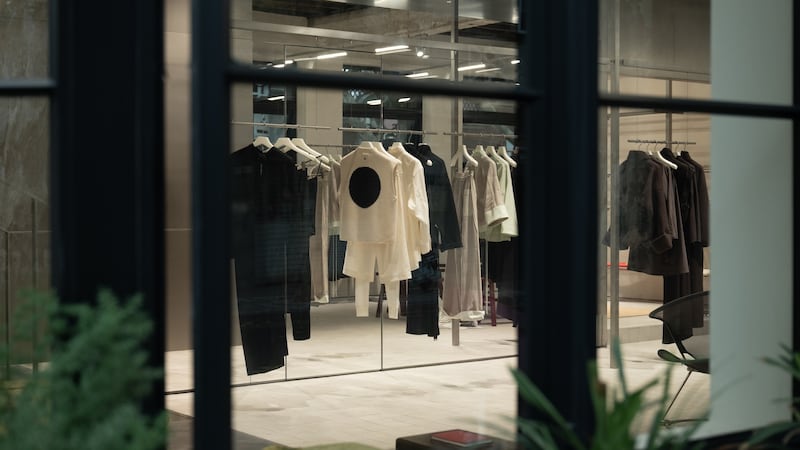
This is “a brand that really can present the spirit of a younger generation in China in a very modern and subtle way,” said Tasha Liu, the founder of Shanghai-based brand incubator, retail platform and concept store Labelhood, who has helped shepherd many of China’s rising crop of young designers.
She has championed Samuel Guì Yang for years and provided consulting on its new store, a sleek space in a converted bath house on the outskirts of Shanghai’s leafy French Concession district.
“This is about cultural recognition. It takes a longer time than a Shushu/Tong which is universal,” she added, referencing the buzzy Shanghai-based, Miu Miu-coded label beloved by A-list “It” girls and stocked globally.
Perhaps things would have moved faster, were it not for the pandemic. In 2020, the brand was on the rise, selected as a semi-finalist for the LVMH Prize in Paris. Then Covid hit.
It was a pivotal moment. As lockdowns rippled across the world, Yang flew back to China, where he spent weeks stuck in quarantine. The brand retracted and expanded at the same time. It pulled back from international sales, but business surged in China, where lockdown “revenge” shopping drove a surge in consumption.
“It was booming, bubbling. It was a crazy, fluffed-up time,” said Yang.
But instead of rushing into growth mode, the brand focused on product development. It shifted manufacturing to China and took time to build deep relationships with local manufacturers and retailers. “The benefit and advantage we have is that China has a great manufacturing history and supply chain. That’s why we’re quite patient to focus on products and design,” said Yang.
But now the brand is ready to shift gears. Earlier this year, it took on its first outside investment, giving it the capital firepower for expansion. (The brand declined to disclose details of the transaction.) Alongside its new Shanghai store, it’s moving back into international wholesale and will launch a website to act as a global direct-to-consumer channel next month. It’s built up a core, loyal base of consumers that’s given it confidence it can sustain a physical presence. Over the next three years, it’s targeting an annual growth rate of around 30 percent, an ambitious number, though starting from a small base.
ADVERTISEMENT
“We’re not taking it to the extreme. We’re here for the long run,” said managing director Caroline Wåglund. “How we run the business is with a clear vision and very steady plan ahead.”
Disclosure: Sarah Kent attended Shanghai Fashion Week as a guest of the organisers. Editor's note: This article was revised on 16 Oct., 2026 to correct naming errors.
Loading recommended reads…
With a pop-up holiday market in New York City, the influencer monetisation platform is hoping to bulk up its credentials as a shopping partner for brands — and build its own name recognition in the process.
Far more than a gateway for Western brands, China’s fashion capital is now a springboard for local and international labels as they tap the city’s shopping districts and trade platforms to drive growth at home and abroad.
With perfume sales handily outperforming its other segments, the US cosmetics giant has a reliable growth engine. Investors are on board, but want to see more even performance across the business.
NuOrder by Lightspeed is helping fashion brands treat wholesale as a source of market intelligence, not just a distribution channel. BoF sits down with Marie Baldauf-Lenschen, senior director of Lightspeed wholesale, to learn more.