Agenda-setting intelligence, analysis and advice for the global fashion community.
Agenda-setting intelligence, analysis and advice for the global fashion community.
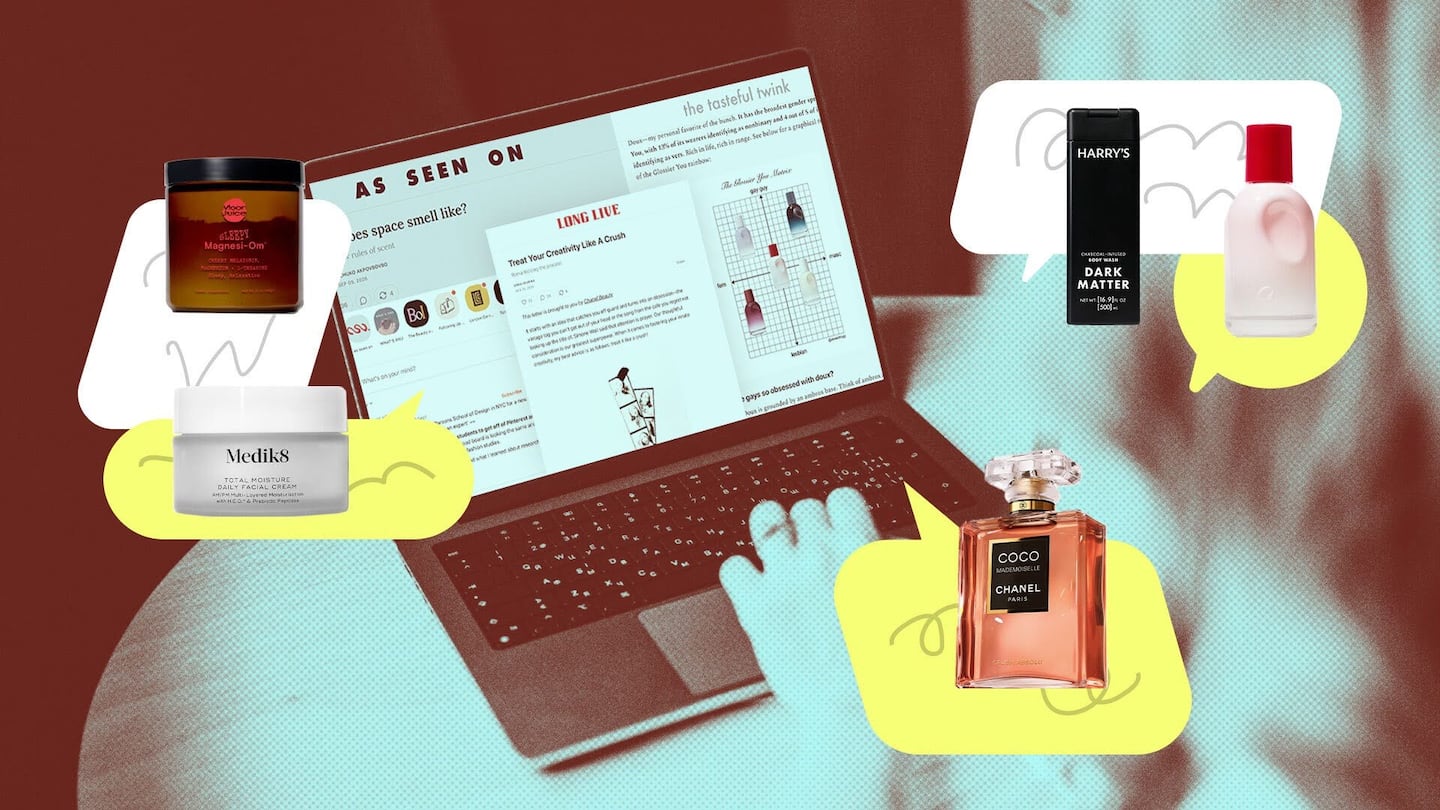
When launching a new scent, luxury labels have their signature playbook: Cast an impossibly beautiful celebrity, throw them on a horse and host a lavish party (or two).
Chanel Beauty added a step with the launch of its newest flanker, Coco Mademoiselle Crush Absolu: In addition to recruiting Gracie Abrams as its campaign face, the label also worked with several Substackers to write personal essays about their relationship to the bestselling franchise.
The French house is the biggest, but not the only, beauty brand name to factor sponsored Substacks into their marketing budgets; Glossier, Merit and Harry’s have also promoted recent launches through partnerships on the newsletter platform. While many beauty brands have tried — and failed — to build their own presence on Substack, sponsorship instead allows labels to insert themselves into the niche, engaged communities and conversations of its already established writers.
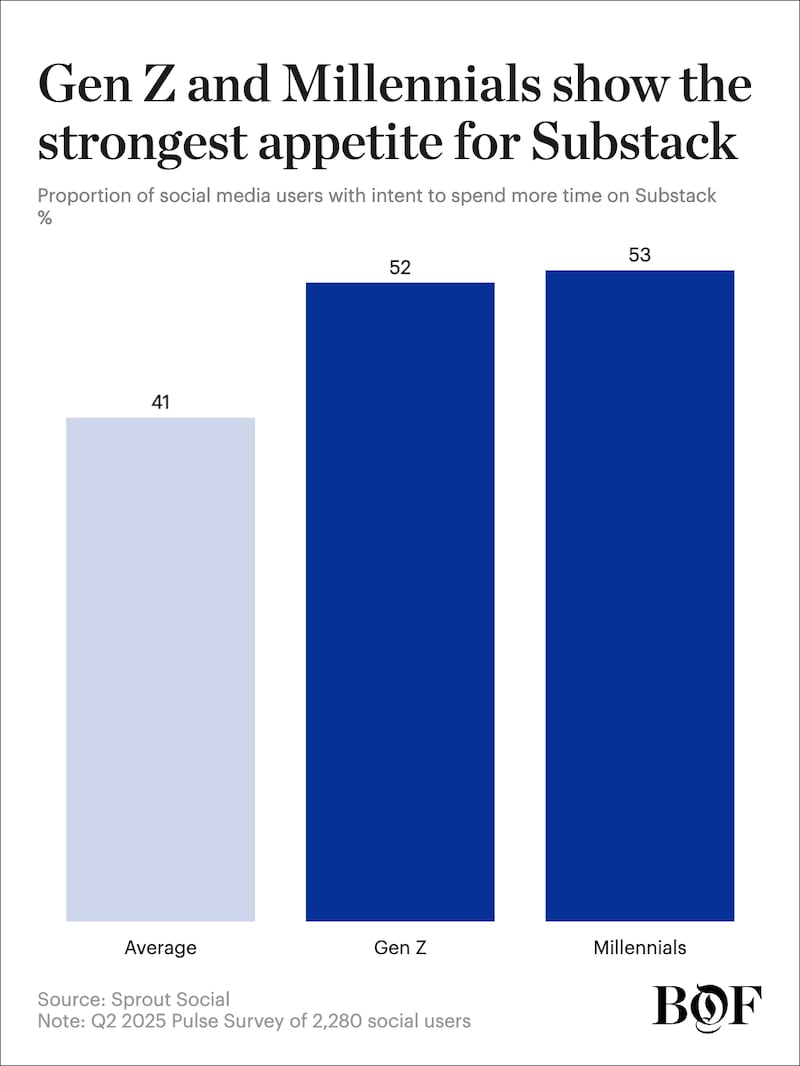
Even amidst the “digital detox” movement, Substack is alluring new users. The platform hosted 50,000 paid newsletters in May 2025, but hit 100,000 in April 2026, and a report by Sprout Social that surveyed 2,280 social media users showed that 41 percent plan to spend even more time on the platform (skewing even higher among Gen Z and Millennials). Though consumers largely yearn to spend less time online, the long-form, well-researched, authentic voices of Substack offer a reprieve from algorithmic feed fatigue.
ADVERTISEMENT
For beauty brands, the platform has elevated a new guard of gatekeepers. “Trust has moved away from brands, moved away from magazines, politicians and institutions,” said Marina Mansour, president of beauty at Kyra and author of newsletter “The Beauty of Influence.” With the rise of AI, the voices of “trusted individual curators” have risen to the top, she added.
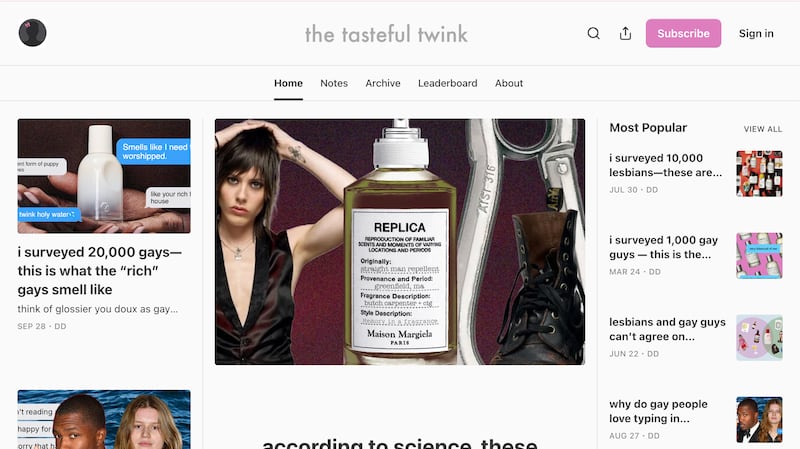
To work well, partners and writers must have a natural affinity. A September collaboration between “Tasteful Twink” author Derek Deng and Glossier’s You Doux hit the right note after Deng had already prolifically and organically praised the fragrance in magazines, newsletters and across his socials. To assist brands in finding such natural fits, Substack launched its own native sponsorships programme in June with a number of flagship partners, including Kering-owned Balenciaga. (Brands can buy into the service, or continue to approach individual writers independently.)
Though beauty has been experimenting with Substack since 2024, the cosign of two luxury houses in as many months signals the platform’s growing resonance among a desirable set of clientele.
But the return on investment has historically been less clear. To troubleshoot, and communicate its initiative’s value, Substack on Thursday revealed a partnership with Kantar, a company that helps measure brand lift for sponsorship campaigns. The company will gauge if campaigns actually improve awareness, consideration and favourability for both the brand and the publisher.
“We feel like we’ve only scratched the surface,” said Dan Robbins, head of brand sponsorships at Substack. “In a world where it can feel harder than ever to build sustained, durable content campaigns, this is the place to really do it.”
While campaigns across TikTok and Instagram may often come with a script, on Substack, briefs tend to be more open-ended: After all, the brand is paying for a creator’s voice, as well as their following.
To give brands a clear indication of what that voice will entail, writers participating in Substack’s partnership initiative produce their own media kits, almost like a dating profile to potential sponsors. Brands that have not bought into the programme — for which Substack declined to provide financials — instead must be savvy enough to sniff out the right fit.
For Glossier, which began as the seminal beauty blog “Into the Gloss,” appearing on Substack felt like a homecoming of sorts. The brand also didn’t have to look too hard to find the correct writers to use as a conduit: Its fragrance You was already a favourite of many.
ADVERTISEMENT
“We were looking at people that had integrated it into their routine already,” said Georgia Weeks, the brand’s associate manager of influencer. “It felt like an opportune moment to jump on an existing narrative, while still being able to ladder back the greater campaign messaging.”
Though Ochuko Akpovbovbo authors one of the platform’s most popular newsletters, “As Seen On,” the majority of her income comes not from subscriptions but sponsorships from the likes of Harry’s and Nutrafol. By funding her work, Akpovbovbo sees brands as acting as patrons of the arts. “I’m Gen-Z, I can hardly remember a media universe that wasn’t sponsored by a brand, so I don’t think, ‘Oh my god, this is a sellout,’” she said.
One way brands are able to show up via Substack’s initiative is known as the “unlock,” the removal a paywall so all subscriber tiers can access a newsletter. It creates a situation where on Substack — like perhaps no other social media platform — ads are not only tolerated, but celebrated.
Substack readers are also uniquely switched on, said Akpovbovbo. “You know audiences are taking a few minutes of their day to actually read a person’s work, which is more than you can say for most TikToks or Instagrams,” she added. As Mansour points out, while almost anyone can have a flash-in-the-pan moment on TikTok, Substack communities are more hard won, and therefore more engaged.
“All beauty brands are doing is trying to find out what the next frontier is in attention,” she added.
Unlike Tiktok and Instagram campaigns, a Substack essay’s return on investment is still quite opaque.
“Is it a solid KPI? Or is it more we’re planting our roots and we’re able to have these conversations?” said Weeks. “It’s more qualitative than quantitative.”
Though it’s hard to quantify, gaining the “co-sign” of this new league of tastemakers allows brands to embed themselves in a writer’s world (and community). “I don’t do affiliates. I don’t do direct product recommendations, and people don’t necessarily come to my newsletter to buy stuff,” said Akpovbovbo. “Brands work with me to help put their products in context of a bigger world, where it is in the industry, what’s exciting about it.”
ADVERTISEMENT
For her partnership with Harry’s to promote its Dark Matter bodywash, Akpovbovbo didn’t dwell on its scents or skin feel, but instead took the chance to place it in a more meta conversation about the internet’s ever-niche fragrance preferences, in an essay titled “What does space smell like?”
To promote Coco Mademoiselle, Erika Veurink of “Long Live” took the more personal approach, weaving the scent’s influence throughout an explanation of her creative processes. While brands once chased clout via the beauty awards of glossy magazines, appearing so prominently in the curated picks of a trusted tastemaker presents a new kind of gravitas.
“There is something pretty special about people sitting down and writing these longform pieces,” said Akpovbovbo. “The essence of luxury is something about scarcity, people having expertise, so I do think that there’s something luxurious about Substack.”
Sign up to The Business of Beauty newsletter, your complimentary, must-read source for the day’s most important beauty and wellness news and analysis.
Brands, podcasters and influencers with massive followings are joining the platform. But some veterans say that growth comes at a price.
As growth marketing becomes even more expensive in a crowded market, beauty leaders must rebuild their creative marketing muscle and make bold choices, finds The State of Fashion: Beauty Volume 2.
More fragrances are now sold through digital channels than in store, posing challenges for the traditional ‘try before you buy’ playbook. As channels like Amazon and TikTok Shop pick up speed, brands must adapt to a new reality.

Rachael Griffiths is a Senior Editorial Associate at The Business of Beauty. She is based between St Helens and London, and covers beauty, wellness and industry news.
Loading recommended reads…
Nearly a decade since the luxury groups first published a charter of model protections, they are introducing new measures to protect those working in the industry.
As the platform matures as a media channel, a slew of beauty brands are turning to its most trusted writers for a more intimate form of audience engagement.
People are experimenting with the substances in a quest for sharper thinking, despite legal grey areas and little published research.
Maggie Gauger is joining Lululemon as chief product officer as new CEO Heidi O’Neill looks to revive sales.