Agenda-setting intelligence, analysis and advice for the global fashion community.
Agenda-setting intelligence, analysis and advice for the global fashion community.

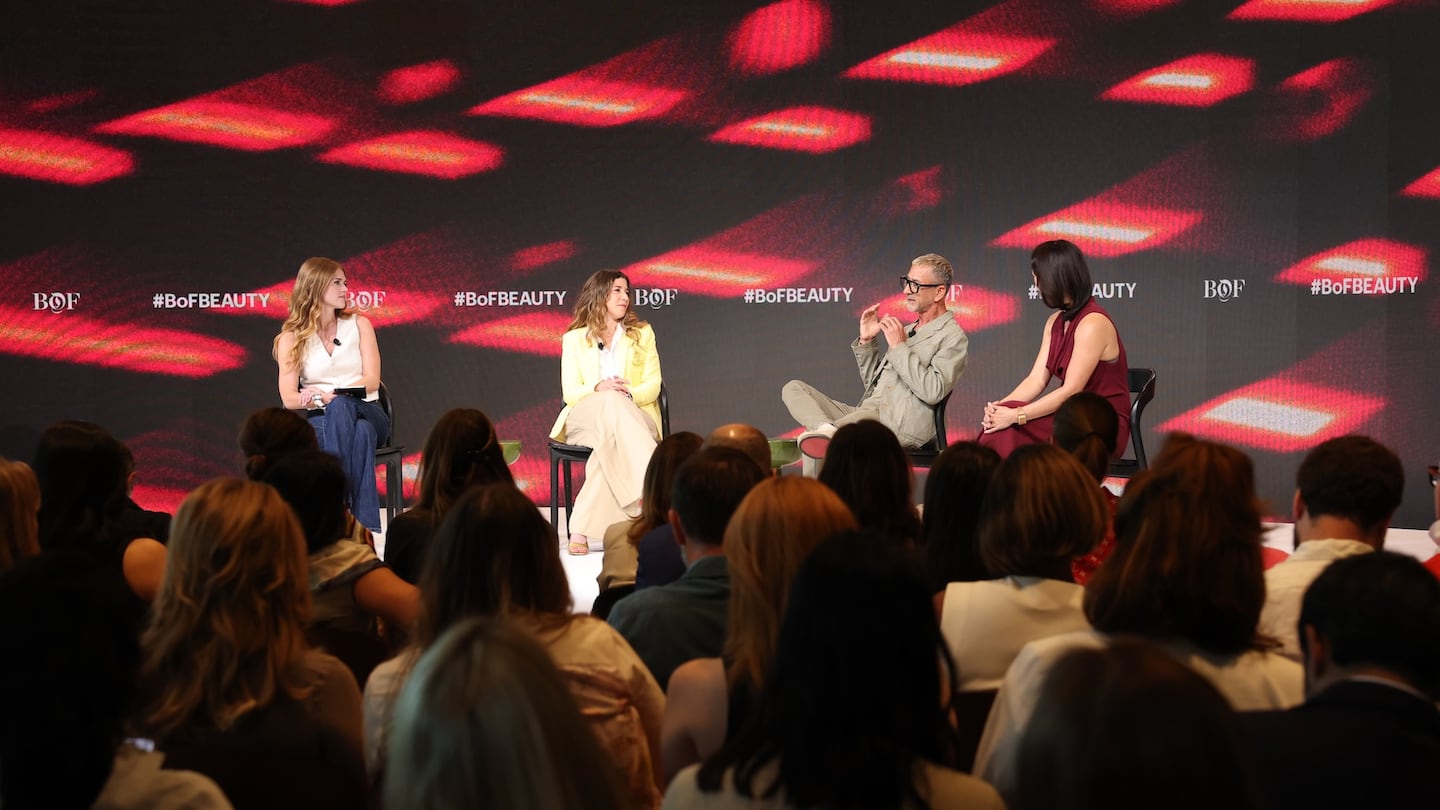
NAPA, California — The Business of Beauty Global Forum 2026 — now in its fourth consecutive year — saw senior executives, entrepreneurs, creatives, and more descend on Napa Valley’s Stanly Ranch from June 24-26. The exclusive event fostered meaningful connections and incisive discussions on the beauty industry’s greatest challenges and opportunities.
On day two of the conference, leaders such as Sephora’s chief executive Guillaume Motte, Diptyque’s chief executive Laurence Semichon and Estée Lauder’s chief brand officer Jane Hertzmark Hudis, among others, took over the stage to discuss desire, loyalty, AI and more.
A panel discussion, entitled “The Next Chapter for Founder-Led Businesses,” saw Mary Carmen Gasco-Buisson, CEO of Unilever Prestige, joined on stage by Suveen Sahib, founder and CEO of haircare brand K18 and Vicky Tsai, founder of Japanese skincare and beauty label Tatcha. The conversation was moderated by Alice Gividen, director of content strategy at The Business of Fashion.
Founder-led brands have defined some of the most compelling growth stories in prestige beauty over the past decade. But as the industry enters a new phase of maturity, growth is moderating, acquisition activity has evolved and there is a renewed focus on what it takes to build enduring businesses in this climate. Indeed, a founder’s appeal is no longer guaranteed to secure long-term success.
As a result, both founders and strategic buyers are thinking differently about long-term value: what makes a brand sustainable beyond its early growth years, how founder involvement evolves over time and what the next chapter of founder-led beauty might look like.
In 2014, Unilever Prestige — the premium beauty arm of Unilever, which counts Tatcha, K18, Hourglass, Dermalogica, Living Proof and more in its portfolio — was created to acquire entrepreneurial beauty companies and preserve each brand’s founder-driven identity.
According to The State of Fashion: Beauty 2025 report, only 13 percent of consumers cite the brand founder as a key reason for buying their most frequently purchased brand, while performance and price are cited by 39 percent and 24 percent, respectively.
As such, brand founders must work to distill their underlying, unique value proposition. Successfully achieving this is key to sustaining a brand’s identity beyond the founder’s personality — and to creating a point of differentiation in a saturated market.
Unilever Prestige acquired Tatcha in June 2019, driven in part by the brand’s loyal consumer following and founder Vicky Tsai’s personal story of living with acute dermatitis and discovering Japanese beauty rituals. It was one of the division’s largest acquisitions at the time. Its founder, Tsai, has remained involved with the business since the acquisition.
Meanwhile, Unilever Prestige’s acquisition of K18 closed in the first quarter of 2024 — a move the company described as “[complementing its] fast-growing portfolio of premium, culturally-relevant consumer brands”. Similarly, Sahib is still actively leading K18 after its acquisition by Unilever Prestige.
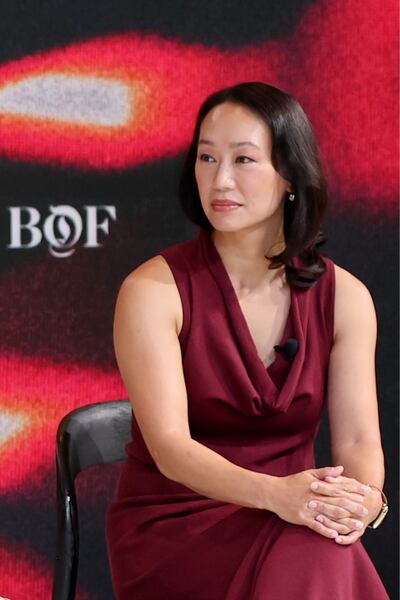
Onstage, the panellists explored how founders can remain valuable strategic and creative partners as brands mature. Now, BoF shares key insights from the conversation.
The panel repeatedly challenged the idea that growth alone is the clearest measure of success. Instead, they argued that enduring founder-led brands are built on a combination of product efficacy, emotional resonance and business fundamentals that allow them to scale over decades – not just deliver impressive short-term growth.
“We’re becoming more discerning of what differentiates a brand having a moment from a brand that has the strength and depth to eventually become a global icon,” said Gasco-Buisson.
To her, although the profile of an attractive acquisition has not changed as much, the strategy of a buyer like Unilever Prestige has. “If I were to summarise, I would say [we are looking for] efficacy, desire and scalability.”
She defines efficacy as “delivering on a brand’s promises in a way that excites customers”. Desire means creating a brand story that resonates and prompts consumers to choose it over competitors. Scalability means having strong foundations and a business model capable of sustaining growth.
“We usually equate value with growth, but growth is more of a consequence,” agreed Sahib.
He suggested that indie brands are built on founder energy, while legacy brands take institutionalised conviction and require a level of discipline and editing out that many founders, including himself, learn after integration into a company like Unilever Prestige.
“I love the rigour and challenge from Mary Carmen and the team. The conversations are not about driving growth, but about making the brand thrive 20, 30, or 50 years from now,” he said. “We are seeing a transition from founder-led to the creation of enduring institutions.”
Tatcha, founded in 2009, is still growing and has tripled in value and profitability, according to Tsai. “We feel lucky to be a part of the Unilever group because their only focus is on unlocking our potential. Most brands sold in my cohort during that time have been impaired or are gone.” She credits the brand’s longevity to Unilever’s brand management model, which recognises that different acquired brands create value in different ways.
The conversation reflected on how the strongest founder-led brands don’t win by making incremental improvements, but rather by understanding a problem more deeply than the market does — and by building products, stories and communities that fundamentally reshape customer expectations.
“It’s about solving a problem using first principles in a way that can change behaviour or recalibrate belief in the communities,” said Sahib. “For [K18], it wasn’t about haircare; it was about intervening in a biological decay happening in the keratin system. We are super obsessive and precise about what the brand stands for.”
To him, the challenge is not competing in existing categories but rather creating new ones: “Category creation is invaluable.” Moreover, K18’s “less is more” philosophy has been at the core of the system from the start and has helped the founder and his team be intentional in everything they do.
Founders should also obsess over building a sense of belonging among their teams to maintain long-term momentum.
“A company is just a community of people who come together every day to bring a brand promise to life,” said Tsai. “The purpose of a founder and the founding team is to embody that brand promise every day — and bring it to life through everything we do. That is a competitive advantage today and always has been because customers want to join brands, not just buy products.”
As the company celebrates its 16th anniversary, Tsai said the entire founding team is still working or close to the brand, while their scientists in Japan, who are now 78 years old, still want to keep going.
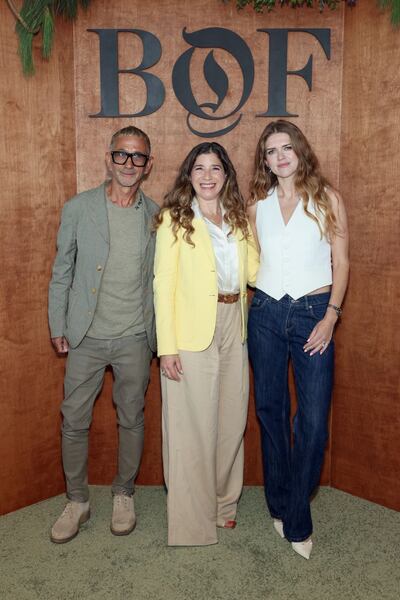
The conversation turned to how trust — between founder and consumers and founder and their team, respectively — remains at the centre of beauty entrepreneurship and growth.
Sahib said he encourages founders to be precise in identifying their unique growth flywheel, and build trust with that cohort. “In our case, it was clearly [hair] stylists,” he said. “You have to build moments of micro-trust, which happens when they love using your products in the salon. When you do that, you create products your communities love, you create billions of moments of micro-trust with advocates.”
Gasco-Buisson also emphasised the importance of trust between founders and Unilever Prestige post-acquisition, which she defines as only the start of a partnership. “Vicky’s brand has been in our portfolio for over seven years. She is always engaged, keeping that founder DNA, vision and team spirit alive.
“When we had a CEO change at the brand last year, Vicki was hand in hand with me [recruiting] for the role. I felt much more confident that we had chosen the right person because she was there throughout the process, helping to keep the brand and team going during the gap”. Gasco-Buisson then reflected on Sahib running K18 as CEO, and her hopes for him to remain long into the future.
Perhaps the most powerful insight from the discussion was that a founder’s ultimate responsibility is not to remain indispensable but to make themselves progressively less necessary. The mission should remain constant, even as leadership, teams and the business evolve over time.
“Founders need to be very protective of the mission and then shed away everything that is a myth, including the idea that they are the most important person in the business and must do or approve everything. They must stop becoming a bottleneck,” said Sahib. “It’s about becoming embedded with your principles so they shape the culture, talent, products, and decisions long after you are there. That is when you evolve from a founder business to an institution.”
When asked whether the traditional exit of a founder following an acquisition is over, Tsai said that, although her job, “like a mother’s”, is to “eventually become irrelevant,” replacing the founding team with experts is a quick way to “destroy value.”
“If you want to buy something that will last and become iconic, hold on to the team and understand how they feed the flywheel [first],” she said. “As founders, our job is to make sure you, eventually, don’t need us anymore.”
At Unilever Prestige, Gasco-Buisson said long-term founder involvement and engagement is critical. “We do not look for brands where the founder wants to leave,” she added. “We want to work with founders to decode their DNA and turn their beautiful brands into global icons.”
This is a sponsored feature paid for by Unilever Prestige as part of a BoF partnership.
Guillaume Motte, Jane Hertzmark Hudis and Cassandra Grey were among the speakers unpacking the most pressing topics for the industry in the second session of The Business of Beauty Global Forum 2026.
Loading recommended reads…
Sales of gems, precious metals and artwork at Japan’s department stores climbed 19 percent in the first half of 2026 from a year earlier to $2 billion.
Though Adidas dressed both teams in the World Cup finals, the global football tournament still presented some bright spots for Nike, writes Bloomberg’s Andrea Felsted.
From our archive, the creator and host of award-winning podcast “Articles of Interest” joins BoF founder, CEO and editor-in-chief Imran Amed to explore what clothing can reveal about identity, culture, labour and the world around us.
Saunders, the brand’s first creative director in five years and a skilled colourist, promises to give Kate Spade the clarity it has long lacked. Now, Tapestry must apply the same long-term brand-building discipline that fueled Coach’s success.