Agenda-setting intelligence, analysis and advice for the global fashion community.
Agenda-setting intelligence, analysis and advice for the global fashion community.

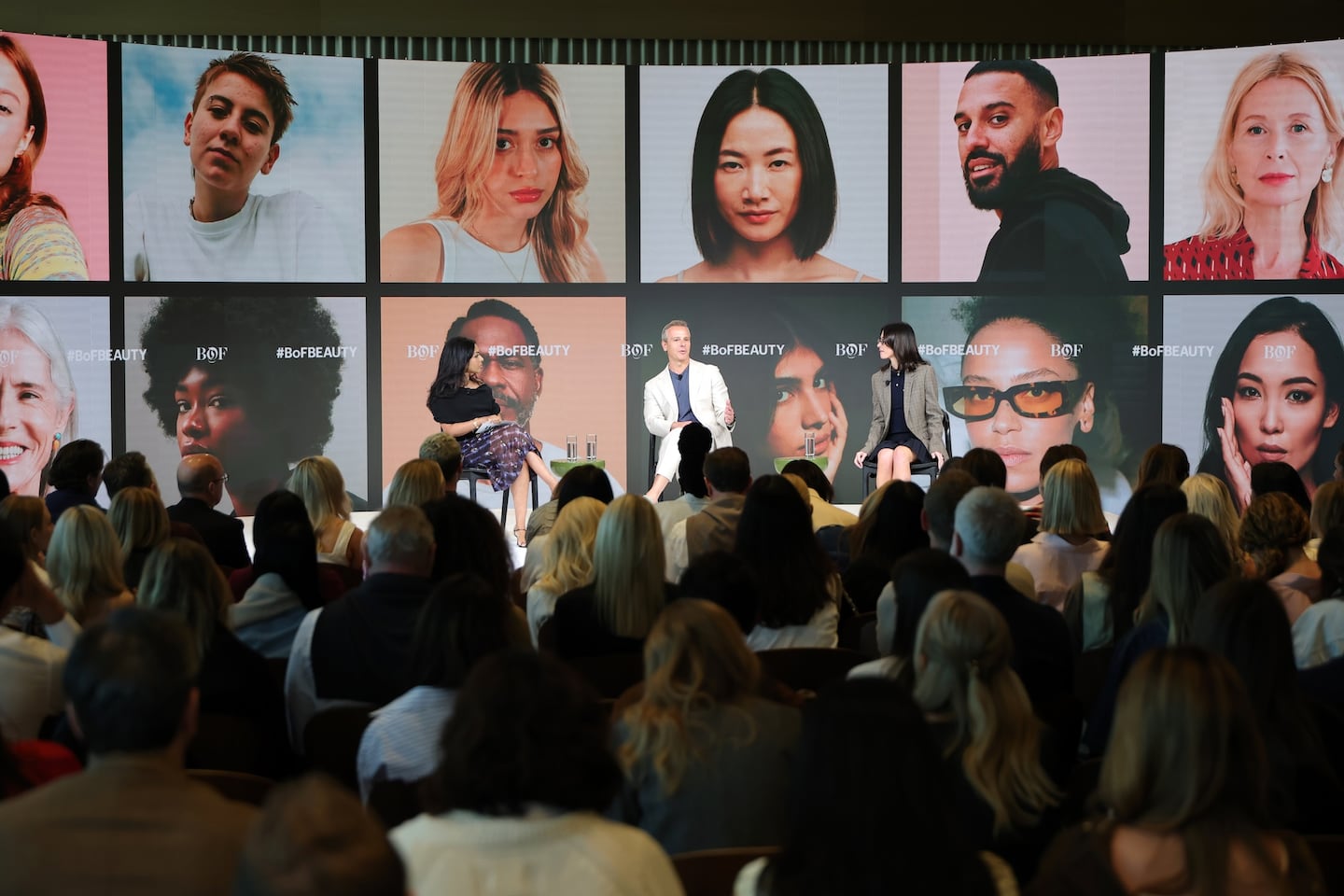
NAPA, California — From shoppers’ growing price consciousness to a relentless trend cycle, beauty companies face constantly changing market conditions.
“People still scroll through social media looking for newness, waft around stores looking for the perfect mascara and spritz perfume just to boost their moods. But the life cycle of a brand is getting shorter, and we all know that,” said Priya Rao, executive editor of The Business of Beauty on June 25 at Stanly Ranch, introducing the second session of The Business of Beauty Global Forum. “Competitive moats are vanishing, dupes are eroding value propositions, and customers are shopping around, not sticking to tried and true labels.”
But these changes also offer opportunities for growth. Executives hailing from giants like Sephora and Unilever, and global labels like Kiko Milano and Tatcha, took to the stage to share their strategies on preserving brand identity, keeping up momentum amid rapid change and utilising new technologies.
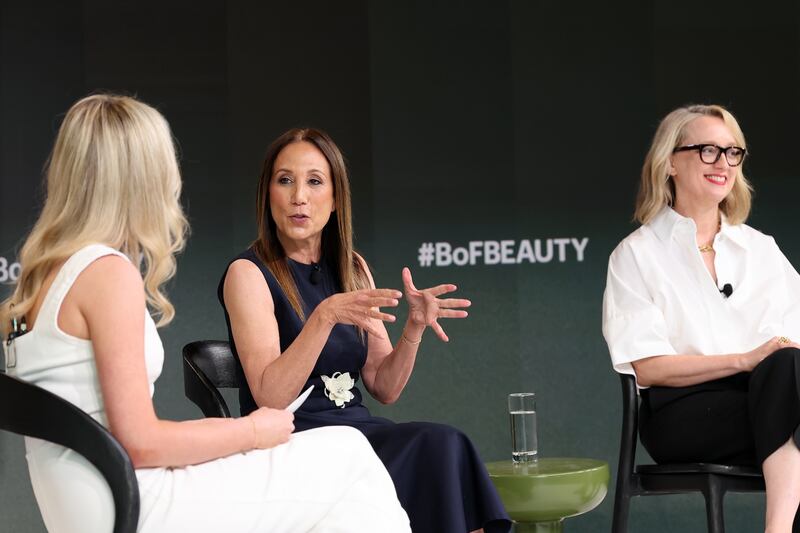
Whether they’re independent or conglomerate-backed, staying true to an original vision and concept is top of mind for all luxury brands.
ADVERTISEMENT
Laurence Semichon, the chief executive of Diptyque, and Jane Hertzmark Hudis, chief brand officer of The Estée Lauder Companies, spoke on stage about how these labels maintain longevity in a crowding, and distracting, market.
Hudis, speaking about Lauder-owned La Mer, said that product quality and brand equity remain “paramount” for the skincare brand. In a time of rapidly changing beauty trends and viral hype, the brand takes its product launch approach slowly, investing in loyalty and a strong repeat rate for purchases.
“We’ve kept it very, very tight and very exclusive,” said Hudis. That means steering clear of jumping on trends just for trends’ sake. “We don’t launch until something’s ready,” said Hudis.
Diptyque, founded in Paris in the 1960s, has also focused on remaining true to its brand DNA, with Semichon echoing a similar sentiment. The brand’s original founders were “allergic to trends,” she said. When it comes to the era of TikTok-viral fragrances, she said the brand has steered clear of jumping on bandwagons.
“The temptation to say yes to many things can be a trap,” said Semichon. The brand still benefits from cultural moments, like a vogue for vanilla fragrances that helped spike sales for its classic Eau Duelle vanilla scent.
“Our relevance doesn’t come from us following the trends. It’s staying true to quality, to singularity, and then the trends come to you,” she said.
While Diptyque remains independent, Hudis said that La Mer also upholds an indie spirit.
“La Mer is kept very, very special and that’s a key part of the success,” she said, noting that Lauder focuses on keeping La Mer the “jewel in the crown” of its portfolio. The brand is still seeking sources of growth, including marketing to men and younger customers. At the same time, it continues to maintain the factors that make the brand unique — including playing recordings of kelp and ocean sounds during the production process.
ADVERTISEMENT
“I know it’s folklore, but the music is still playing,” said Hudis.
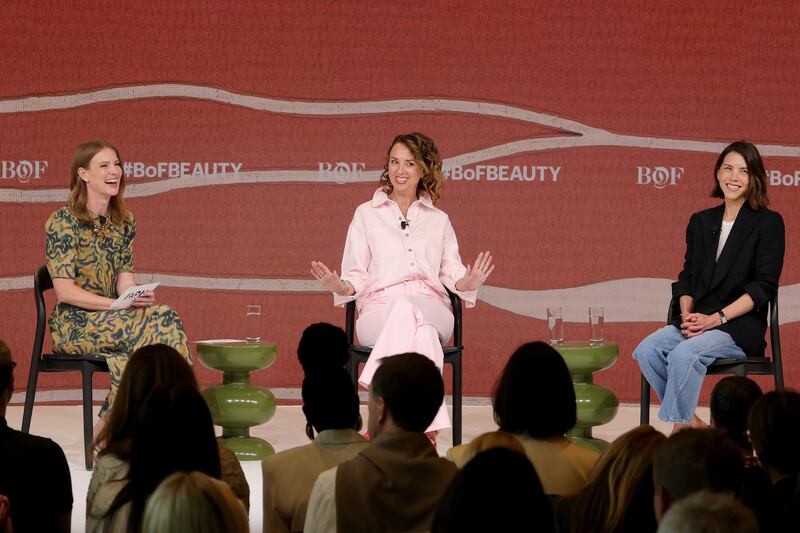
With widespread adoption among beauty brands, companies are looking to up their personalisation game with more sophisticated technology and data analysis.
“The biggest mistake, number one, is if you’re not capturing all the data, you’re not truly knowing your customer,” said Jamie Domenici, chief marketing officer of Klaviyo, who added that AI technology is offering possibilities to rapidly speed up that data’s interpretation. “You no longer have to go and analyse a spreadsheet for hours; you can put it in an LLM, and it’ll give you an answer,” she said.
From tailored product recommendations to personalised email send times, brands can adopt increasingly granular strategies with the right data.
Liz Cebron, chief marketing officer, Ilia Beauty, described how the brand offers on-site features such as quizzes for product recommendations tailored to specific customer concerns, as well as human beauty advisors, who customers can book for a one-on-one video call.
“In this day and age, a lot of marketing talk is around personalisation – right time, right place, right product – and using AI to automate all of that. We want to do that, but we also want to be able to serve the person for whom personalisation is about, talking to a real human. It’s not just about one way to personalise. You have to have a lot of options,” said Cebron.
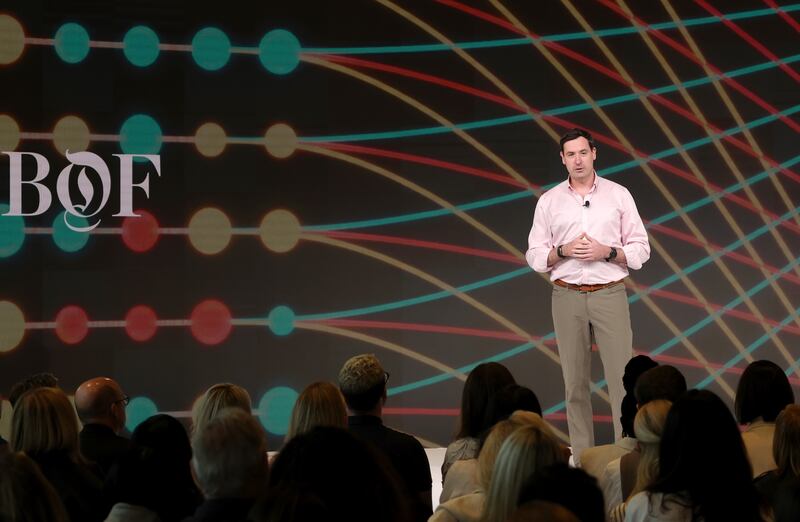
Can a sense of smell be digitised? That’s what Alex Wiltschko, founder and CEO of four-year-old AI fragrance company Osmo, has been working on. Osmo, which was conceived with inspiration from the “digital olfaction” group Wiltschko founded at Google, has been in the process of using AI to develop fragrances.
According to Wiltschko, the process of creating AI-developed fragrances has come a long way since he first began, when AI programs’ first concoctions hardly counted as perfume.
ADVERTISEMENT
“It was awful. It turned brown. It violated basically every industry regulation, and it was very, very expensive. It was a complete failure,” he said of the initial attempt.
Since then, he said he’s learned strategies about collecting and using quality data to create AI-generated fragrance formulations.
“AI that’s fed poor data spits out plausible and confident and completely wrong predictions,” he said. The company has collected 5.4 million “sniffs,” or tests of people smelling something and writing down what they smell, as well as 100 million chemical sensor readings.
To utilise AI, the company employs master perfumers to create the fragrances, using the technology to speed up their processes. Wiltschko argued that human creatives can never be replaced when it comes to fragrance creation.
“AI is a tool. AI is not an employee,” he said, arguing it “is like a pencil, or a screwdriver or a paintbrush. And if you put that in the hands of someone without creativity and taste, you still get a bad outcome.”
When a brand is acquired, it’s inevitable that sooner or later, its original founder will relinquish control.
For Mary Carmen Gasco-Buisson, the chief executive of Unilever Prestige, retaining a founder’s original vision is paramount to sustainable success. She was joined onstage by two of its portfolio brand founders, Vicky Tsai of Tatcha and Suveen Sahib of K18, for a discussion centred around the role of the founder at all stages of a brand’s life cycle.
Gasco-Buisson emphasised the importance of founder involvement with a brand for “keeping the passion and the DNA of the brand alive.”
Acquired by Unilever two years ago, K18 is still led by Sahib, the brand’s co-founder and CEO.
“The one thing founders need to hold onto is the mission,” he said.
Tatcha, which acquired seven years ago, is still led with heavy guidance from Tsai, even after she transitioned to a founder role. She was heavily involved in the selection of a CEO who would remain dedicated to keeping the brand’s identity alive. This has been crucial to its long-term success, she said.
“Most of the brands that sold in my cohort during that time have been impaired or they’re gone, whereas we’ve tripled in value and tripled in profitability in this time,” said Tsai. “We’re still having a great time, and it’s because of the model that was built that respects that each one of us has a different way of creating value.”
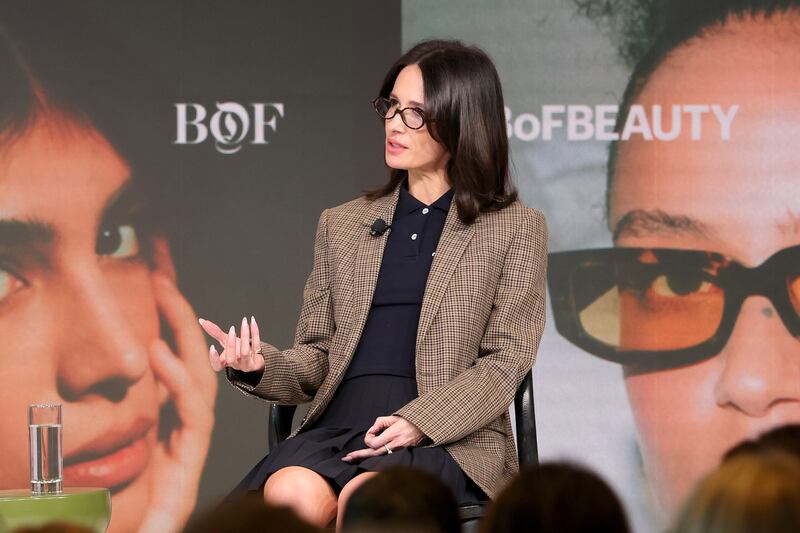
Luxury and mass beauty came together onstage for a conversation with Cassandra Grey, founder, Violet Grey and Madame Grey and Simone Dominici, chief executive, Kiko Milano, on the meaning of value and the importance of customer loyalty.
Grey, known for meticulous curation at her namesake luxury beauty retailer, talked about the importance of discernment for maintaining its cult status among a loyal base of customers.
“We’ve always thought of Violet Grey’s product as trust,” said Grey. “With every line of communication, we’ve aimed to garner their trust, affection and advocacy.”
Kiko Milano, meanwhile, is dedicated to balancing an accessible price point with premium branding.
“Value is not a pricing point. Value is when you’ve bought something that exceeds your expectations, regardless of the pricing,” said Dominici. The brand, which recently launched into Macy’s and is opening its own New York flagship soon, is focused on staying true to its brand identity as it continues to scale internationally. While at different price points, both agreed on the importance of adhering to established brand codes.
“Founders need to be a little insane and obsessive. I have a very high standard,” said Grey. She also addressed what it means to remain top of mind with luxury customers in the age of AI, arguing that a growing focus on in-person experiences will continue to fuel beauty demand among her clientele.
“We’re in a moment now with the invasion of the machines, where I think we’re going to have another wave of explosive growth in beauty,” said Grey. “I’m optimistic … I like to think that the machines are going to take care of everything, so that we can just seek pleasure."
The Business of Beauty Global Forum 2026 is made possible in part by our partners Klaviyo, Unilever Prestige, Front Row Group, Amazon Beauty, TikTok Shop, Sephora, CLINUVEL, Citi, Tilt Beauty, Summer Fridays, ELEMIS and Stanly Ranch. If you are interested in learning about partnership opportunities, please contact us here.
Paloma Elsesser, Byunghoon Kim and Emma Dabiri discussed the global cultural shifts transforming today’s beauty standards on the first day of The Business of Beauty Global Forum 2026.
Global Livestream — Wednesday, June 24 and Thursday, June 25, 2026

Liz Flora is a Beauty Correspondent at Business of Fashion. She is based in Los Angeles and covers beauty and wellness.
Loading recommended reads…
In this week’s High Margin, a search for images that cut through our visual fatigue — with leads from M/M Paris, Ferdinando Verderi and stylist Emilie Kareh. Plus: Tod’s designer exit; Burberry’s resilient sales.
The producer price index rose 6.5% from October 2025, an acceleration from the prior month, according to Bureau of Labor Statistics data out Friday. On a monthly basis, the PPI increased 0.3%.
The creative director and strategist joins Imran Amed on The BoF Podcast to discuss the evolution of his career, the realities of shaping artist narratives and why long-term collaboration outperforms short-term marketing.
The former Nvidia CEO was central to an AI boom that has propelled the US stock market and fueled the country’s unmatched luxury spending. After his exit, nobody is sure what happens next.