Agenda-setting intelligence, analysis and advice for the global fashion community.
Agenda-setting intelligence, analysis and advice for the global fashion community.


For the year and a half leading up to the opening of their first Los Angeles store, the co-founders of independent fragrance label Maison Louis Marie were getting nervous. When they reached out to one Silver Lake landlord for a newly vacant space they spotted, they were “ghosted,” said co-founder and CEO Matthew Berkson. Another one that opened up in the trendy Sunset Junction area required extensive negotiations.
The landlord was “very particular about who is in the Sunset Junction,” said Berkson, who spent months working on being approved for the space. The brand was finally successful: its first flagship store opened last week near retailers like Mohawk General Store in the neighborhood’s increasingly exclusive shopping area.
Designed by retail studio Via Clover, which has worked on interiors for Alaïa, Dries Van Noten and Chloé, the store joins a group of familiar niche labels – namely, Le Labo, which is a block away, and DS & Durga’s two-year-old shop down the road. In the same week, on the other side of town, luxury Omani fragrance brand Amouage opened its new Beverly Hills location, joining Diptyque, Creed and Parfums de Marly.
“It’s a lot of effort from our side to garner such an iconic flagship location, especially on the West Coast, quite far from Oman,” said Renaud Salmon, the chief creative officer of Amouage.
ADVERTISEMENT
Like fashion or flowers, entire districts are popping up around niche perfume in the world’s largest cities. Driven by motivations to world-build, drive customer loyalty, create brand awareness and own their channels, they are also facing growing saturation and competition as similar names move into their territory.
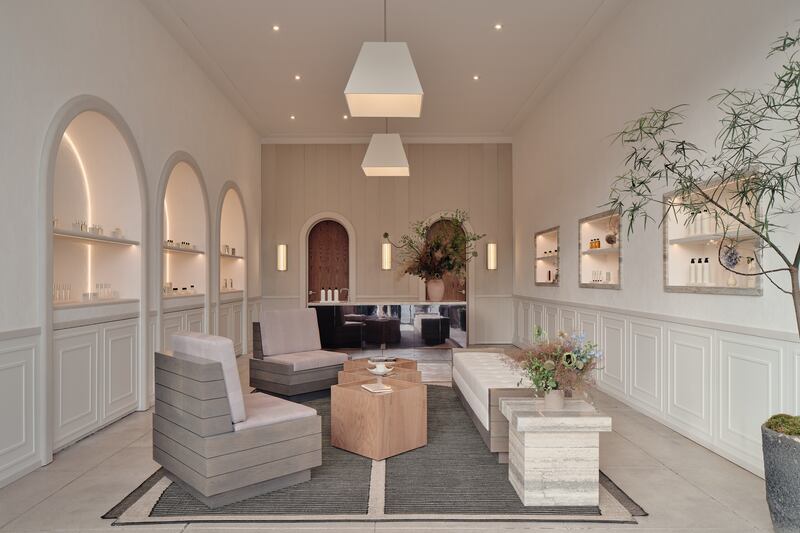
Standalone luxury perfumers have existed throughout history, but have had a resurgence as of late with an influx of global niche perfume brands and added motivation to branch out beyond department stores. Beyond Los Angeles, New York has several burgeoning unofficial fragrance districts, with an especially high concentration in eastern Soho, ranging from Amouage and Trudon on Spring Street to Le Labo and DS & Durga in Nolita. There’s now a niche luxury perfume brand on virtually every block in London’s Mayfair, which has seen openings from Fueguia and Clive Christian in 2025, joining stalwarts like Roja, Penhaligon’s, Creed and Diptyque.
“Clustering” as a retail strategy dates back thousands of years, to when cities built markets around their temples. More recently, a modern iteration has been identified by experts like Harold Hotelling, who wrote in 1929 about why retailers tend to locate stores together, or Harvard Business School Professor Michael Porter, who coined a term for business “clustering” in 1990.
“Fragrance is obviously a very tactile purchase. People want to come in, smell it and try different things out,” said Elizabeth Lafontaine, director of research at foot traffic analysis firm Placer.ai. “That ultimately helps when there is a clustering of these stores together, because you can go and potentially compare the retailers against one another.”
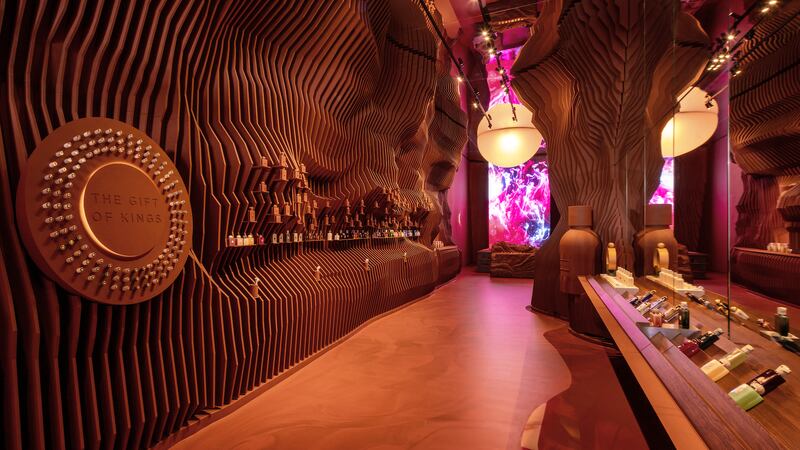
The new Amouage store in Beverly Hills, with interior design inspired by an Omani valley, features a perfume oil set that pays homage to the ancient history of traditional Middle Eastern fragrance souks dating as far back as the 7th century AD.
The same parties opening in LA tend to replicate elsewhere. A growing staple of top luxury shopping areas is Parfums de Marly — the high-end perfumier that frequently finds itself nearby an Amouage, including right across the street in New York’s Meatpacking District, along with shops for Frédéric Malle, Diptyque and Bond No. 9. Brooklyn’s Williamsburg, meanwhile, contains a perfume cluster similar to Silver Lake with DS & Durga and Byredo next to each other, Le Labo across the street and niche emporium Scent Bar a few blocks away.
“A lot of times, Le Labo has been first,” said Robert Sorce, a fragrance industry consultant and former president at Byredo, who added that expensive rents in prime neighbourhoods like Soho have sparked new clusters in niche brand-heavy areas like Williamsburg and the Lower East Side.
Beyond sheer rent prices, positioning and price point are one factor in the formation of certain enclaves. Maison Louis Marie tends to be more accessibly priced, while Amouage and Parfums de Marly have options in the $500-plus range and others that exceed thousands.
ADVERTISEMENT
But aligning with the culture of each area is perhaps even more important. Silver Lake, for example, is “where the tastemakers generally live” said Berkson of how they chose the location for their first flagship. “People are in their 20s and 30s,” he said. “It’s so eclectic. There’s so many different vibes and trends of people there.”
The benefits of opening in a retail cluster are numerous, including brand positioning and a lower cost of obtaining foot traffic as a certain destination becomes known.
But there’s also a risk of oversaturation, given the major investment required. Byredo, which opened its Silver Lake location across the street from Le Labo in 2022, closed it only three years later, along with several other North American locations including San Francisco.
“The issue is … can you make the P&L work? What some of them are finding is it’s difficult when you’re not the only game there in town,” said Sorce. For brands at competitive price points, comparison shopping can be an advantage in appealing to young, trend-aware shoppers with higher price consciousness.
As these enclaves become increasingly crowded, survival dictates that brands cannot rely on product alone. They must stand out through distinct world-building and sensory store design.
For Amouage, making its spaces pop means differentiating from both consumers and other stores of its own. Its top flagships have world-building themes, including references to pearl fishing in an Abu Dhabi store or a tribute to frankincense in an Oman location. The store staff is highly educated on brand lore, while an abstract take on the concept of liquids by Thomas Vance, a digital artist, is displayed at the front of the space.
“The colours are important because you smell with your eyes,” said Salmon.
One thing that’s likely is that fragrance stores will keep coming in a saturated market. Amouage has 30 stores worldwide, and will soon have a total of six US stores with Miami coming up next. Meanwhile, the Maison Louis Marie team is eyeing other markets including New York.
ADVERTISEMENT
“It’ll have to be similar circumstances in any market,” said Berkson. “It’s a growth opportunity, but it’s also a branding exercise.”
Sign up to The Business of Beauty newsletter, your complimentary, must-read source for the day’s most important beauty and wellness news and analysis.
As department stores wane in popularity and specialty and e-commerce becomes more saturated, beauty brands are looking to open their own stores to regain ground and control the customer experience. Becoming a retailer, however, is very different to being a wholesaler.
Once the preserve of a handful of high-end labels, world-building has become a powerful method for any brand to create a lasting impression and connect emotionally with customers. Pulling it off requires more than just consistent branding across channels.
The Omani fragrance house charted record growth, despite disruptions in its home region.
Liz Flora is a Beauty Correspondent at Business of Fashion. She is based in Los Angeles and covers beauty and wellness.
Loading recommended reads…
From sweat-resistant makeup to climate-adaptive skincare, brands are rethinking beauty for a hotter planet.
Givaudan’s second-quarter organic sales came in ahead of market estimates on Thursday, but its shares fell 5 percent on litigation costs and tariff repayments.
Sales rose unexpectedly in June as shoppers increased spending on clothing and air conditioning, adding to signs of a pickup spurred by record temperatures and the World Cup.
The renaissance of the Upper East Side shopping district reflects a broader shift in how brands are rethinking their retail strategies, prioritising affluent neighbourhoods where loyal customers live and dine.