Agenda-setting intelligence, analysis and advice for the global fashion community.
Agenda-setting intelligence, analysis and advice for the global fashion community.

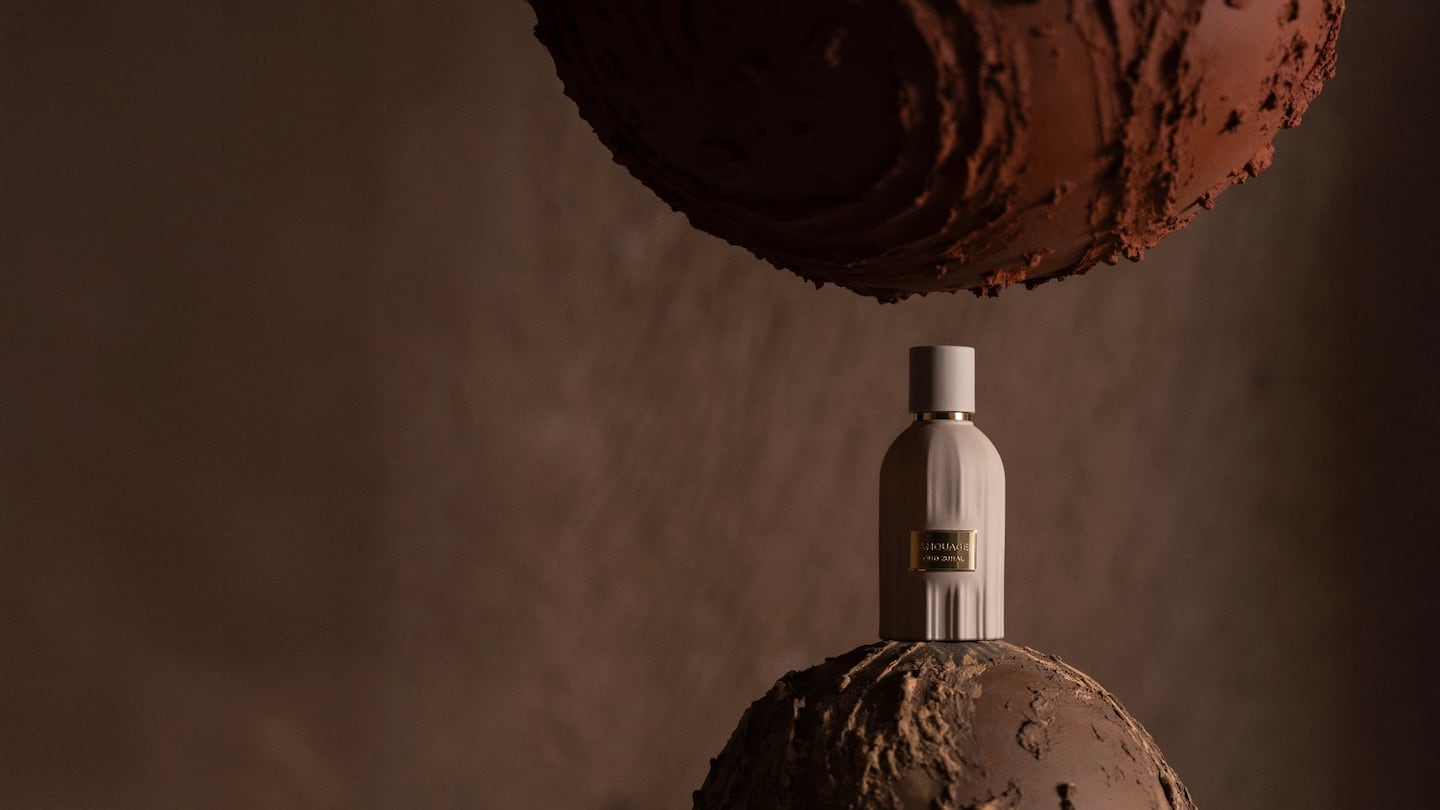
The Omani fragrance house Amouage’s limited-edition fragrance, Oud Zuhal, began with an experiment. The brand’s chief creative officer Renaud Salmon had the idea to marinate a hefty pile of oud wood chips, one of the rarest and most expensive materials in perfume-making, for weeks in a 250-kilo tank of precious fragrance oil. When we spoke for this story, he wasn’t sure it would work.
At first, it didn’t. When Salmon checked in a few days later, he found the oud chips had soaked up the oils instead of imparting their animalic aroma to them. Salmon had to ply them with substantially more concentrate until they were saturated; the oud finally acquiesced, and Oud Zuhal launched into the brand’s premium Essences collection in February as a Gulf region exclusive, for $610 per bottle.
Amouage has become adept at gambling with the one ingredient that’s becoming increasingly commodified in the niche space, and one being used to market new and niche fragrances. After deploying star perfumers and concept-driven stores, these perfumery brands were running out of ways to differentiate themselves from each other. Then they found a new one: Time.
Niche houses are leveraging time literally, by letting undiluted perfume oils or concentrate sit undisturbed to “mature” for anywhere from a few weeks to years to enhance a scent’s longevity, help the brand distinguish their wares from copycats and justify their pricing in an oversaturated market. Amouage, whose global retail sales exceeded $430 million in 2025, is one of the rare houses that can afford pushing the boundaries of the craft with expensive gambles that might not pay off. But even other houses like Matiere Premiere and Krigler are experimenting with time in ways that add to production costs and impact working capital flow and delivery timelines, and don’t always reflect a significant ROI.
ADVERTISEMENT
Salmon predicts that in the future, brands will increasingly experiment with maturation techniques for competitive advantage. “Despite its financial challenges, it opens up big room to create,” Salmon told The Business of Beauty.
Marketing on time allows fragrance brands like Guerlain, Santa Maria Novella or Penhaligons to tap into legacy and gain authority. “They nurture among consumers a feeling of nostalgia associated with a better past, in contrast with the uncertainty and ephemerality of the future,” said Giulio Lorenzini, a fragrance consultant and founder of Levitum Paris.
Aging a perfume before and after it is mixed with alcohol (or macerated) to create its final composition is by no means a new phenomenon. In centuries past, when scent was still bespoke, perfume houses aged their compositions very intentionally to allow for a rounded, full-bodied scent. “There is no way that a fragrance could express itself fully without an aging process,” says Gabriela Chelariu, principal perfumer at DSM-Firmenich. “It allows you to put out the best version of that particular perfume.”
What is new is the fact that age is becoming a niche fragrance differentiator. German label Krigler, established in the beginning of the 20th century, still adheres to yearslong maturation-maceration timelines set five generations prior by its founder, Albert Krigler, who maintained that the maceration time was the key differentiator in their perfumes. Consumers want quality, said current owner Ben Krigler, “and it proves that time is luxury.”
Krigler can afford to make these extravagant creative gestures because of its unique distribution model through own network of boutiques and website, with no third-party sellers. The house doesn’t play in the fleeting trend-driven marketing landscape, because it cannot produce in time to meet the trends of the moment.
Houses like Krigler and Matiere Premiere maintain that age keeps their doors revolving because consumers can recognise the qualitative difference, even if they can’t articulate why.
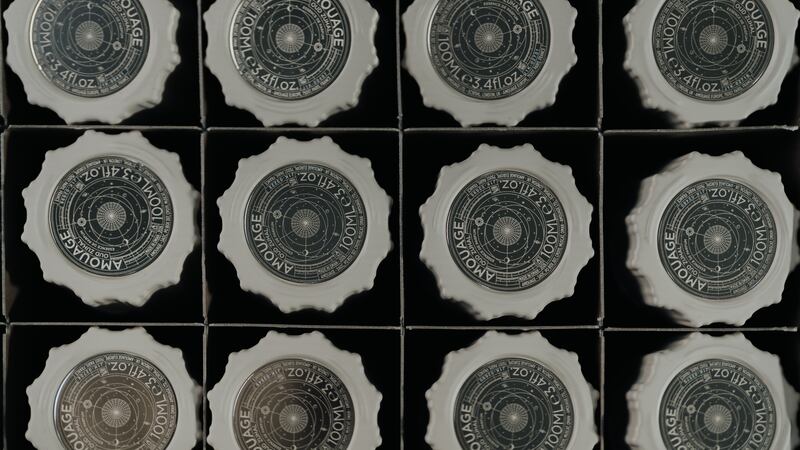
If Amouage’s customers can articulate exactly why they pay between $475 and $550 for 100ml, it’s because the brand pushes education on their aging techniques like a special double-infusion process for the Essences. The perfume concentrate is matured for weeks with sandalwood chips, while the alcohol it will be mixed with is aged separately in oak barrels. They’re then macerated together for months to achieve a wood-like patina that can’t be replicated any other way. This process is communicated on product display pages and Instagram content. The ROI might be hard to calculate, but chief executive Marco Parsiegla has attributed the brand’s success to its premium offerings in which aging is a big factor.
Not all perfumers think of time as a talking point. “That’s the beauty of independent perfumery. The people who do it, do it without these kinds of calculations,” said Aurélien Guichard, the perfumer and co-founder of Matiere Premiere. He doesn’t even try to use it as a selling point. “We try not to make it marketing. We don’t communicate about it, because it’s part of our know-how. When you’re a luxury house, you don’t have to tell everything you do,” he said.
ADVERTISEMENT
Time takes on an almost philosophical bent when it comes to houses with decades or centuries of history. That lineage is marketing gold, translating to fantastic storytelling which translates to sales. “Many successful niche brands leverage their connection to the past — whether it dates back centuries or only a few decades — to fuel growth,” says Lorenzini.
And it turns out that even Gen Z, like generations before it, is not immune to a bit of brand lore. “Nostalgia is the new cool,” says Bertrand Pochet, general manager of Guerlain US. “Our history is not just a backdrop; it’s a living source of inspiration and credibility that resonates with our clients, more so the younger generation.” Guerlain, in fact, has a full-time in-house Head of Art, Culture and Patrimony, whose job it is to “preserve our brand’s memory,” says Pochet. Last year Guerlain celebrated 100 years of Shalimar, their most recognisable and enduring fragrance, with a world tour, 1.5 litre collector’s bottles and a new, vanilla-forward version of the scent meant to entice a younger audience.
Gen Z, aged between 14 and 29, seem particularly susceptible to this variety of marketing. “Their life stage is marked by identity construction, making them more prone to current shifts in perfume consumption,” said Lorenzini.
Successful heritage-driven brands nurture among consumers a feeling of nostalgia associated with a “better past” in contrast with the uncertainty and ephemerality of the future, Lorenzini added.
In some cases, poetic license can stretch far into the past. As BoF’s Priya Rao wrote last year, brands like Officine Universelle Buly 1803 have added a 19th century suffix for the plot — suggesting, but not reflecting, its birth year. (The current brand was launched in 2014, inspired by but unconnected to a 19th century Parisian perfumer). The year 1743 printed on Parfums de Marly’s crest reflects the year in history that inspired the brand, not its date of inception. Creed’s 250 year old history in tailoring is established, but suggesting a perfumery lineage that long warrants some side eye.
Projecting a legacy, however imaginary, still benefits them all. Time is not merely a marketing angle; “it’s fundamental to defining what true luxury means in perfumery. Because, at its heart, luxury is about purchasing and investing in time,” said Pochet.
Sign up to The Business of Beauty newsletter, your complimentary, must-read source for the day’s most important beauty and wellness news and analysis.
Want to dive deeper into an insight from this article? Check out The Brain of Fashion, BoF’s new generative AI tool where you can unlock BoF’s beauty archive with a single question.
Luxury fragrance houses like Marc-Antoine Barrois, Amouge and Krigler are pouring investment into their retail spaces, master perfumers and artisanal manufacturing — and reaping double-digit sales growth.
More fragrances are now sold through digital channels than in store, posing challenges for the traditional ‘try before you buy’ playbook. As channels like Amazon and TikTok Shop pick up speed, brands must adapt to a new reality.
Nimble niche perfumers like Xinú, Perfumérica and Laguna Cyprien are riding a wave of popularity with domestic customers and overseas visitors, and finding that building global brands doesn’t always mean US expansion.
Parizaad Khan is a contributing writer at The Business of Fashion. Khan is a freelance beauty and lifestyle editor based in New York.
Loading recommended reads…
Sales of gems, precious metals and artwork at Japan’s department stores climbed 19 percent in the first half of 2026 from a year earlier to $2 billion.
Though Adidas dressed both teams in the World Cup finals, the global football tournament still presented some bright spots for Nike, writes Bloomberg’s Andrea Felsted.
From our archive, the creator and host of award-winning podcast “Articles of Interest” joins BoF founder, CEO and editor-in-chief Imran Amed to explore what clothing can reveal about identity, culture, labour and the world around us.
Saunders, the brand’s first creative director in five years and a skilled colourist, promises to give Kate Spade the clarity it has long lacked. Now, Tapestry must apply the same long-term brand-building discipline that fueled Coach’s success.