Agenda-setting intelligence, analysis and advice for the global fashion community.
Agenda-setting intelligence, analysis and advice for the global fashion community.
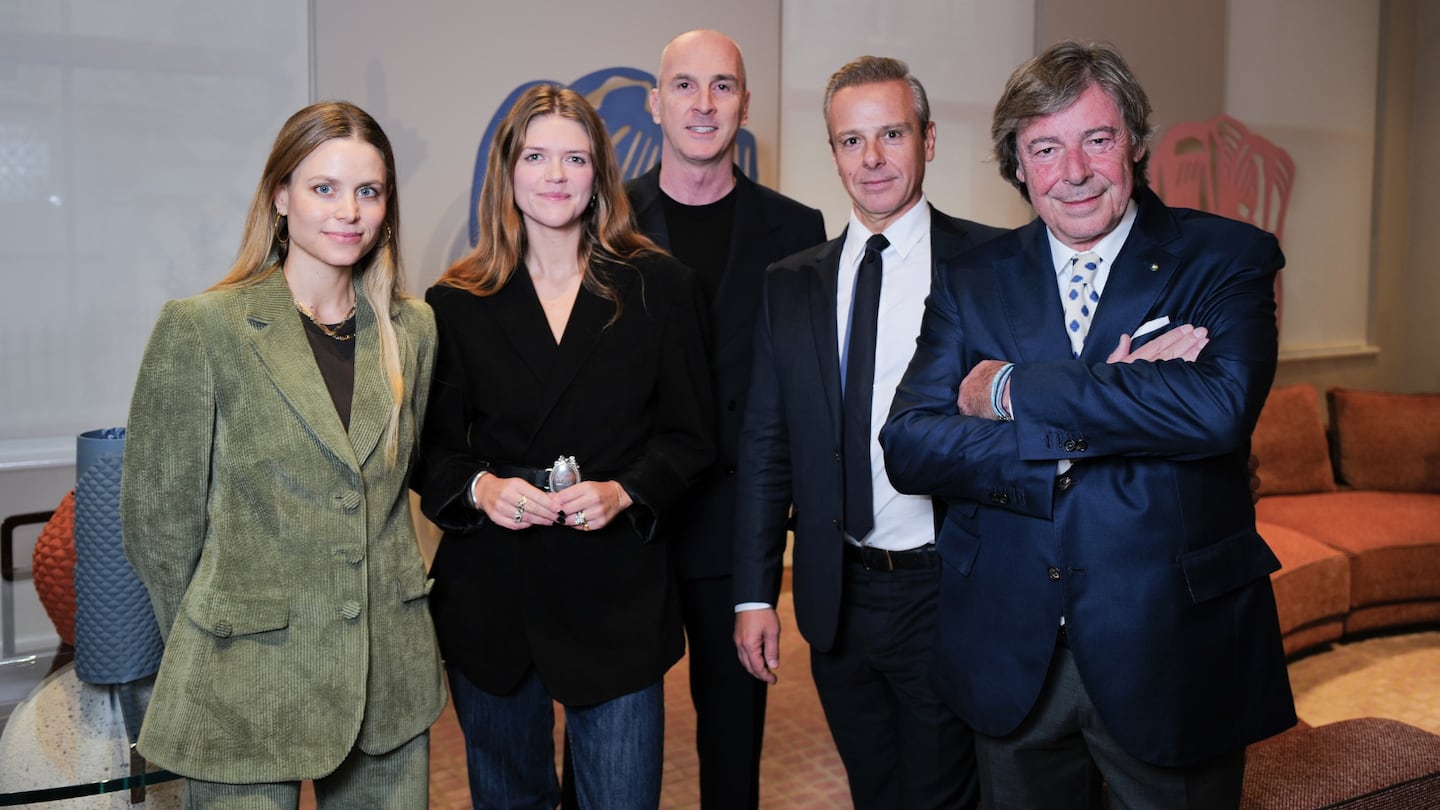
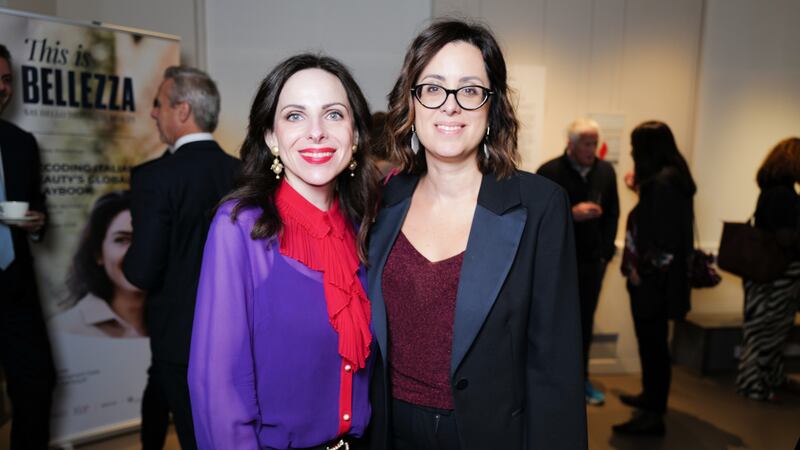
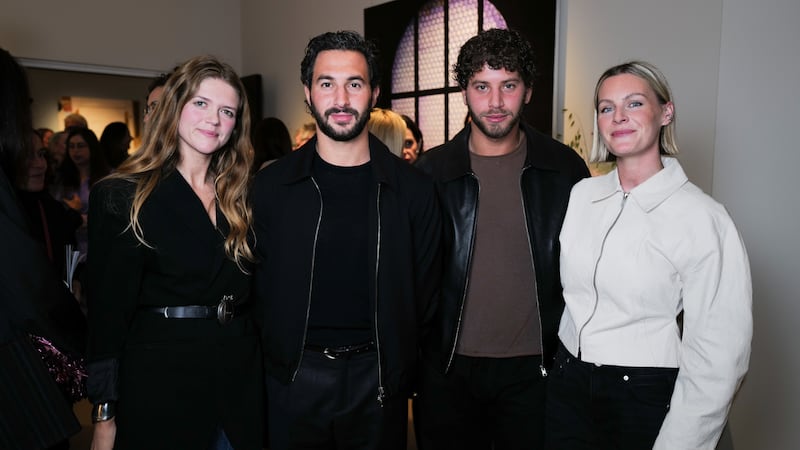
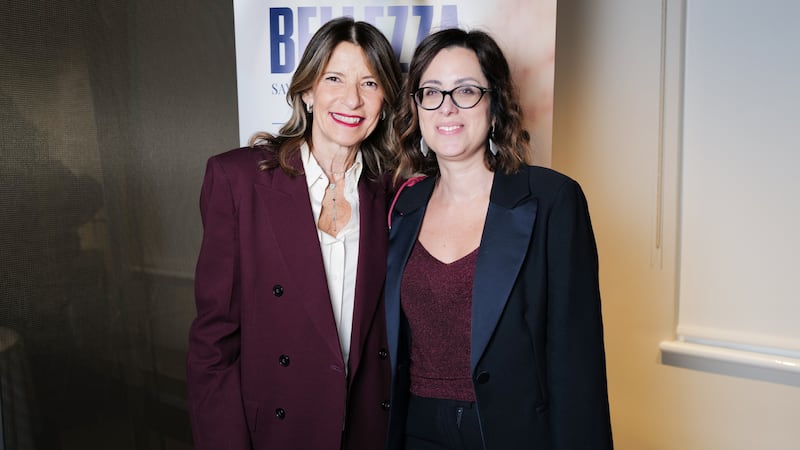
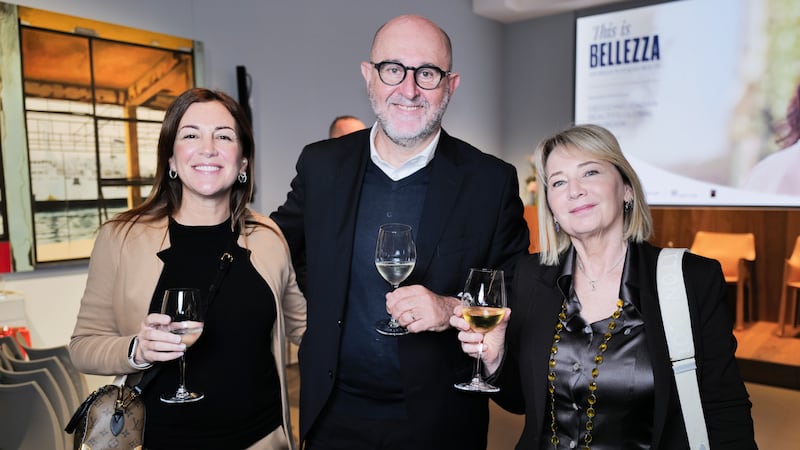
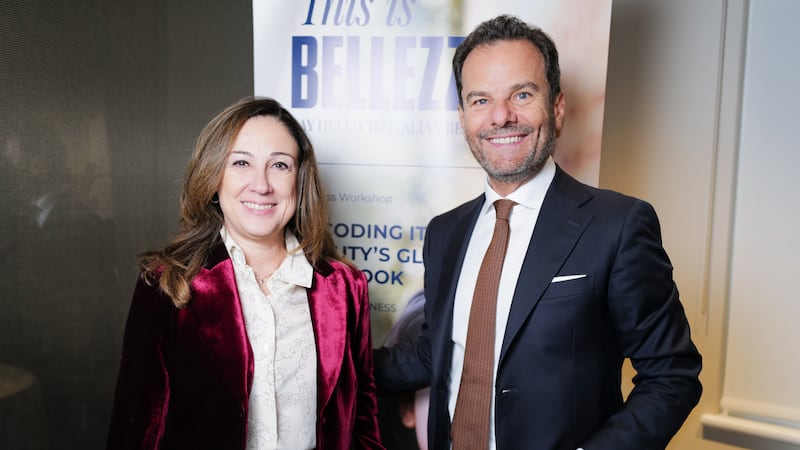
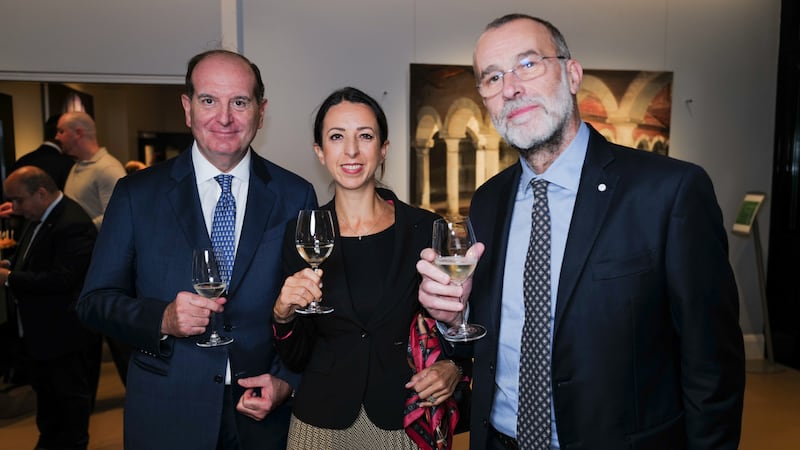
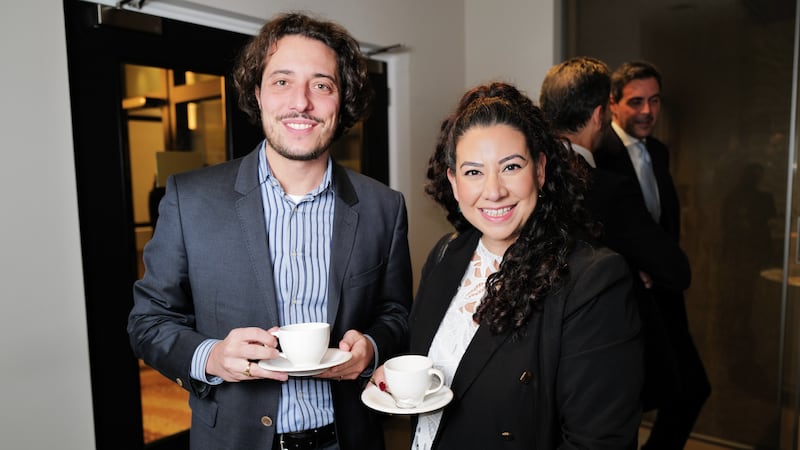
LONDON — On October 20, The Business of Beauty, together with the Italian Trade Agency, the Italian cosmetics industry trade association Cosmetica Italia, and the British Beauty Council, convened UK and Italian beauty executives at the Embassy of Italy for a leadership breakfast during British Beauty Week.
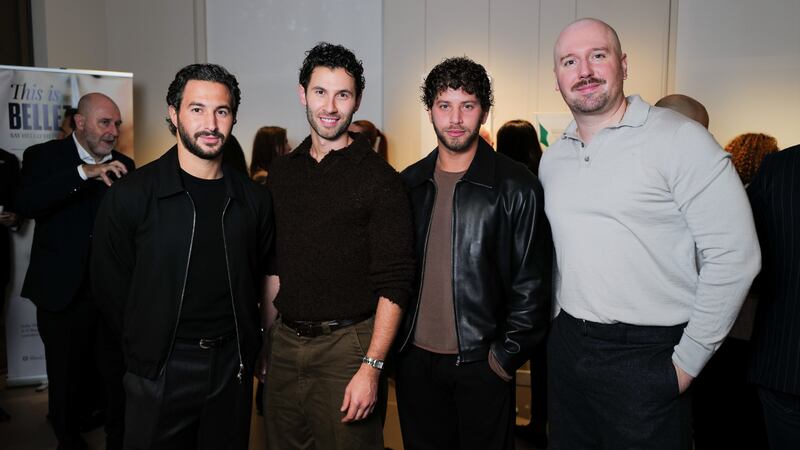
Guests included executives from Elemis, 111Skin, Murad, Wavy and AKT London, alongside a delegation of Italian companies. The morning also marked the UK launch of “ This is Bellezza - Say Hello to Italian Beauty,” a movement that works to bring together the entire Italian beauty ecosystem to champion its strength at a global level.
“There is no perfect English translation for bellezza,” said Fabio Cassese, Italy’s ambassador to the UK, in his welcome remarks. “It is a way of living where science, craftsmanship and creativity meet, and where taking care of oneself is part of everyday culture. Behind this word is a remarkable industry.”
Indeed, Italian cosmetics turnover reached a record €18 billion in 2025, according to Cosmetica Italia. Exports accounted for €8.6 billion, or 48 percent, making Italy the world’s fifth-largest beauty exporter. Including the wider supply chain, from raw materials, machinery and packaging to distribution, the sector generated €49 billion, according to a 2026 study by The European House–Ambrosetti and Cosmetica Italia.
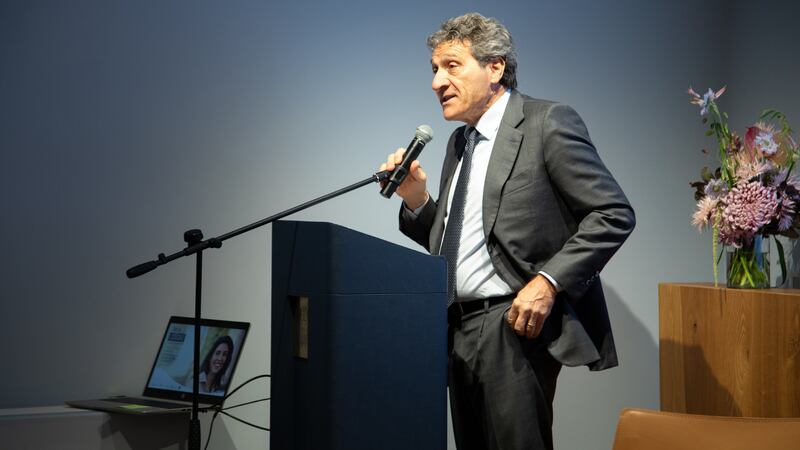
“Many consumers do not know it, but more than half of the [eye-and-face] makeup sold worldwide is made in Italy, often for the best-known international brands,” said Cassese.
Yet that leading position is not guaranteed. Italy is among the UK’s top beauty suppliers, but competition is intensifying. “The rapid growth of South Korean imports in the first half of 2026 is a clear reminder that we cannot take our position for granted,” said Giovanni Sacchi, director of the Italian Trade Agency in London.
To explore what Italian beauty can offer the UK market and global discerning consumers, BoF’s head of client strategy Alice Gividen was joined on stage for an exclusive panel by Simone Dominici, chief executive officer of Kiko Milano and vice president of Cosmetica Italia, Irene Forte, founder of her namesake skincare brand, Gianluca Toniolo, chief executive officer of Dolce & Gabbana Beauty, and Renato Ancorotti, founder and president of contract manufacturer Ancorotti Cosmetics.
Below, BoF shares key insights from the panel discussion.
For Dominici, Italian beauty’s edge lies in combining apparent opposites. “What distinguishes the Italian culture of beauty is the combination of industrial technology and creativity; art and science; perfection and self-expression,” he said.
Geography makes that balance possible. “Within 100 kilometres of Milan, you have formula developers, primary pack designers, manufacturers, active-ingredient developers and retail concept designers,” said Dominici. “Because the ecosystem lives so close together, every part of the value chain challenges the others. [...] The system is able to go from a concept to a product on shelf in literally 12 months, for something really innovative.”
For Toniolo, that speed-to-market is a competitive advantage. Dolce & Gabbana took its beauty business in-house from a licensing model in 2023. Since then, turnover has grown from €400 million to more than €1 billion in wholesale equivalent in 2025, he said, and the company expects to maintain double-digit growth in 2026.
“In 2023, we were a fragrance-driven business. Now, we are a three-axis brand, with fragrance, makeup and skincare. We decided to manufacture everything in Italy. This strategy has been possible because we have an ecosystem that allows us to create and develop amazing makeup and skincare products,” said Toniolo.
Ancorotti agreed: “Geographical proximity is a very important strategic factor. We have created a beauty valley in Lombardy, where raw materials, production and packaging suppliers sit close together, and that shortens the distance in developing and manufacturing products.”
The Lombardy region alone accounted for 63 percent of the sector’s national turnover in 2025, according to business association Assolombarda and Cosmetica Italia. Italy’s contract manufacturing sector is worth more than €2 billion and companies such as Ancorotti Cosmetics export up to 90 percent of their production.
Irene Forte, founder and chief executive of Irene Forte Skincare, has built her business between the UK and Italy. Raised in Britain by Italian parents, she runs her company from London but makes all of her products in Italy.
“In luxury skincare, everyone wants results, clinical proof and efficacious products,” said Forte. “That’s what drives someone to make the first purchase. Then it’s the provenance story that keeps someone in.” Beyond its made-in-Italy commitment, the Mediterranean lifestyle is built into the DNA of her brand.
The story extends beyond manufacturing, from packaging inspired by Sicily, Mount Etna and the brand’s organic farm to Mediterranean scents and formulas designed for sensitive skin. Forte said the brand has seen a repeat purchase rate of more than 77 percent among direct-to-consumer customers who have bought twice. “You need the other layers to be competitive in a market where there are so many cold, clinical brands,” she said.
Italy’s manufacturing strength has yet to translate into consumer recognition. Forte recalled an investor who insisted Italy wasn’t known for scientific efficacy. “I don’t think Italy is perceived as an innovator,” she said. “Not because the manufacturing isn’t innovative, but because there aren’t Italian brands that are renowned for innovating.”
During the audience Q&A, Dija Ayodele, founder of Black Skin Directory, noted that Italian brands are often associated with botanicals, while consumers increasingly seek technology-led products and use AI tools for skincare advice. Because Italy is better known for making products for other brands, she said, it lacks “the consumer-facing identity of J-beauty or K-beauty.”
Dominici pointed to Kiko Milano’s growth as one answer, built on making high quality accessible across markets from India and Southeast Asia to Latin America and North America. He said Italian beauty’s difference on the market is also philosophical. “For us, beauty excellence is at the service of self-expression, while other cultures are chasing perfection. We want to unlock each individual’s beauty,” he said.
0 of 10
To scale, quality, technology and creativity are no longer enough, according to Dominici. “Our local Italian culture is relevant everywhere,” he said. “The question is: how do we help our ecosystem become a truly global player?”
The answer, he argued, lies in understanding local consumers, which the industry has not done enough of after years of exporting its home-market model. “You need to understand the local culture and differences, especially in makeup,” he said. “This global mindset is what will change the scale of our companies.”
London will be the first stop outside Italy for “This is Bellezza – Say Hello to Italian Beauty.” Upcoming plans include a matchmaking programme connecting UK retailers with Italian brands and British companies with Italian representatives across the value chain, a cultural exhibition showcasing a distinctly Italian way of experiencing beauty, and a London pop-up in 2027, said Fabio Franchina, vice president of Cosmetica Italia
For Forte, the UK makes sense as a launchpad. “Italy is the number one global signal of quality,” she said. “Whereas the UK is a great space for entrepreneurship.” She pointed to the ease of setting up a business, a deep talent pool, access to capital and a bridge to the US market. The UK attracted more venture capital in 2025 than Germany, France and Switzerland combined, according to HSBC Innovation Banking and Dealroom.
“Here in London, we want to take the spirit of collaboration between our countries a step further,” said Benedetto Lavino, president of Cosmetica Italia. “We see the United Kingdom as a dynamic beauty ecosystem and a valuable partner with whom we can exchange ideas, foster innovation and unlock new opportunities for mutual growth.”
Ultimately, Dominici argued, Italy’s path to global scale will look different from that of its neighbours. “In Italy, culturally, we are not a land of large consumer conglomerates. We will hardly ever have one company with a $10 billion turnover, as in the UK, in America or in France, but we can have 100 companies making €100 million,” he said. “That is the power of the ecosystem.”
This is a sponsored feature paid for by the Italian Trade Agency as part of a BoF partnership.
As Milano Beauty Week closes its biggest edition yet, Cosmetica Italia and its partners are betting that the country’s entire beauty ecosystem can become a brand in its own right.
At Milan Beauty Week, one of the world’s cosmetic manufacturing hubs demonstrated why ‘Made in Italy’ still matters with a new urgency.
Loading recommended reads…
Dior claimed its winter campaign, ‘Christian Dior’s Night in Colour,’ was fully hand-illustrated. But online commenters have questioned whether the campaign used AI in its development.
The decades-old hair-loss remedy is unexpectedly booming from more people taking GLP-1 weight-loss drugs.
Piccioli is leaving the Parisian house after less than two years as part of a sweeping creative shakeup at owner Kering.
This week, Brennan Kilbane is taking over to explore how the Bravo TV show holds up a mirror to our worst aesthetic impulses.