Agenda-setting intelligence, analysis and advice for the global fashion community.
Agenda-setting intelligence, analysis and advice for the global fashion community.

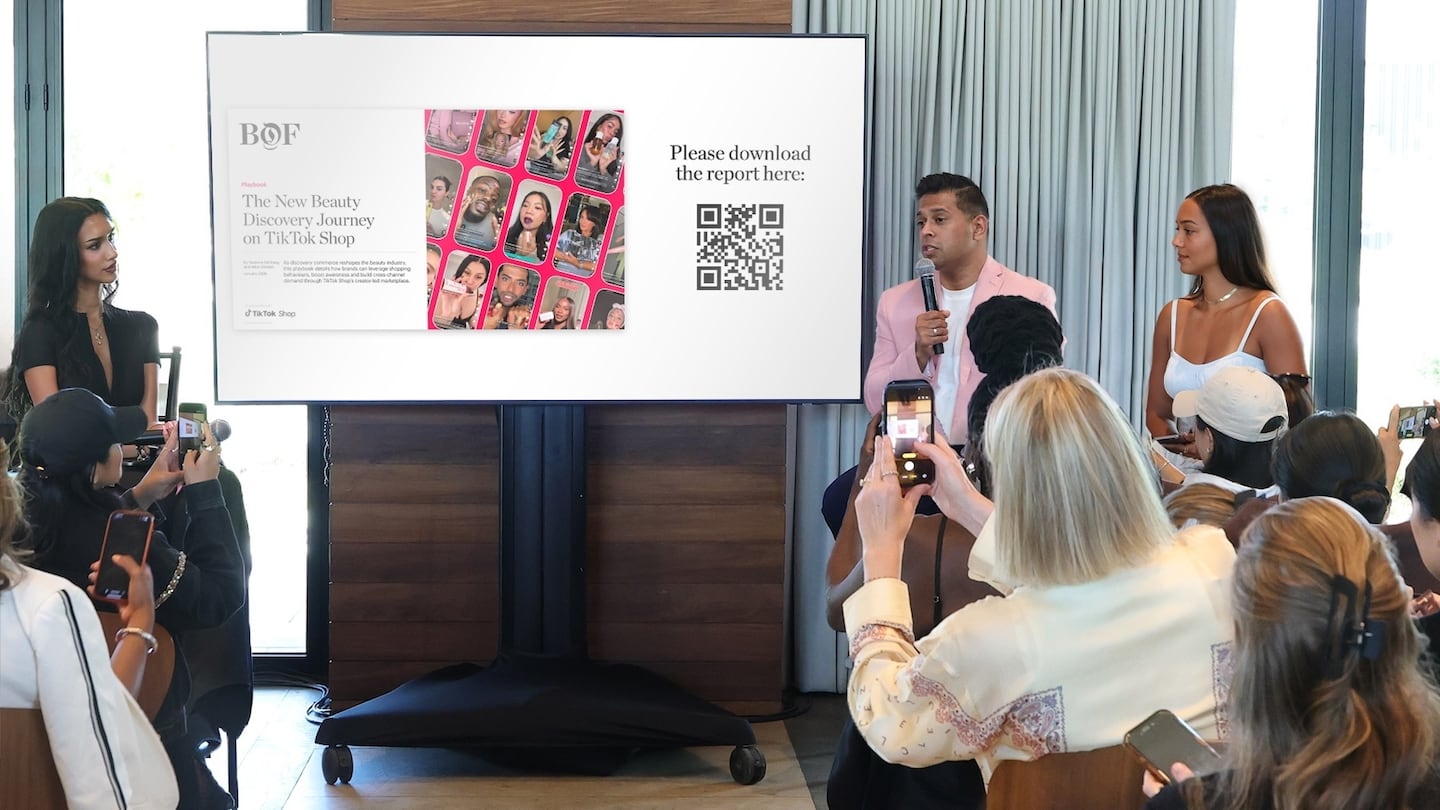

NAPA, California — Over the past decade, beauty’s customer journey has become increasingly difficult to predict. Consumers no longer move neatly from awareness to consideration before making a purchase. Instead, discovery, evaluation and transaction happen simultaneously, compressed into a single moment.
This evolution has given rise to what many now describe as discovery commerce — an ecosystem where entertainment, community and commerce operate in parallel, allowing consumers to encounter, evaluate and purchase products without leaving the same platform.
For beauty brands, the implications are significant. Success is no longer determined solely by product quality or media investment, but by a brand’s ability to participate in culture, empower creators and generate authentic conversation that drive demand both online and offline.
These questions formed the basis of a discussion during The Business of Beauty’s Global Beauty Forum 2026, where BoF’s content strategist Shenel Wickramaratne moderated a fireside conversation with Ajay Salpekar, general manager of beauty, food and beverage at TikTok Shop, and BoF content strategist Yasmine Dahlberg.
Drawing on insights from The New Beauty Discovery Journey on TikTok Shop, the discussion explored how consumer behaviour is evolving, what differentiates brands succeeding in discovery commerce and why these shifts have accelerated over the past year.
“Think of creators as your number one customer,” said Salpekar. “If your product appeals to them and they believe they can tell a story about it, your brand can reach millions through their audience. It’s not about follower count — it’s about their ability to tell a compelling story.” The brands that succeed, he added, take the time to understand not just who a creator is, but why they make the choices they do — why they pick brand A over brand B.
While much of the conversation centred on TikTok Shop, the broader message extended beyond any single platform. As discovery drives commerce, brands must rethink not only how they market products, but also how they develop products, collaborate with creators and organise their businesses.
Below, BoF shares the key insights from the conversation.
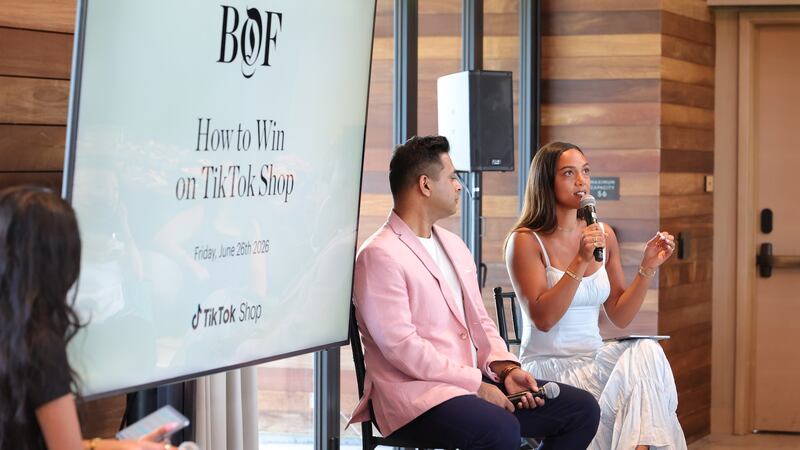
The traditional marketing funnel no longer reflects how consumers discover and shop for beauty products. Instead, discovery, consideration and purchase progressively happen simultaneously, with creator content driving demand before consumers have actively begun searching for a product.
“Discovery has always been at the heart of TikTok,” said Salpekar. “Long before TikTok Shop existed, consumers were already saying, ‘TikTok made me buy it.’”
Rather than separating content from commerce, TikTok Shop brings brands, creators and consumers together within the same ecosystem. Brands introduce products, while creators generate authentic content around those products at scale, allowing them to reach consumers while they are being entertained rather than actively shopping.
“What emerged in our research was clear,” said Dahlberg, in her opening remarks. “Consumers are becoming increasingly channel agnostic, while the creator economy is fundamentally changing how beauty products are discovered. Discovery often happens before purchase intent has even formed, particularly on platforms where creator content is surfaced organically rather than through deliberate search.”
For brands, that fundamentally changes the role content plays. Rather than chasing a single viral campaign, Salpekar encouraged brands to build creator ecosystems that generate discovery everyday. “The objective isn’t to get ‘that one viral video,’ but a content flywheel that continually creates those ‘I have to have it’ moments through authentic storytelling,” he shared.
The research underpinning the discussion reflected that shift. Eighty-three percent of shoppers surveyed discovered a new product on TikTok Shop, while 70 percent discovered a new brand, reinforcing how recommendation is steadily replacing traditional search as the starting point for beauty discovery.
As discovery commerce matures, brands are rethinking the role creators play within the business. Today, creators are becoming strategic collaborators who shape how products are discovered, understood and purchased.
That shift requires brands to think differently about creator relationships. Instead of commissioning one-off campaigns, leading brands are connecting with creators at scale, building long-term partnerships with the top performers, and involving creators much earlier in the product lifecycle. If creators cannot immediately understand the story they can tell around a product, Salpekar explained, “that product effectively doesn’t exist in discovery.”
Creators are also influencing product development itself. Rather than launching a product and searching for a narrative afterwards, brands are beginning to consider how creators will talk about products from day one, using creator feedback to shape innovation before launch.
Referencing case studies from the playbook, Dahlberg shared that viral K-beauty brand Medicube positioned TikTok Shop as “an educational environment where creators could explain skincare routines, demonstrate usage and build confidence in products that require more consideration before purchase.”
In contrast, fragrance brand Phlur “shifted the conversation away from scent alone on the platform and toward the idea of fragrance as layering and personal expression, with creators building narratives around mood and identity, rather than product claims.” To do this, Dahlberg reported that the brand worked with more than 30,000 affiliate creators.
Across categories, brands performed best when they stopped applying traditional advertising logic and instead created stories that felt native to creator culture.
Discovery commerce is not simply another retail channel — it requires a different way of operating. The brands outperforming their peers are those treating discovery as an organisational capability rather than a campaign or commerce initiative.
“One of the clearest findings from the report was that discovery commerce cannot be treated as a standalone channel, ” said Dahlberg. “The brands are able to iterate quickly, test formats continuously and adapt messaging in real time based on how audiences respond.”
The strongest businesses remain closely connected to creators, culture and consumer feedback, allowing them to test, learn and adapt more quickly. The report also highlighted the growing halo effect of discovery commerce, where awareness generated on TikTok Shop increasingly drives demand across retailers, brand websites and physical stores.
“While conversion may happen on TikTok Shop, awareness and demand frequently extend across other retail environments, creating a broader halo effect that is difficult to attribute but [shouldn’t] be ignored.”
Salpekar was clear about what separates the brands that thrive on TikTok Shop from those that don’t. “The biggest difference between brands succeeding on the platform and those struggling to gain traction isn’t budget or company size — it’s leadership mindset,” he said. “Brands succeed when leaders are open to learning and are personally involved in figuring out TikTok Shop.”
Discovery commerce cannot be delegated as a side project. It requires senior leaders to rethink how demand is created, recognising that content, creators and commerce now sit at the centre of the customer journey rather than operating as separate functions.
That means breaking down organisational silos between marketing, commerce and creator partnerships so that consumer insights flow more freely across the business. As consumer behaviour continues to evolve, the brands best positioned for long-term success will be those that remain curious, stay close to their communities and build organisations capable of adapting alongside them.
The impact also extends well beyond the platform itself. As products gain traction through creator-led discovery, demand is carrying more and more into broader retail channels, positioning discovery commerce not simply as a sales channel, but as a driver of awareness and consideration across the wider beauty ecosystem.
This is a sponsored feature paid for by TikTok Shop as part of a BoF partnership.
Loading recommended reads…
Sales of gems, precious metals and artwork at Japan’s department stores climbed 19 percent in the first half of 2026 from a year earlier to $2 billion.
Though Adidas dressed both teams in the World Cup finals, the global football tournament still presented some bright spots for Nike, writes Bloomberg’s Andrea Felsted.
From our archive, the creator and host of award-winning podcast “Articles of Interest” joins BoF founder, CEO and editor-in-chief Imran Amed to explore what clothing can reveal about identity, culture, labour and the world around us.
Saunders, the brand’s first creative director in five years and a skilled colourist, promises to give Kate Spade the clarity it has long lacked. Now, Tapestry must apply the same long-term brand-building discipline that fueled Coach’s success.