Agenda-setting intelligence, analysis and advice for the global fashion community.
Agenda-setting intelligence, analysis and advice for the global fashion community.

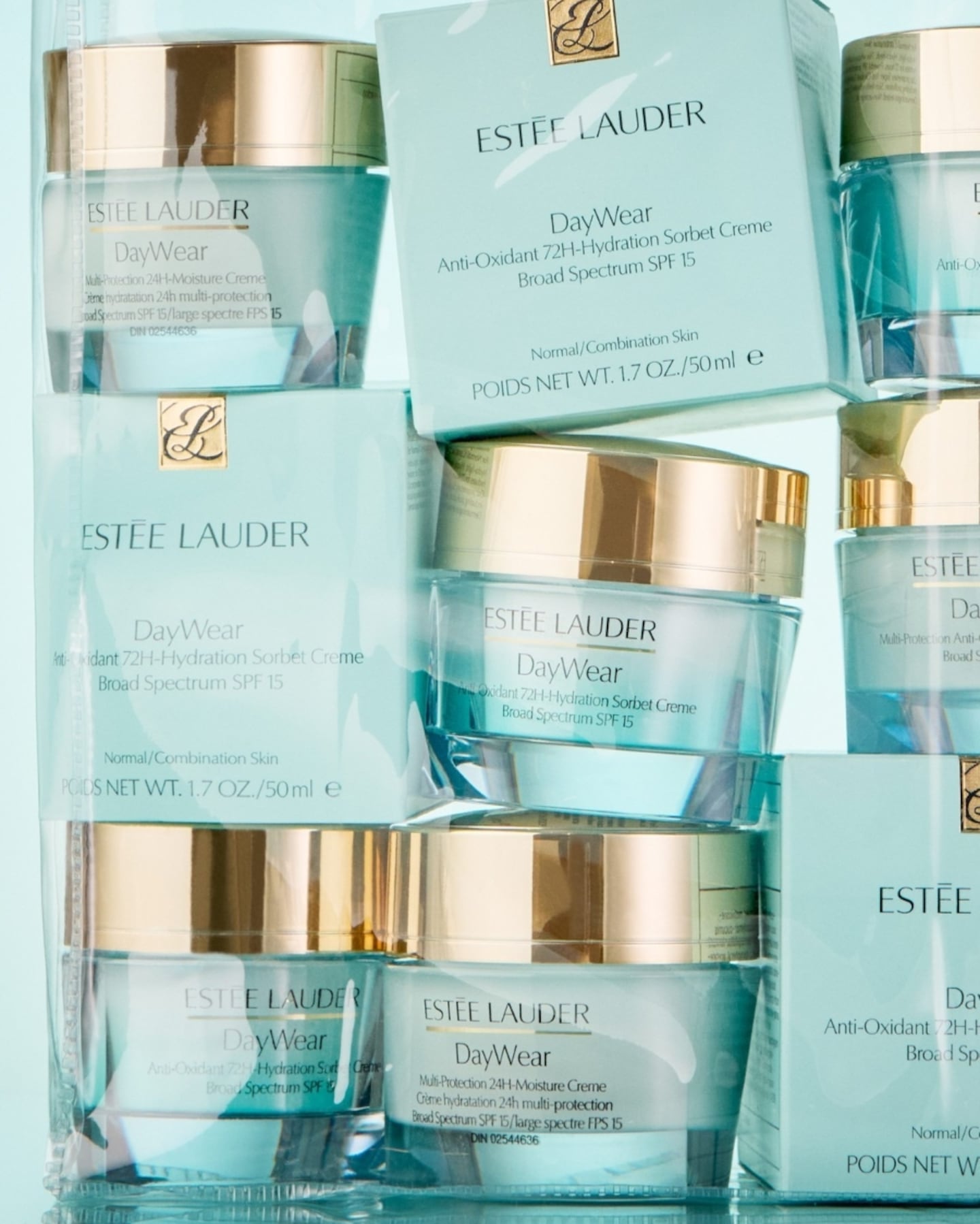
On its earnings call early Wednesday morning, the Estée Lauder Companies struck a different tone, quite literally. Over a remixed house music version of American DJ Carl Craig’s “Throw”, the US cosmetics giant broadcast a montage of brand highlights from its labels including Tom Ford, MAC Cosmetics and La Mer.
There was reason for celebration: The company reported organic sales growth of 3 percent for the full year and 5 percent for its fourth quarter, beating Wall Street expectations, and raised its profit outlook. Lauder’s stock lifted 17 percent, its biggest jump in two years.
“Can we accelerate growth? Yes, we just did, and we will again!” crowed chief executive Stéphane de La Faverie to analysts and investors.
It’s a departure from previous quarters’ more muted messages. In his first full fiscal year as CEO, de La Faverie has made the company more agile, pushing through cost-saving measures that have eliminated some 10,000 roles and moving toward e-commerce, which now comprises over a third of group revenue. Its Chinese business, a previous loss-leader, grew 9 percent in the full year. Jo Malone London and Tom Ford have also become billion-dollar brands.
ADVERTISEMENT
In a note, Barclays managing director Lauren Lieberman said the company has made “real progress” on its turnaround, noting that the organic sales growth is more balanced than before. While all its units grew in the fourth quarter, the biggest gains were in skincare, largely analogous to its China business, and in fragrance. Its outlook for the 2027 fiscal year, which begins in June, is organic sales growth of 3 to 5 percent.
To get back to a fighting weight, the beauty giant needs to consistently outperform the prestige beauty market. Despite its progress, questions remain about the company’s ability to nurture brands and make them stand out in a hyper-saturated market.
In July, The Business of Beauty reported that it had abandoned plans to sell the ailing lines Too Faced, Smashbox and Dr Jart, while Origins, another sleepier line, will be managed by The Ordinary’s parent company Deciem. Keeping these labels only adds to Lauder’s challenge: If it does not fundamentally build desire for its portfolio, and add newer, faster-growing brands, its turnaround will lose steam.
“The [global] market is changing dramatically,” de La Faverie told The Business of Beauty on a media call. “There is a bigger pool of competition, and there are a lot more that are coming our way.”
In addition to its smart — if overdue — steps with e-commerce and brand, Lauder is also benefitting from more favourable conditions.
A July survey by investment bank Citi in July found that 48 percent of local shoppers increased their beauty spending in the last 12 months. Puig and L’Oréal also grew double digits in the country. On the earnings call, de La Faverie told investors that it is moving away from discounting and overly promotional activity to try and “valorise” its brands in China, and that 30 percent of its innovation is designed for the China market. Over half of sales in China come from digital channels, decreasing its reliance on department stores.
There were other rising tides. Its US business, which grew 5 percent in the fourth quarter, was partly flattered by an increase of shipments from Amazon’s Prime Day shopping event in July. According to Barclays, if Prime Day and a one-time benefit related to gift cards was removed, US organic sales growth would likely be closer to 2 percent.
Both markets will remain fiercely competitive. And outside of skincare and fragrance, Lauder’s foundation is shakier.
ADVERTISEMENT
“Obviously, we are not yet satisfied with our performance for makeup and hair care,” de La Faverie said on the media call. Makeup lines Bobbi Brown and Too Faced both declined; the company said its hair line Aveda is struggling in the salon channel.
To become more competitive in the US, more innovation and more brands are needed. K-Beauty is the defining skincare trend of the moment, but Lauder has only one Korean-founded brand, Dr. Jart, which is subscale. De La Faverie mentioned a Clinique PDRN line, a key Korean trend, but customers already have a raft of low-cost options from native brands like Medicube and Anua. Dynamic makeup lines like Rare Beauty, Tarte and YSL Beauté reign supreme with younger shoppers, while viral hits like body mists, lip balms and setting sprays are also gaining wallet share.
Lauder comfortably beat expectations, and has set the groundwork for a better, more agile 2027, which should help absorb shocks down the road. With $3.5 billion in cash on hand, acquisitions are also possible.
“We’re demonstrating execution against controllable [things],” said de La Faverie. “What we are also keeping in mind is the macro environment, which we don’t control.”
Sign up to The Business of Beauty newsletter, your complimentary, must-read source for the day’s most important beauty and wellness news and analysis.
The Japanese conglomerate has taken a conservative approach to expanding its perfume portfolio against a greater boom where global competitors supercharge their efforts.
The Sunshine State has long been a destination for plastic surgery, but has more recently become a hub for founders and a clandestine birthplace for new policies shaping national health.
After years of double-digit growth and a perception of being impervious to wider economic downturns, the beauty industry is finding that cash-strapped customers aren’t interested in “little luxuries.”

Daniela Morosini is Senior Beauty Correspondent and Special Projects Editor at The Business of Beauty at BoF. She covers the global beauty industry, with an interest in how companies go to market and overcome hurdles.
Loading recommended reads…
Reebok’s head of basketball, Jide Osifeso, has been revamping the category the brand was once known for. To do it, he’s turning to a new generation of rising stars from the WNBA and NBA.
Tommy Hilfiger topped Launchmetrics’ media impact value ranking for the week, with Calvin Klein and Carolina Herrera following closely behind.
This week’s round-up of global markets fashion business news also features Chinese cashmere giant Erdos, Indian jewellers heading for IPOs and New Zealand’s outdoor brands.
As dupe brands become more brazen, the line between taking inspiration from competitors and shamelessly knocking them off has become increasingly blurred.