Agenda-setting intelligence, analysis and advice for the global fashion community.
Agenda-setting intelligence, analysis and advice for the global fashion community.

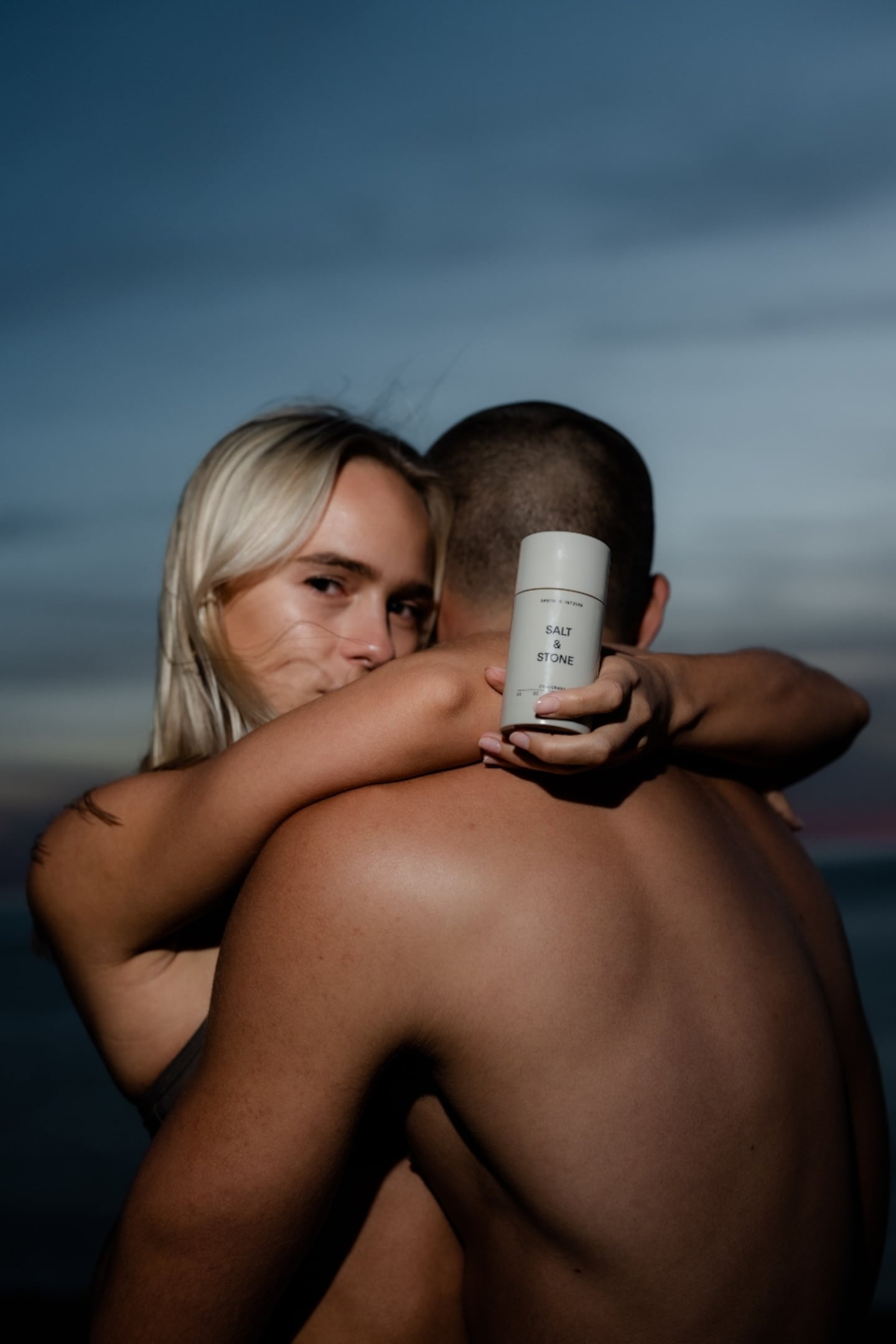
While assiduous beauty experts have long espoused the benefits of applying skincare to the necks, chests and faces, modern customers take that approach all the way down to their toes.
Disruptive brands like Sol de Janeiro and Saltair created a wave of premiumisation, and made shoppers more interested in elaborate, multi-step body care routines of anti-ageing actives, spot-clearing sprays and softening serums. In the first half of 2026, sales of prestige body care products rose 16 percent in the US, according to market insights firm Circana, while globally, body care sales increased 5.84 percent in 2025, per Euromonitor. Deal flow is heating up: this year alone, private equity buyers snapped up the scent-forward lines Salt & Stone and Saltair, while masstige labels Wild and Dr. Squatch went to strategic buyers in 2025.
Investors like the category: it’s not yet saturated, it’s less dependent on short trend cycles, and as so few customers currently have extensive routines, there’s ample white space. The challenge is identifying brands with a unique point of view, appropriate pricing, and a product offering that will make customers change their routines; Sol de Janeiro helped normalise “firming” lotions for a younger audience, and through scent and clean claims, Salt & Stone made customers choose its pricy deodorants over drugstore mainstays.
“Body care was almost the ugly step-sister to the skincare category,” said Madeline Kaplan, a partner at Selva Ventures. “Now, there’s a light shining on it.”
ADVERTISEMENT
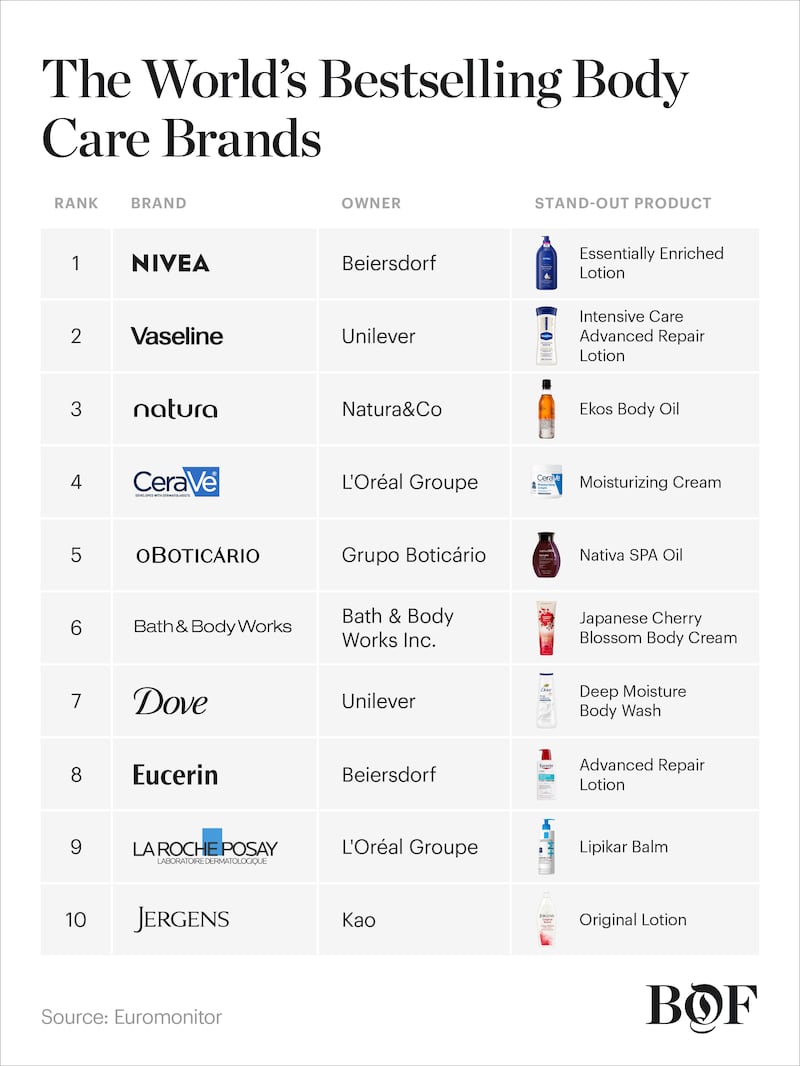
While the market is fragmented, mass brands still dominate: German firm Beiersdorf has the best-selling body brand in the world in Nivea, per Euromonitor, with more than 11 percent of the total market, followed by L’Oréal’s Cerave and Unilever-owned, Dove and Vaseline. On a call with analysts and investors in August, Beiersdorf chief executive Vincent Warnery said it needs to add more brands to its portfolio to help reduce its reliance on Nivea. Lines like the US’ Bath & Body Works and Tree Hut have benefited from the “everything shower” trend, where customers indulge in extra-long, multiple-step bathing routines with exfoliants, scrubs and scents.
Buzzy elevated lines, like Cyklar (also produced by Saltair and Naturium accelerator The Center) and results-driven names like Joonbyrd and Dealbodies are gaining speed. They’re also dealing with increased competition — Nyx Cosmetics, Rare Beauty and Jones Road have all launched body products recently — as well as price resistance, as customers scrutinise premium products more closely.
As the category crowds, Fei-Fei Zhang, managing director and head of beauty investment banking at JPMorgan, said “brands really need to deliver an exceptional experience.”
Alicia Sontag, co-founder and managing partner at investment firm Prelude Growth Partners backed — and now exited — the body care brands Sol de Janeiro and Saltair. She credits Heela Yang, the co-founder of Sol de Janeiro, which sold to L’Occitane in 2021, for helping to expand the category into a bigger, more premium business through its cheeky product claims and memorable fragrances.
“Skin is the body’s largest organ, and so thinking about how you take care of it, not just on that very small piece of your face, is quite important,” said Sontag.
Many strategics and sponsors have stocked up on fragrance-led brands; L’Oréal bought Aesop in 2023. But as the growth of the perfume category cools, investors are now eyeing labels that offer efficacy and value. Customers, too, have become more educated about ingredients lists and product performance.
Vasiliki Petrou, managing partner of private equity firm Semcap and former head of Unilever Prestige, said the prevalence of GLP-1-induced weight loss creating sagging skin, and desire for more youthful skin top-to-toe means opportunity in high performance anti-aging, body care. Maëlys and Oneskin both make products with skin-tightening, and youth-ifying claims. Maëlys’ $49 Get-Taut mousse has become an influencer favourite for its novel whipped-cream-style formula, while the likes of Selva, Prelude and Unilever have funnelled $20 million into Oneskin’s biotech-led brand.
There’s disruptive brands to meet every niche, but each conglomerate or sponsor has a different mandate. Unilever and Beiersdorf have proven authority in mass body care, each with two brands in the top 10 best-selling list. But Unilever also has a successful dedicated prestige arm and a strong professional med-spa network through its Dermalogica skincare line. It could likely do well with high-tech body care; as could L’Oréal, which has so far focussed on lower-priced lines tackling issues like eczema. Beiersdorf’s track record with elevated labels is less established, but a masstige label with youth appeal could build off the framework of Nivea’s extensive distribution. EOS, which has been enjoying fresh popularity for its $10.99 softening body lotions, could be additive.
ADVERTISEMENT
While the category is becoming more sophisticated in step with consumers’ routines, it is still a commodity to most, and many premium brands have languished without being able to gain a critical mass of shoppers. World-building and marketing is essential to making a brand proposition last, but if the price is too high without a genuinely differentiated experience, progress will stall.
Petrou said that people who want noticeable results will pay more. “If you want real performance, price isn’t an issue,” she said. Some customers are opening their wallets: Space NK carries a $102 firming body serum from dermatologist-founded line Joonbyrd; and Oneskin’s proprietary peptide lotion is $105.
Still, top brands like Salt & Stone and Dr. Squatch have used more quotidian categories like premium deodorant and hand and body wash to bring in customers, while Saltair focuses on uplifting fragrance and inclusive messaging. The next generation of labels will need to combine experience, performance and price — and also make their products worth the extra steps in one’s shower routine.
That desire and differentiation can also be created through a strong, consistent brand world. That can include scent and packaging, as long as it’s underpinned by speaking to a clear customer demographic.
“Strategic firms want to expand brands internationally. Just having a pretty packaging and a nice fragrance is not enough,” said Petrou.
Sign up to The Business of Beauty newsletter, your complimentary, must-read source for the day’s most important beauty and wellness news and analysis.
Paloma Elsesser joined The Business of Beauty’s executive editor Priya Rao about staying true to herself amid the pressures of tokenism and why — after a decade building other people’s brands — she’s finally thinking about building one of her own.
Body scrubs have long been a shortcut to the at-home spa experience, but thanks to Gen-Z’s ‘everything shower’ ritualists, the category has gained a gloopy new lease of life.
With a new CEO, a deeper push into fine scents and updated distribution channels, the mall mainstay is hoping to reestablish its position as a fragrance authority in the US.

Daniela Morosini is Senior Beauty Correspondent and Special Projects Editor at The Business of Beauty at BoF. She covers the global beauty industry, with an interest in how companies go to market and overcome hurdles.
Loading recommended reads…
A great associate can generate millions in sales and build a following of loyal clients. Stores are increasingly courting them with everything from lucrative pay packages to the resources and freedom to run businesses of their own.
Launchmetrics CMO Alison Bringé and sibling studio founder Lucinda Bounsall discuss how fashion and beauty brands can measure the attention they generate and translate it into business value.
Former chief executive and co-founder Ben Jones has exited the company.
The fast-fashion retailer’s warning is part of growing alarm in the industry as 11 logistics operators have started losing their authorisations to clear large volumes of lower-value shipments.