Agenda-setting intelligence, analysis and advice for the global fashion community.
Agenda-setting intelligence, analysis and advice for the global fashion community.

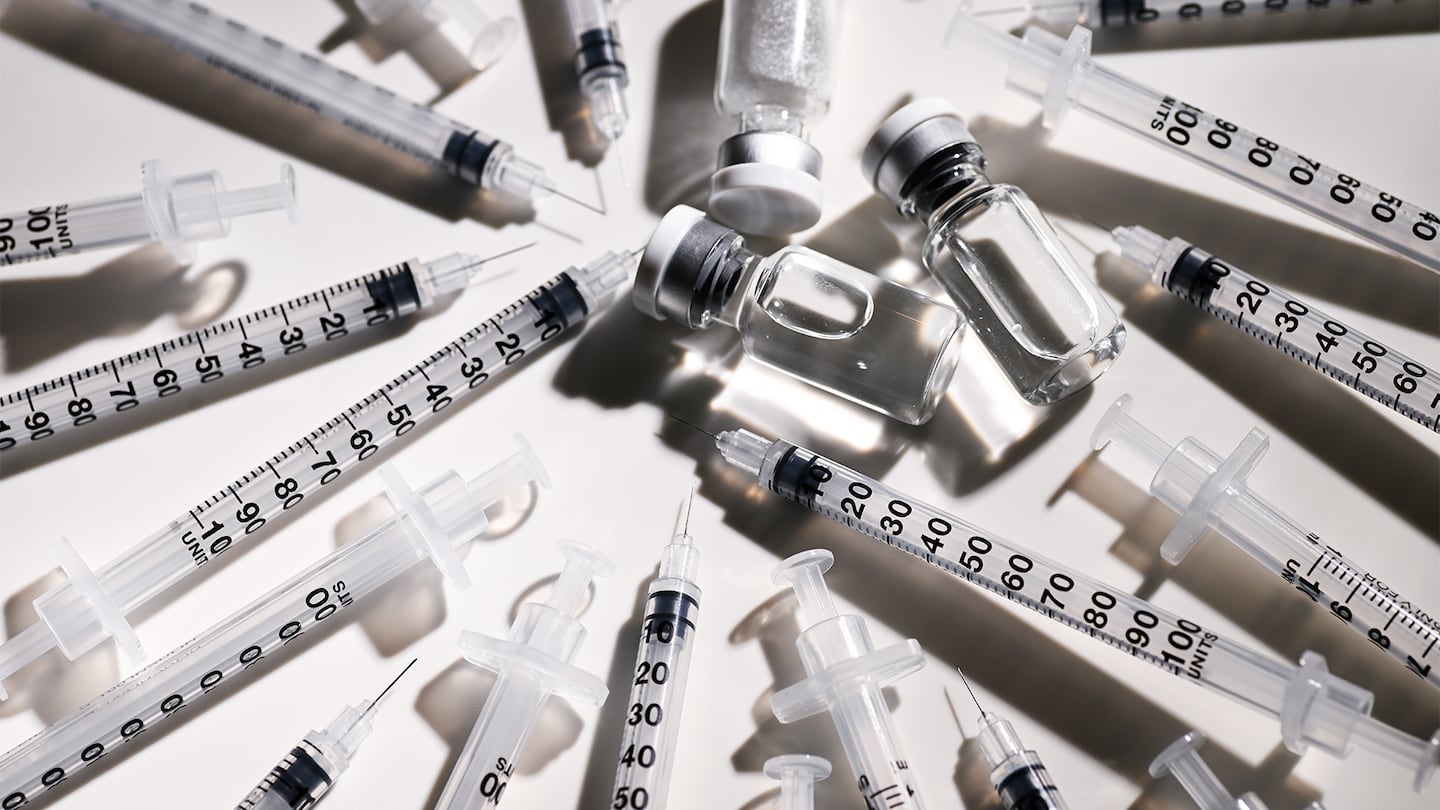
Dr. Anant Vinjamoori was at home enjoying his morning coffee when one of his doctor group chats lit up. A friend had seen something horrifying in Queens: a standard corner bodega, its windows stuffed with advertisements for the usual fare — energy drinks, candy-coloured vapes — and injectable peptides.
Vinjamoori, a physician and the chief medical officer of the telehealth company Hims, brought the anecdote before the Food and Drug Administration at a late July hearing, as an advisory committee weighed whether or not compounding pharmacies should be allowed to dispense a number of experimental peptides with purported benefits for sleep, energy and more.
“Something like that doesn’t happen unless there’s real consumer interest,” he told The Business of Beauty.
The widespread popularity of GLP-1 injectables, and recommendations shared on popular podcasts and in élite wellness circles, has contributed to surging demand for experimental peptides that has outpaced the ability to regulate them. But the debate over peptides’ safety in the US, their biggest market, has become clouded by business and political interests.
ADVERTISEMENT
In the US, drugs that have not been FDA approved but nonetheless are deemed safe and medically necessary can be added to a 503(a) bulk list. Proponents believe that adding these drugs to the list helps to curb grey market activity, by redirecting supply to 503(a) or 503(b) approved facilities. In other words, it’s theoretically safer to buy them from a telemedicine company than at the corner store.
The issue has become a political sticking point since the arrival of Health and Human Services Secretary Robert F. Kennedy Jr, who pledged early on in his appointment to end “the aggressive suppression” of peptide medicines.
But putting these peptides on the bulk list “would represent a significant step backwards,” said Azza AbuDagga, a health services researcher at Public Citizen, by creating a “dangerous precedent that would certainly be used by others to pressure the FDA into permitting other unproven compounds.”
A number of highly publicised incidents have occurred involving patients receiving intravenous or injectable therapies at medspas, conventions and private residences. Two women experienced life-threatening reactions after receiving peptide cocktails at a Las Vegas longevity conference in 2025; at least one of them received a shot of BPC-157, one of the peptides the FDA committee recommended be added to the bulk list. Originally developed for intestinal ulcers, biohackers now hail it the drug for tissue repair and inflammation reduction.
Leading up to the FDA hearing, health companies and wellness brands in the growing peptides business were already preparing to fight for another incremental win.
Several brand-name peptide medicines, like Pitocin or Ozempic, have received broad regulatory approval from agencies like the FDA and are widely prescribed all over the world. Biohacking and longevity communities have seized on a number of less studied peptide drugs for a wide variety of therapeutic uses that have more recently captivated the beauty community. The podcaster Joe Rogan has endorsed BPC-157, as has Hailey Bieber; Trinny Woodall, the founder of Trinny London, told The Daily Mail she injects peptides “from the US to help with skin, hair, energy and for the longevity of my body as a whole.”
As the arrival of GLP-1 drugs has inured global consumers to the idea of injectable wellness drugs, health entrepreneurs and players like Hims and Hers and Noom have invested in or acquired compounding facilities to seize the growing opportunity.
Dr. Brandon Howard and his business partner Elizabeth Straus, owners of a compounding pharmacy in South Carolina, have gone all-in on peptides this year, offering 39 different compounds including the next-generation “GLP-3″ retratrutide and NAD+. “We created a legal opportunity where [doctors] can purchase pharma‑grade peptides and treat patients,” Howard said. “We’re basically a medical-grade supplement company.”
ADVERTISEMENT
On Monday, Hims & Hers chief executive Andrew Dudum said the company is planning to add peptides sermorelin (for fat loss and energy gain) and glutathione (reduces stress, supports immunity) to its menu. The company is also testing the six peptides recommended for approval at the end of July.
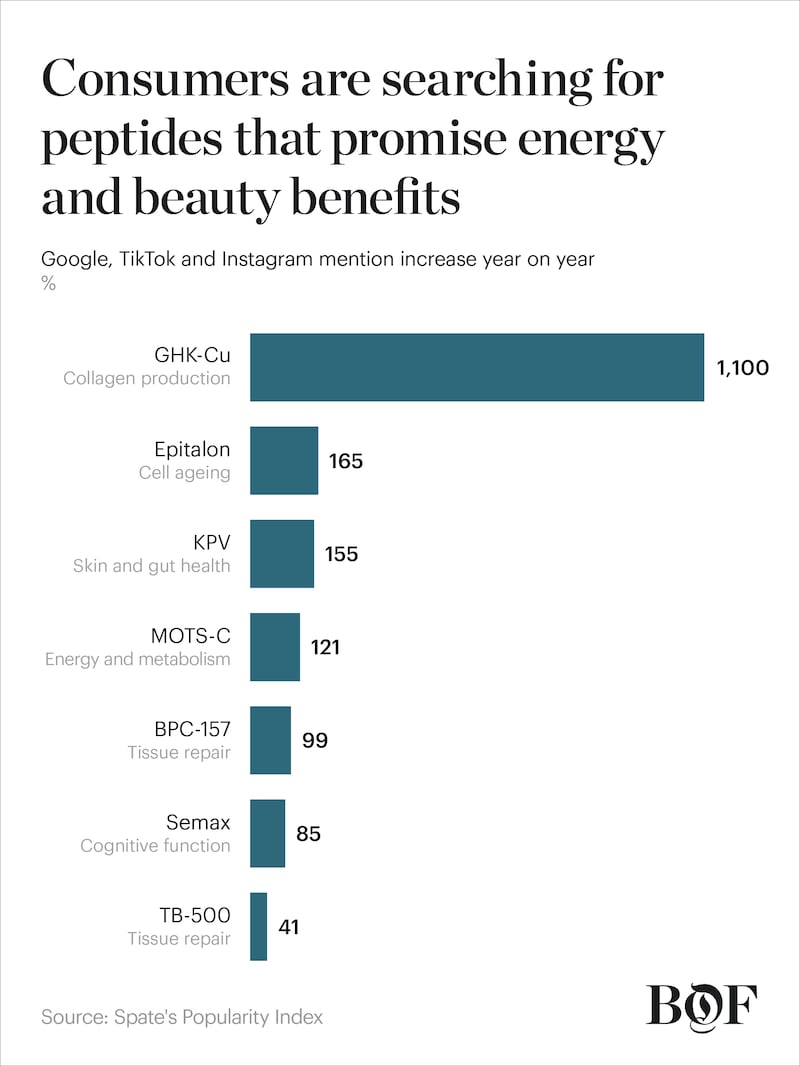
GHK-Cu, another peptide endorsed by Bieber and believed by purveyors to stimulate collagen production, is part of another batch of peptides that will be considered when an FDA committee convenes again in Feb. 2027. It will be joined by other trending peptides like Melanotan II, the infamous “Barbie peptide” that stimulates melanin production and induces a gradual tan.
Many of the world’s health regulators, including the UK’s Medicines and Healthcare products Regulatory Agency and Australia’s Therapeutic Goods Administration, have warned citizens against taking Melanotan II and taken action against providers.
“Even if they go in the bulk list, these drugs are still, in some respects, experimental,” said Dustin Robinson, a lawyer at LumaLex in Florida and New York who advises compounding pharmacies and telehealth companies on drug policy. “There’s still not a whole lot of data on safety and efficacy.”
Currently, the most sought-after peptides — like Melanotan II, or retatrutide, the next-generation GLP drug being developed by Eli Lilly — can be easily purchased through a grey market loophole that makes them available online for “research use only.”
“There’s no doctor, no labs, no dosing information, no education for the consumer,” said Robinson, adding that the vast majority are made in China and shipped to third-party sellers in the US. Others, like Semax, which the FDA committee recommended be compounded, and Selank, another peptide with supposed cognitive benefits, are produced by The Russian Academy of Sciences’ Institute of Molecular Biology. Suppliers of peptides that are added to the 503(a) list would need to register with the FDA, theoretically regulating their import.
Many of the peptides currently under FDA review lack long-term safety data or conclusive studies supporting their efficacy. MOTS-C, one peptide recommended for compounding by the committee — and promoted for its energy and metabolism effects — does not feature in any published human research, except for one unpublished study MOTS-C derivative tested on 11 patients over four weeks, said AbuDagga.
In 2023, the FDA barred compounding pharmacies from producing 20 experimental peptides, citing safety risks. The July advisory hearing’s recommendation works to help reverse that decision, a change of heart that experts attribute to President Donald Trump and RFK Jr.
ADVERTISEMENT
“This is really a political issue,” said AbuDagga. “The current administration is in favour of peptides. In contrast, the FDA scientists who reviewed the evidence for these peptides think otherwise.” Allowing compounding is not the same as drug approval, but that may be taken as a hint of regulatory recognition, AbuDagga added.
As the FDA continues to debate the merits of deregulating peptides, consumers are only growing more interested in them, potentially opening the door to even more grey market activity.
“What’s going to happen is we’re going to see an explosion on the demand side, but there’s going to be a challenge on the supply side,” said Robinson.
With additional reporting by Liz Flora
Sign up to The Business of Beauty newsletter, your complimentary, must-read source for the day’s most important beauty and wellness news and analysis.
Telemedicine is gearing up for a windfall if the FDA legalises peptides popular with wellness influencers, but long-run brand equity will depend on evidence and efficacy.
Hims & Hers Health Inc. surged as much as 12 percent after Health Secretary Robert F. Kennedy Jr. said US drug regulators will loosen restrictions around a dozen popular peptide injections.
The Medicines and Healthcare products Regulatory Agency said clinics are not permitted to make medicinal claims for the peptide treatments offered by their service.

Brennan Kilbane is News and Features Editor at The Business of Beauty. He is based in London, and supports BoF’s coverage of the multifaceted cosmetics industry, from fine fragrance to wellness trends.
Loading recommended reads…
BoF’s retail editor Cathaleen Chen joins Sheena Butler-Young to break down the standout names and data behind BoF’s inaugural list of the world’s 65 best independent fashion stores — and why the pleasure of ‘moseying around’ is still so relevant amongst consumers.
The US-based activewear brand plans to double annual revenue to $2 billion within five years, in part by opening dozens of new stores in markets such as India, Mexico and the United Arab Emirates.
Business owners and politicians are lobbying regulators for easier access to new injectable drugs against the recommendations of some medical experts. But customer demand isn’t waning.
The Society Management group is teaming up with collegiate sports agency Canopy Talent to bring new brand deals to the brightest names in college sports across the US.