Agenda-setting intelligence, analysis and advice for the global fashion community.
Agenda-setting intelligence, analysis and advice for the global fashion community.


In 2026, fashion’s relationship with generative AI remains uneasy. Frustration with the technology is growing and brands using AI imagery have faced fierce customer criticism.
Yet adoption is accelerating. Automation and generative AI could boost productivity by more than 30 percent over the next five years, according to The Business of Fashion and McKinsey & Co.’s The State of Fashion 2026. Over the past five years, 17 AI-powered fashion startups have raised more than $400 million.
Inside the industry, sentiment is more positive than the backlash suggests. In BoF’s How AI Is Reshaping the Battle for Fashion and Beauty Talent report, which surveyed nearly 3,000 professionals, 53 percent of fashion workers and 61 percent of beauty workers view the growing use of AI in their industry positively, though most have yet to see it transform their daily workflows.
Independent designers face a different calculation. Many smaller brands use AI for back-office tasks but keep it away from design, wary of its impact on creativity. Others, including make-up artist and beauty founder Isamaya Ffrench, argue creatives have little to fear if they learn to use the tools well.
For Kanyinsola Onalaja, founder and creative director of her namesake brand, the debate became a business reality overnight. On 11 June 2026, three months before her London Fashion Week debut, a fire tore through her London studio, destroying more than a decade of archives, samples, fabrics and bespoke orders. The brand was uninsured.
Founded in 2014, Onalaja makes maximalist, hand-embellished womenswear rooted in the designer’s Yoruba and Edo heritage, in sizes XXS to 4XL. Named one of Vogue Talents’ “Ones to Watch” in 2017, the brand was shortlisted for the 2026 BFC/Vogue Designer Fashion Fund.
To rebuild in time, Onalaja and her five-person team turned to Adobe Firefly, a suite of generative AI tools which can produce images, video and design assets from simple text prompts. The solution was designed to help creators explore ideas, iterate and bring their vision to life.
Embedded in tools such as Adobe Photoshop and Illustrator, which are already standard across fashion and beauty creative teams, it lets brands generate campaign imagery, extend product shots or iterate on design concepts in a fraction of the time.
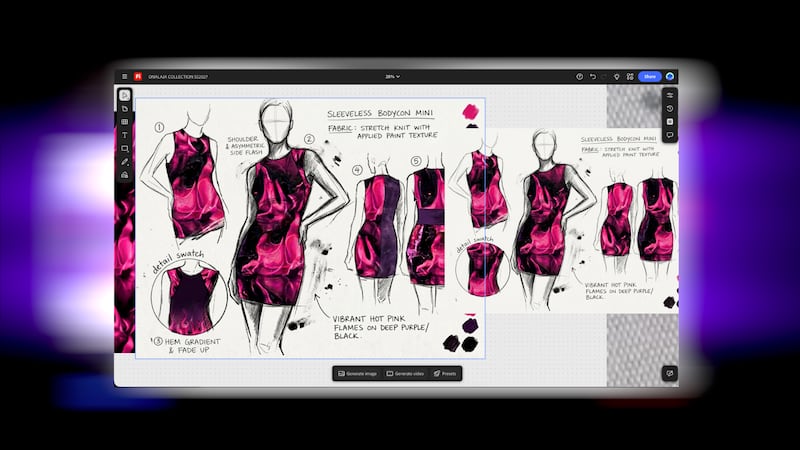
The team used Firefly Boards, Adobe’s AI workplace for brainstorming and concept development, to test prints, fabrics and embellishments virtually before committing budget to physical samples. The technology also turned sketches into clearer briefs for the artisans who made each piece from the collection by hand across Nigeria, India, China and the UK. This approach aligns with the brand’s ethos: it produces only what has been commissioned.
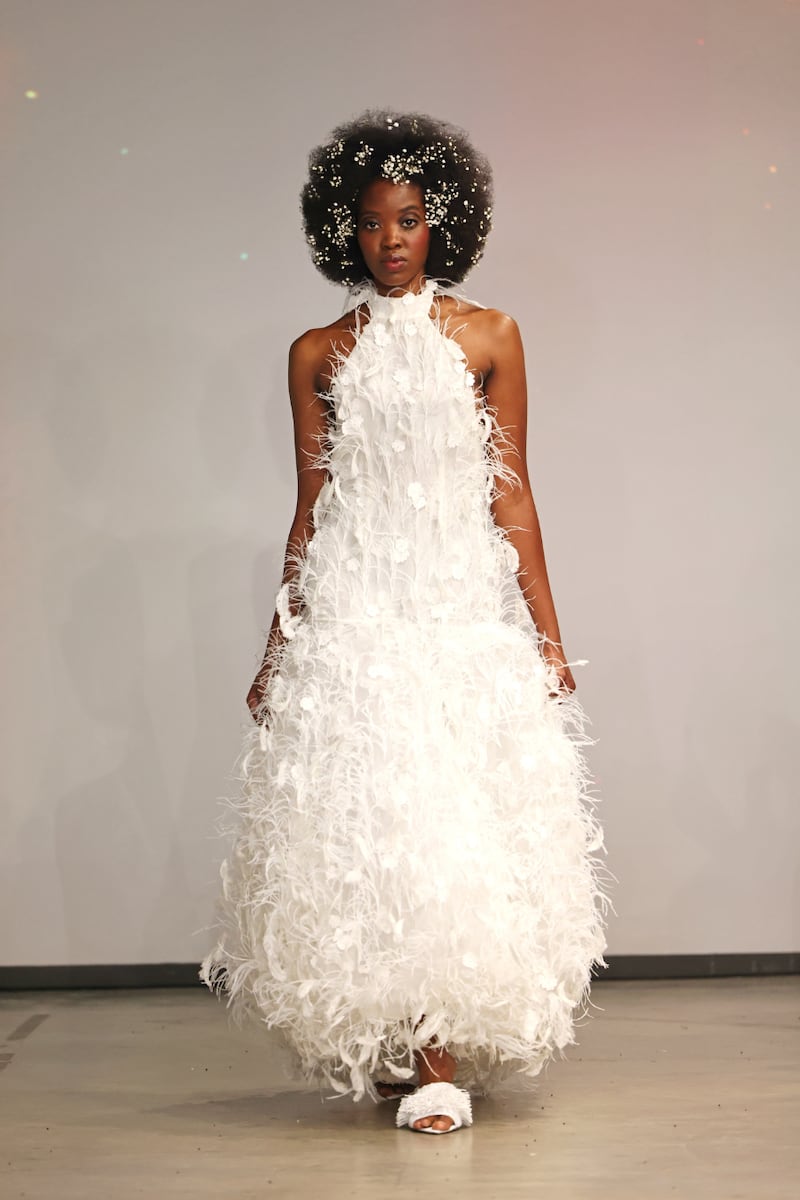
The collection, “Rising From the Ashes,” was shown on 20 September, in a season critics called London’s strongest line-up in years. Onalaja was already filming a three-part series about the rebuild when she approached Adobe to explain how central Firefly had been. Adobe then agreed to partner on the series, which culminated in the show.
Now, BoF sits down with Kanyinsola Onalaja to discuss rebuilding a brand from scratch and what technology can — and cannot — do for a designer’s craft.
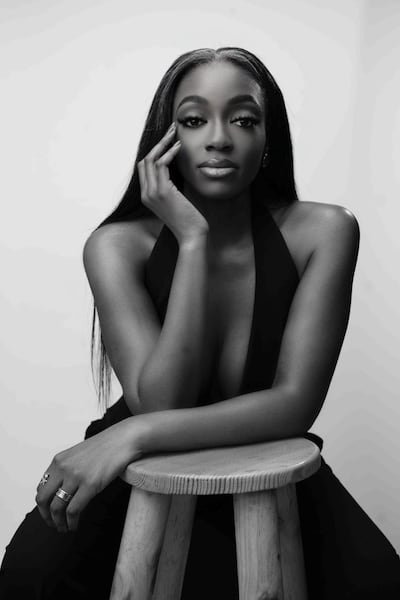
You only gave yourself two days before signing a lease on a new studio. How did you begin rebuilding?
Working through it was the only way I could process my emotions and see the light at the end of the tunnel. It was essentially therapy. I don’t think I realised we were starting from zero until we arrived at the new space. It was just my team and four walls. We went to Ikea to pick up tables. Luckily, I saved a lot of my work in the cloud.
Fashion has taught me project management, working across multiple time zones and how to work with artisans and teams. Luckily for me, many of the artisans I’ve worked with have been with me since university. Everyone was very gracious and supportive. We all came together, and they asked: ‘What do we need to do to get this done? We’ll sort out payments later.’
How did Adobe Firefly change your process after the fire?
I’ve always used Adobe tools; it’s been integrated across multiple areas. We do our lookbooks in InDesign, and our prints and tech packs in Photoshop and Illustrator. After the fire, Firefly was a game-changer because it cut the time I spent on many tasks in half.
If I had an idea for an embroidery sample, I would do the components, put them into Firefly and it would generate multiple alternatives. Instead of doing 10 samples, I could do three because I’d already seen the different alternatives, colour combinations and possible outcomes. I can’t tell you how many times the direction changed, depending on what was generated.
We integrated it into the system early. It makes us more intentional and saves time and resources, but we still need to handcraft. Embroidery takes time and handwork.
How does virtual sampling work in practice?
Once I have the finalised pattern in Adobe Firefly, I extract it and then create my tech packs from it. I put it back into Photoshop or Illustrator and break it down for the different factories. For instance, if it’s the print factory, I have to do it in the dimensions they need.
Before, I did everything manually in Photoshop to turn it into repeats. Now I can put it into Firefly and say “Make this repeatable,” which is faster. Then I extract it and send it to the factories. They work from that.
Many of the textures and silhouettes for this collection were also different for us, because I normally would not have had time to explore other avenues. With Firefly and the silhouettes we generated from it, we were like, ‘Let’s try this out, let’s see how people would react to it.’ And it was really positive. I was able to do a lot of things I would normally be shy to do. I did them without being scared.
Every piece is still embroidered and beaded by hand. How did Adobe Firefly change the way you brief your artisans?
Providing visual references to our artisans goes a long way because it cuts out guesswork. I even break down my embroidery process. Before, I’d open Photoshop, place a bead in the direction, then the next bead and say, ‘Follow this direction.’
Now, Firefly creates the placements for me automatically. It provides our partners with the colour and direction, even generating the right Pantone numbers. These are essential because they’re the reference our partners use to get the right colours, or the right mixes if we’re dyeing fabric. It saved time, so they could match things on the technical side.
Where did you draw the line between what AI could do and what had to stay human?
AI helps with my process, but it does not come up with the design or the idea.
I draw a lot from my Nigerian heritage, and many of the pieces I imagine are influenced by that, plus lived experience, culture and nature. You can’t generate that. It comes from within, and from years of knowledge and research I’ve acquired over time. That’s what, essentially, differentiates human work from AI.
What would you tell independent designers who remain AI sceptical?
I see it as a tool to help me work more efficiently. It also reduces cost. We are a small brand, so unfortunately our budget doesn’t allow for extensive exploration.
Nonetheless, you still need that creativity. You still need the right ingredients to get the output you want from AI. If you’re open-minded and want to explore alternatives to what you would normally do, the technology increases bandwidth without extra costs. But it doesn’t take away the creativity itself.
I know everyone is worried about AI, but I think there’s a middle ground between being innovative and still respecting tradition.
How will AI shape Onalaja’s design process from here?
AI definitely helps me get to things faster, explore a bit more and fine-tune my ideas. I think fine-tuning ideas is what AI helps me do, but it doesn’t take away the handcraft that I love to share.
We’ll keep experimenting with print, colour, embellishment, bead placements, silhouettes and proportions because now I don’t have to do it manually. We’re also thinking about streamlining production in terms of getting clearer references. The time spent explaining is cut down because we actually have things that we’re following.
It’s also helping me build brand guides and ultimately build a larger creative world. And, most importantly, it’s reducing unnecessary sampling and material waste.
This is a sponsored feature paid for by Adobe as part of a BoF partnership.
Four designers from Raisefashion’s brand fellowship programme share how the non-profit has enabled the creatives to take their business from strength to strength, and better navigate on-going market challenges today.
Loading recommended reads…
Brands are finding success with products that are scarce because of real constraints, such as the materials and craftsmanship involved, as consumers tire of chasing limited drops engineered to sell out.
After a fire destroyed more than a decade of her work, designer Kanyinsola Onalaja had just three months to prepare for her London Fashion Week debut. Here, she explains how Adobe Firefly sped up her design and sampling process while keeping her creative vision and the collection’s craftsmanship front and centre.
Pricing for speedier express parcel deliveries is forecast to jump 13.8 percent from the fourth quarter of 2025, according to the TD Cowen/AFS Freight Index.
Whereas Rolex is both a buyer and seller of its second-hand watches through official retail partners, Audemars is setting up a marketplace where sellers set prices.