Circulose Appoints Interim CEO as Textile Recycling Plant Restarts
Chief financial officer Amanda Geijer will take over from Jonatan Janmark as the Swedish textile recycler resumes commercial-scale production.


In the midst of the pandemic, brands are continuing to make big, long-term commitments to environmental and social goals, but with money tight, progress is likely to be fraught.

Local labels with shorter supply chains can more easily be transparent.

Fashion Revolution’s annual index shows signs of progress, but the fallout from Covid-19 has revealed how much the industry still needs to improve.
This week, everyone will be talking about the return of climate activism, more financial results from luxury brands and retailers experimenting with reopening stores. Get your BoF Professional Cheat Sheet.

The digitally-native footwear brand is labelling all its products with their carbon footprint as it bets consumers will emerge from the current crisis more engaged than ever with issues relating to sustainability.
Under severe economic pressure, it’s tempting to see social responsibility as dispensable, but it’s as essential as ever to long-term strategy, argues Clare Press.

In the latest special edition of the BoF Podcast, rapper and actor Riz Ahmed speaks with BoF’s Editor-in-Chief Imran Amed about why the world should pause and reset its priorities in light of the Covid-19 outbreak.

Lockdown teaches us that beyond our basic needs for clean air and water, wholesome food and the company of loved ones, so much of our everyday consumption is excessive and greedy, writes Bandana Tewari.

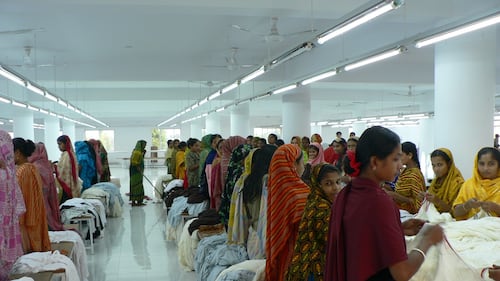
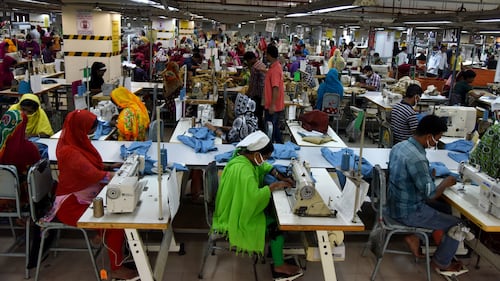
Bangladesh is strategically critical for global apparel supply chains and it is ultimately in all our interests — from brands and retailers to factories and governments — to work together, collaborate and support each other through this, argues Mostafiz Uddin.

The brand is going further than many bigger companies in adopting tough organic certification standards, but has yet to publish other significant environmental targets.

As a growing number of established and start-up brands grapple with what it means to operate responsibly, one New York flip-flop company is testing its own model.

The sought-after producer is responsible for some of the most opulent and over-the-top fashion shows of the last 30 years. Now he’s going public with efforts to radically reduce the impact of the industry’s most important marketing moments.
Chief financial officer Amanda Geijer will take over from Jonatan Janmark as the Swedish textile recycler resumes commercial-scale production.
A new analysis of eight widely used cosmetics ingredients by Verisk Maplecroft found widespread exposure to child and forced labour risks, with palm oil, cocoa and shea nuts among the most problematic commodities.
Global environmental non-profit The Nature Conservancy has launched a new industry coalition to help apparel companies tackle microfibre pollution across their supply chains.
The new initiative will explore how the industry can take responsibility for the millions of used and unsold garments exported to secondhand markets around the world.
Planet-warming emissions associated with the raw materials used to make fashion, footwear and home textiles have risen 30 percent since 2019, according to a new report.
Investments to reduce heat stress for garment factory workers can pay for themselves within four years, a new report from Cornell University's Global Labor Institute finds.
Greenhouse gas emissions rose in 2023 and 2024, due in part to increased global production of fibre, especially polyester, according to a new report by the Apparel Impact Institute.
Lululemon and apparel manufacturer MAS Holdings are among the investors backing the French startup as it scales a proprietary process for recycling nylon from mixed-textile waste.