Circulose Appoints Interim CEO as Textile Recycling Plant Restarts
Chief financial officer Amanda Geijer will take over from Jonatan Janmark as the Swedish textile recycler resumes commercial-scale production.

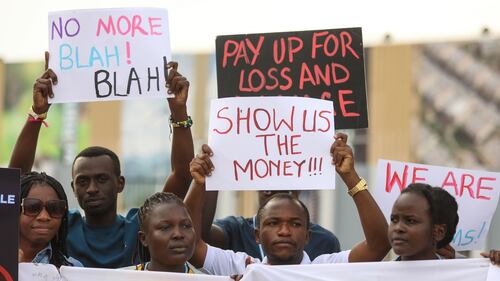
From activists taking brands to task over corporate greenwashing to the finance gap and antitrust challenges, here’s what fashion leaders need to know from the UN’s high-stakes climate summit.

Efforts to stave off catastrophic climate change are failing, reports from the UN’s COP27 climate summit show. From cotton yields to forced labour, here’s what that means for fashion.

With all eyes on COP27, BoF Insights research into the sustainability initiatives of the world’s 30 largest publicly listed fashion companies underscores why the industry is at risk of missing sustainability goals set for the end of this decade.

At the UN’s COP27 summit, fashion’s chances of achieving lofty climate targets still rest on ‘a leap of faith,’ with the industry just starting to lay the basic foundations required to deliver.

Big brands are changing the way they talk about sustainability following a regulatory crackdown in Europe. But exactly how companies should be required to substantiate their eco-marketing claims remains hotly debated.

Brands from Canada Goose to Patagonia still rely on PFAS for performance attributes like waterproofing.

Last week, the governing bodies of Italian fashion held a series of thought leadership talks featuring executives from Fendi, Kering, Prada, OTB, YNAP and Canali, outlining the urgent need for the industry to accelerate its sustainability efforts. BoF shares key insights from the programming.

The UN’s annual climate summit is taking place against a challenging backdrop. But coming together to agree on tangible action has never been more critical.

At its annual meeting the Sustainable Apparel Coalition sought to move past a greenwashing controversy that’s exposed the limits of the fashion industry’s efforts at self-regulation.

Leather alternatives have been boosted as eco-innovation and dismissed as mere plastic, but the truth is more complicated than that and demands clearer marketing to avoid misleading consumers.

BoF’s editor-in-chief Imran Amed spoke with the founder of degrowth brand Early Majority about the power of energised communities and what the future of token-gated commerce looks like.

As the UN warns the world is on track for dangerous levels of warming, companies must treat climate change as a real business risk, not just a marketing opportunity.
Chief financial officer Amanda Geijer will take over from Jonatan Janmark as the Swedish textile recycler resumes commercial-scale production.
A new analysis of eight widely used cosmetics ingredients by Verisk Maplecroft found widespread exposure to child and forced labour risks, with palm oil, cocoa and shea nuts among the most problematic commodities.
Global environmental non-profit The Nature Conservancy has launched a new industry coalition to help apparel companies tackle microfibre pollution across their supply chains.
The new initiative will explore how the industry can take responsibility for the millions of used and unsold garments exported to secondhand markets around the world.
Planet-warming emissions associated with the raw materials used to make fashion, footwear and home textiles have risen 30 percent since 2019, according to a new report.
Investments to reduce heat stress for garment factory workers can pay for themselves within four years, a new report from Cornell University's Global Labor Institute finds.
Greenhouse gas emissions rose in 2023 and 2024, due in part to increased global production of fibre, especially polyester, according to a new report by the Apparel Impact Institute.
Lululemon and apparel manufacturer MAS Holdings are among the investors backing the French startup as it scales a proprietary process for recycling nylon from mixed-textile waste.