Circulose Appoints Interim CEO as Textile Recycling Plant Restarts
Chief financial officer Amanda Geijer will take over from Jonatan Janmark as the Swedish textile recycler resumes commercial-scale production.


Excess is built into the economics of the industry at every step of the value chain, writes Kenneth P. Pucker.

The UN’s annual COP climate summit ended Wednesday with an agreement to transition away from fossil fuels. The fraught, days-long negotiations to get there point to the challenges facing fashion companies seeking to deliver on these ambitions.
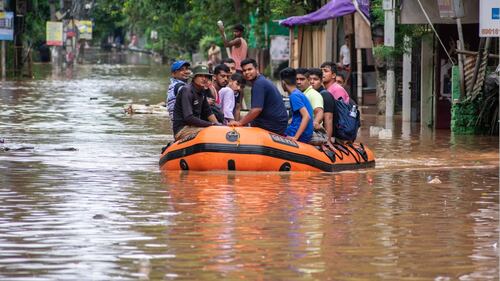
The State of Fashion 2024 explores how the frequency and intensity of extreme weather-related events are leaving the industry’s value chain increasingly vulnerable.

Bestseller and H&M Group have pledged $100 million to help develop a renewable-energy project in Bangladesh, a possible template for more meaningful investment in decarbonising the industry.

Big brands like H&M Group, Inditex and Nike are turning to biomass like wood pellets and agricultural waste in a bid to get the world’s dirtiest fossil fuel out of energy-intensive manufacturing processes. Climate groups say it’s not any better.

With global temperatures reaching new highs and time running out for brands to deliver on their environmental commitments, here’s what fashion leaders need to know ahead of the start of the UN’s annual climate summit in Dubai Thursday.

A growing body of consumer surveys suggests interest in sustainable consumption is reaching a tipping point. Those surveys are deeply flawed, writes Kenneth P. Pucker.

Vestiaire Collective will now block 30 brands including Gap, H&M and Zara from its platform, adding to an earlier ban on Boohoo and other low-priced online retailers. It’s an eco-conscious spin on a broader push upmarket by secondhand companies.
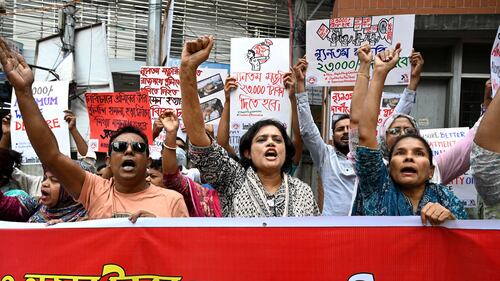
Negotiations over a new minimum wage for garment workers in Bangladesh have sparked mass demonstrations on streets across the capital.

Brands are passing the buck on sustainability targets, placing an unrealistic burden on manufacturers, according to a new industry report.
This week, deadly protests after the Bangladeshi government proposed a minimum wage increase well below the level unions had called for highlighted a fundamental challenge in raising worker salaries: somebody has to pay for it.

Weaker-than-expected demand for Swedish textile recycler Renewcell’s first commercial volumes of recycled cellulose pulp has sent the company’s stock price plummeting and highlighted broader hurdles challenging efforts to lessen fashion’s environmental footprint.
Chief financial officer Amanda Geijer will take over from Jonatan Janmark as the Swedish textile recycler resumes commercial-scale production.
A new analysis of eight widely used cosmetics ingredients by Verisk Maplecroft found widespread exposure to child and forced labour risks, with palm oil, cocoa and shea nuts among the most problematic commodities.
Global environmental non-profit The Nature Conservancy has launched a new industry coalition to help apparel companies tackle microfibre pollution across their supply chains.
The new initiative will explore how the industry can take responsibility for the millions of used and unsold garments exported to secondhand markets around the world.
Planet-warming emissions associated with the raw materials used to make fashion, footwear and home textiles have risen 30 percent since 2019, according to a new report.
Investments to reduce heat stress for garment factory workers can pay for themselves within four years, a new report from Cornell University's Global Labor Institute finds.
Greenhouse gas emissions rose in 2023 and 2024, due in part to increased global production of fibre, especially polyester, according to a new report by the Apparel Impact Institute.
Lululemon and apparel manufacturer MAS Holdings are among the investors backing the French startup as it scales a proprietary process for recycling nylon from mixed-textile waste.