BoF Logo

Agenda-setting intelligence, analysis and advice for the global fashion community.

The BoF Podcast | Anoushka Shankar: Creativity Is an Act of Hope

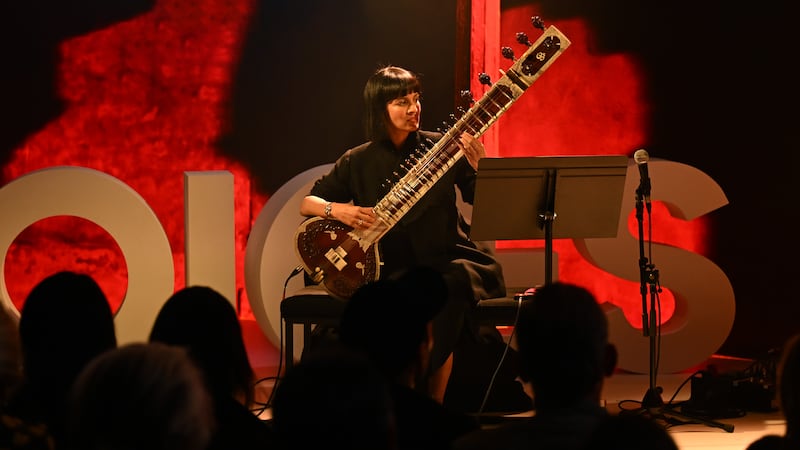
Fourteen-time Grammy-nominated sitarist and composer Anoushka Shankar shared the creative process behind her music at BoF VOICES 2025.
Anoushka Shankar performing.

The author has shared a YouTube video.

You will need to accept and consent to the use of cookies and similar technologies by our third-party partners (including: YouTube, Instagram or Twitter), in order to view embedded content in this article and others you may visit in future.

The author has shared a Podcast.You will need to accept and consent to the use of cookies and similar technologies by our third-party partners (including: YouTube, Instagram or Twitter), in order to view embedded content in this article and others you may visit in future.

Listen to and follow the “BoF Podcast”: Apple Podcasts | Spotify | Overcast

Background:

Anoushka Shankar has spent three decades building one of the most distinctive bodies of work in contemporary music. She has taken the sitar — an instrument rooted in centuries of North Indian classical tradition — into completely new territory, blending the ancient Hindustani raga system with electronic, flamenco and Western orchestral influences.

At a time when we’re bombarded — wars, looming AI risk, a constant churn of uncertainty — her music is a salve. It carries echoes of long road trips with my family, listening to her father, Ravi Shankar, play the sitar.

ADVERTISEMENT

But this is not just nostalgia; Shankar’s music is rooted in her personal journey. At BoF VOICES 2025, she explained how she has written from joy, from pain, from outrage — and in each case, the impulse to release something into the world is inseparable from the belief that it will matter to someone. Every act of creation is an act of hope.

“I believe that any creative act is a hopeful act, because we wouldn’t send anything out into the void if we didn’t have a hope and belief that it was gonna reach other people,” says Shankar. “By nature, it is about hope.”

Shankar spoke about how she found her way back to music after prolonged creative numbness following the pandemic, and what the ancient discipline of improvisation has taught her about adapting to a world in constant upheaval.

The author has shared a YouTube video.You will need to accept and consent to the use of cookies and similar technologies by our third-party partners (including: YouTube, Instagram or Twitter), in order to view embedded content in this article and others you may visit in future.

Key Insights:

  • Creativity is an act of hope: Shankar argues that to make anything is to believe it will reach someone. For her, the impulse to create is inseparable from the belief that it will matter. “I’ve written from a place of joy, from a place of pain, and from outrage about global events, but each of those times there is some shred of hope that means it’s gonna make some kind of a difference to bother putting something out into the world,” she says.
  • Small moments of presence can become a way through crisis: After the pandemic, Shankar entered a protracted period of creative silence, unable to write — caught, as she puts it, in “a period of very, very numb and debilitating pain.” The way back was not an act of will but a gradual process, beginning with a single moment in the garden with her children she kept returning to in the days that followed. “If I was truly present, not caught up in my head or in worries or thoughts, that I could really fully experience these moments of joy, even in the hardest of times, and they would give me the strength to move through.”
  • Hope is a choice made before certainty arrives: As Shankar moved into the second chapter of the trilogy, she began to feel that moments of solace were not enough. Against the backdrop of global violence and grief, including the devastation in Palestine, she says she had little faith that the world would change. The album How Dark It Is Before Dawn became her attempt to make music for that space: “I had to trust that things do eventually change, even if I’m in that moment where I can’t see it. I had to choose hope. I have to choose to hope in the moment when I don’t know it’s going to work, or that anything is going to happen. It’s an act of faith.”
  • Tradition only lives when it is made current. In explaining Hindustani classical music, Shankar describes a form rooted in oral transmission, apprenticeship and improvisation, and links the discipline of improvisation to a broader way of navigating change. Having learned under her father from the age of seven, she sees the sitar tradition as both a weight of history and a space for freedom. “It is about … assimilating all this stuff that could be a weight – the history and how much there is to learn – but finding a way to have freedom within it,” she says. “It doesn’t really live unless it’s present as well. I have to make that tradition current and real to me in order for it to resonate with other people who are here with me today.”

Additional Resources:

© 2026 The Business of Fashion. All rights reserved. For more information read our Terms & Conditions

Loading recommended reads…

Latest News & Analysis
Unrivalled, world class journalism across fashion, luxury and beauty industries.
VIEW MORE
Agenda-setting intelligence, analysis and advice for the global fashion community.
CONNECT WITH US ON
The State of Fashion - Face to Face with Luxury Clients - Discover what luxury clients want today