Agenda-setting intelligence, analysis and advice for the global fashion community.
Agenda-setting intelligence, analysis and advice for the global fashion community.

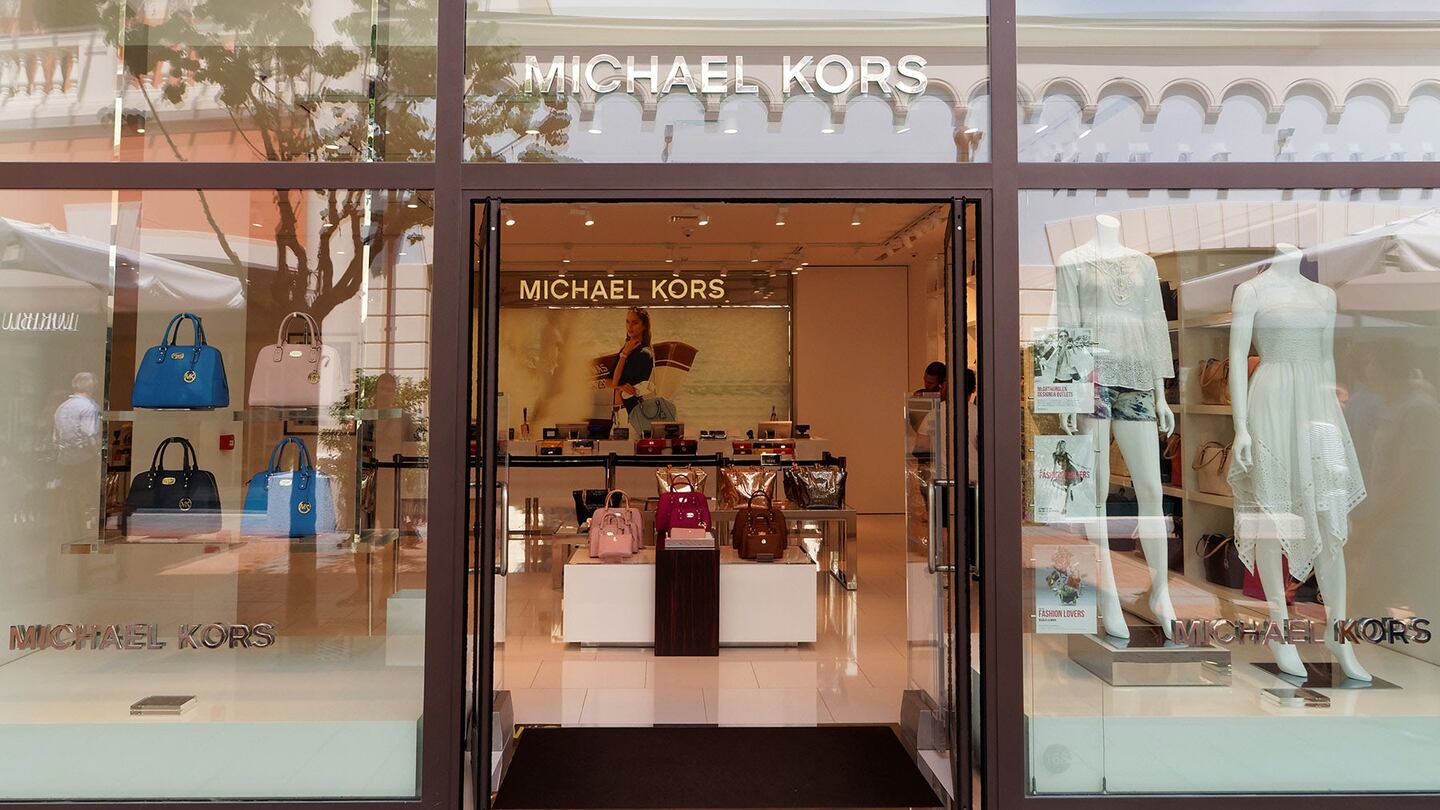
NEW YORK, United States — Michael Kors set out to blanket North America in its glossy white boutiques when it went public in 2011. Four years and nearly 200 stores later, the handbag seller has said: Enough.
"We'll open a few more stores, and then that rollout will be complete," Chief Executive John Idol said on a conference call with analysts today, after the company posted its second- quarter earnings. Idol said it will soon stop opening new women's boutiques.
Tasked with mass expansion at Kors, Idol had vowed to run 400 shops on the company's home continent, a fleet that could take on its larger rival Coach, in his initial plan. And that's what he did, throwing open the doors at dozens of mall and street locations each year since. Now, finally nearing that number, he will stay put, and that may not be a bad thing.
Wait. The more stores, the better, no?
ADVERTISEMENT
Not in retail. Well, not always. Unlike a Forever 21 — or a discount store like Dollar General, or a fast food brand like Subway, or a coffee chain like Starbucks — Kors can't stick a shop in every mall or on every street corner. For a label that's cheaper than glitzy fashion houses but more expensive than mall brands, perceived prestige is everything. Such brands rely on their luxe reputation to convince shoppers to drop $400 on a leather satchel or a silk-blend shirtdress. The industry likes to describe Kors as an "accessible luxury" brand. It just can't be too accessible.
As Kors aggressively expanded, critics railed at the company for getting too big too fast. These days, you can hardly walk down a city street without seeing a shiny gold piece of MK hardware dangling from someone's shoulder bag. For Kors, saturating America with that logo made it harder to retain an aura of exclusivity. Heavy discounting further eroded the label's cachet, as its many department store partners knocked down prices to sell more bags. The mass rollout of stand-alone stores made Kors still more ubiquitous. Plus, at a certain point, stores begin to cannibalize each other's sales — particularly detrimental when a label has multiple price tiers, such as a line of outlet stores.
Just ask Coach, Kors's chief rival in the handbag wars, which overexpanded its outlet chain until it accounted for around 70 percent of its sales, then had to scale back. Kors hopes to keep its outlets at around a third of its retail sales.
It's good, then, that the retailer seems to know its boundaries, said Simeon Siegel, an analyst at Nomura Securities. "They do have a very concentrated position in North America," said Siegel. "But they're acknowledging that there’s a limit."
Then there's e-commerce, taking bites out of brick-and- mortar sales. On the call, Idol said he's been repeatedly questioned about his company's devotion to physical stores, despite the rise of online shopping. This is still how people shop, he said, at least for the foreseeable future.
"Well, we're profitable when we open more stores. And people — while online shopping is absolutely a trend and it's going to move the needle for the company — people will still go out and shop in a store," Idol said. "That won't, at least while I'm alive, won't have evaporated."
By Kim Bhasin; editor: Peter Jeffrey.
Loading recommended reads…
Chanel, Hermès and Dior lead the pack as 1,173 fashion professionals and aspiring workers from 93 countries tell BoF Careers which brands they most want to work for — and why.
Fashion and beauty workers are AI optimists — but their employers aren’t keeping up. BoF Careers’ annual survey of 2,926 professionals reveals a widening gap between what talent expects and what the industry delivers.
L’Oréal Paris, Dior Beauty and Charlotte Tilbury topped the list as 296 beauty professionals and aspiring workers from across 53 countries tell BoF Careers where they dream of working — and what’s pulling them there.
This August, the ELC-owned incubator behind The Ordinary will launch its premium skincare line, NIOD, into Sephora — and take over management of Lauder-owned Origins. With more resources, distribution, and responsibility, Deciem is becoming the company’s most valuable asset.