Agenda-setting intelligence, analysis and advice for the global fashion community.
Agenda-setting intelligence, analysis and advice for the global fashion community.
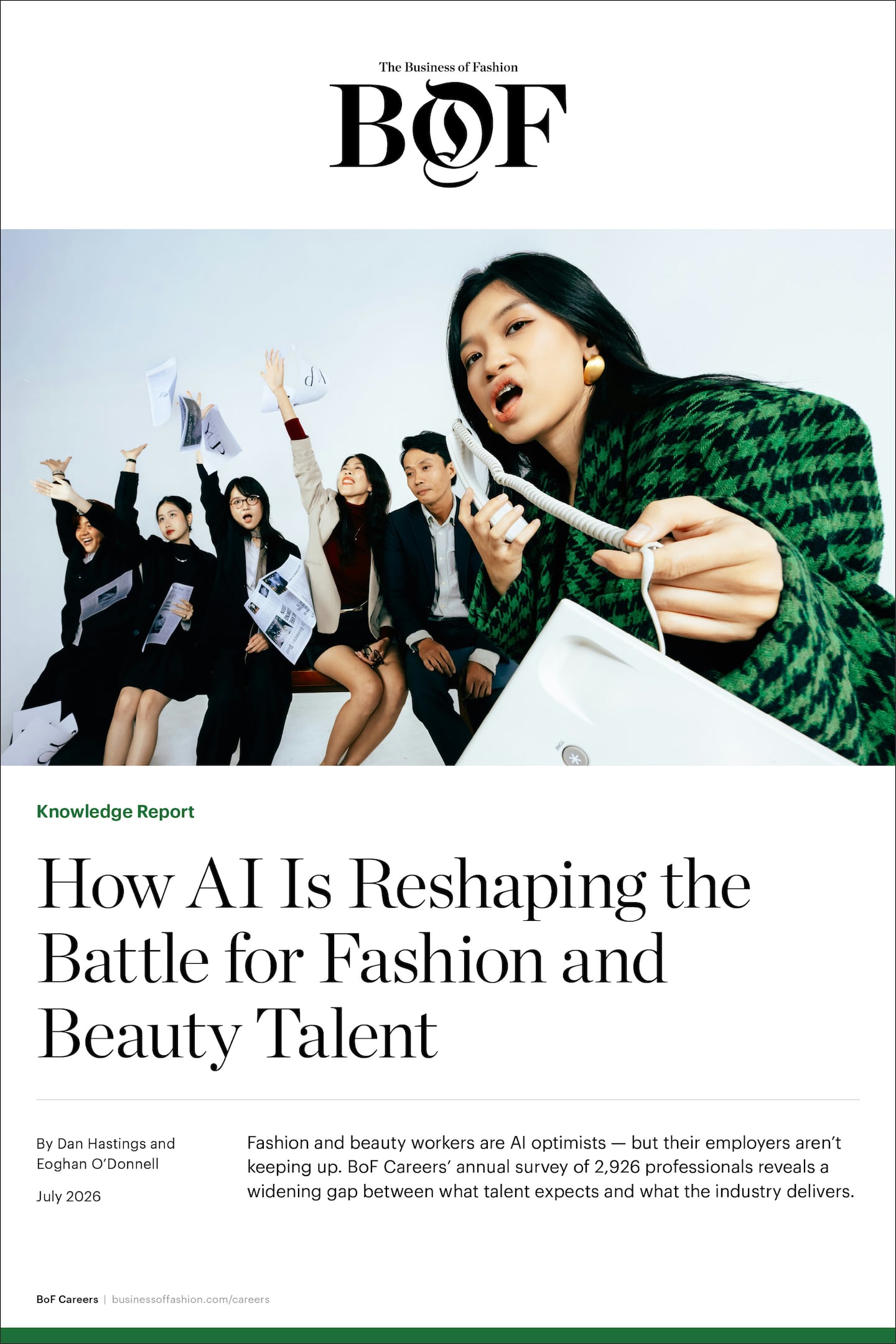
A decelerating global fashion and beauty market is colliding with the rise of artificial intelligence (AI). Amid a slowing recruitment landscape and high levels of youth unemployment and underemployment — from the US and Western Europe to China — companies are grappling with how large language models (LLMs) like ChatGPT and Claude, as well as other AI productivity tools, could transform the way they operate.
Interestingly, many current fashion and beauty workers are AI optimists — 53 percent of current fashion workers and 61 percent of current beauty workers view the increasing use of AI in their industry “positively” or “very positively” — but they have not yet seen a transformative impact on workflows.
This is in part due to employers’ inability to match AI optimism with action. For instance, 39 percent of fashion workers and 35 percent of beauty workers say their desire for AI training remains unmet, while only 16 percent in fashion and 25 percent in beauty have received comprehensive, structured AI training. But the need to capitalise on AI optimism is clear — around a quarter of respondents in both sectors say a company’s investment in AI tools and training would make it a significantly more attractive employer.
This year, 2,926 members of the global BoF community answered our latest BoF Careers questionnaire, spanning all seniority levels across 98 countries. Respondents who identified as fashion professionals work for brands including Balenciaga, Burberry, Gap, H&M, Moncler, Nike, Uniqlo, Valentino and Zara, among others. In beauty, respondents hail from brands such as Aesop, Armani Beauty, Benefit Cosmetics, Clinique, Fenty Beauty, MAC Cosmetics, Nars and retailers such as Harrods, Sephora, Ulta Beauty and Superdrug.
ADVERTISEMENT
In How AI Is Reshaping the Battle For Fashion and Beauty Talent, we unpack key insights gathered from our research alongside expert analysis from Ralph Lauren, Adidas, Space NK and executive search professionals. Survey findings also inform our 2026 rankings of the most desirable fashion and beauty companies to work for, published alongside this report.
This report is split into three sections:
Explores how fashion and beauty workers are experiencing AI in the workplace — where there’s optimism, where there’s anxiety and how the training gap is costing employers.
Key Insights:
Examines why the gap between a brand’s employer promise and employees’ lived experiences is becoming a defining measure of trust — and what that means for pay transparency, working conditions and retention.
Key Insights:
Provides a practical roadmap for employers and HR teams on how to meet those expectations to drive recruitment, aid progression and address the gap in family and women’s health benefits.
Key Insights:
BoF Careers is our hiring and employer branding platform. We partner with fashion and beauty companies across the globe to support their talent acquisition strategies and showcase their unique employer brand to our community of fashion, luxury and beauty professionals. Get in touch to find out how BoF Careers can support your business.
Chanel, Hermès and Dior lead the pack as 1,173 fashion professionals and aspiring workers from 93 countries tell BoF Careers which brands they most want to work for — and why.
L’Oréal Paris, Dior Beauty and Charlotte Tilbury topped the list as 296 beauty professionals and aspiring workers from across 53 countries tell BoF Careers where they dream of working — and what’s pulling them there.
Dan Hastings is the Commercial Features Editor at The Business of Fashion (BoF). Based in London, he oversees BoF Careers’ content, including the “Building a Career in Fashion and Beauty” and “Insider Advice” series, and writes, edits and presents partner-commissioned work.

Eoghan O’Donnell is the Junior Commercial Writer at The Business of Fashion (BoF). From Kerry, Ireland and based in London, he contributes to BoF’s careers advice and written content partnerships.
Loading recommended reads…
The company’s share price notched its biggest weekly rise since 2020 as investors bet on softer gold prices to bring customers back to stores.
Workers staged fresh demonstrations in Dhaka Thursday, forcing factories to suspend operations despite government promises to raise wages before the end of the year.
The cult menswear designer and former Demna collaborator is returning to Balenciaga as owner Kering seeks to revive sales at the French house.
Just a few years ago, commentators were declaring the brand as past its peak amid multiple ownership changes and a broader streetwear cooldown. Today, consumer tracking metrics shows domestic sales and youth market share is rebounding strongly.